



Meiji Period Brass Lamps
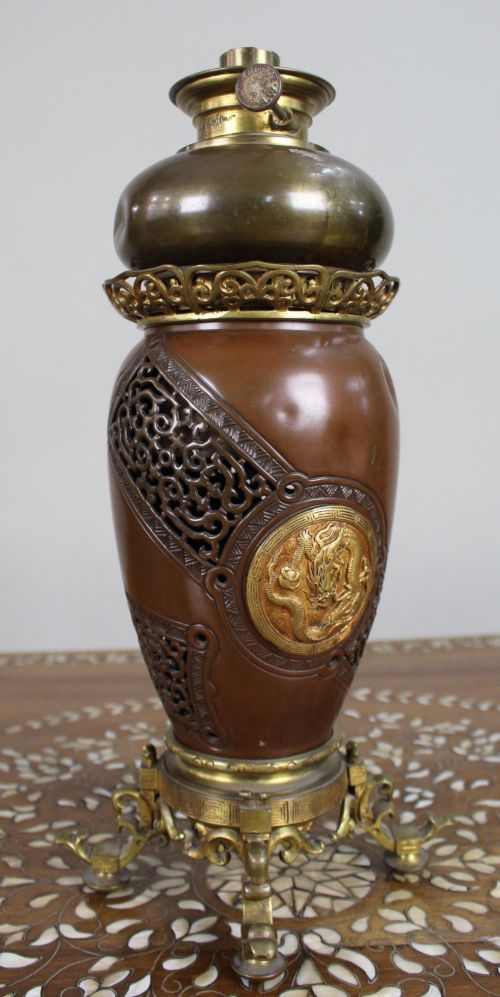
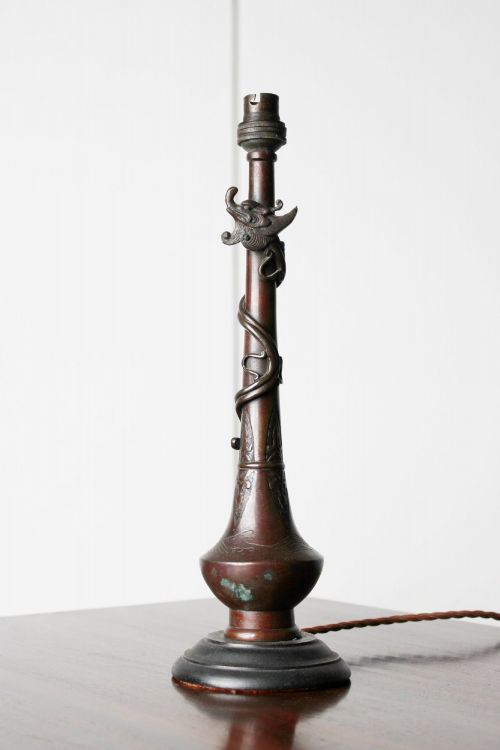
These meiji period brass lamps are heavy, intricate objects that bring 19th-century Japanese metalwork and ceramic conversions into a room.
Meiji Period Brass Lamps
When you search for meiji period brass lamps, you encounter table lights and oil lamps spanning the 19th century, Edwardian, and Victorian eras. These items often originate from Japanese production, taking the form of vases or vessels later adapted for lighting.
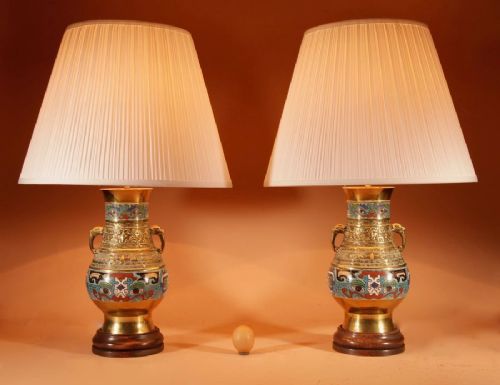
You are most likely to meet bronze, brass, and gilded metal bodies combined with cloisonné enamel, champlevé, porcelain, and fabric shades. The selection ranges from pairs of spill vases converted into lamps to single decorative table lights displaying distinct Chinoiserie or Imari influence.
How they were made
Maker workshops employed cast bronze and brass as the structural base, often working metal into complex vessels designed to hold oil or display decorative motifs. Artisans applied cloisonné and champlevé enamel techniques directly onto the metal surfaces, creating intricate coloured patterns within wire cells or recessed channels.
Many examples incorporate Japanese porcelain, including Imari and Fukagawa wares, integrated into metal mountings. Wood and fabric elements appear alongside gilded metal details, showing how different craft traditions merged during the period.
Several lamps began life as Imari spill vases before someone decided they deserved to light up the parlour instead.
What varies in quality
Quality rests on the precision of the metal casting and the execution of the enamel work. Finer examples display crisp, even cloisonné cells and securely seated bronze or brass components that maintain their structural balance.
The integration of porcelain and metal also distinguishes finer pieces from simpler conversions. When Satsuma or Imari elements align harmoniously with the brass framework, the overall design achieves greater cohesion.
The Meiji Period Brass Lamps Glossary
- Cloisonné enamel
- A technique where thin metal wires are soldered to a metal base to form compartments filled with enamel paste before firing. This method produces intricate patterns of distinct coloured fields across the body.
- Champlevé
- A method where troughs or cells are hollowed out of the metal surface and filled with enamel prior to firing. It differs from cloisonné by carving directly into the thick metal rather than applying wire.
- Imari
- A style of Japanese porcelain decorated in underglaze blue and overglaze red, gold, and other colours. Pieces featuring this palette frequently appear in lamp conversions.
- Chinoiserie
- A European artistic style reflecting Chinese and broader East Asian artistic motifs. It influences the decorative vocabulary seen on several listed table lights.
Meiji Period Brass Lamps: Frequently Asked Questions
What are meiji period brass lamps?
These pieces are lighting fixtures created from 19th-century Japanese metalwork, bronze vessels, and porcelain vases. They combine traditional Asian craftsmanship with period electrical or oil-burning adaptations.
Many started as decorative vases or spill vases before conversion into table lamps during the Victorian and Edwardian eras.
How do I identify meiji period pieces?
Identification relies on observing characteristic materials such as bronze, champlevé enamel, and Fukagawa porcelain. The presence of Meiji period stylistic markers helps date the metalwork accurately.
Examining the construction methods of the brass and the style of the enamel provides further context for the origins of the piece.
Where were these lamps used?
These lamps functioned as decorative and practical light sources in domestic interiors during the late 19th and early 20th centuries. Their striking colours and detailed metalwork suited prominent display on tables in reception rooms.
Today, they serve a similar role as statement lighting pieces that introduce texture and historical interest to a room.
How should I live with these lamps?
Living with these items involves placing them on stable surfaces where their weight and delicate enamel work remain secure. Pairing them with compatible fabric shades allows the brass and bronze bases to stand out.
Regular, gentle dusting helps preserve the surface of the metal and enamel without disturbing the antique construction.