
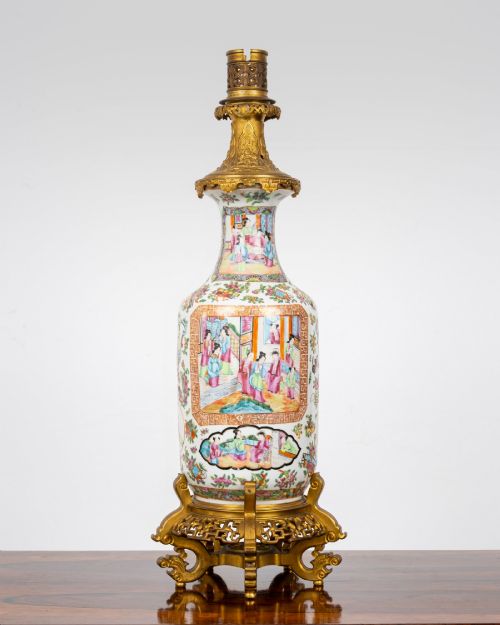


Japanese Brass Table Lamps
Japanese brass table lamps bring intricate Far Eastern craftsmanship into British rooms, combining cast metalwork with rich porcelain and enamel.
Japanese Brass Table Lamps
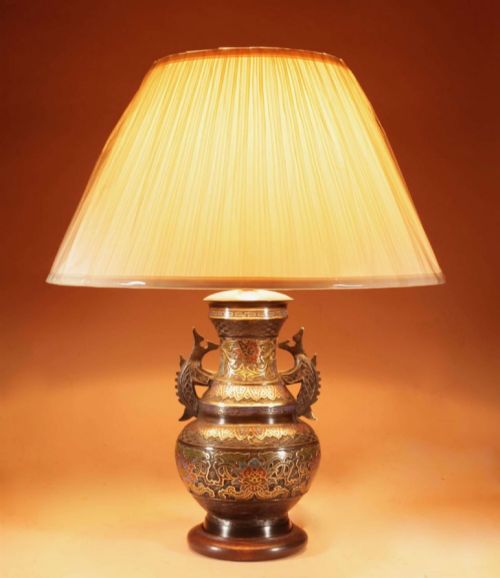
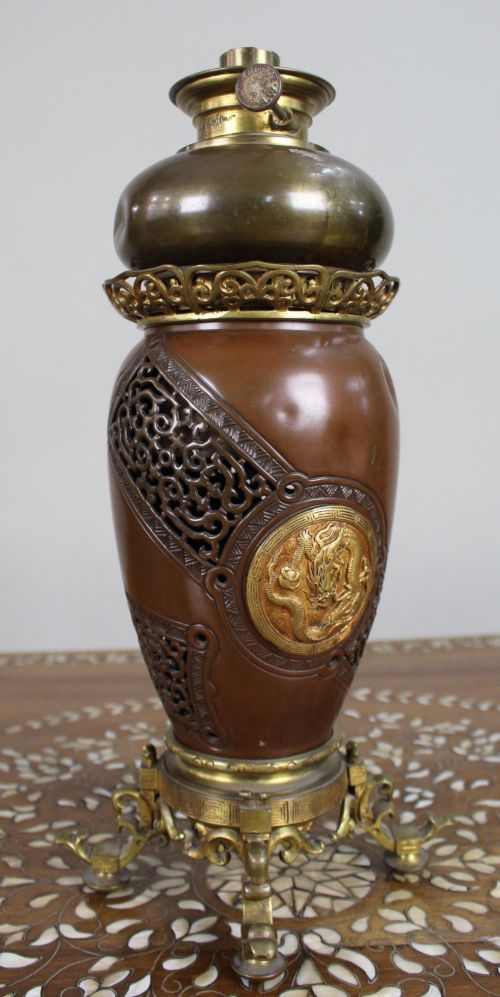
Japanese brass table lamps unite traditional metalwork and ceramics from the Meiji period and Victorian eras with later conversion to domestic lighting. These pieces take the form of table lamps and oil lamps, often utilising older vases and vessels mounted for modern illumination.
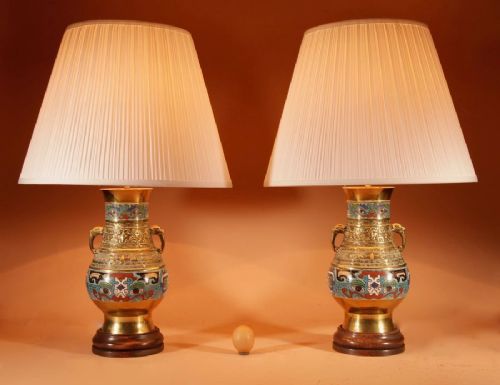
The materials span cast brass, bronze, and gilt bronze combined with porcelain, cloisonné enamel, and champlevé work. Buyers encounter pairs and single items featuring Satsuma, Imari, and Arita ceramic bodies fitted with metal mounts.
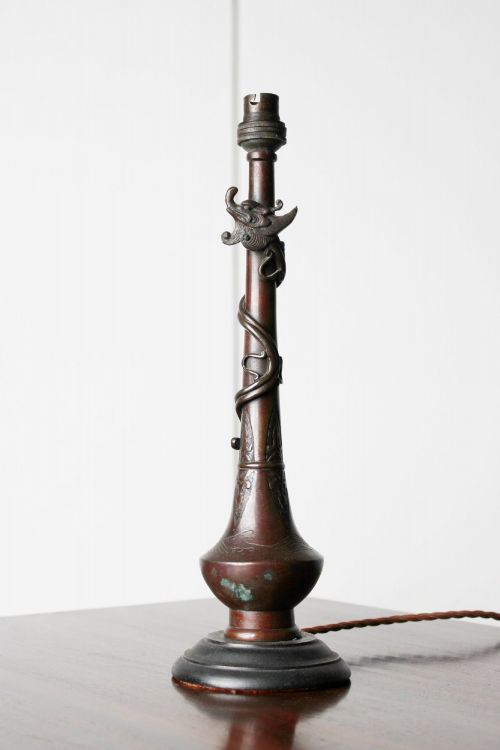
Styles range from strict Meiji period aesthetics to Chinoiserie and Edwardian adaptations. The forms include spill vases and urns repurposed as lamp bases alongside purpose-built bronze standards.
Materials and construction
Makers formed the metal bases through casting and chasing in brass, bronze, and gilt bronze, often incorporating champlevé and cloisonné enamel decoration. Enamelling involved soldering fine wire compartments onto a metal base before filling them with vitreous paste and firing.
Ceramic bodies such as Imari and Satsuma porcelain were imported or adapted, then secured with metal mounts of brass and gilded metal. Many pieces combine wood elements with fabric shades and detailed metalwork to complete the lamp structure.
Several heavy bronze bases began their days burning paraffin oil before finding a second career holding lightbulbs.
Judging quality and execution
Quality rests in the crispness of the bronze casting and the precision of the cloisonné wirework, where finer cells and smoother enamel finishes distinguish superior examples. The integration of metal mounts to porcelain bodies shows the skill of the fitter.
The depth of the hand-painted porcelain decoration, particularly on Imari, Satsuma, and Rose Medallion ceramics, dictates the visual merit of the piece. Matching pairs demonstrate greater uniformity in both the ceramic bodies and the cast brass components.
The Japanese Brass Table Lamps Glossary
- Cloisonné
- An enamelling technique where metal wire forms raised barriers on a surface to contain coloured glass pastes before firing.
- Champlevé
- A method of decoration where troughs or cells are hollowed out in the metal surface and filled with enamel.
- Imari
- A style of Japanese porcelain featuring underglaze blue and overglaze red, gold, and black decoration.
- Satsuma
- A type of earthenware with a ivory-coloured, crackled glaze, typically decorated with fine polychrome enamels and gilding.
- Meiji Period
- The era in Japanese history spanning from 1868 to 1912, known for opening trade and exporting decorative arts.
Japanese Brass Table Lamps: Frequently Asked Questions
Are these lamps originally wired for electricity?
Most of these pieces started life as vases, oil lamps, or decorative vessels before being converted to electrical table lamps during the nineteenth or twentieth century.
Buyers should inspect the existing wiring and consult a qualified electrician to ensure safety and compliance with modern standards.
How do I date a Japanese brass lamp?
Dating relies on identifying the period of the ceramic body or bronze casting, such as Meiji period work or Victorian mounts.
Stylistic markers like Chinoiserie influence or Edwardian alterations also help narrow down the period of the final assembly.
Can I find matching pairs?
Pairs do appear among listings, often utilising symmetrical Imari vases or matching cloisonné enamel urns.
Matching sets demand closer attention to subtle variations in hand-painted details and casting differences.
What care do enamel and bronze lamps need?
Enamel and bronze surfaces require gentle dusting with a soft, dry cloth to protect the delicate wirework and patination.
Avoid abrasive cleaners or chemical polishes that might damage the gilt bronze or disrupt the vitrified enamel surface.