


Oriental Black Lacquered Panels
Oriental black lacquered panels bring heavy timber frames and deep decorative surfaces into a room, offering rich cultural imagery and tactile depth.
Oriental Black Lacquered Panels
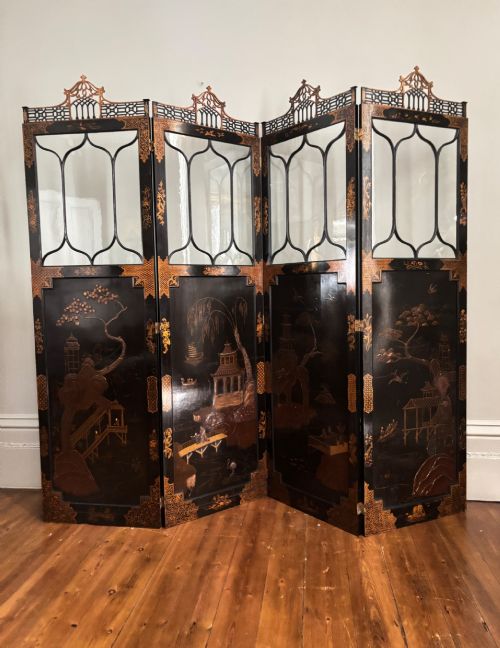
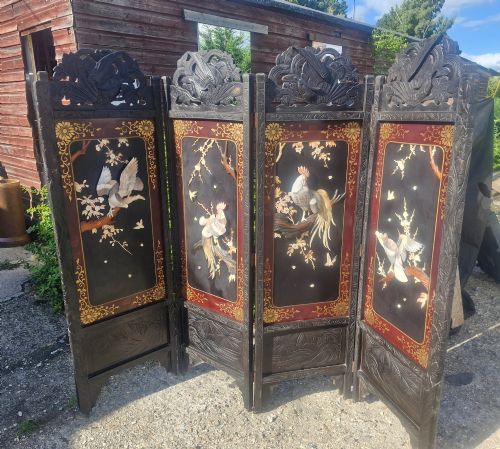
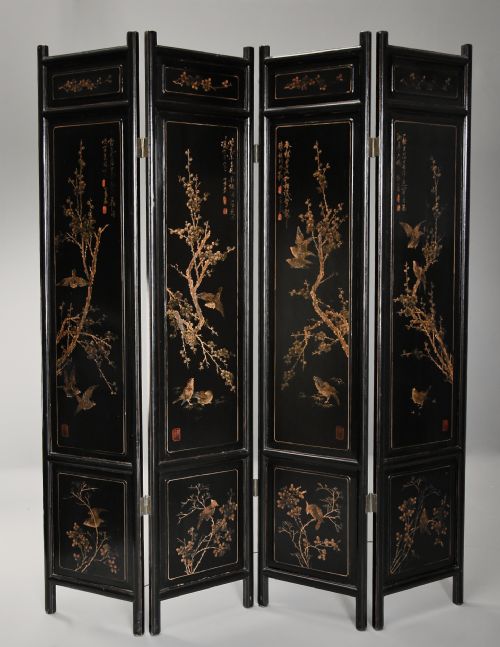
Oriental black lacquered panels encompass folding screens, wall plaques, and room dividers originating from traditions such as Chinese Chinoiserie and Japanese Meiji work. The pieces appearing most frequently across these listings take the form of large multi-fold screens and framed wall panels dating from the nineteenth and early twentieth centuries.
Makers utilised wood as the primary substrate, shaping freestanding dividers and hanging panels that often reflect Chinese Qing style or Japanese Showa period aesthetics. Buyers encounter everything from tall eight-fold Coromandel screens down to matched pairs of smaller wall roundels.
The decorative schemes on these panels rely heavily on narrative scenes, flora, and fauna rendered in contrasting materials. Such items served traditionally to divide interior spaces or adorn walls with intricate figurative artwork.
How they were made
Wood serves as the core structural material for these panels, built into folding frames, trunks, and flat wall plaques. Artisans applied successive layers of lacquer to this timber base to create a deep, glossy dark surface.
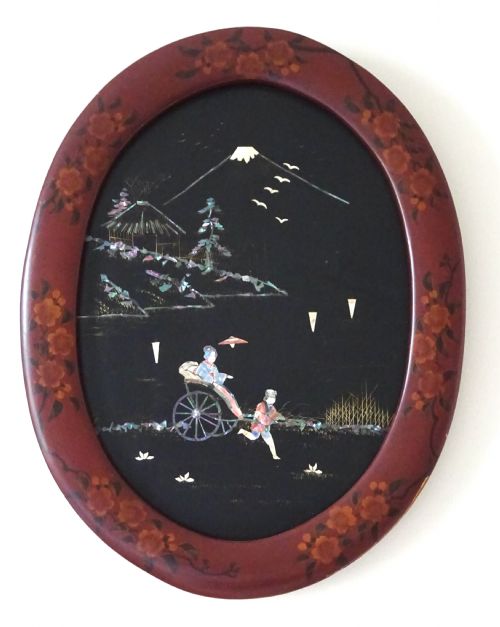
Surface ornamentation involved intricate inlay techniques utilising bone, mother-of-pearl, abalone, and hardstones to build up raised figures, birds, and foliage. Craftsmen also incorporated gold leaf and painted details directly onto the lacquer ground to add luminosity and fine detail.
Listings feature items spanning the nineteenth century through the nineteen-fifties, employing materials such as bone, brass, and mother-of-pearl alongside lacquer.
What varies in quality
The standard of carving and inlay work dictates the visual impact of an oriental black lacquered panel, separating flat painted surfaces from deeply incised designs. Pieces featuring high-relief bone, mother-of-pearl, or hardstone mounted securely into the lacquer display greater labour and material investment.
The depth and uniformity of the black lacquer finish itself indicate the maker's skill, alongside the structural integrity of multi-fold hinges and heavy timber frames. Superior examples maintain crisp detail in the painted or gilded motifs across large expanses without excessive wear to the ground.
Iida Takashimaya Company
The Oriental Black Lacquered Panels Glossary
- Chinoiserie
- European decorative style reflecting Chinese artistic influences. This aesthetic appears frequently in nineteenth-century British and continental interpretations of oriental motifs.
- Coromandel
- Chinese incised lacquer work where designs are cut into the dark ground and filled with colours or left natural. It is commonly found on heavy multi-fold screens.
- Meiji
- Japanese historical period spanning from eighteen sixty-eight to nineteen twelve. Pieces from this era often showcase detailed metalwork, lacquer, and textile integration.
- Mother of pearl
- Iridescent inner layer of mollusc shells used extensively for inlay. Artisans shaped these shells into delicate birds, leaves, and figures set against black lacquer.
Oriental Black Lacquered Panels: Frequently Asked Questions
How were oriental black lacquered panels used historically?
These panels functioned primarily as portable room dividers, dressing screens, or decorative wall art within domestic interiors. Large multi-fold screens created private zones or blocked draughts in large rooms.
Smaller wall panels and roundels served a purely decorative purpose, mounted directly onto walls to display intricate craftsmanship and exotic motifs.
What is the difference between Coromandel and standard lacquer?
Coromandel work involves carving deeply into a thick buildup of dark lacquer to expose underlying layers or create recessed channels for pigments. Standard lacquer work often relies on surface painting, gilding, or applied inlay rather than deep incising.
Pieces described as Coromandel typically feature heavier timber construction and distinct matte or polished carved recesses.
How do I care for antique lacquered wood?
Keep lacquered pieces away from direct sunlight, extreme temperature fluctuations, and high humidity to prevent the wood and finish from cracking. Dust gently with a dry, soft cloth without applying modern chemical polishes or water.
Stable indoor environments help preserve the delicate bond between the wooden substrate and the layered lacquer surface.
How can I tell the period of a screen?
Dating relies on examining the construction methods, hinge types, wood species, and the specific stylistic vocabulary of the painted or inlaid motifs. Nineteenth-century examples often display traditional Chinese export styles or early Meiji workmanship.
Twentieth-century pieces from the nineteen-tens and twenties introduce different hardware and slightly altered interpretations of classic Chinoiserie themes.