




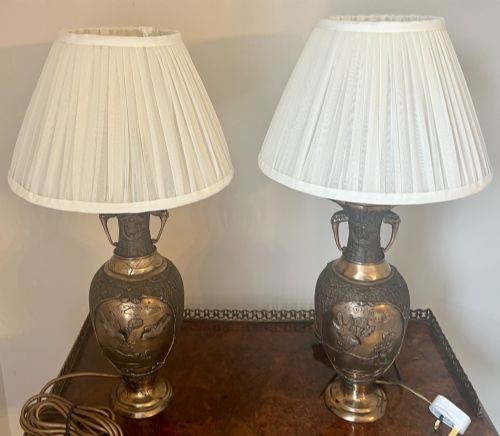
Oriental Bedside Lighting
Oriental bedside lighting brings character to a room through repurposed porcelain vases, bronzes and lacquered vessels wired for modern use.
Oriental Bedside Lighting
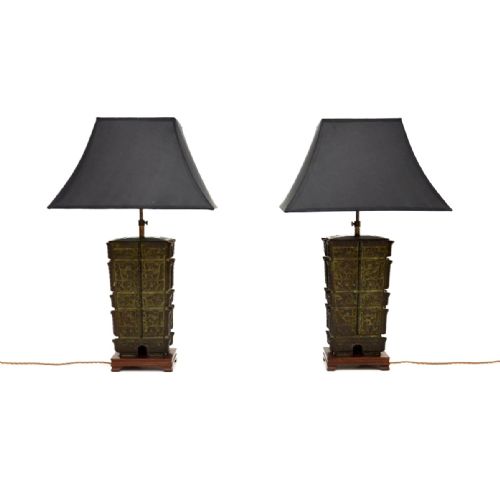
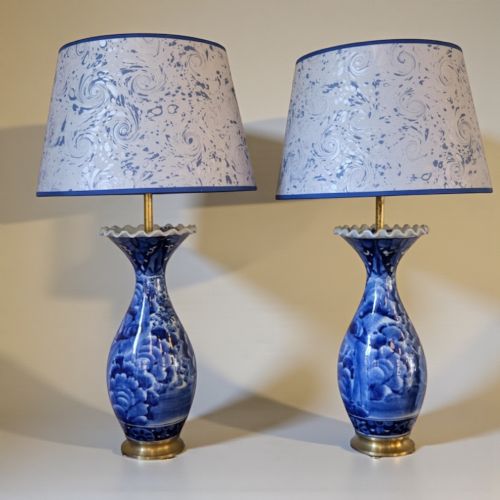
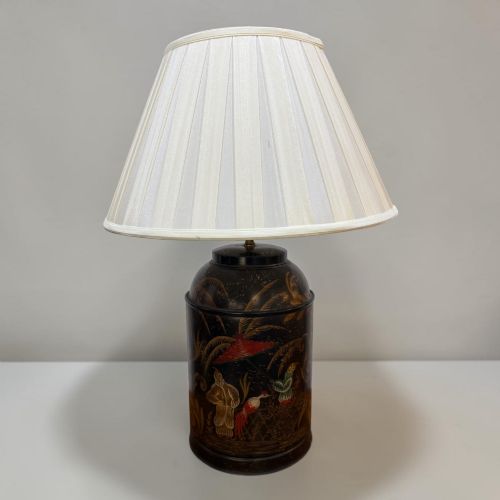
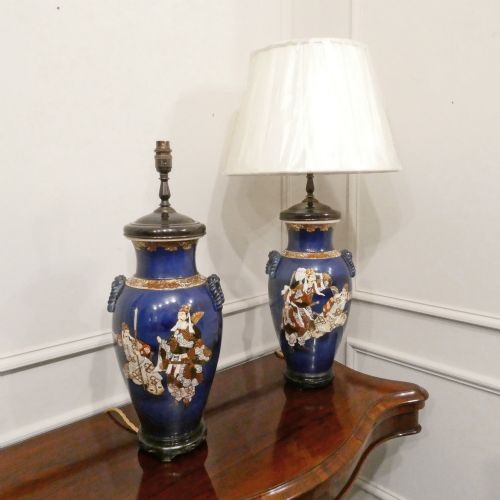
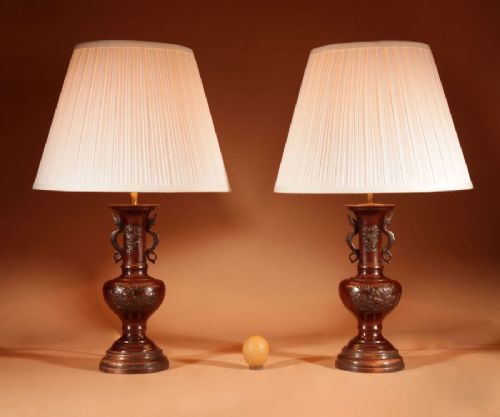
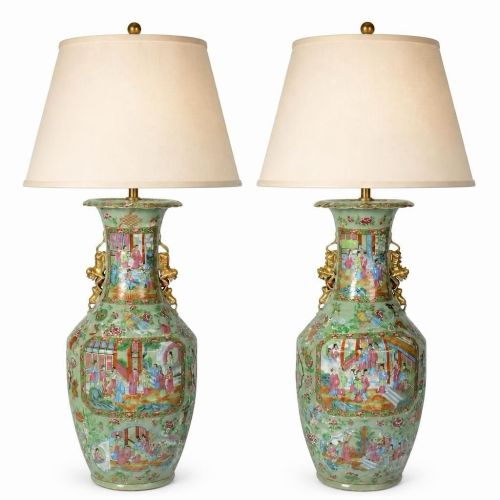
Oriental bedside lighting comprises table lamps adapted from nineteenth-century and early twentieth-century ceramic vessels, ginger jars, vases and tea canisters. The selection leans heavily towards Japanese Meiji period Satsuma and bronzes, alongside Chinese export porcelain including Famille Verte and Rose Medallion.
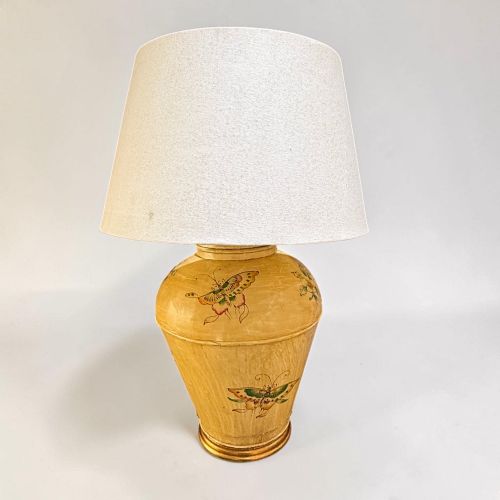
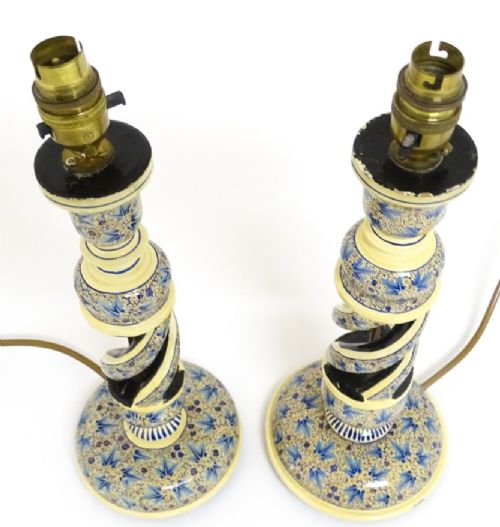
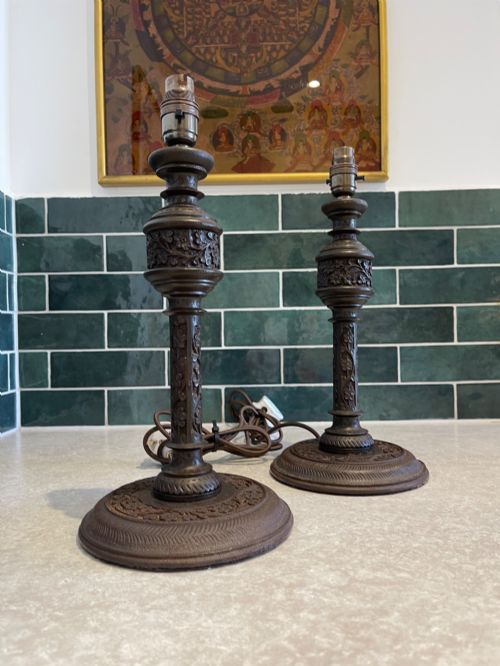
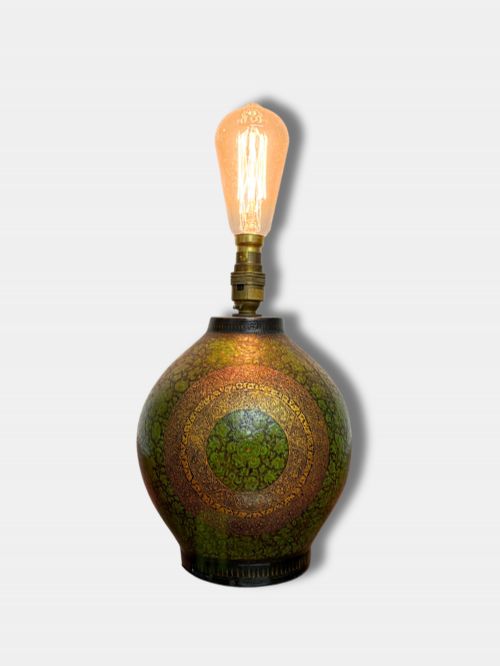
Most examples take the form of paired or single table lamps sitting on timber, brass or fabric bases. Makers and converters draw on Chinoiserie styles, Anglo-Indian traditions and Kashmiri hand-painted woodwork to supply these decorative domestic pieces.
Dated items range from Victorian and Edwardian productions through to the 1920s and 1930s. Buyers encounter converted ginger jars and tea canisters more frequently than purpose-built lamp bodies from the period.
Materials and Technique
The construction combines imported or export ceramic, bronze and brass bodies with subsequent electrical fittings. Artisans utilise porcelain, cloisonné enamel, lacquer, and carved hardwoods, mounting the vessels onto metal or wooden bases.
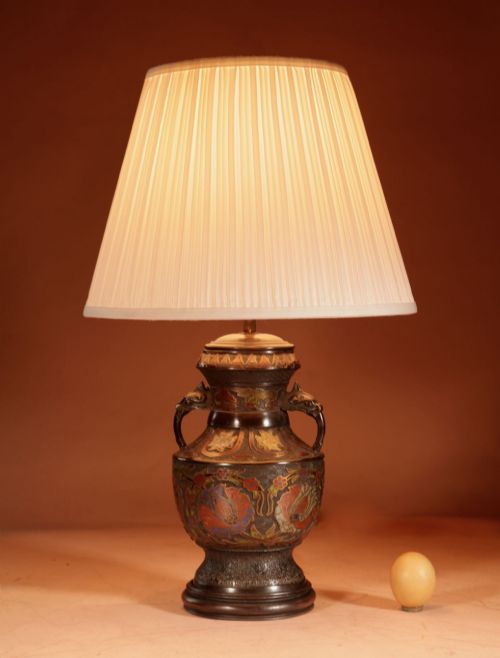
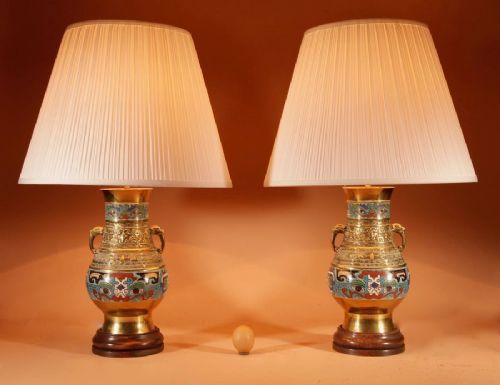
Surface decoration relies on hand-painted enamel, gilt gold, and intricate champlevé work. Many pieces originate as nineteenth-century vases or jars later converted into lamps by drilling the base or mounting collars to secure the flex.
Oriental Bedside Lighting Retail Price Guide 2026
Typical asking prices for oriental bedside lighting among the pieces listed under this phrase on Sellingantiques today, from the lower quarter to the upper quarter. They describe what is for sale here now, not the wider market.
Current listings feature materials spanning brass, fabric, porcelain, wood, silk, enamel, bronze, and lacquer across multiple decades.
Standards of Craftsmanship
Quality rests on the integrity of the original vessel and the sympathy of the conversion. Superior examples retain crisp enamel details, well-preserved gilding, and stable mounting without compromising the antique ceramic or bronze.
The finish of the metal components and the stability of the base distinguish finer pieces from standard adaptations. Hand-painted Satsuma porcelain and detailed champlevé bronze demonstrate greater artistry than plain lacquer or simple painted brass.
The Oriental Bedside Lighting Glossary
- Satsuma
- A type of Japanese earthenware with a crackle-glaze finish, typically decorated with polychrome and gilt enamels. These wares often feature detailed figurative scenes.
- Champlevé
- An enamelling technique where troughs are dug into a bronze or metal surface and filled with enamel paste before firing. The resulting patterns show distinct metallic borders.
- Ginger Jar
- A broad-shouldered ceramic storage vessel with a domed lid, commonly adapted into a table lamp base. They form a staple shape in Chinese export ceramics.
- Meiji Period
- The era in Japanese history spanning from 1868 to 1912, noted for opening trade with the West and producing decorative bronzes and Satsuma porcelain.
- Cloisonné
- Enamelling work created by soldering flat metal wire to a metal base to form compartments, which are then filled with coloured paste and fired.
Oriental Bedside Lighting: Frequently Asked Questions
How do I date an oriental lamp?
Dating relies on the style of the ceramic body, metal mounts, and manufacturing marks rather than the electrical wiring. Victorian and Edwardian examples often pair nineteenth-century vases with later twentieth-century fittings.
Examining the base and interior access points reveals whether the vessel was drilled recently or adapted decades ago during initial importation.
Were these originally made as lamps?
Nearly all oriental bedside lighting started life as functional vessels, tea canisters, ginger jars, or decorative vases. Artisans converted them into table lamps during the nineteenth or twentieth centuries to suit Western domestic interiors.
Original factory-made lamps from this geographic influence are uncommon compared to later conversions of antique export ware.
How do I match a pair?
Matching lamps usually share identical ceramic motifs, dimensions, and patination on their bronze or brass bases. Slight variations in hand-painted details indicate authentic manual production rather than mass manufacture.
Buyers should check both the height of the ceramic body and the style of the mounting hardware to ensure visual balance on bedside tables.
What is Chinoiserie style?
Chinoiserie represents the European interpretation and imitation of Chinese and East Asian artistic traditions, popular in furniture, lacquer, and ceramics. Makers apply these motifs to create decorative objects tailored for Western homes.
This aesthetic appears across lacquered wood finishes and painted table lamps dating from the Victorian era onwards.