





Orange Persian Rug
An orange persian rug brings warmth and deep pigment into a room, offering rich historical craftsmanship from regional workshops.
Orange Persian Rug
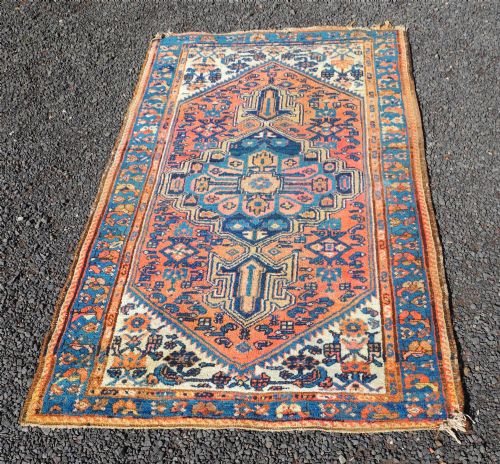
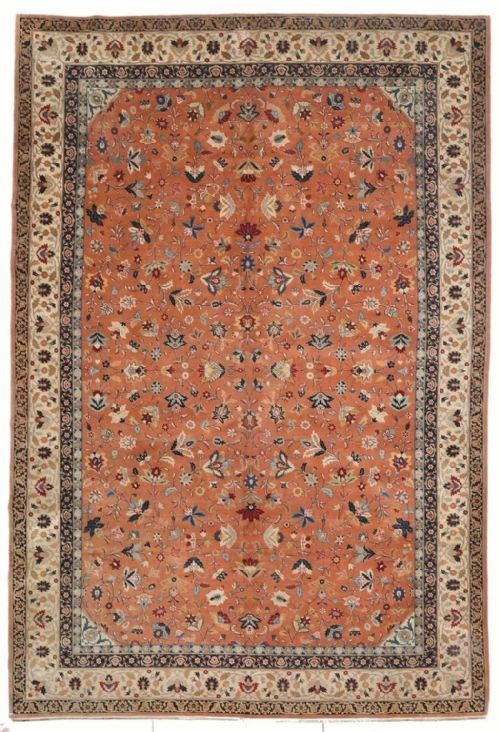
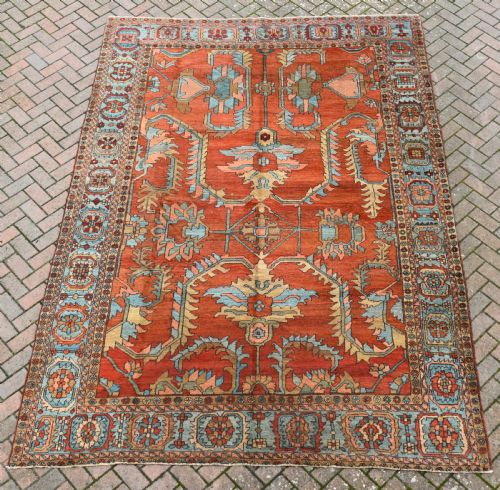
An orange persian rug encompasses hand-knotted and woven textiles originating from regions like Tabriz, Heriz, Mahal, and Hamadan, often dating from the late nineteenth and early twentieth centuries. These pieces display distinct tribal and classical patterns, ranging from geometric village designs to intricate floral medallions.
Buyers will encounter various formats on this page, including large carpets, smaller area rugs, hallway runners, kilims, and embroidered panels. Materials span traditional wool piles, cotton foundations, silk highlights, and wool felt bases.
The palette across these examples incorporates terracotta, ivory, and mellow tones alongside bolder vegetable dye variations. Each piece reflects the specific regional weaving traditions of Persian, Baluch, Afghan, Qajar, and Turkish makers.
Materials and construction
The primary construction of these rugs relies on hand-spun wool and cotton foundation threads, providing the structural density needed for daily use. Silk is utilised in select pieces for fine pile work or detailed embroidery, addinglustre and precise definition to the motifs.
Weavers employed traditional knotting techniques alongside flatweave methods such as kilim construction and silk on felt embroidery. Natural dye sources yielded the terracotta and varied colourways seen across the surviving examples from the periods between 1890 and 1930.
Orange Persian Rug Retail Price Guide 2026
Typical asking prices for orange persian rug among the pieces listed under this phrase on Sellingantiques today, from the lower quarter to the upper quarter. They describe what is for sale here now, not the wider market.
Listings feature pieces spanning five distinct decades from 1890 to 1930, utilising wool, cotton, silk, and wool felt.
Evaluating the standard
Quality in these textiles rests upon knot density, the precision of the geometric or floral layout, and the integrity of the foundation materials. Finer weaves allow for sharper medallion outlines and more intricate border details.
The condition of the pile and the stability of the cotton or wool edges dictate the structural longevity of the piece. Consistency in natural dye saturation and the preservation of original selvedges also separate standard examples from superior specimens.
The Orange Persian Rug Glossary
- Medallion
- A central ornamental motif found in the middle of the rug field. It often forms the focal point of classical Persian design.
- Kilim
- A flatweave textile made without a pile. These pieces are created by tightly interweaving warp and weft strands.
- Selvedge
- The reinforced side edges of a rug that protect the structure from unravelling. Original selvedges indicate careful preservation.
- Pile
- The upright yarn loop surface of a carpet that forms the soft layer. Wool and silk are common materials used for this top layer.
- Foundation
- The underlying grid of warp and weft threads that supports the pile knots. Cotton is frequently utilised for this structural framework.
Orange Persian Rug: Frequently Asked Questions
How do I clean an antique rug?
Professional dusting and specialist low-moisture washing are essential for maintaining fragile wool and silk fibres. Household cleaners and excessive water will damage the natural dyes and foundation.
Regular gentle vacuuming without a beater bar helps remove grit from the pile. Keeping the textile out of direct sunlight prevents the terracotta and warmer pigments from fading.
Where were these carpets made?
Production centres include traditional weaving towns and tribal regions such as Tabriz, Heriz, Mahal, Hamadan, and Khorassan. Each area developed distinct geometric or floral repertoires.
Nomadic and village groups like the Qashqai and Baluch also produced characteristic runners and prayer rugs. These pieces often feature regional motifs handed down through generations.
Can I place these rugs in hallways?
Hallway runners and flatweave kilims suit high-traffic areas when paired with a quality underlay. The underlay prevents slipping and reduces friction against the floorboards.
Wool piles offer natural resilience underfoot while maintaining their structural integrity. Rotating the rug periodically ensures even wear across the length.
How do I date an old rug?
Dating relies on stylistic analysis, material composition, and structural characteristics such as knot type and dye palette. Pieces from the early twentieth century often display specific regional chemical or vegetable dye combinations.
Examining the wear patterns and foundation materials helps narrow down the production era. Comparative analysis with dated examples from the same workshop provides further clarity.