







Open Tier Whatnot
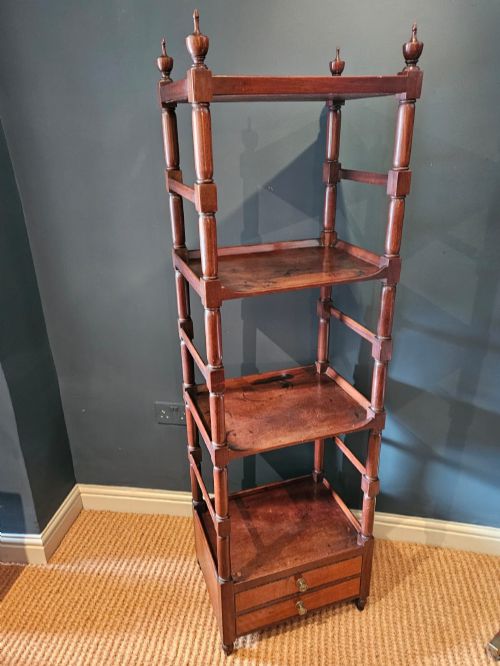
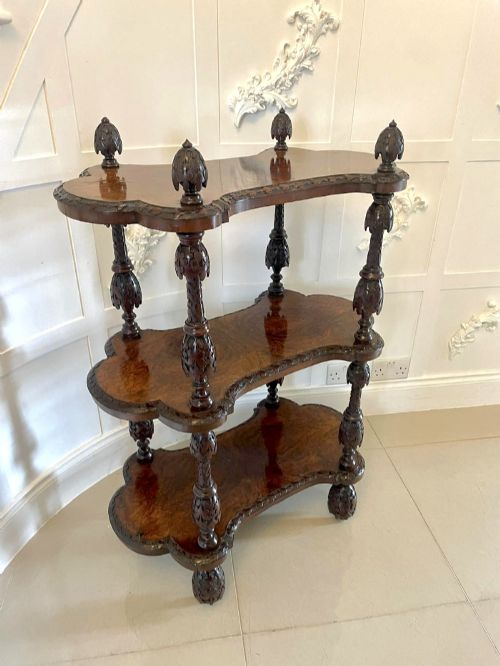
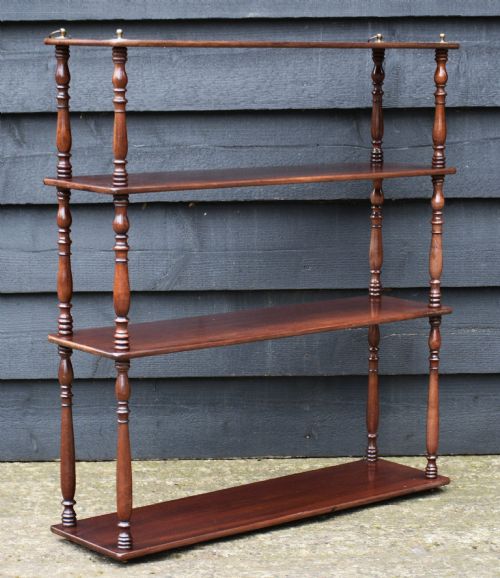
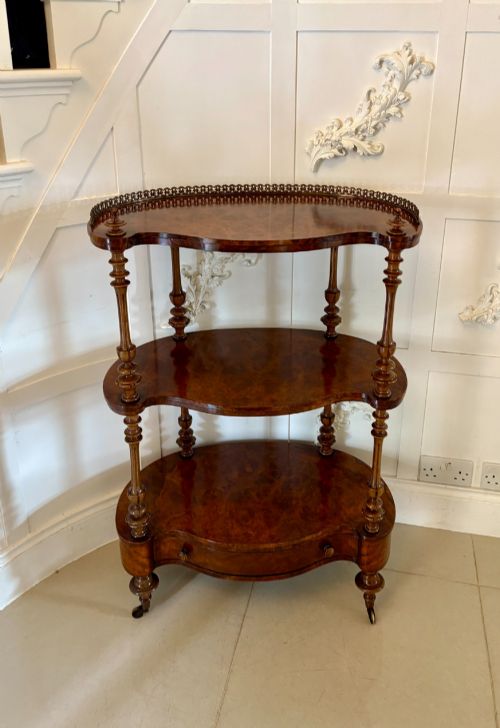
An open tier whatnot provides tiered display space for books and ornaments, bringing multi-level elegance to a room.
Open Tier Whatnot
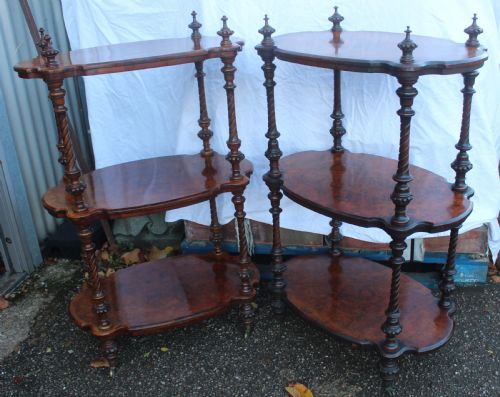
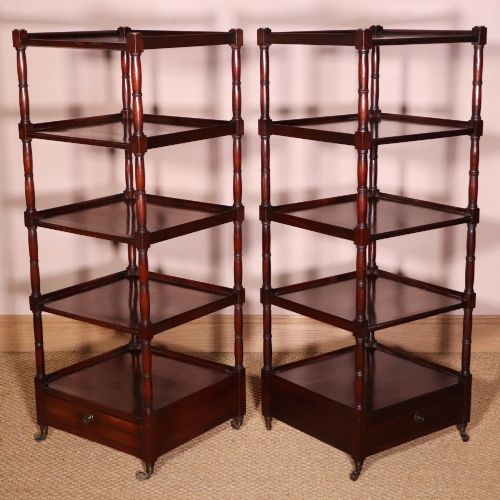
When you search for an open tier whatnot, you are looking at multi-shelved display furniture that emerged in Georgian, Regency, and Victorian periods. These pieces serve to hold books, display ceramics, and organise smaller domestic items across ascending horizontal planes.
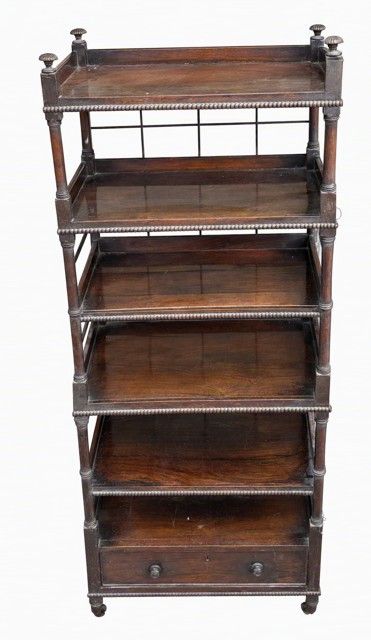
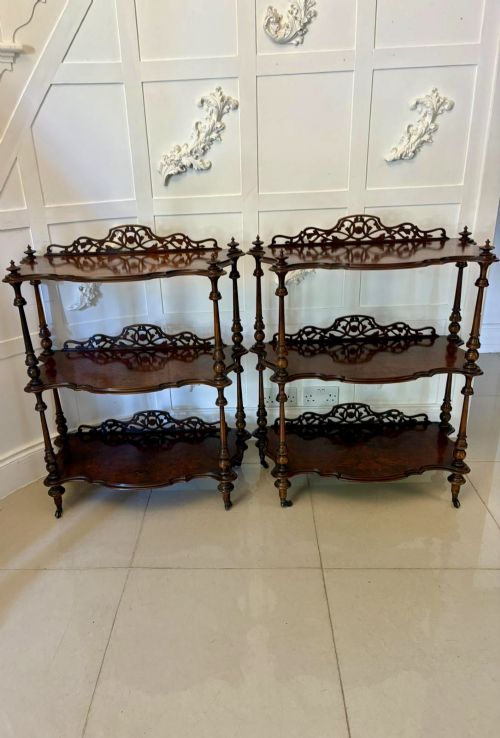
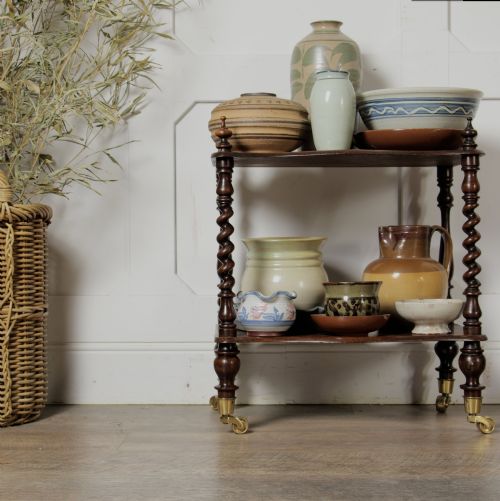
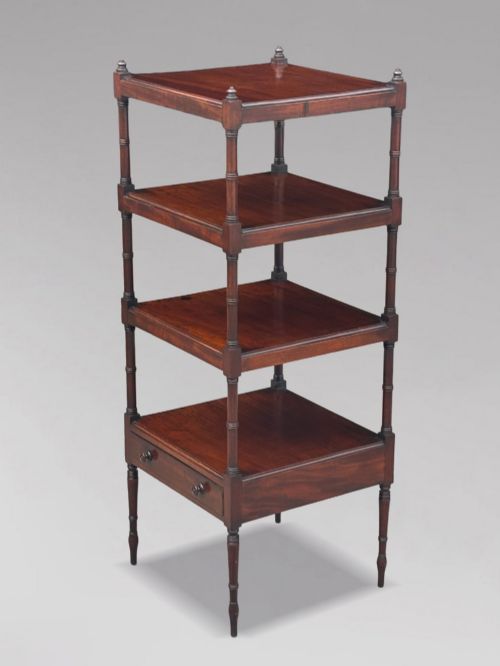
You are most likely to meet mahogany, rosewood, and walnut examples featuring three to six tiers supported by columns or turned uprights. Some incorporate lower drawers, brass galleries, or mirror backs, whilst corner variants utilise tight domestic spaces.
Origins span standard English cabinet-making traditions alongside Anglo-Indian colonial workshops and Irish workshops. Forms range from freestanding serpentine units to wall-hanging shelves and music stands.
Distinctions in Execution
The distinction between standard utility items and exceptional pieces lies in the choice of timber figure and the crispness of turning. Figured veneers and carefully matched grain elevate the visual coherence of multiple tiers.
Structural refinement shows in the delicacy of upright supports and the integration of functional elements like drawers and brass galleries. Finer examples display meticulous joinery where shelves meet supports, maintaining rigidity without heavy brackets.
Open Tier Whatnot Retail Price Guide 2026
Typical asking prices for open tier whatnot among the pieces listed under this phrase on Sellingantiques today, from the lower quarter to the upper quarter. They describe what is for sale here now, not the wider market.
Early cabinet-makers built sturdy maritime variants from teak to withstand life at sea without losing a single book.
Gillows
The Open Tier Whatnot Glossary
- Whatnot
- A piece of furniture consisting of a set of open shelves for displaying ornaments or books. It developed in the late 18th century and remained popular through the Victorian era.
- Étagère
- A piece of furniture with a series of open shelves for displaying small objects. The term is often used interchangeably with whatnot.
- Brass gallery
- A low metal rail fitted around the edge of a shelf. This prevents objects from sliding off upper tiers.
- Barley twist
- A type of column or support carved in a spiral shape resembling a twisted barley sugar. It appears frequently on Victorian stands and supports.
- Serpentine
- A curved shape curving inward centrally and outward at the ends. This contour adds fluidity to the front edges of shelves and cabinets.
Open Tier Whatnot: Frequently Asked Questions
What is an open tier whatnot used for?
These units function primarily to display decorative objects, porcelain, and books in sitting rooms or parlours. Multiple tiers allow items to be arranged by height and visual weight.
They also serve specific domestic roles, such as music stands or bedside shelving, depending on their height and whether they include enclosed drawer space.
How do I identify a Regency whatnot?
Regency examples typically feature rich rosewood or mahogany timbers with clean architectural lines, often incorporating slender turned columns. Brass galleries and delicate uprights are common characteristics of this period.
Proportions tend to be balanced and restrained, pre-dating the heavier carvings and burr walnut veneers associated with later Victorian production.
What distinguishes Victorian whatnots?
Victorian pieces frequently utilise walnut and burr walnut timbers, displaying highly figured grain patterns across the shelves. Turnings often include barley twist supports and elaborate fretwork galleries.
They also encompass varied forms, from serpentine shapes to corner units and versions incorporating mirrors or lower drawers for storage.
Where should I place a corner whatnot?
Corner variants fit neatly into unused room angles, maximising floor space while offering vertical display areas. They work effectively in smaller rooms where a freestanding rectangular unit might obstruct movement.
Position them away from direct heat sources to protect the polished wood finishes and delicate veneers from drying out.