
Open Shelf Bookcase Cabinet
An open shelf bookcase cabinet brings together open display space and enclosed storage, offering a practical anchor for a room.
Open Shelf Bookcase Cabinet
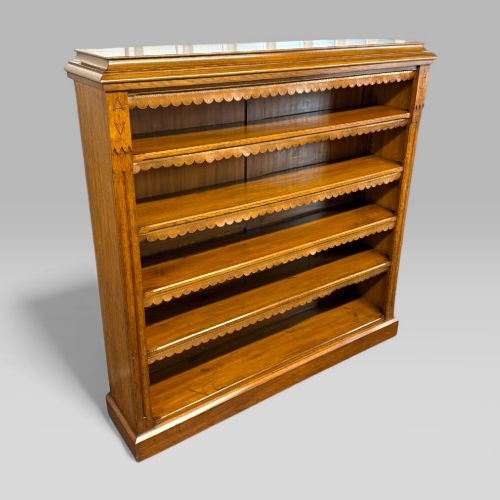
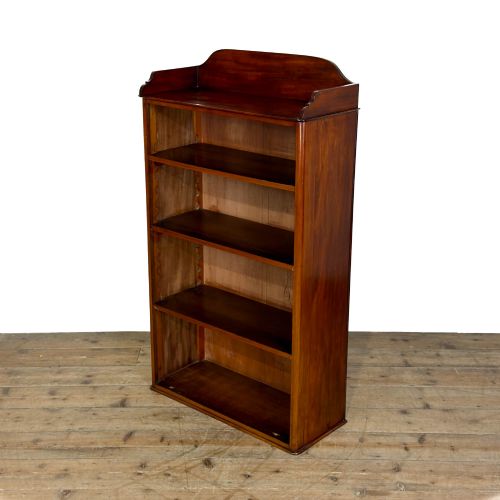
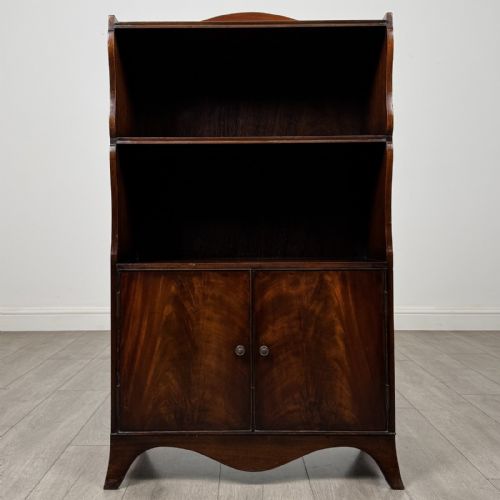
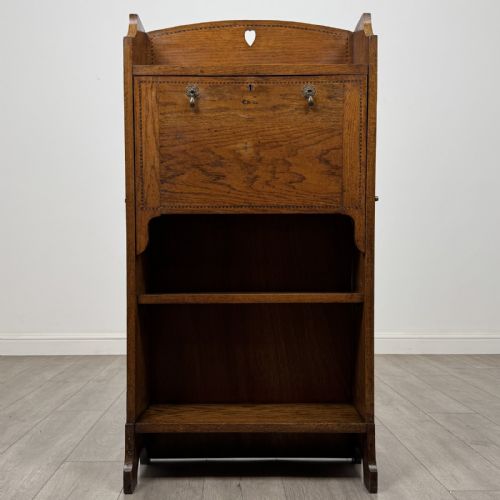
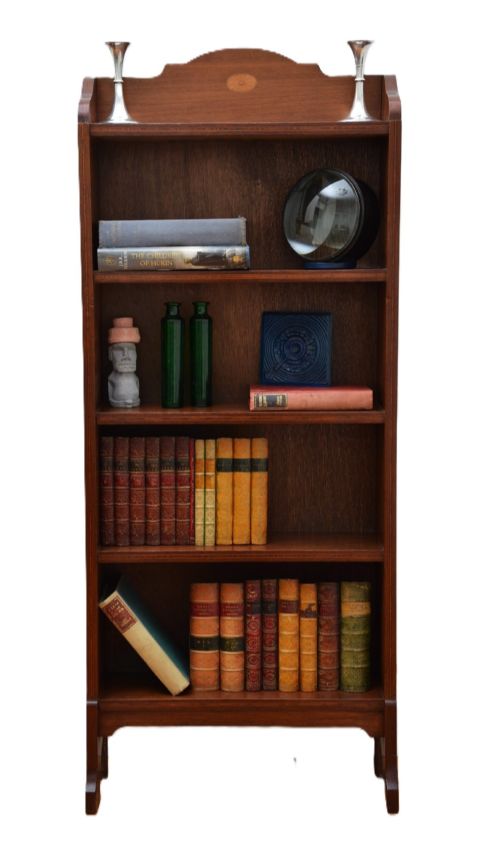
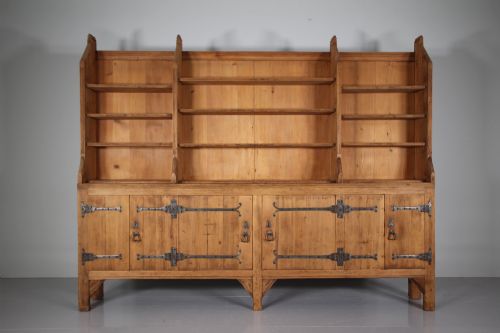
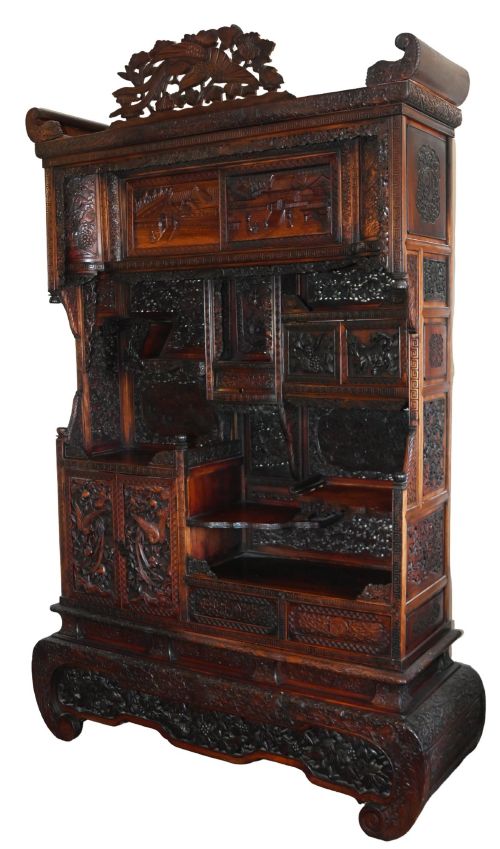
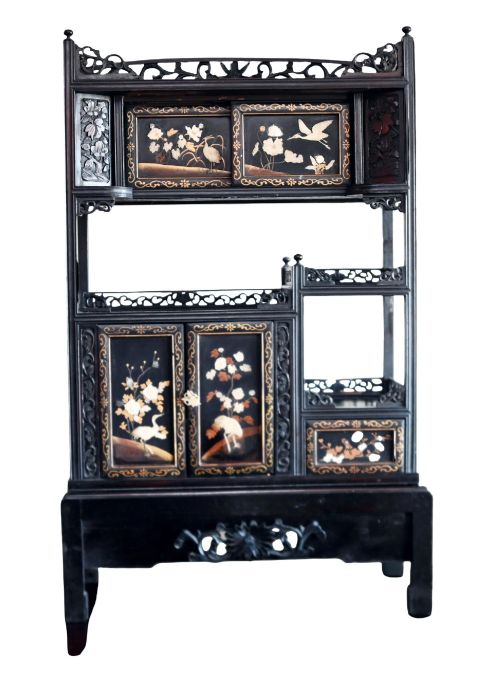
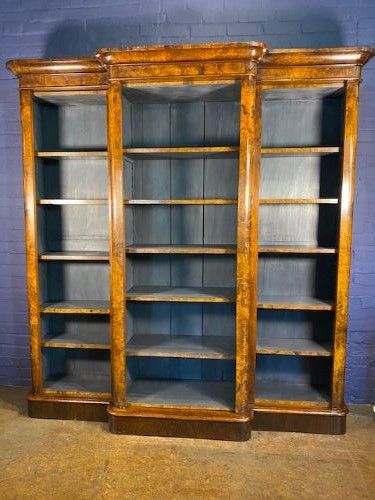
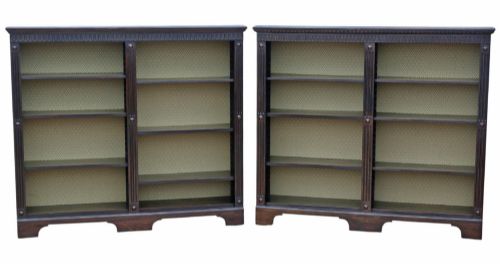
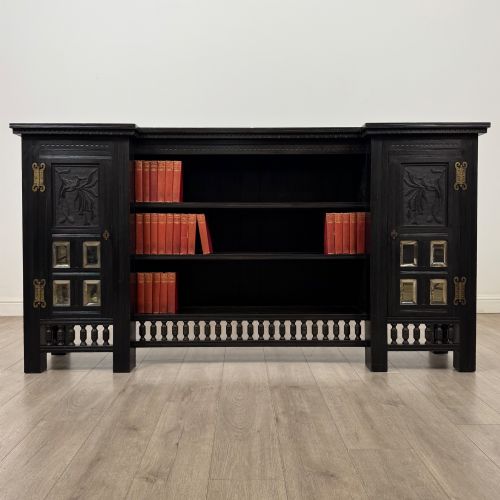
An open shelf bookcase cabinet combines accessible upper shelving with lower enclosed cupboards, drawers, or bureau sections. When searching for an open shelf bookcase cabinet, buyers encounter pieces spanning the nineteenth and twentieth centuries, including Victorian, Edwardian, and Art Deco iterations.
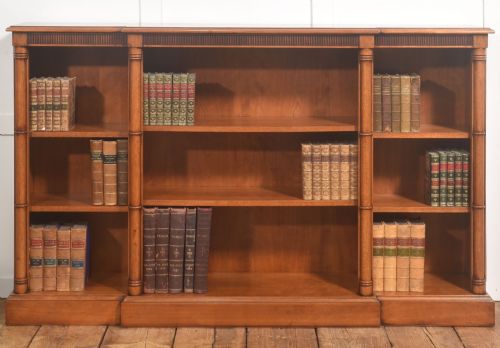
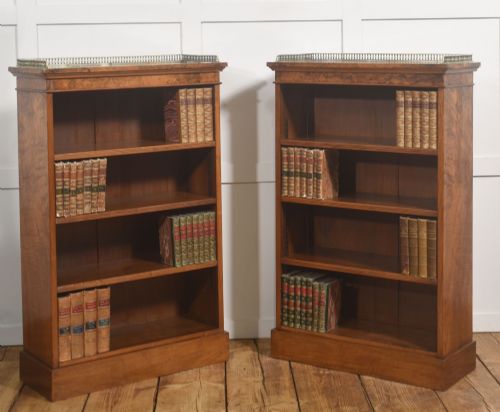
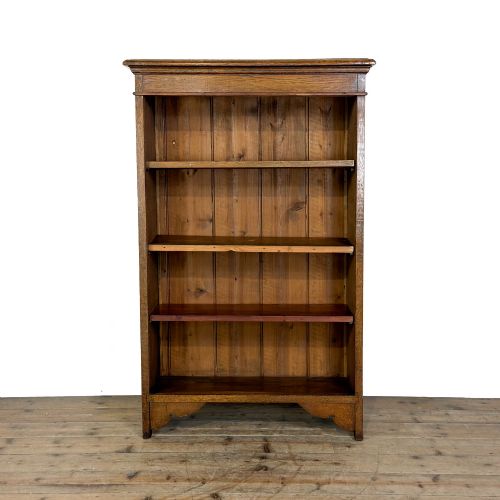
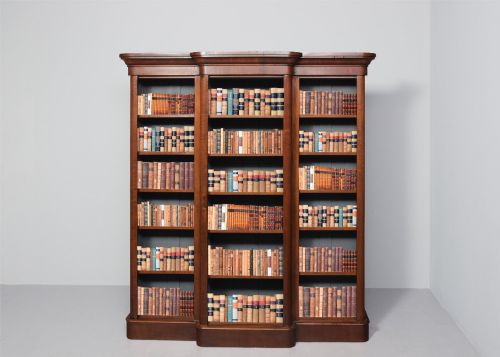
The form appears in various configurations, from slim mahogany designs to large breakfront oak versions. Many examples incorporate adjustable shelves, raised galleries, or brass castors, reflecting both domestic utility and stylistic ambition across different periods.
How they were made
Cabinet makers built these pieces primarily using timbers such as oak, mahogany, walnut, and pine, frequently selecting burr walnut or flame mahogany veneers for decorative effect. Structural components often incorporated brass hardware, glass panels, and inlaid details.
Joinery techniques varied according to the period, utilising solid timber construction alongside veneered panels, carved edgings, and beaded details. Workshops integrated functional elements like adjustable shelving racks and brass castors into the overall design.
Styles represented across the inventory include Victorian, Edwardian, Art Deco, Jacobean Revival, and Arts and Crafts.
What varies in quality
Quality rests upon the selection of timber and the precision of the cabinet work, distinguishing simpler utilitarian pieces from ambitious workshop productions. The choice of figured veneers, such as burr walnut or flame mahogany, elevates a piece alongside refined inlay work and carved details.
Construction integrity defines the upper tier, seen in the smooth operation of adjustable shelving, tightly fitted drawer joints, and robust backboards. The integration of auxiliary materials, including brass castors and mother of pearl accents, further separates standard examples from distinguished ones.
Bowman Brothers, London·Gabriel Viardot·Johnstone and Jeanes·Heals
The Open Shelf Bookcase Cabinet Glossary
- Breakfront
- A piece of furniture whose central section projects forward from the flanking sections. This configuration creates visual depth in larger bookcases.
- Waterfall bookcase
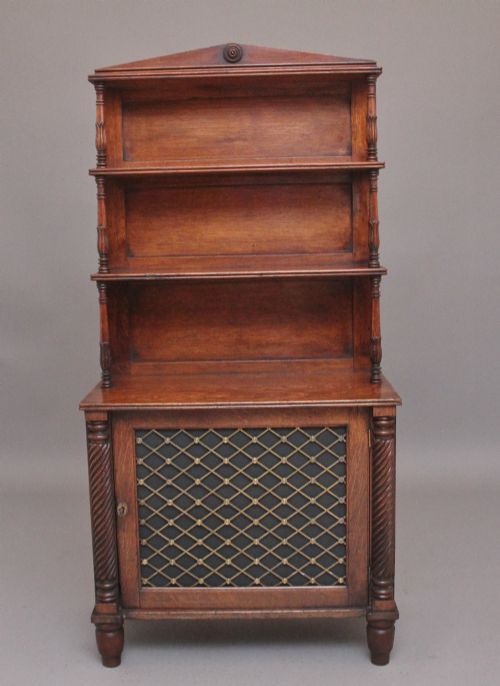
- A tiered shelving unit where each successive shelf is deeper than the one above it. This design originates in the nineteenth century for compact display.
- Gallery
- A raised decorative border along the top edge of a cabinet or bookcase. It prevents items placed on top from sliding off.
- Ebonised
- Wood finished to resemble ebony through staining or painting. This treatment appears frequently on nineteenth-century and Aesthetic Movement pieces.
- Ormolu
- Gilt bronze mounts applied to furniture for decorative enrichment. It is found on select walnut and mahogany pieces from the nineteenth century.
Open Shelf Bookcase Cabinet: Frequently Asked Questions
What is an open shelf bookcase cabinet?
It is a hybrid furniture form featuring open display shelves alongside enclosed cupboard doors, drawers, or a bureau drop-front.
This combination allows for both the exhibition of books or decorative objects and the concealed storage of household items.
How do I date an open shelf bookcase cabinet?
Dating relies on identifying timber choices, construction methods, and stylistic indicators such as Victorian carved oak or Edwardian inlaid mahogany.
Hardware details like brass castors and the presence of adjustable shelf mechanisms also offer clues to the era of manufacture.
Where were these cabinets used?
They served primarily in studies, libraries, and parlours to organise family book collections and display ornaments.
Smaller variations functioned effectively in bedrooms or drawing rooms for lighter storage and daily reading materials.
How do I style an open shelf bookcase cabinet?
Balance the open shelves with a mix of upright books, decorative objects, and framed pieces to avoid visual clutter.
Utilise the lower enclosed storage to keep less frequently accessed items out of sight while maintaining a tidy room appearance.