
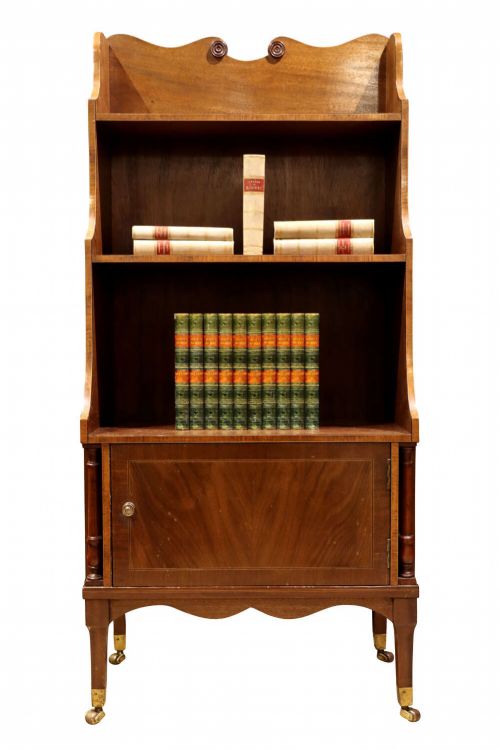


Open Mahogany Book Cabinet
An open mahogany book cabinet brings warmth and practical display to a room, offering accessible shelving in rich timber.
Open Mahogany Book Cabinet
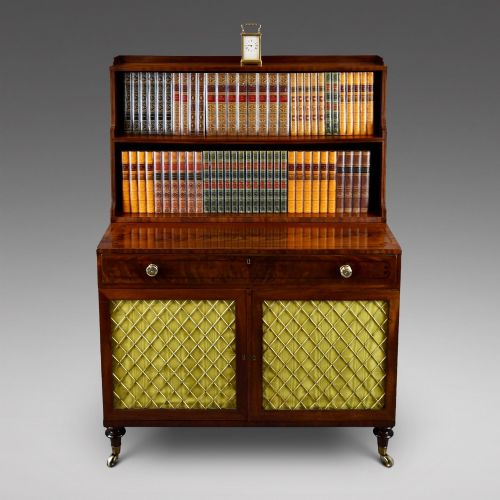
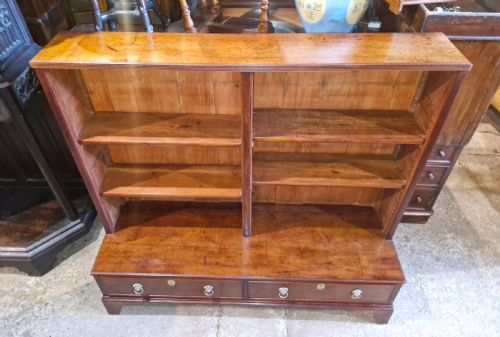
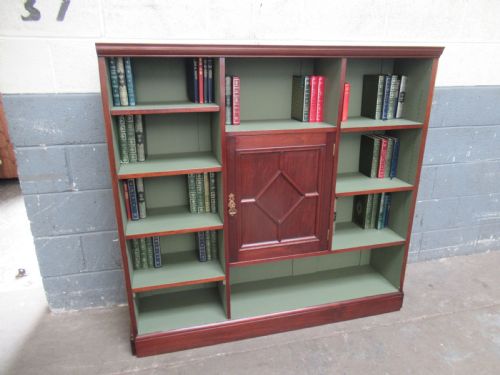
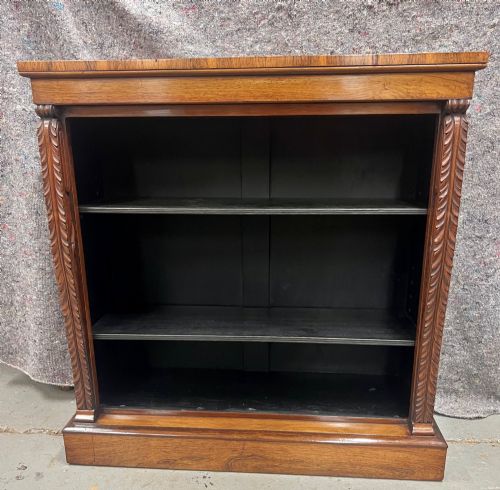
An open mahogany book cabinet provides versatile storage for libraries and living spaces, combining exposed shelving with occasional lower cupboards or drawers. You will frequently encounter Regency and Victorian examples on this page, alongside Edwardian and Georgian interpretations.
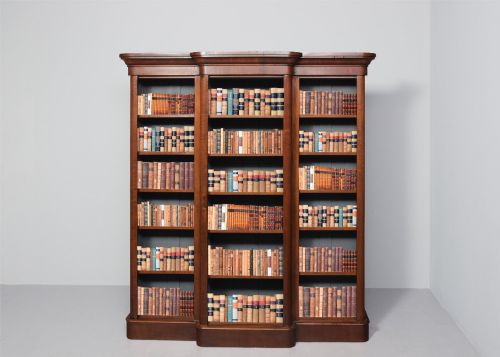
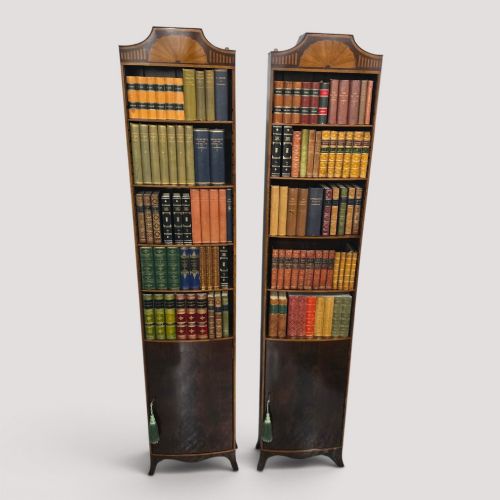
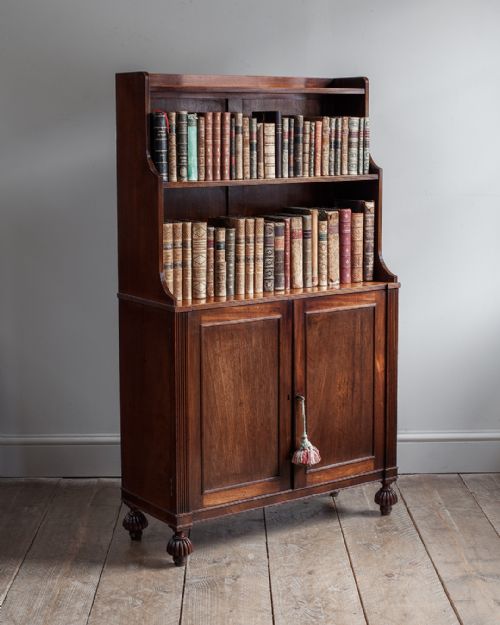
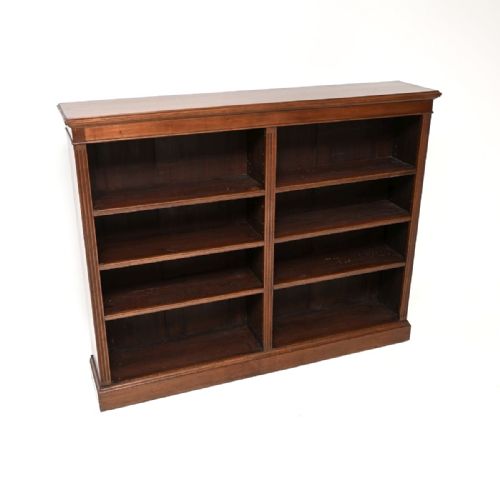
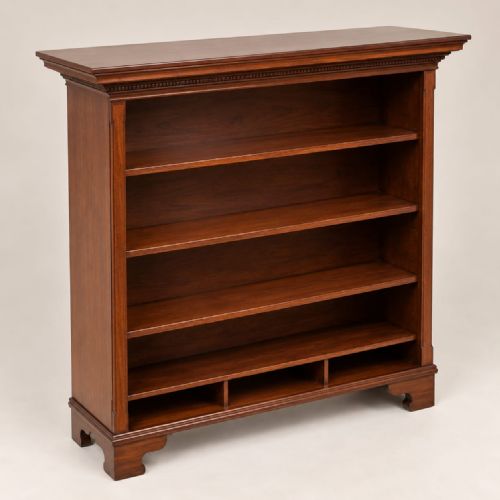
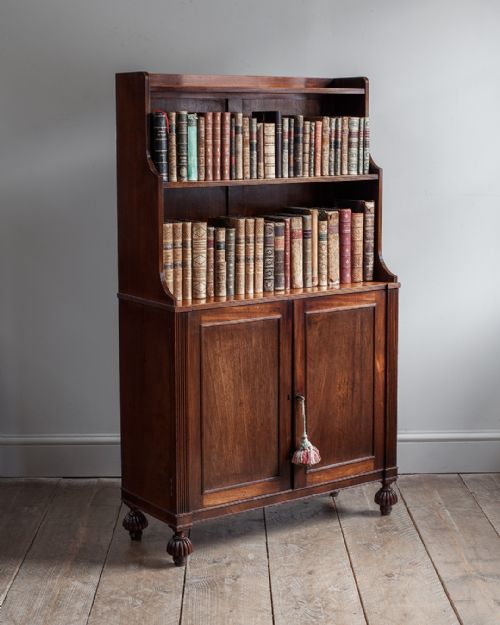
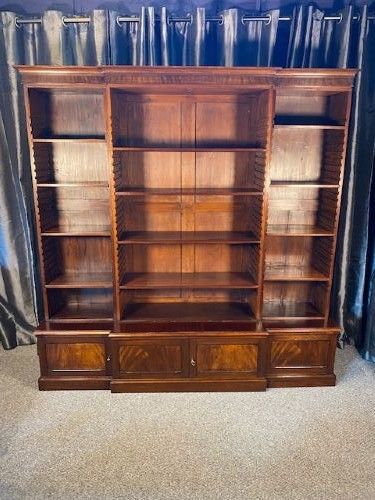
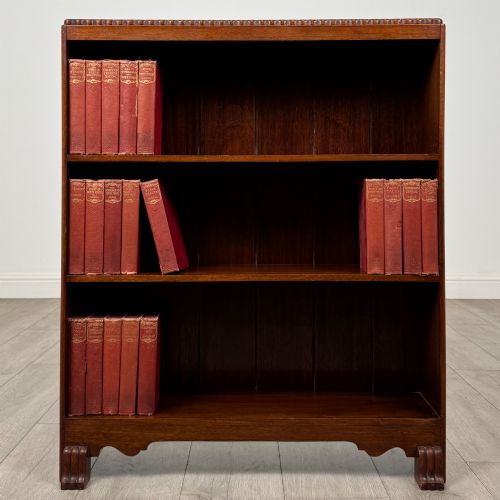
The forms range from compact waterfall bookcases and dwarf proportions to large breakfront library pieces and narrow freestanding units. Many feature adjustable wooden shelving supported by timber racks, and some examples incorporate brass castors or enclosed lower storage sections.
Materials and Construction
Cabinet makers utilised solid mahogany, Spanish mahogany, and flame mahogany veneer applied over secondary woods such as pine. Individual pieces often demonstrate fine figural grain patterns across the primary display surfaces and drawer fronts.
Structural hardware typically includes brass castors, ormolu mounts, and occasionally leather edges applied to the shelves. Joinery methods reflect the periods of manufacture, spanning Georgian cabinet work through to Arts and Crafts production.
Several bookcases feature leather-edged shelves, offering a soft landing for prized volumes and busy readers.
Judging Quality and Distinction
The distinction between standard pieces and the finest examples rests on timber selection and decorative restraint. Pieces utilising heavily figured flame mahogany or dense Spanish mahogany command greater attention from collectors.
Refinement shows in secondary details such as inlaid stringing, ormolu mounts, well-executed brass castors, and proportioned architectural cornices. The integration of functional elements like smooth adjustable shelving also elevates the standing of a cabinet.
Shapland & Petter·Holland & Sons·Whytock & Reid
The Open Mahogany Book Cabinet Glossary
- Waterfall bookcase
- A tiered shelving unit where each successive shelf steps back from the one below, creating a cascade profile. These pieces date predominantly from the Regency and Victorian periods.
- Breakfront
- A cabinet design where the central section projects forward from the flanking wings. This configuration adds architectural depth to larger library bookcases.
- Flame mahogany
- A veneer cut from the fork of the mahogany tree, producing a distinctive flickering, flame-like grain pattern. Cabinet makers reserved this timber for prominent facades and doors.
- Dwarf bookcase
- A low-standing open bookcase designed to sit beneath dado height. These items often feature adjustable shelving and compact proportions suitable for smaller rooms.
Open Mahogany Book Cabinet: Frequently Asked Questions
What periods do these bookcases span?
The pieces on this page primarily date from the Georgian, Regency, William IV, Victorian, and Edwardian eras. You will also find items attributed to the early twentieth century and Arts and Crafts movement.
Each period imparts distinct proportions and decorative details, ranging from neoclassical Regency lines to heavier Victorian library proportions.
Are the shelves adjustable?
Many of the larger library bookcases and open cabinets feature adjustable shelving systems supported by wooden ratchets or brass shelf studs. This allowed owners to accommodate volumes of varying heights.
Smaller pieces, particularly waterfall bookcases and certain dwarf cabinets, often feature fixed shelves integrated directly into the vertical partitions.
How were lower cupboards used?
Some open bookcases incorporate enclosed lower compartments fitted with wooden panelled doors or built-in cupboards. These sections provided dust-free storage for periodicals, ledgers, or fragile items that required protection.
In many examples, the lower cabinet aligns with the breakfront projection, adding visual weight and stability to the base of the furniture.
Where should I place an open book cabinet?
These cabinets suit studies, drawing rooms, and libraries where easy access to books and displayed objects is desired. Freestanding and dwarf models fit comfortably against plain walls or beneath windows.
Because the shelves are entirely open, placement away from direct heat sources and strong sunlight helps protect the mahogany timber and any veneered surfaces.