

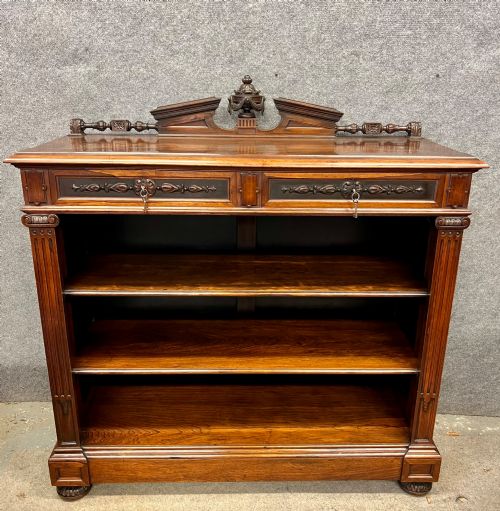


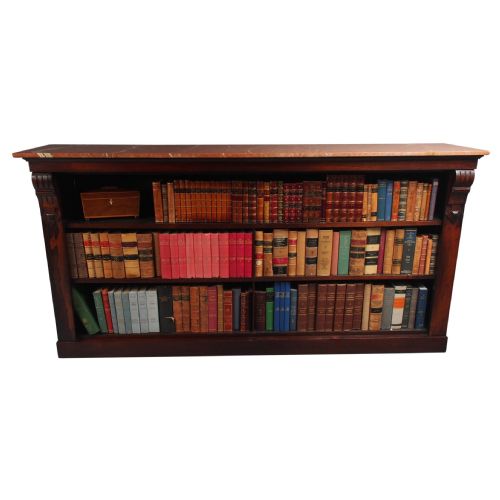


Open Low Credenza Bookshelf
An open low credenza bookshelf offers accessible display and storage, bringing timeless character and practical utility into a room.
Open Low Credenza Bookshelf
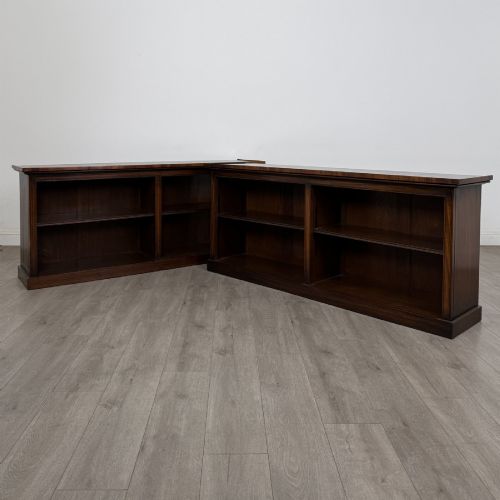
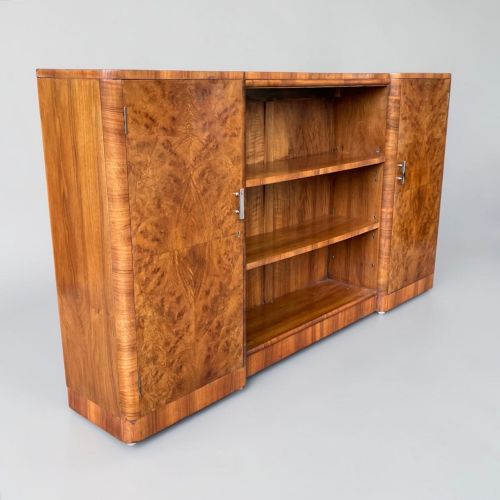
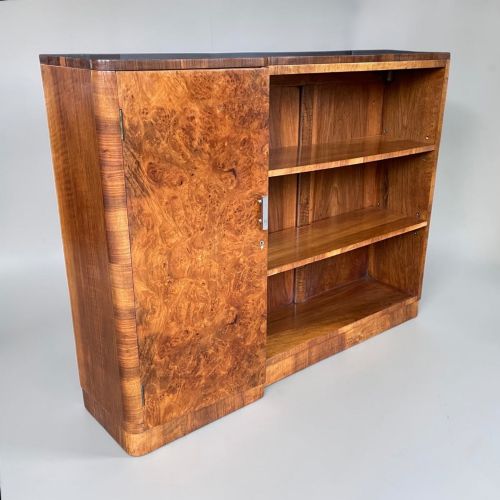
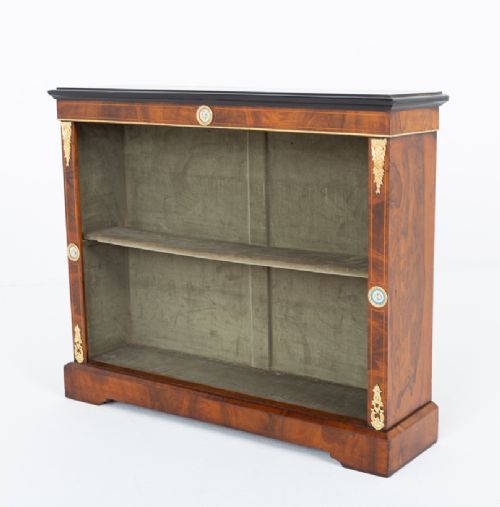
When you search for an open low credenza bookshelf, you are looking for low-profile storage units designed to hold books and display objects without obstructing sightlines in a room. The pieces on this page span the 1800s, Regency, Victorian, William IV, and 1930s Art Deco periods, encompassing forms identified as bookcases and side cabinets.
The versions you are most likely to encounter here are low wooden carcases, often configured with open shelving flanked by or integrated into cabinet spaces. They originate across the nineteenth and twentieth centuries, appearing in styles ranging from formal Regency and Victorian designs to geometric Art Deco pieces.
These low bookcases function effectively beneath windows or against panelled walls, providing accessible surfaces for decorative items alongside ample linear shelf space. Their low stature distinguishes them from towering libraries, making them suited to modern domestic proportions while retaining period craftsmanship.
Materials and construction methods
Cabinet makers utilised dense hardwoods such as mahogany, rosewood, and burr walnut as the primary structural foundations for these low bookcases. Finer timbers were often applied as veneers over stable secondary woods to create decorative grain patterns across the front facades.
Metal mounts and decorative details appear in brass and ormolu, while specific pieces incorporate contrasting inlays or pink marble tops. Some designs also feature leather elements, demonstrating the varied specialist trades employed in their creation.
Open Low Credenza Bookshelf Retail Price Guide 2026
Typical asking prices for open low credenza bookshelf among the pieces listed under this phrase on Sellingantiques today, from the lower quarter to the upper quarter. They describe what is for sale here now, not the wider market.
One Regency rosewood piece includes leather dummy books, offering the visual appearance of a packed shelf without the reading material.
Judging the quality of construction
Quality in these low bookcases rests upon the selection of timber figures and the precision of surface embellishments such as brass inlay and ormolu mounts. Superior examples display seamless veneer matching and careful integration of decorative metals that complement the underlying wood grain.
The refinement of the joinery and the proportional balance between open shelving and enclosed cabinetry distinguish finer workshop output from standard production. Details such as parcel gilding or carved architectural elements reflect the higher tier of period craftsmanship.
The Open Low Credenza Bookshelf Glossary
- Credenza
- A low cabinet or sideboard traditionally used for serving or display. On this page, the term describes low storage units positioned beneath eye level.
- Burr Walnut
- A prized timber harvested from the tree's root growth, displaying swirling, irregular grain patterns. Cabinet makers prized it for creating decorative veneered surfaces on fine furniture.
- Ormolu
- Gilded bronze ornamentation applied to furniture. Makers cast and finished these metal mounts to accent the corners and friezes of prominent pieces.
- Parcel Gilt
- Partially gilded woodwork where specific carved details or mouldings receive a gold leaf finish. This technique highlights particular decorative motifs against the dark background of woods like rosewood.
Open Low Credenza Bookshelf: Frequently Asked Questions
What is an open low credenza bookshelf used for?
These pieces serve as functional storage for book collections while providing a flat top surface for lamps, clocks, or decorative objects. Their low stature allows them to sit beneath windows or art without dominating a room.
They also function as side cabinets in living spaces and dining rooms, bridging the gap between library shelving and display furniture.
How do I date a low bookcase?
Dating relies on identifying stylistic markers, timber choices, and construction techniques associated with specific eras like the Regency or Victorian periods. For instance, brass inlay and waterfall designs often point to early nineteenth-century work.
Later pieces from the 1930s exhibit Art Deco geometric lines that contrast sharply with the heavier carvings of the mid-nineteenth century.
Are these bookcases suitable for modern homes?
Their modest height aligns well with contemporary ceiling heights and open-plan layouts, avoiding the visual heaviness of tall floor-to-ceiling shelving units. They integrate smoothly into various interior schemes.
The mix of woods like mahogany, walnut, and rosewood provides natural warmth and texture that complements both traditional and modern decor.