





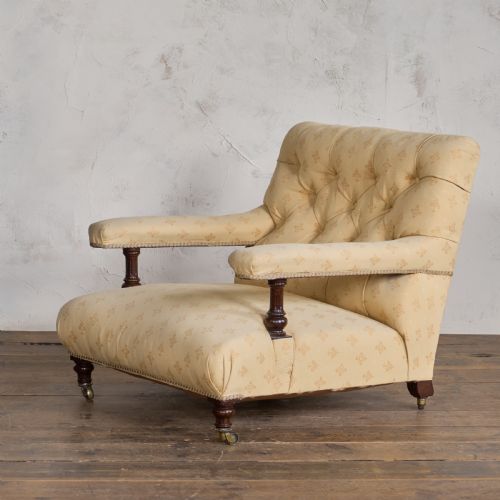
Open Arm Easy Chairs
These open arm easy chairs offer deep comfort and sturdy frames, bringing period character and practical seating to any room.
Open Arm Easy Chairs
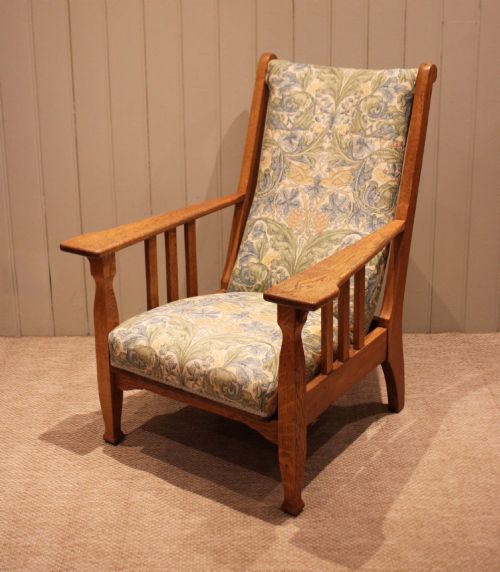
Open arm easy chairs are substantial seats designed for relaxation, featuring exposed wooden arms and upholstered components that appear across various nineteenth-century periods and revival styles.
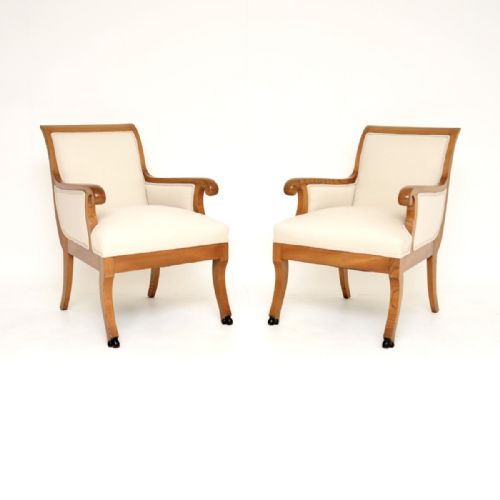
A buyer searching for open arm easy chairs will most frequently encounter nineteenth-century examples and Victorian pieces, alongside specific regional interpretations such as Swedish Neoclassical and French designs.
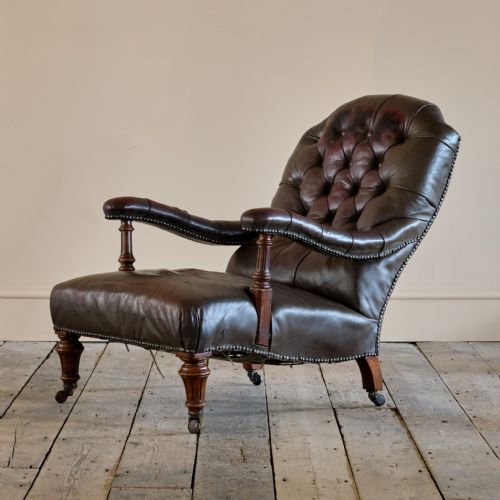
The selection ranges from compact linen-covered models to large walnut and mahogany armchairs bearing the distinct lines of the Howard style or Jacobean revival.
Materials and construction
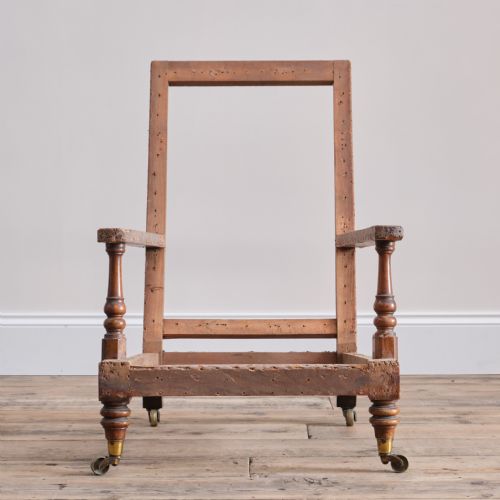
Makers built the structural frames of these armchairs using dense timbers such as walnut, mahogany, elm, oak, and occasionally brass details for stability and decoration.
Upholstery techniques combined traditional stuffing with fabrics including velvet, leather, linen, and gold textiles, often secured over robust wooden arm frameworks.
Open Arm Easy Chairs Retail Price Guide 2026
Typical asking prices for open arm easy chairs among the pieces listed under this phrase on Sellingantiques today, from the lower quarter to the upper quarter. They describe what is for sale here now, not the wider market.
The listings show nineteenth-century frames constructed from walnut, mahogany, elm, and oak, upholstered in leather, velvet, linen, and wool fabric.
Judging quality
Quality in these armchairs rests upon the integrity of the timber frame, the crispness of any hand-carved details like those seen in Jacobean designs, and the balance of proportions.
Finer examples demonstrate careful joinery and substantial frames in walnut or mahogany, whereas simpler pieces rely on straightforward elm or oak construction.
Howard and Sons
The Open Arm Easy Chairs Glossary
- Fauteuil
- An open-armed upholstered armchair originating in France, typically featuring an exposed wooden frame. These chairs combine formal elegance with comfortable seating.
- Howard Style
- A nineteenth-century seating design known for deep, sprung comfort and clean lines. Such chairs often carry maker attribution to Howard and Sons.
- Carolean
- A seventeenth-century design revival popular in later nineteenth-century furniture production. It is characterised by elaborate woodwork and carved walnut framing.
- Neoclassical
- A style drawing upon classical antiquity, seen here in Swedish elm armchairs with restrained ornamentation. This aesthetic favours symmetry and clean structural form.
Open Arm Easy Chairs: Frequently Asked Questions
Where should I place an open arm easy chair?
These armchairs suit studies, libraries, and living rooms where comfortable seating and period character are desired. Their exposed wooden arms and upholstery allow them to function as statement reading seats.
Position them away from direct heat sources to protect the wooden frames and fabric or leather upholstery from drying out over time.
How do I identify a Victorian open arm easy chair?
Victorian examples often feature dark hardwoods like walnut and mahogany, combined with buttoned or sprung upholstery. Look at the turnings and stretcher bars for clues to the mid-to-late nineteenth-century date.
Construction methods and timber choices align closely with the manufacturing standards typical of the Victorian era.
What is the difference between French and English styles?
French fauteuils often display carved oak or walnut frames with curved structural lines, whereas English counterparts from the nineteenth century frequently follow Howard or Victorian club chair proportions.
Regional differences appear mainly in the carving motifs, wood selection, and overall silhouette of the exposed arms.
How do I care for the upholstery on these chairs?
Regular gentle dusting preserves fabric, linen, and velvet surfaces, while leather requires suitable conditioning to maintain suppleness. Avoid placing antique seating in direct sunlight to prevent fading.
Professional cleaning is recommended for antique textiles to protect the underlying nineteenth-century stuffing and frame integrity.