


Opalescent Glass Pendant
An opalescent glass pendant catches ambient light and transforms a room with its shifting milky tones and subtle fire.
Opalescent Glass Pendant
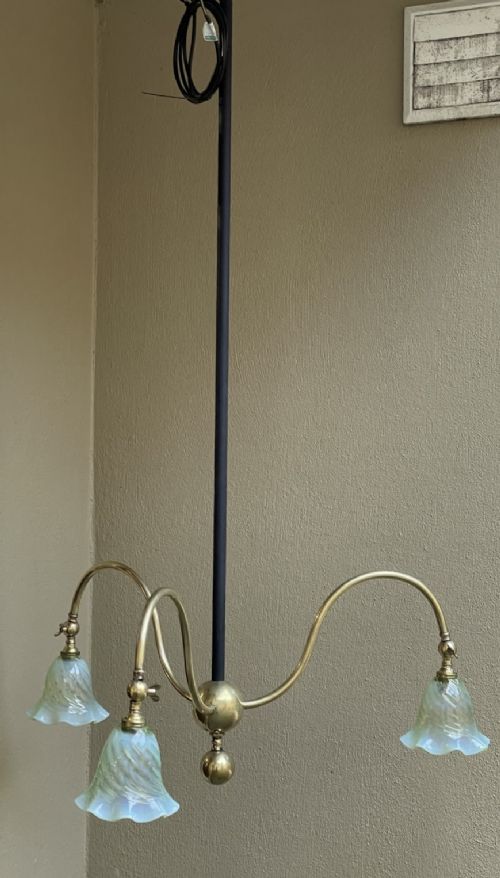
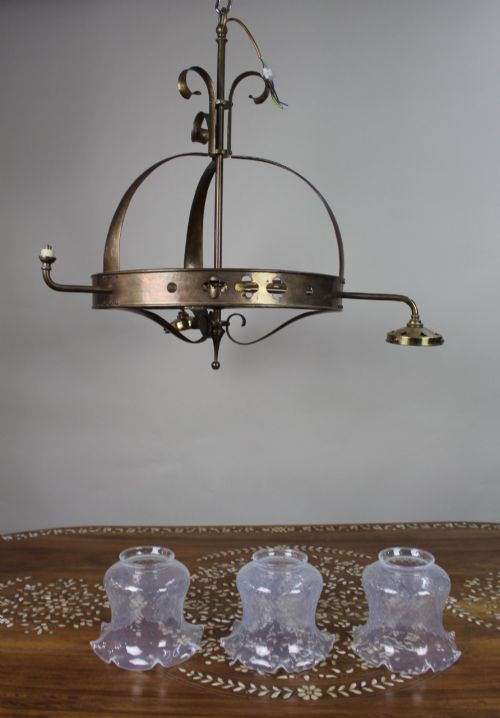
An opalescent glass pendant represents a hanging light fitting suspended from ceilings, centred upon distinctive milk-and-fire glass shades. These pieces surface across Victorian, Edwardian, and later twentieth-century eras, reflecting the tastes of the nineteenth century up to the nineteen-thirties. Buyers encounter various ceiling lights, pendant lampshades, and hanging lights designed for domestic and municipal spaces.
The prevailing examples on this page span the Art Nouveau, Arts and Crafts, Gothic Revival, and Art Deco styles. An opalescent glass pendant typically appears paired with metalwork fixtures, housing bulbs or gas elements inside bowls and shades. Pieces range from single pendant lampshades to substantial three-light ceiling fittings originating from British and continental workshops.
Materials and construction
The physical build of these pieces relies on combinations of opalescent glass, frosted glass, brass, copper, and patinated brass. Glassmakers manipulated minerals within the molten batch to achieve the characteristic milky opacity and iridescent surface shifts. Metalworkers shaped brass and copper into frames, galleries, and suspension arms to support the heavier glass bowls and shades.
Workshops utilised fabric cords alongside rigid metal rods and chains for hanging the fixtures from ceilings. The metal components often received patination or mechanical polishing to complement the translucent and reflective qualities of the glass shades.
Listings feature pieces from the Victorian, Edwardian, and Art Deco eras, constructed in brass, copper, and opalescent glass.
Distinctions in quality
The refinement of the glass melt largely dictates the quality of an opalescent glass pendant, separating sophisticated chromatic depth from flat, uniform opacity. Superior pieces display a complex play of light where milky whites bleed into amber or blue tones depending on the angle of illumination. Lesser examples show a duller surface without the inner fire characteristic of skilled nineteenth and twentieth-century glasshouse production.
Integration between the metal framework and the glass shade marks the difference between standard production and exceptional design. Master metalworkers shaped copper and brass brackets that gripped or suspended the glass securely while echoing the flowing lines of Art Nouveau or the structural honesty of the Arts and Crafts movement. Coarse mountings or ill-fitting metal collars diminish the visual harmony of the fixture.
The Opalescent Glass Pendant Glossary
- Opalescent glass
- Glass that exhibits a milky translucence with internal fire or colour shifts resembling natural opal. This material diffuses harsh light while adding a pearlescent glow to ceiling fixtures.
- Gasolier
- A multi-burner gas lighting fixture suspended from the ceiling. Many surviving examples were later converted to electricity.
- Rise and fall
- A mechanical pulley system utilising counterweights to allow the height of the pendant light to be adjusted by hand. This arrangement was popular in Edwardian interiors for shifting light levels over dining tables.
- Patinated brass
- Brass that has been chemically treated or aged to darken the surface tone. This finish reduces bright metallic glare and highlights chased details.
- Arts and Crafts
- A design movement prioritising traditional craftsmanship and honest materials over mass production. Pieces from this tradition often feature hand-hammered copper and robust brass mountings.
Opalescent Glass Pendant: Frequently Asked Questions
What is an opalescent glass pendant?
An opalescent glass pendant is a hanging ceiling light featuring a translucent, milky glass shade that diffuses illumination softly. These fixtures date from the nineteenth and twentieth centuries and include bowls, shades, and multi-light configurations.
They combine glassmaking traditions with metal suspension hardware, frequently associated with movements such as Art Nouveau and Arts and Crafts.
How were these pendant lights used?
These fixtures served as primary illumination sources in domestic rooms, hallways, and public buildings like town halls. Their design allowed them to cast a warm, diffused glow downwards while adding decorative presence to the ceiling plane.
Many utilised adjustable cords or rise and fall mechanisms to alter the height of the light source according to room requirements.
How do I identify Art Nouveau styles?
Art Nouveau lighting is characterised by organic, flowing lines inspired by natural forms like plant stems and tendrils. The metalwork on these pendants often curves symmetrically around the glass shades.
Makers working in this style avoided rigid geometric shapes in favour of sinuous brass and patinated metal frames.
How do I distinguish Arts and Crafts pieces?
Arts and Crafts pendants emphasise visible construction methods and hand-worked materials such as copper and brass. The metal components often display subtle hammer marks or straightforward structural joins.
These designs prioritize utility and material honesty over ornate surface decoration.
How do I live with antique pendant lights?
Living with these vintage fixtures involves pairing them with compatible low-wattage or warm LED bulbs to replicate historic light levels safely. Professional installation is recommended to ensure secure ceiling anchoring and proper wiring compatibility.
Regular, gentle dusting preserves the patinated metal surfaces and keeps the glass shades clear.