
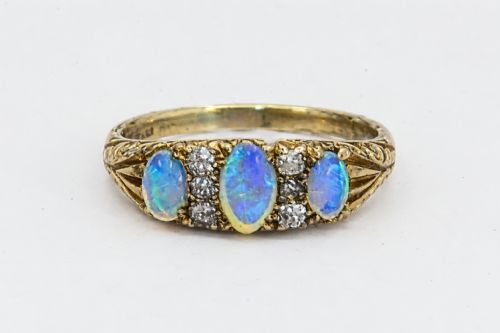
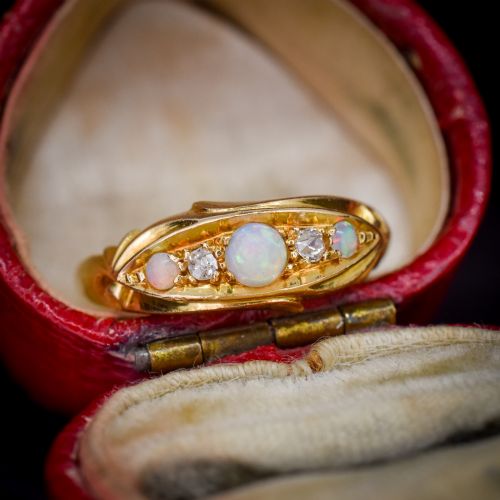
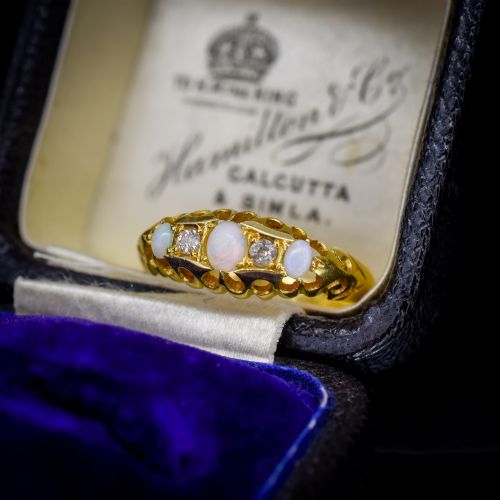
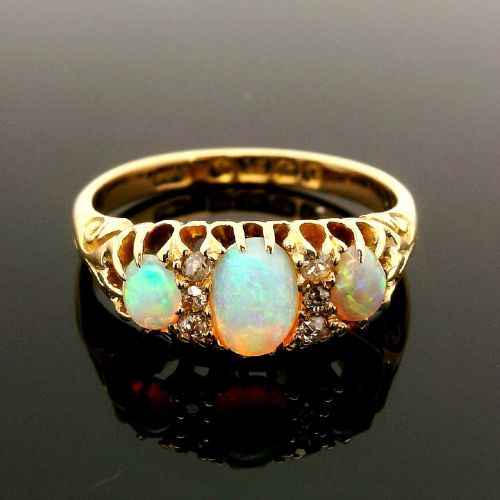




Opal Diamond Dress Ring
An opal diamond dress ring sets iridescent play-of-colour against bright stones, bringing Victorian, Edwardian and vintage character directly to the hand.
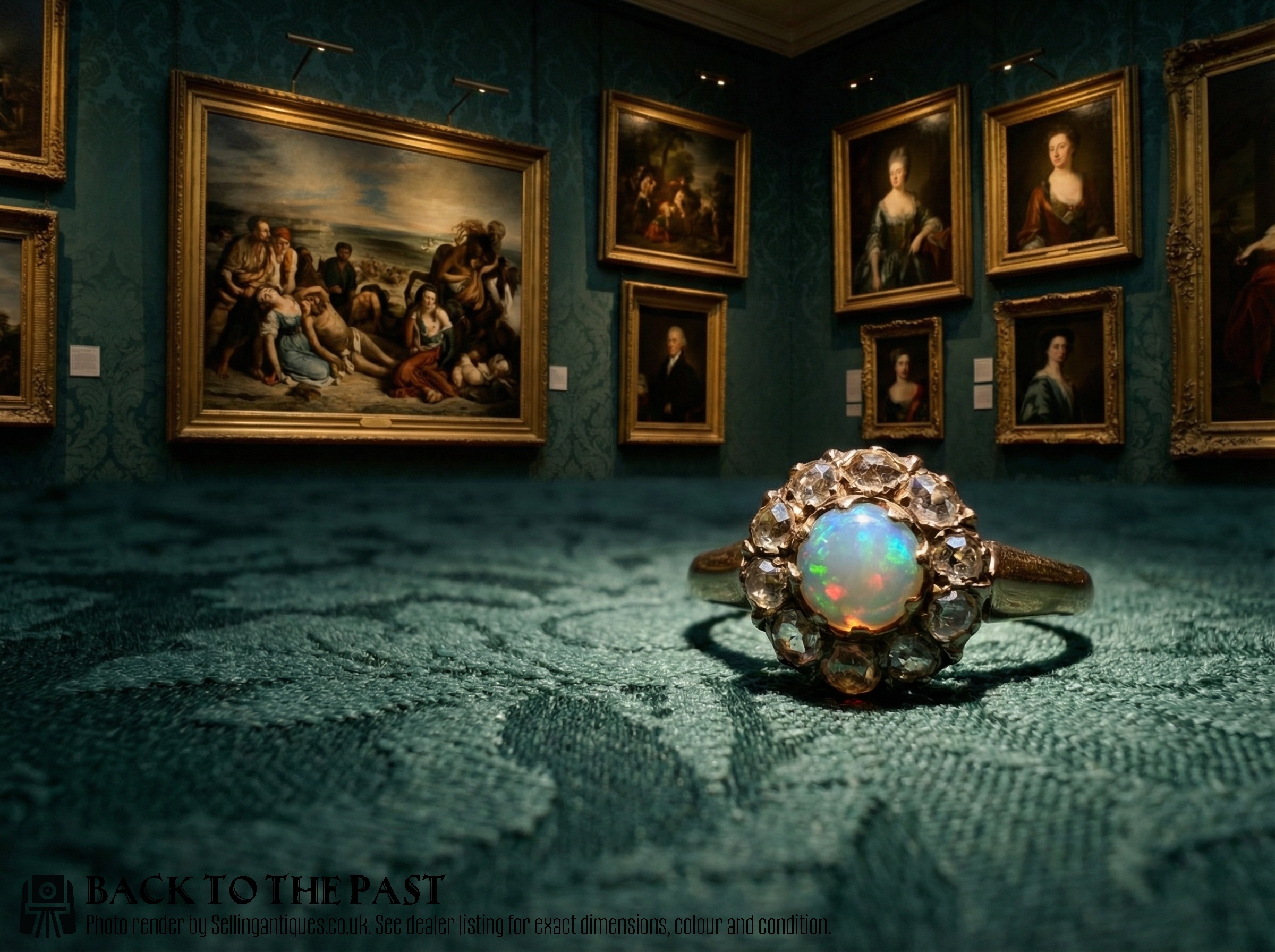
Opal Diamond Dress Ring
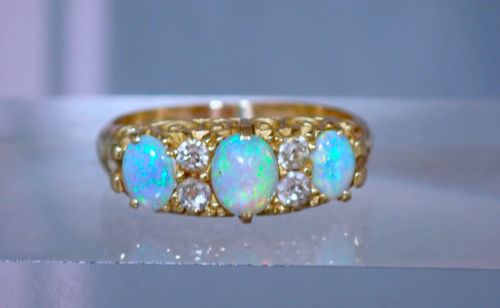
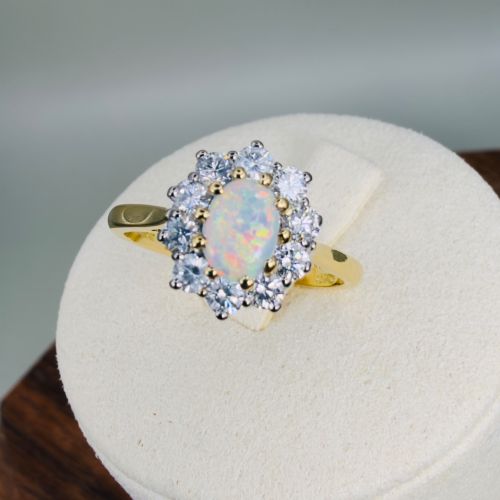
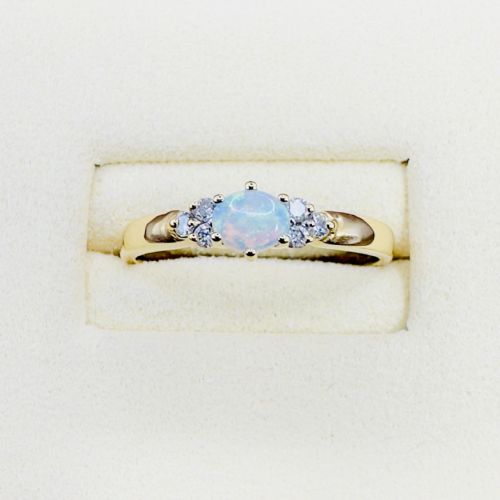
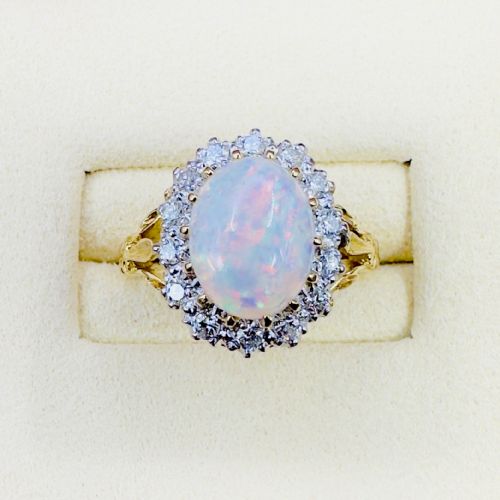
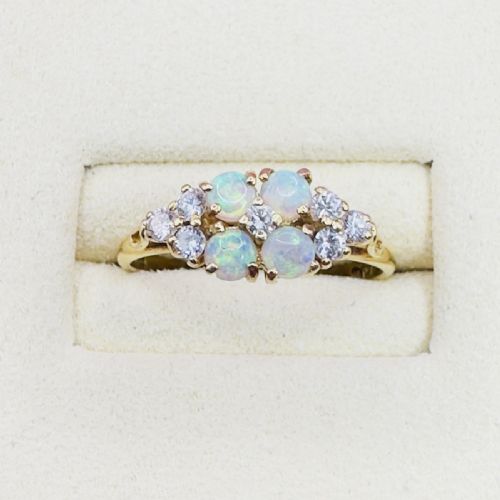
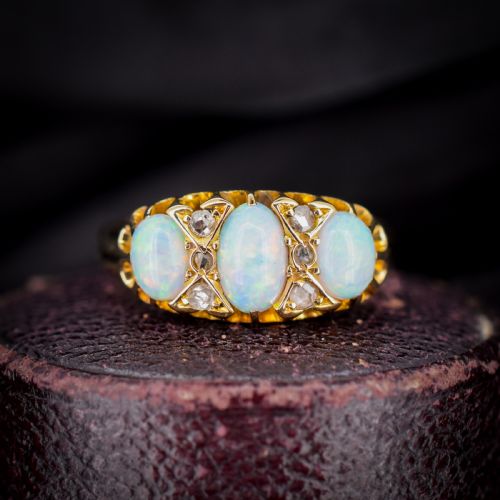
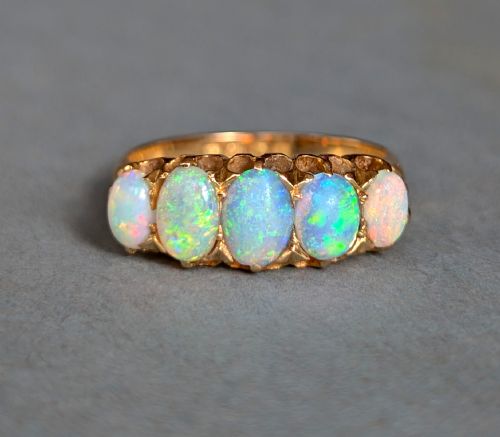
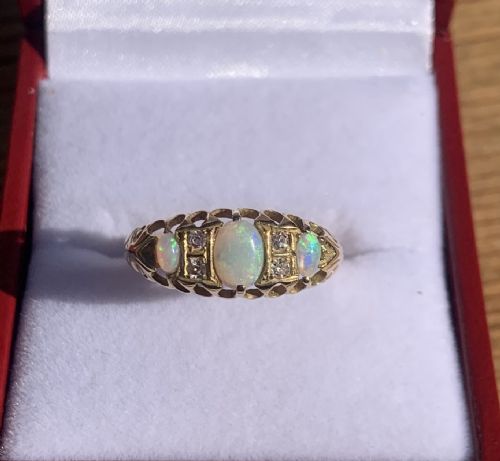
An opal diamond dress ring combines the shifting fires of natural opals with the clean sparkle of diamonds in settings designed to catch the light from every angle. When you search for an opal diamond dress ring, you encounter pieces spanning from the nineteenth century through the Edwardian period and into mid-century vintage designs.
The most common forms on this page include traditional boat rings, intimate three-stone trilogies, and multi-stone clusters set in yellow gold, white gold, or platinum. Master jewellers arranged these gems to highlight the central stone while smaller diamonds frame the softer cabochon opals.
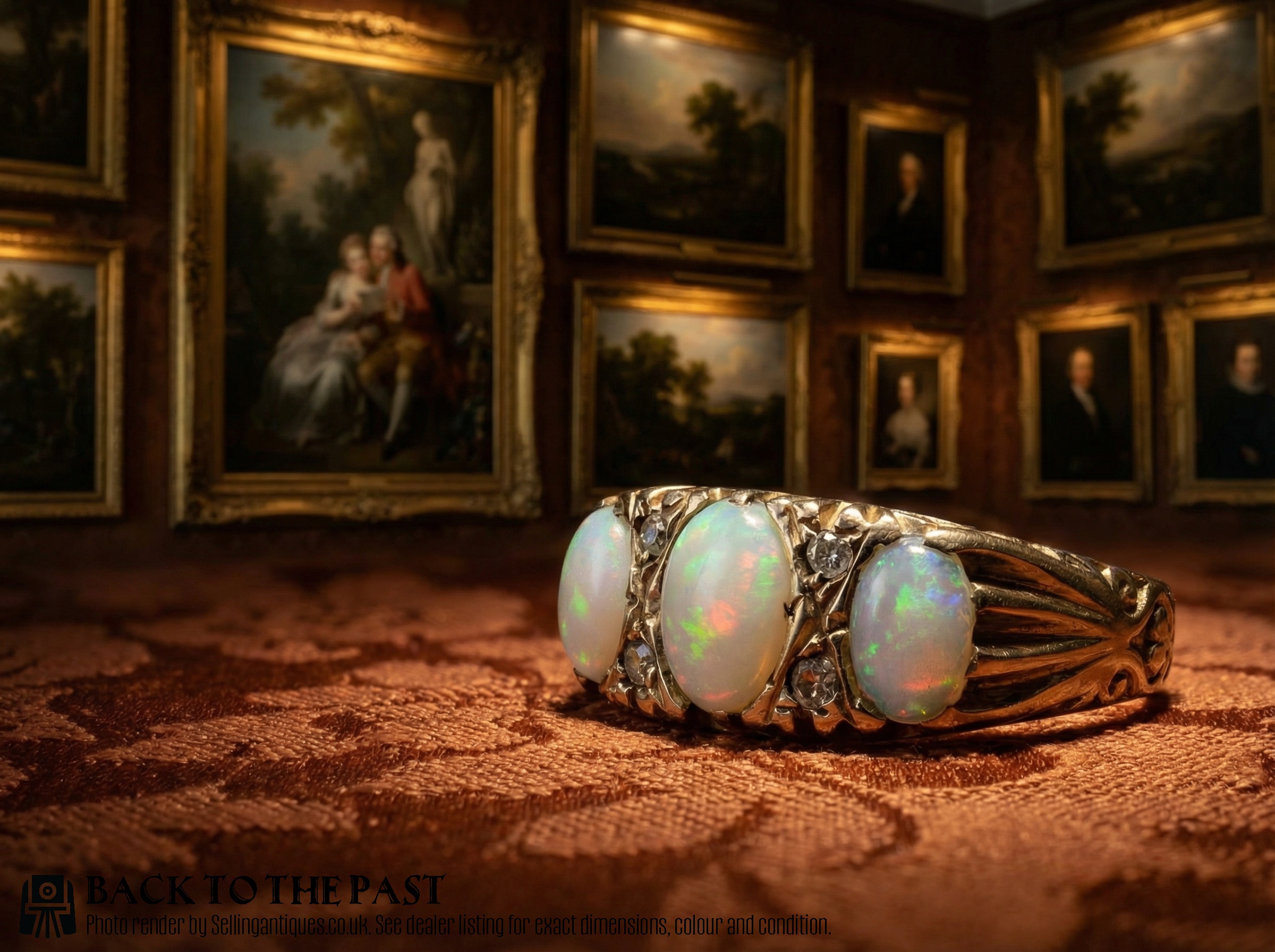
How they were made
The materials recorded in these listings rely primarily on 18ct yellow gold, 9ct gold, and platinum to support the fragile nature of opals. Goldsmiths utilised traditional techniques such as boat-shaped settings, claw mounts, and cluster arrangements to secure cabochon-cut opals alongside old-cut or rose-cut diamonds.
Makers shaped the precious metals by hand, often incorporating hallmarked bands from regional assay offices such as Birmingham, Chester, and Glasgow to guarantee gold standards. The contrast between bright white diamonds and the deep play-of-colour in solid opals defines the construction of these historical pieces.
Opal Diamond Dress Ring Retail Price Guide 2026
Typical asking prices for opal diamond dress ring among the pieces listed under this phrase on Sellingantiques today, from the lower quarter to the upper quarter. They describe what is for sale here now, not the wider market.
Listings span multiple eras from the 19th Century through Victorian, Edwardian, and mid-century vintage periods up to 1960.
What varies in quality
Quality in these rings rests upon the intensity of the opal's play-of-colour, the proportion of the stones, and the integrity of the metalwork. Superior examples display vibrant spectral flashes across the opal face without dead spots, paired with well-matched diamonds that retain their original faceting.
The finesse of the claw work and the crispness of the surrounding gold or platinum setting separate standard production from finer goldsmithing. Balance between the central opal and the supporting diamonds determines the overall harmony of the design.
The Opal Diamond Dress Ring Glossary
- Cabochon
- A gemstone cut with a smooth, rounded, convex top rather than faceted planes. This shape allows opals to display their internal play-of-colour to maximum effect.
- Boat ring
- A ring setting shaped like an inverted boat, curving gently along the finger to house a central stone flanked by smaller gems. It was particularly popular during the Victorian and Edwardian periods.
- Trilogy ring
- A ring featuring three main stones set in a row, often interpreted as representing the past, present, and future. In these listings, they pair a central opal with flanking diamonds.
- Cluster ring
- A central gemstone surrounded by a geometric arrangement of smaller stones. This format maximises the visual impact of both opals and diamonds.
- Rose-cut diamond
- An antique diamond cut with a flat base and a domed crown consisting of triangular facets that resemble an unopened rosebud. It yields a soft, subtle shimmer rather than modern brilliant fire.
Opal Diamond Dress Ring: Frequently Asked Questions
How do I care for an antique opal ring?
Opals contain water within their structure and possess a softer Mohs hardness than diamonds, requiring gentle handling. Avoid harsh chemical cleaners, ultrasonic baths, and sudden temperature changes to protect the stone.
Remove the ring when engaging in manual work or swimming. Store it separately from harder jewellery to prevent scratching the polished surface of the opal.
What is the difference between a Victorian and an Edwardian ring?
Victorian rings often feature heavier yellow gold settings, romantic multi-gem clusters, and dark backdrops that intensify the deep fires of the opals. They lean towards expressive, substantial designs.
Edwardian rings shift towards lighter, airier aesthetics, frequently employing platinum or yellow gold with delicate pierced work and subtle diamond accents to create a refined silhouette.
Are these opals natural or synthetic?
The pieces recorded in these listings feature natural solid opals, often accompanied by descriptive terms like white opal, water opal, or cabochon opal. These stones display organic colour variations formed naturally over millennia.
Synthetic or doublet stones are distinct from the genuine antique and vintage materials found in these documented Victorian and twentieth-century items.
Can these rings be resized?
Most gold and platinum bands can be adjusted by a skilled jeweller who understands antique mountings. The feasibility depends on the shank thickness and whether the side stones extend too far down the band.
Consult a professional jeweller to inspect the integrity of the claws and the shoulders before undertaking any alterations to historical settings.