

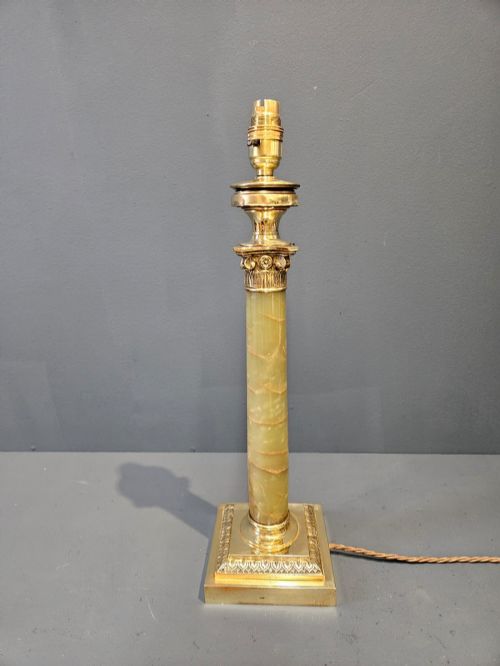


Onyx Table Lamp
Onyx table lamp examples combine polished stone with metal mounts, illuminating interiors through the natural translucent banding of the mineral.
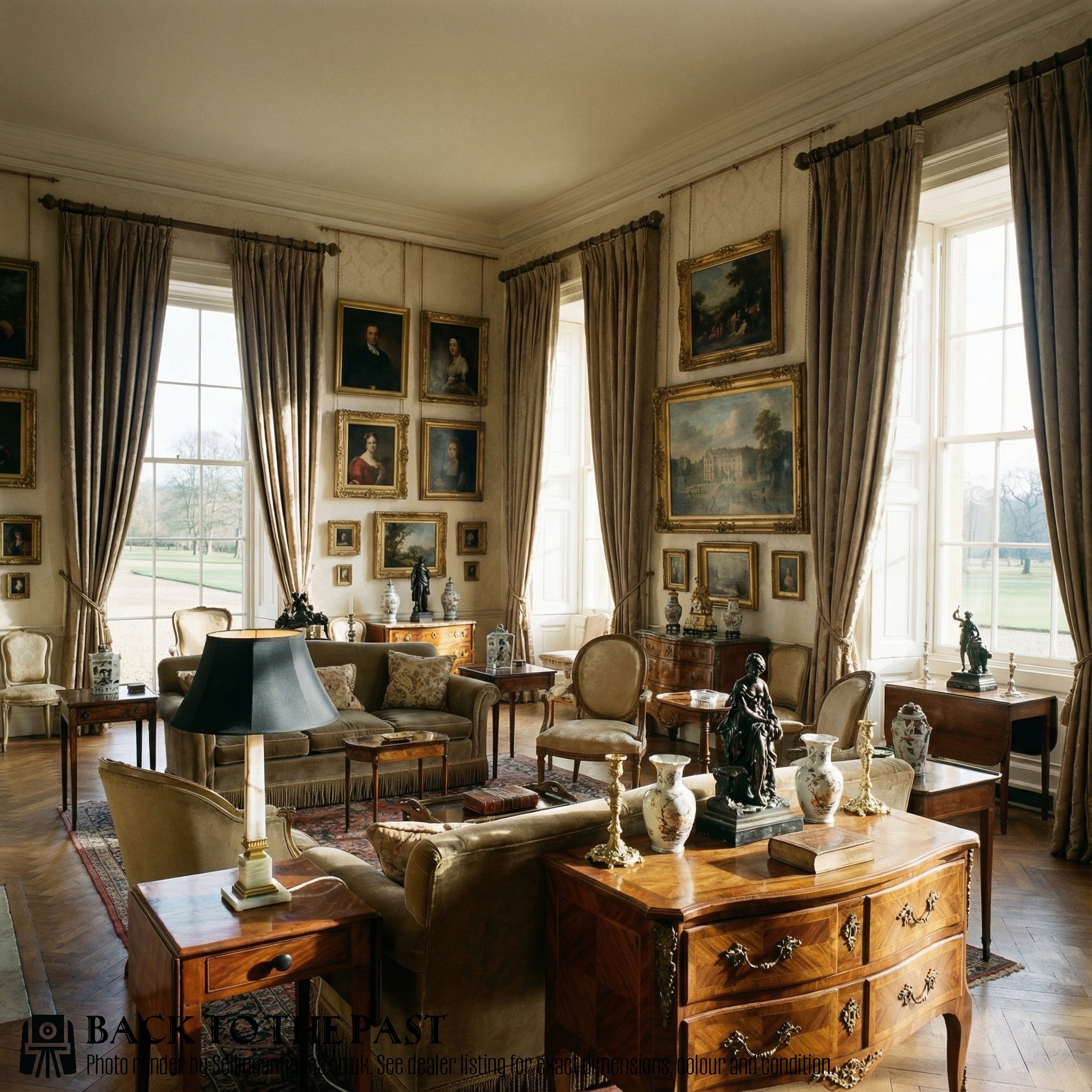
Onyx Table Lamp
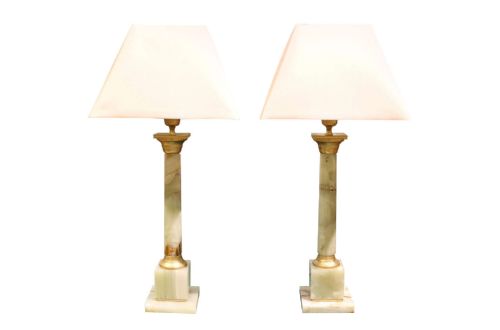
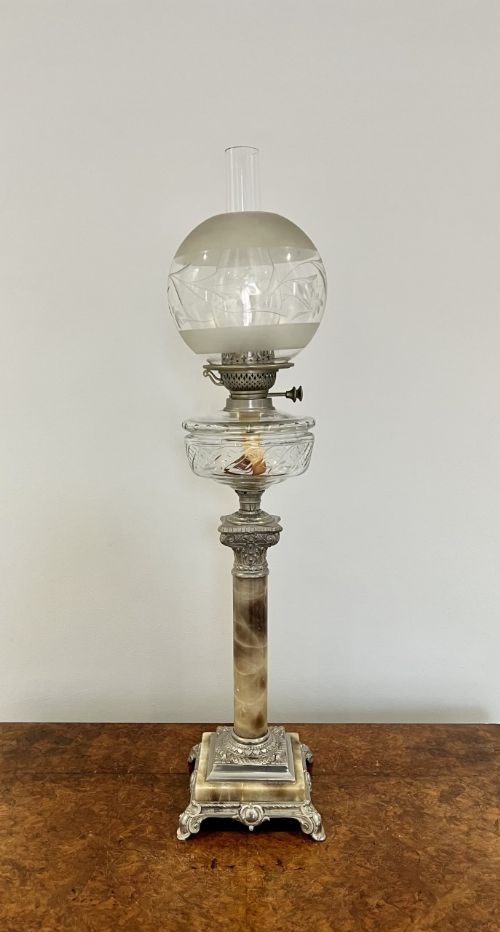
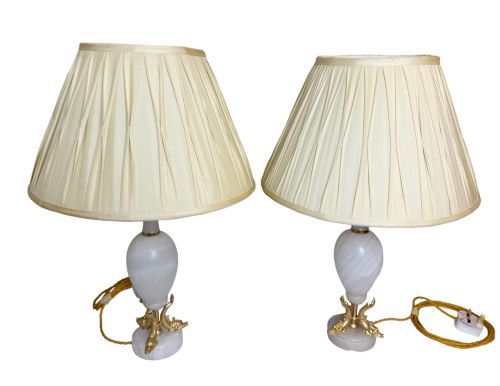
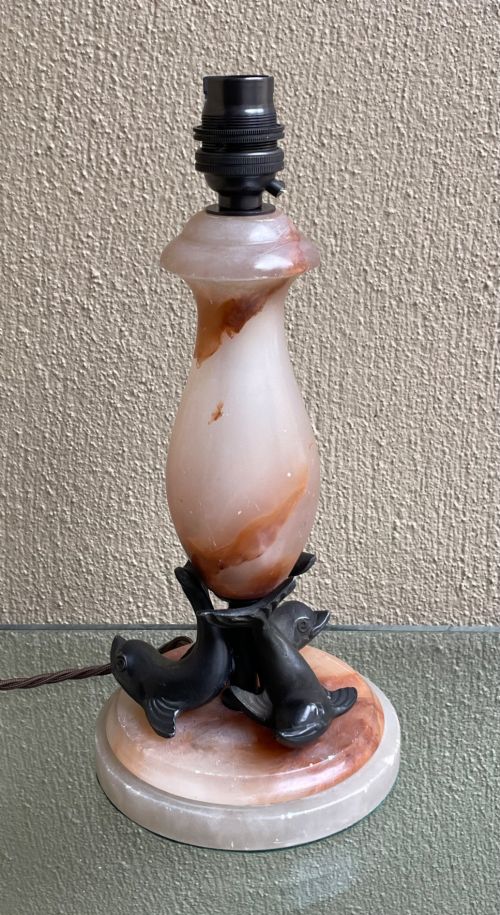
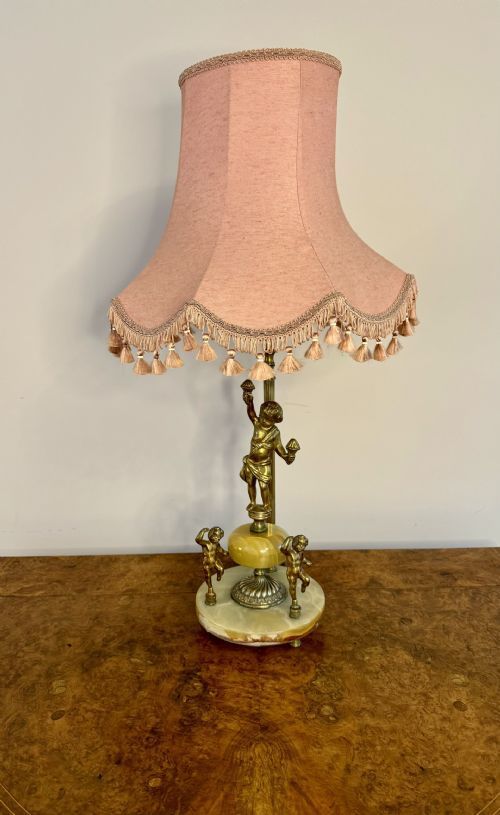
An onyx table lamp is a domestic light fitting formed largely from banded stone, appearing frequently alongside related items like marble lamps and occasional tables with stone tops. When you search for an onyx table lamp, you encounter pieces spanning from the Victorian era through the Edwardian period and into the Art Deco epoch.
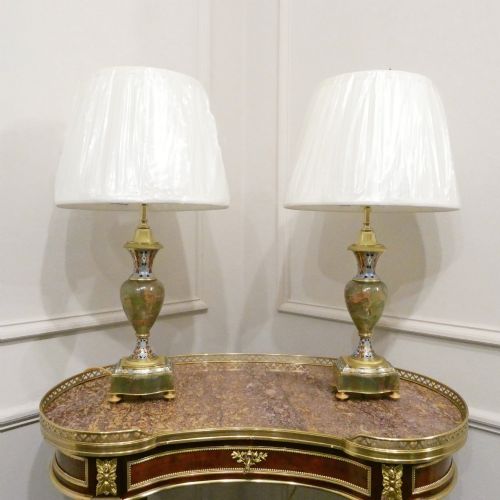
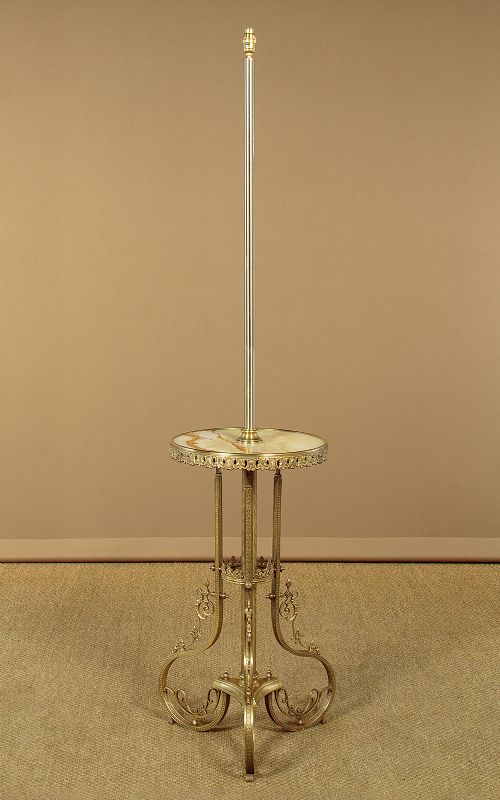
The most common forms on this page include column designs with brass or ormolu capitals, French amphora shapes, and pairs featuring champlevé enamel or gilt bronze trims. Alongside dedicated lighting, the selection includes standard lamps and occasional pieces sharing the same mineral construction.
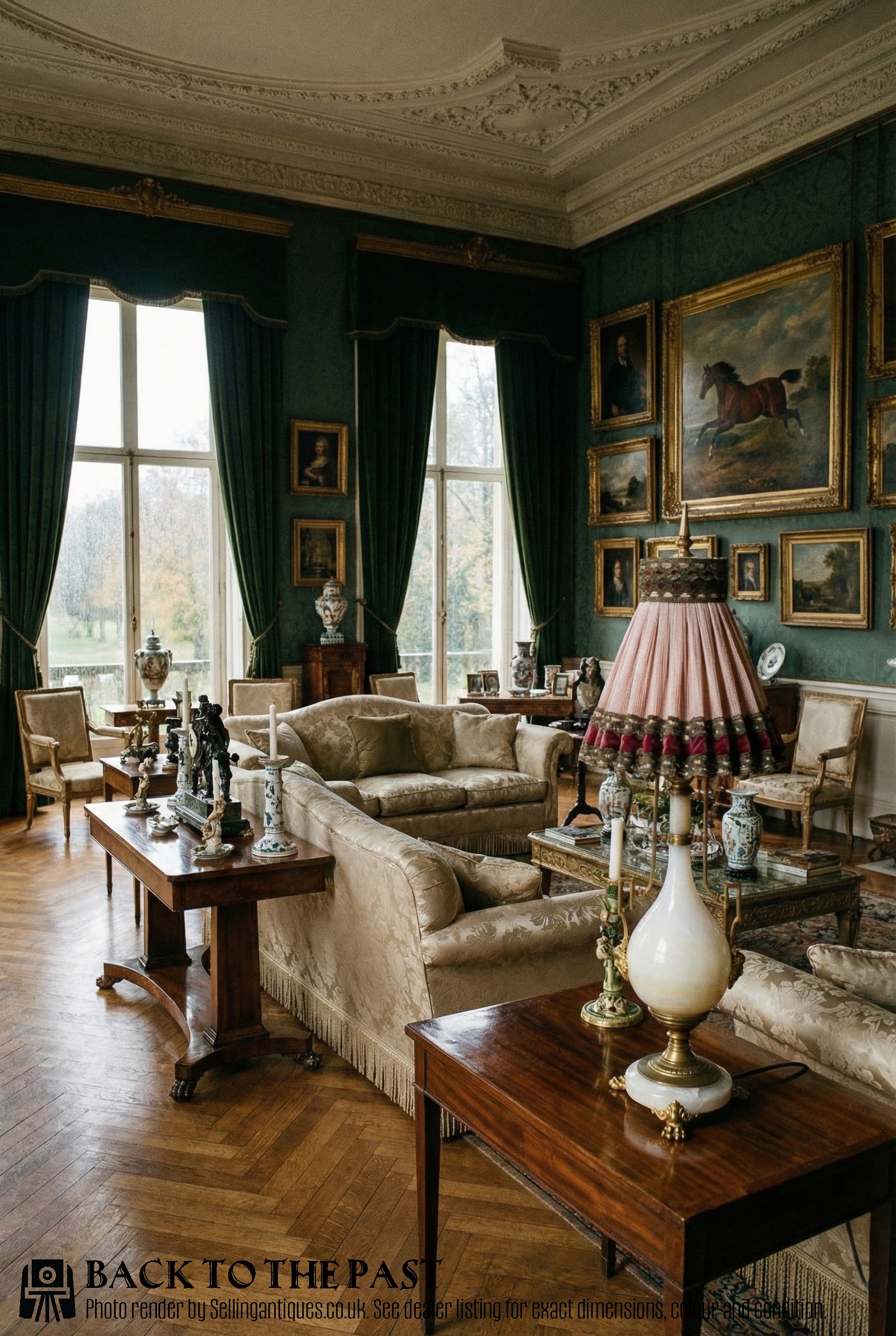
How they were made
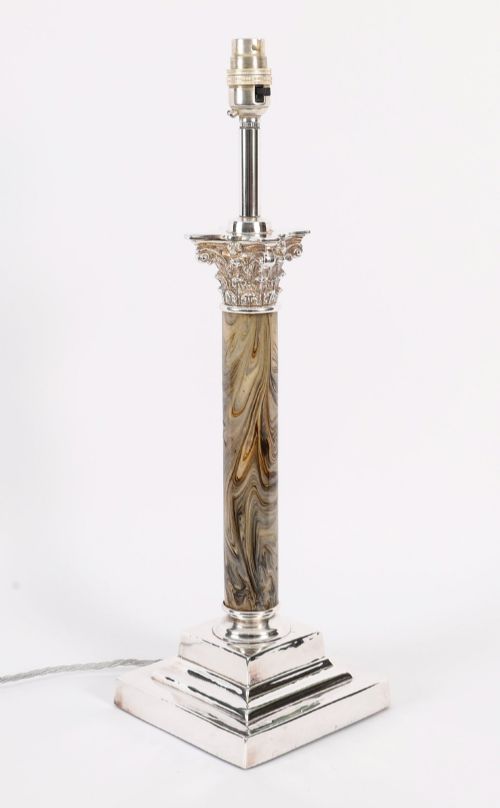
Maker workshops turned and carved natural onyx and allied stones into smooth shafts, urns, and column sections, occasionally pairing white or cream varieties with darker mineral segments. These stone bodies were combined with cast brass, gilt bronze, ormolu, and silver-plated metal components.
Mounts, paw feet, and Corinthian capitals were secured via central threaded rods or pins passing through the stone elements, while decorative enrichments like champlevé enamel and cloisonné added colour and pattern to the metalwork.
Onyx Table Lamp Retail Price Guide 2026
Typical asking prices for onyx table lamp among the pieces listed under this phrase on Sellingantiques today, from the lower quarter to the upper quarter. They describe what is for sale here now, not the wider market.
Listings incorporate designs from the Victorian period, 1880, 1890, 1900, 1910, 1920, and 1930.
What varies in quality
Quality rests in the depth and clarity of the stone's natural banding, the crispness of the cast metal mounts, and whether the piece survives as a matched pair rather than a single lamp. Finer examples display heavier ormolu or gilt bronze enrichment, more intricate champlevé detailing, and substantial Corinthian capitals rather than plain metal collars.
The integration between the stone shaft and its metal base dictates structural success, with superior pieces showing tight joints and well-proportioned architectural or figural elements.
The Onyx Table Lamp Glossary
- Onyx
- A form of banded chalcedony or calcite used for ornamental columns and lamp bodies. Its translucent layers catch light from within.
- Ormolu
- Gilt bronze produced by applying a mercury and gold amalgam to cast bronze. This technique creates a rich golden finish on lamp mounts.
- Champlevé
- An enamelling technique where troughs are dug into a metal surface and filled with vitreous enamel before firing. It appears on French lamp bases.
- Corinthian
- An architectural column style featuring ornate acanthus leaves on the capital. Victorian lamp makers frequently adopted this order for brass and onyx standards.
- Cassolette
- A decorative vessel or vase with a removable lid, occasionally adapted into a lamp body. French makers utilised these forms in pairs.
Onyx Table Lamp: Frequently Asked Questions
How do I wire an antique lamp safely?
Most older lamps require modern rewiring to meet contemporary electrical standards and ensure safe domestic use.
Qualified electricians can thread modern cable through the central metal rod without altering the historic stone exterior.
How do I clean onyx safely?
Onyx is a relatively soft and porous stone that absorbs moisture and reacts poorly to acidic cleaning agents.
Dust the surface gently with a dry microfiber cloth and avoid water or chemical polishes entirely.
Can I find matching pairs easily?
Matched pairs appear frequently among French and English stock, particularly from the late nineteenth and early twentieth centuries.
Pairs often feature cast ormolu mounts and identical stone turning, making them suitable for balanced placement on sideboards or desks.
How do I distinguish onyx from marble?
Onyx typically exhibits parallel, translucent banding that allows light to pass through the mineral layers when illuminated.
Marble displays more irregular veining and opaque solid fields without the distinct linear transparency found in onyx.