


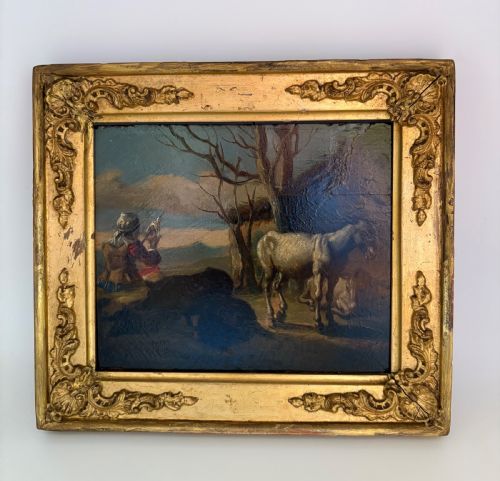


Old Master Landscape
An old master landscape brings centuries of European history into a room through oil on canvas, wood panel, and giltwood frames.
Old Master Landscape
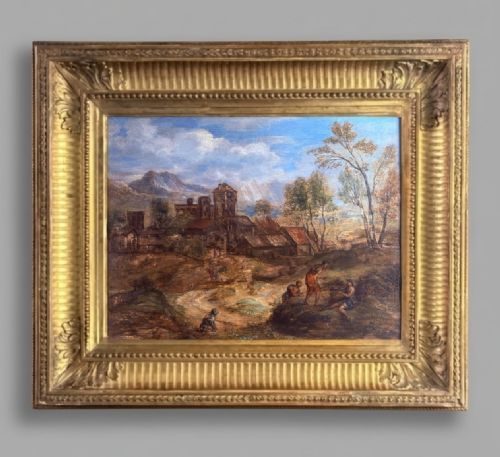
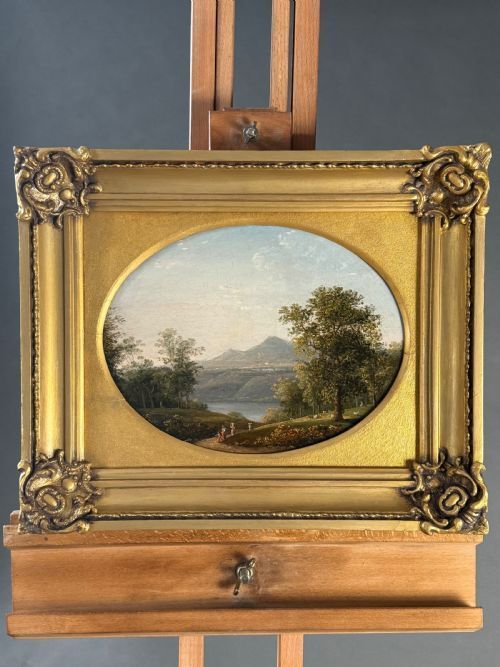
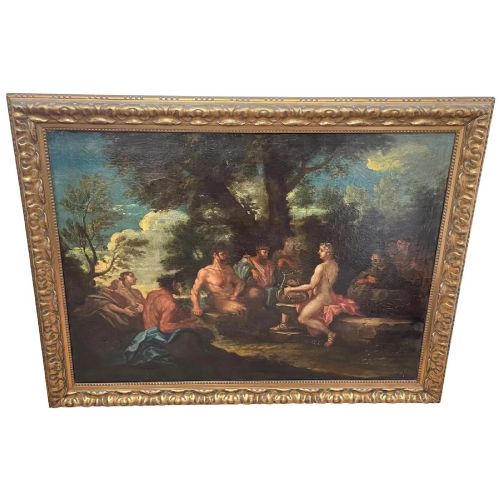
An old master landscape represents centuries of European painting traditions from the seventeenth and eighteenth centuries, executed by named artists, followers, and regional schools. These works span Dutch Golden Age, Italian Baroque, Flemish Baroque, and Neoclassical styles, capturing mythological scenes, pastoral views, castle ruins, and village fetes. A buyer encounters oil paintings on canvas or wood panel, frequently housed in original or period giltwood frames.
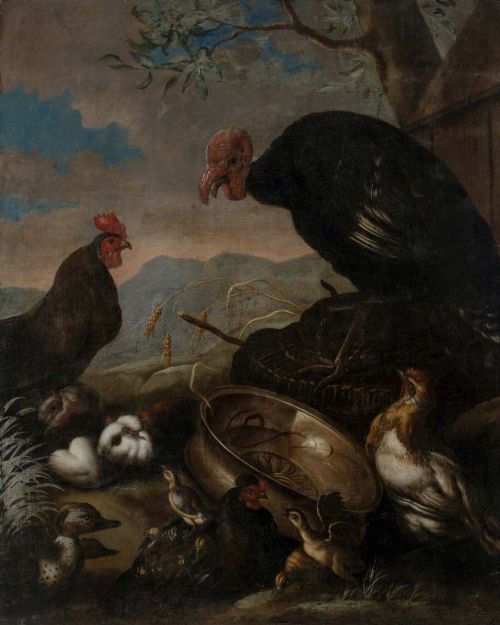
The subjects range from arcadian scenes with figures and grand tour vistas to depictions of birds and animals in rustic settings. Italian and Dutch influences dominate the selection, showing the technical breadth of European studios from these periods.
Materials and technique
Painters utilised oil paint applied to prepared canvas or wood panels, sometimes incorporating oak supports. Pigments were layered to create depth in foliage, skies, and architectural ruins, occasionally revealing pentimento where earlier compositional choices show through the final surface.
Framing forms an integral part of the piece, utilising carved and giltwood frames that complement the painting style. Paper prints and engravings also appear alongside primary oil works, reflecting reproduction methods of the era.
Old Master Landscape Retail Price Guide 2026
Typical asking prices for old master landscape among the pieces listed under this phrase on Sellingantiques today, from the lower quarter to the upper quarter. They describe what is for sale here now, not the wider market.
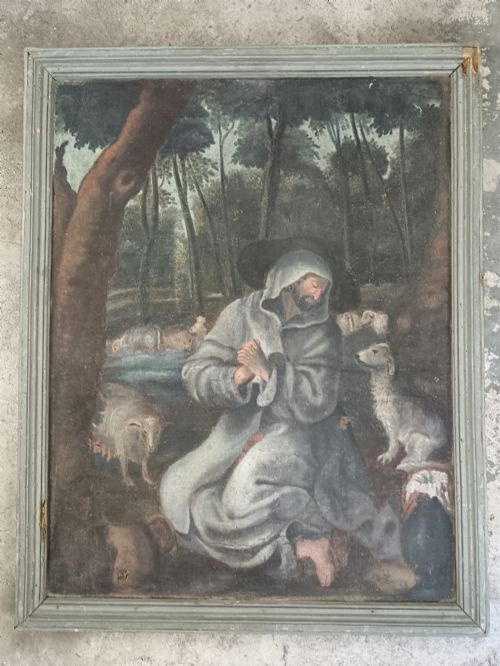
St. Francis shares space with mythological deities, sleeping nymphs, and exotic fowl in these pastoral scenes.
Quality and execution
Quality rests in the handling of brushwork, pigment preservation, and the structural integrity of the canvas or wood panel. Works by documented masters or close studio followers demonstrate superior draughtsmanship in figure placement and atmospheric perspective compared to naive regional pieces.
The condition of the original giltwood frame and the stability of the paint layer without extensive modern intervention distinguish the finer examples from heavily restored works.
Jacob Philipp Hackert·Angelo Maria Crivelli·Johannes Lingelbach·Adriana Verelst·Cornelis Van Poelenburgh·Philipp Peter Roos·David Teniers II·Marmaduke Cradock·Jacob Bogdani·Francesco Zuccarelli·Francesco Albani·Giacomo Nani
The Old Master Landscape Glossary
- Oil on panel
- Painting executed on a prepared wood support rather than canvas. Oak was frequently utilised by northern European artists during the seventeenth century.
- Giltwood frame
- A wooden frame covered with a thin layer of gold leaf or gold paint. These frames often match the period of the artwork.
- Pentimento
- An alteration in a painting evidenced by visible traces of previous brushstrokes beneath the surface layer. This occurs when an artist changes their composition during the painting process.
- Dutch Golden Age
- A period in Dutch history spanning the seventeenth century characterised by exceptional output in painting. Artists from this era focused heavily on landscape, genre, and still life subjects.
- Baroque
- A European artistic style of the seventeenth and early eighteenth century marked by grand scale, drama, and rich detail. Italian and Flemish schools developed distinct regional variations of this aesthetic.
Old Master Landscape: Frequently Asked Questions
What periods do these paintings date from?
The works originate primarily from the seventeenth and eighteenth centuries, capturing periods such as the Dutch Golden Age and Italian Baroque.
Dates reflect the active lifetimes of the painters or the estimated production window of the regional school.
What materials were used to create them?
Artists used oil paint on woven canvas or prepared wood panels, including oak supports. Giltwood frames completed the presentation.
Paper engravings also appear as period representations of master compositions.
How do I distinguish between schools of painting?
Italian works often feature classical ruins, mythological figures, and arcadian landscapes with dramatic lighting. Dutch and Flemish pieces tend to focus on rural village life, animals, and naturalistic atmospheric effects.
Attributions in the titles indicate the regional origin or stylistic follower.
Are the frames original to the paintings?
Many listings include original or period giltwood frames that match the age and style of the artwork. Frame construction typically involves carved wood with gold leaf application.
Checking the frame description clarifies whether it dates alongside the canvas or panel.