
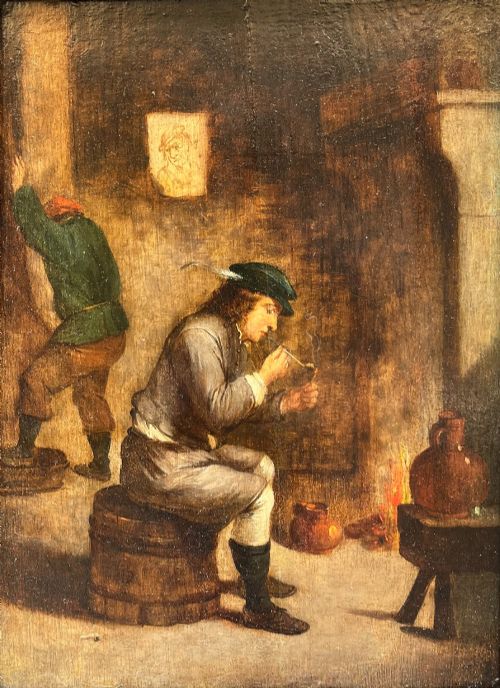


Old Master Genre Painting
Old master genre painting captures domestic scenes and village life from earlier centuries on canvas or panel, bringing rich historic character into a room.
Old Master Genre Painting
When you search for old master genre painting, you are looking at historic works depicting everyday scenes, tavern interiors, and village festivities. These pictures record the daily lives, celebrations, and quiet moments of past centuries through the hands of skilled painters.
On this page, you are most likely to meet works originating from the seventeenth and eighteenth centuries, executed in the Dutch or Flemish traditions. These pieces frequently show peasants merrymaking, domestic hearths, or figures gathered around a barrel.
The subjects range from intimate portraits to lively village fetes, capturing human character with remarkable directness. Collectors prize them for their historical depth and the warm atmosphere they bring to traditional interiors.
Materials and methods
These works are executed primarily in oil paint upon canvas or prepared wooden supports such as oak panel. The pigments were carefully layered to achieve rich depth, subtle light effects, and realistic textures in clothing and surfaces.
Many pieces retain their original or period giltwood frames, often enhanced with gold leaf to complement the dark, atmospheric palettes typical of the seventeenth and eighteenth centuries. The physical support frequently dictates the preservation of the paint surface over the centuries.
Common subjects recorded on this page include tavern interiors, hearth scenes, and village festivities in the Dutch and Flemish traditions.
Assessing quality
Quality in these works rests upon the expressive handling of the figures and the confidence of the brushwork. Studio pieces and works after established masters display varying degrees of artistic independence from the original compositions.
The preservation of the original paint layer on canvas or oak panel largely determines the visual impact of the scene. Finer examples retain the luminous glazes and subtle tonal gradations intended by the artist.
David Teniers·Jan Cossiers·William Tate·Joseph Wright of Derby·Bartolome Murillo·Reinier de la Haye·Jan Steen
The Old Master Genre Painting Glossary
- Genre painting
- Depiction of aspects of everyday life by portraying ordinary people engaged in common activities. These works focus on non-idealised subjects rather than grand historical or mythological narratives.
- Oil on panel
- A painting technique where oil pigments are applied directly to a prepared wooden board, frequently oak in Northern European works. This rigid support provides a stable surface that has preserved many early compositions.
- Flemish Baroque
- A style of painting flourishing in the Southern Netherlands during the seventeenth century, characterised by vigour, dramatic light, and rich colour. Artists working in this manner often captured lively village scenes and detailed interiors.
- Giltwood
- Wood that has been decorated with a thin layer of gold leaf or gold paint. Period frames finished in this manner frequently accompany historic oil paintings.
- Circle of
- A designation used when a work is judged to be by an unidentified artist working closely alongside a known master and strongly influenced by his style. It denotes proximity in time and technique to the principal painter.
Old Master Genre Painting: Frequently Asked Questions
What is an old master genre painting?
An old master genre painting is a historic work depicting scenes of everyday life, such as tavern gatherings or domestic interiors, created before the nineteenth century. These pieces record the social customs and daily activities of past eras through traditional oil techniques.
They offer a direct window into historical society, focusing on ordinary people rather than royalty or mythological figures. Collectors value them for their atmospheric lighting and narrative charm.
How were these paintings constructed?
Artists typically applied oil paint onto stretched canvas or solid wooden panels, such as oak. These materials were carefully prepared with grounds to receive the rich layers of pigment.
Frames made of giltwood often house these works, providing a decorative border that suits the dark, tonal palettes of the period. The choice of support greatly influences how the paint ages over centuries.
How do I live with an old master painting?
Living with these works involves placing them away from direct sunlight and maintaining stable indoor humidity to protect the canvas or wooden panel. Traditional giltwood frames should be handled gently and kept free of moisture.
Their rich dark tones and historic subjects pair well with traditional interiors, adding depth and character to a room. Proper placement ensures the oil surface remains stable for years to come.
How can I tell different periods apart?
Periods are identified by stylistic developments in costume, interior furnishings, and the handling of paint and light. Seventeenth-century works often feature tighter brushwork and darker, dramatic chiaroscuro.
Later eighteenth-century and Victorian interpretations show shifts in palette and a looser approach to narrative subjects. Comparing the physical characteristics of the canvas or panel also helps establish the age of the piece.