


Old Cut Diamond Trilogy Ring
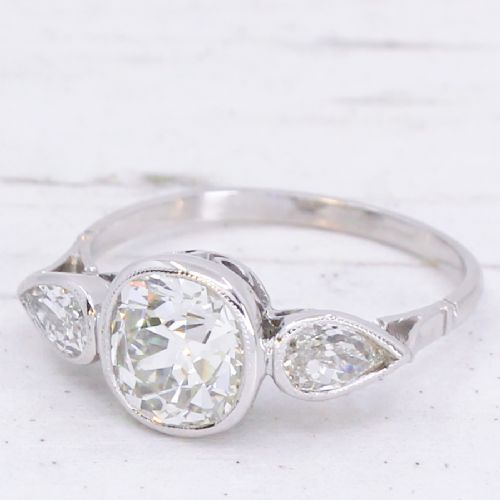
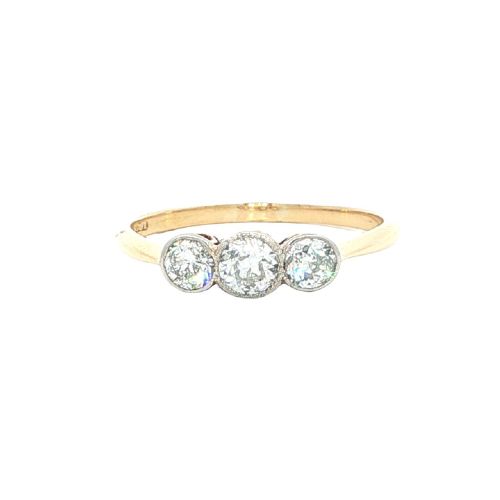
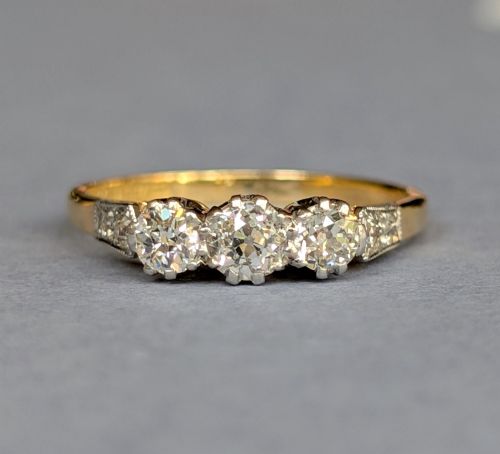
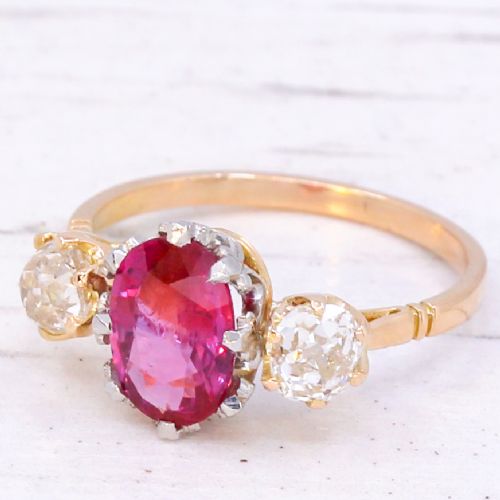
An old cut diamond trilogy ring brings together three hand-faceted stones that catch candlelight with a soft, warm glow.
Old Cut Diamond Trilogy Ring
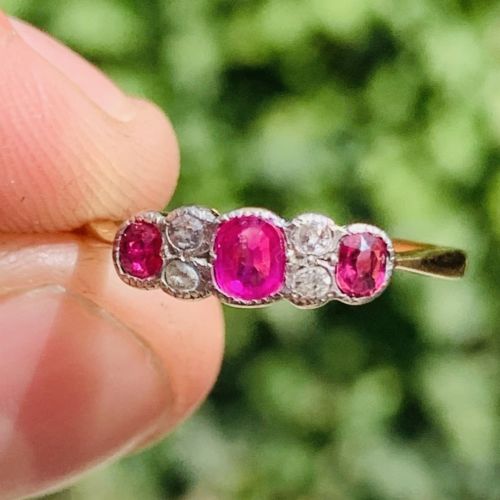
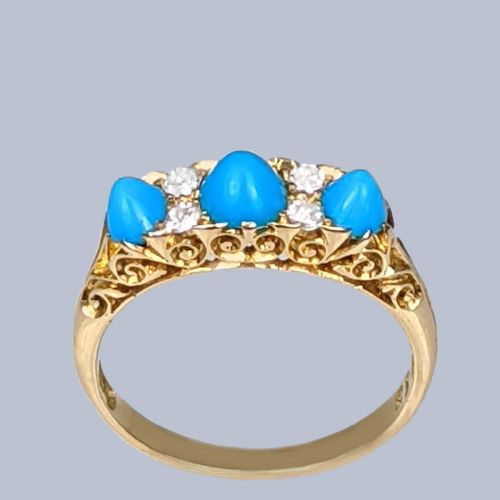
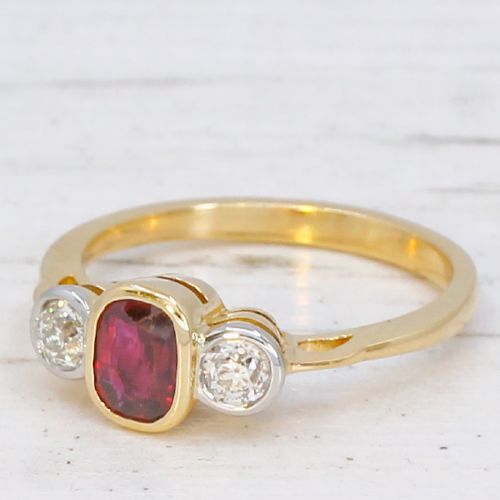
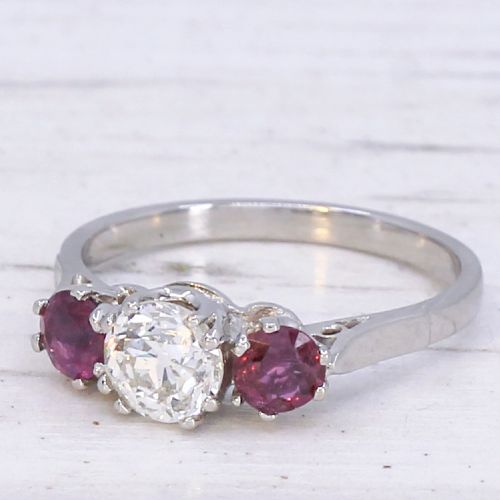
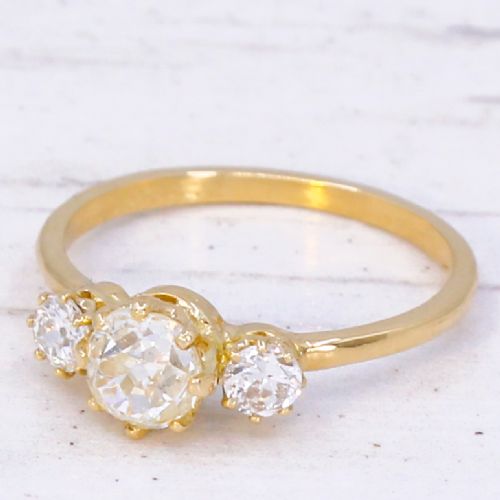
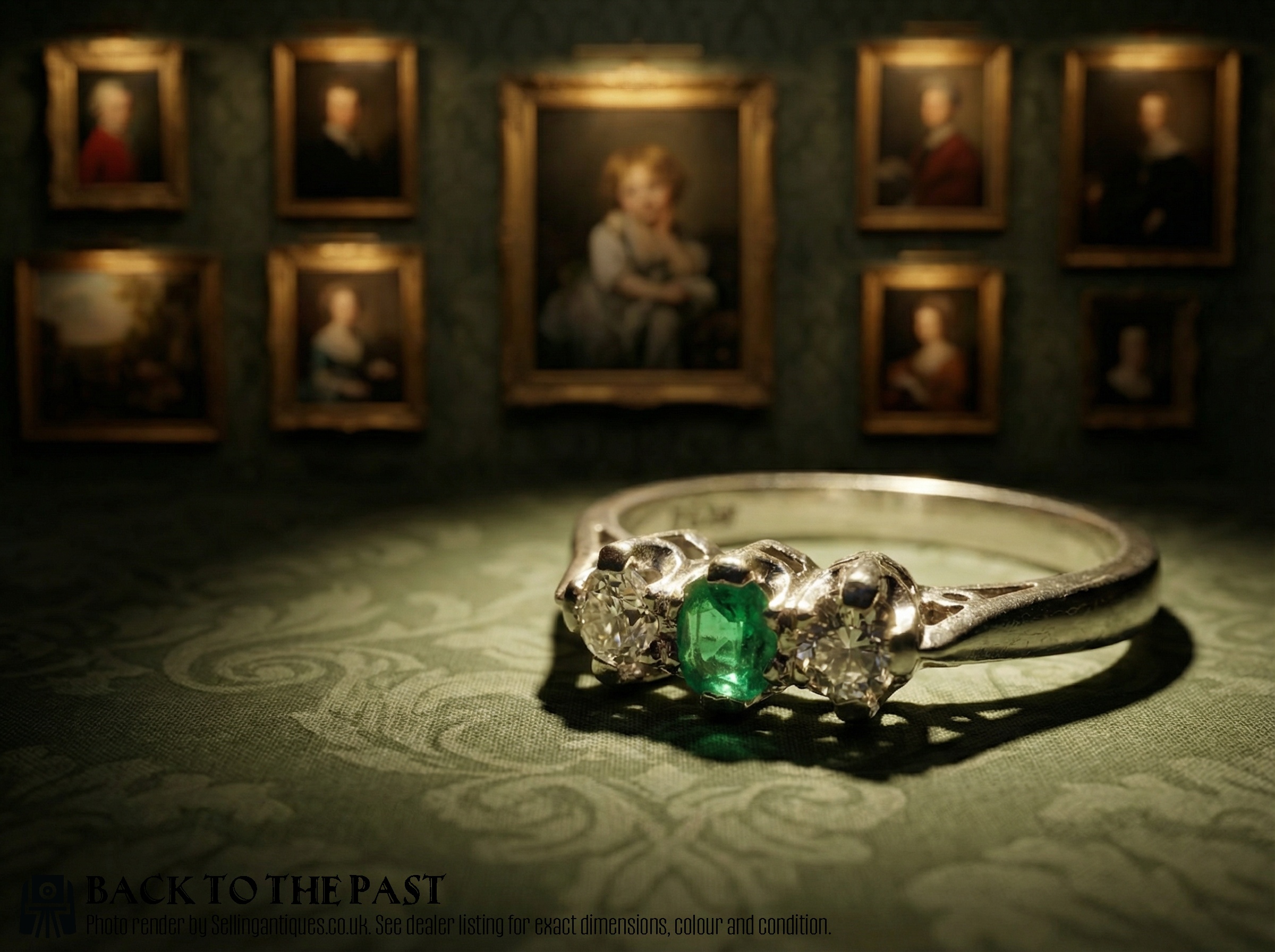
The version most commonly met on this page pairs graduated old mine or old European cut diamonds, frequently flanked by or alternating with coloured gemstones such as rubies, sapphires and emeralds. These configurations appear mounted across yellow gold, white gold and platinum bands.
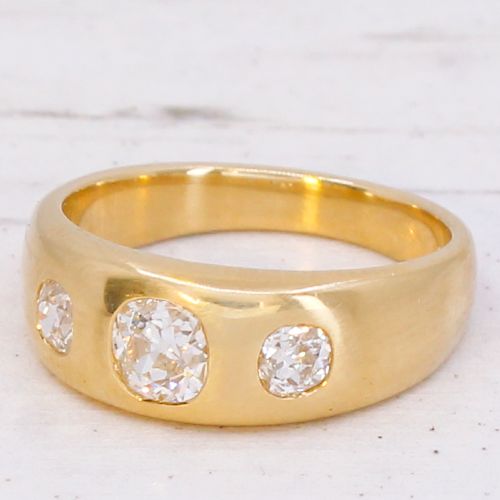
Trilogy rings from these periods often incorporate twist designs or gypsy settings alongside traditional claw mountings. Each surviving example reflects the shifting aesthetic preferences of the decades in which it was made, moving from ornate Victorian yellow gold towards clean geometric platinum lines.
Materials and construction methods
Goldsmiths constructed these mountings predominantly using 18ct yellow gold, 18ct white gold and platinum. Platinum gained wide favour during the Edwardian and Art Deco periods for its strength in delicate, lace-like settings, while yellow gold remained popular throughout the Victorian era.
The diamonds themselves possess hand-cut facets shaped before modern precision standards existed, resulting in smaller tables and higher culets. Gemstones like rubies, sapphires and emeralds were secured alongside these diamonds using claw settings, gypsy flush settings or bezel techniques.
Factors influencing quality
Quality separates through the proportional matching of the three central stones and the integrity of their original settings. Pieces where the side gems balance the visual weight of the centre stone demonstrate superior design harmony.
The preservation of the hand-cut facets on the diamonds and the crispness of any engraved or milled details on the metalwork distinguish the finest examples. Minimal wear to the claws and shanks ensures the ring maintains its structural integrity over time.
The Old Cut Diamond Trilogy Ring Glossary
- Old cut diamond
- A diamond faceted by hand before the advent of modern machinery, typically displaying a smaller table, higher crown and characteristic open culet. These stones were cut to maximise brilliance under candlelight.
- Trilogy ring
- A ring featuring three primary gemstones set in a row across the finger. This form traditionally symbolizes the past, present and future of a relationship.
- Gypsy setting
- A style where gemstones are flush-set directly into the thick metal band of the ring. This technique creates a smooth, flat surface prized for durability.
- Old mine cut
- An early form of diamond cut with a cushion outline and high crown, common in pieces dating from the nineteenth century. It produces chunky, distinctive facet reflections.
- Culet
- The small facet at the very bottom of a gemstone. Old cut diamonds frequently exhibit a visible flat facet at this point rather than a pointed tip.
Old Cut Diamond Trilogy Ring: Frequently Asked Questions
How do I wear an old cut diamond trilogy ring daily?
These rings suit daily wear provided you take sensible precautions with antique jewellery. Remove the ring during heavy manual tasks to protect the delicate platinum or gold claws holding the stones.
Store the piece separately in a fabric-lined box to prevent the old cut diamonds from scratching other items in your collection. Periodic inspection by a professional jeweller ensures the settings remain secure.
What do the three stones symbolize?
The three stones traditionally represent the past, present and future of a relationship. This enduring symbolism made them popular choices for engagement and anniversary rings.
Variations incorporating rubies, sapphires or emeralds alongside the diamonds allowed Victorians and Edwardians to introduce personal meanings through gemstone symbolism.
How can I tell a Victorian trilogy ring from an Art Deco one?
Victorian examples generally utilise 18ct yellow gold and feature warmer, heavier mountings sometimes paired with gypsy settings or turquoise and rubies. The stones may possess deep old mine cuts with rounded outlines.
Art Deco pieces lean towards platinum and white gold, showcasing geometric arrangements and clean lines. Transitional and old European cut diamonds frequently populate these later geometric designs.
Are coloured gemstones in these rings natural?
The sapphires, rubies and emeralds found in these period rings are natural earth-mined stones characteristic of their respective eras. Burmese and Ceylon origins frequently appear among the sapphires and rubies.
These coloured gems provide a vivid contrast to the softer sparkle of the accompanying old cut diamonds. Their presence helps date the ring alongside the mounting style and hallmarks.