
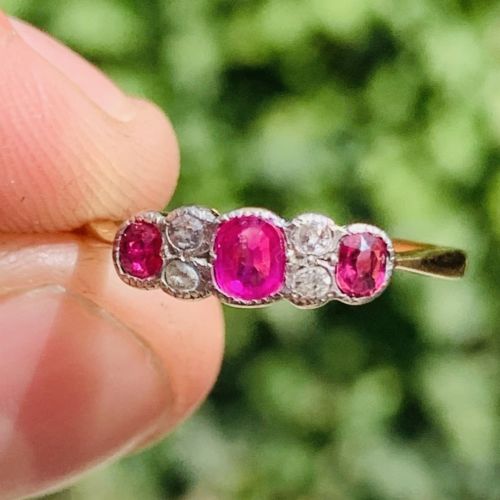
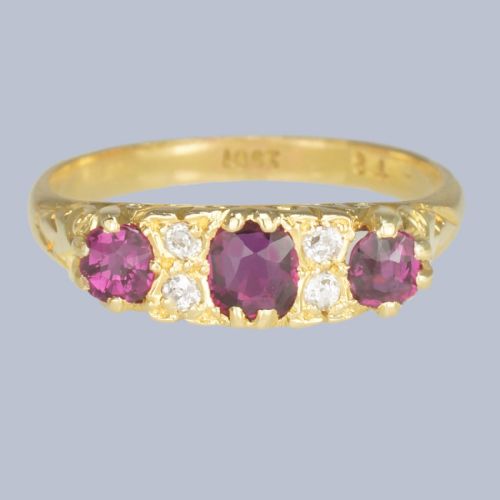
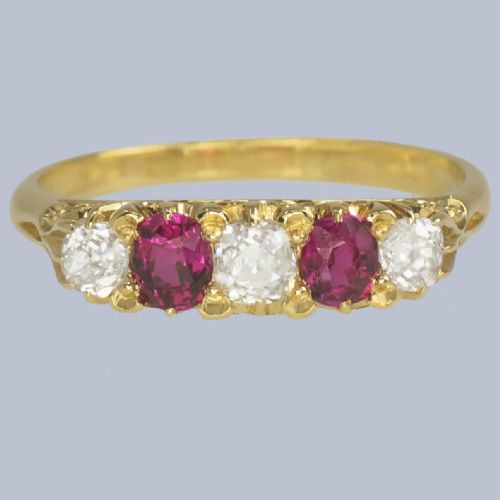
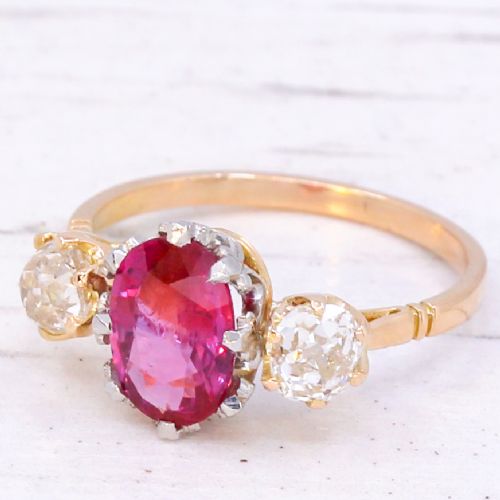


Old Cut Diamond Ruby Ring
An old cut diamond ruby ring combines antique charm with vibrant red gemstones and hand-faceted stones that catch candlelight beautifully.
Old Cut Diamond Ruby Ring
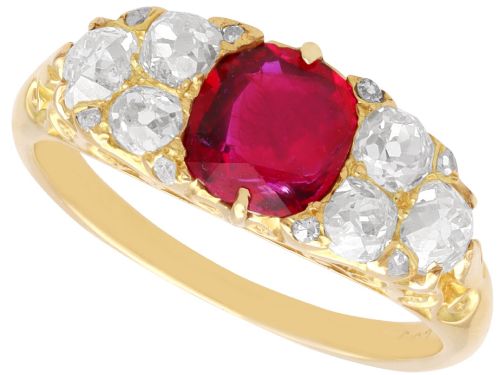
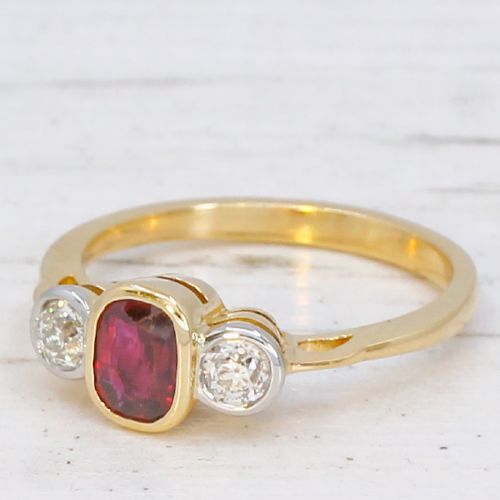
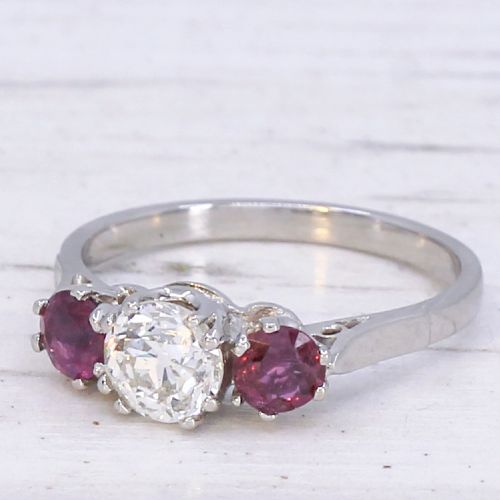
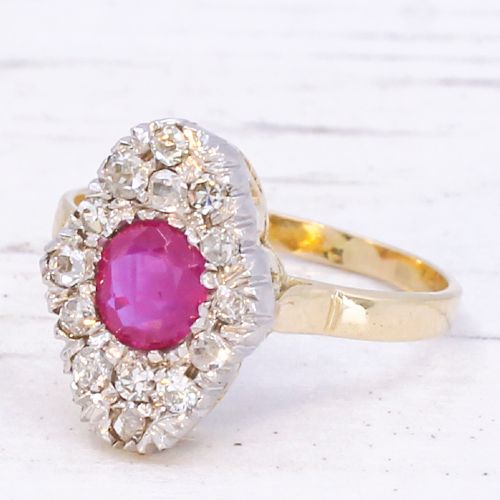
An old cut diamond ruby ring is a piece of fine antique or vintage jewellery uniting red corundum with hand-shaped diamonds from the Victorian, Edwardian, and Art Deco eras.
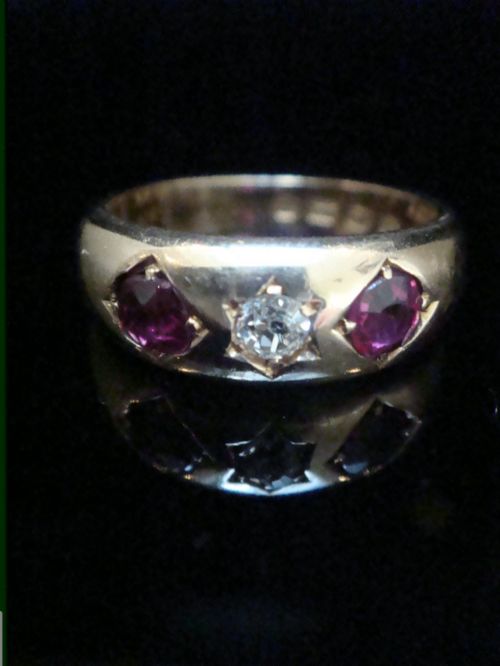
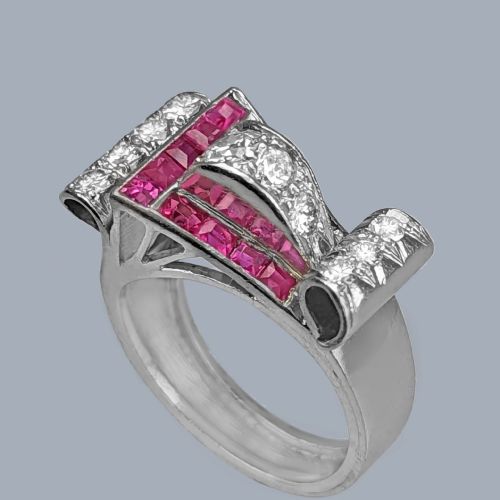
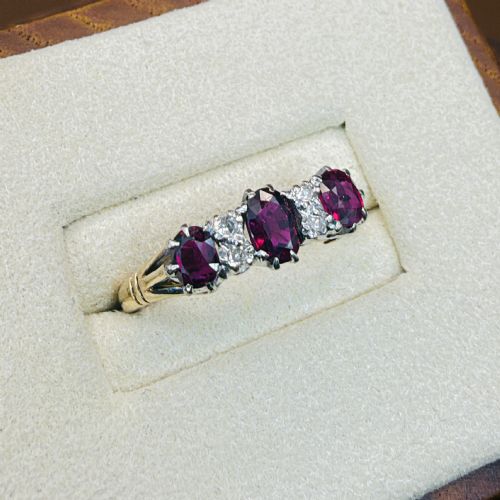
The pieces on this page appear in various historic settings, ranging from traditional clusters and five-stone arrangements to geometric Art Deco platinum designs.
Makers and designers from the late nineteenth century onwards utilised these stones to create meaningful motifs, including trilogy, navette, and crossover configurations.
How they were made
Goldsmiths worked primarily in 18ct yellow gold, platinum, and silver-topped gold, fabricating intricate settings by hand before the widespread adoption of modern casting.
Diamonds were cut by hand with smaller tables, higher crowns, and open culets, producing a softer, warmer scintillation than modern brilliant cuts.
Rubies were carefully selected for their natural origin, sometimes originating from Mogok or Burma, and secured in claw, bezel, or flush settings.
Snakes coil around fingers in multiple Victorian designs, whispering eternal romance.
What varies in quality
The overall standard of an old cut diamond ruby ring depends on the depth of colour and saturation in the ruby, alongside the clarity and symmetry of the hand-cut diamonds.
Superior examples demonstrate secure, original setting work with minimal wear to the metal prongs and shank, preserving the integrity of the piece over generations.
The refinement of the period design, whether a delicate Edwardian floral cluster or a bold Art Deco geometric mount, dictates the artistic merit of the jewellery.
The Old Cut Diamond Ruby Ring Glossary
- Old cut diamond
- A diamond shaped by hand before modern machinery, typically featuring a smaller table and a distinctive open culet that reflects light with a soft glow.
- Cluster ring
- A jewellery design where a central gemstone is surrounded by a tight formation of smaller stones, maximising visual impact and colour contrast.
- Navette
- A boat-shaped ring setting that tapers to sharp points at either end, popular during the Victorian and Edwardian periods for elongating the finger.
- Trilogy ring
- A three-stone ring traditionally representing the past, present, and future, often combining diamonds and rubies in balanced proportions.
- Gipsy set
- A mounting style where gemstones are flush-set directly into the thick metal band, creating a smooth, flat surface characteristic of late Victorian pieces.
Old Cut Diamond Ruby Ring: Frequently Asked Questions
How do I care for my antique ring?
Clean your jewellery gently with warm soapy water and a soft brush, avoiding harsh ultrasonic cleaners that might damage natural rubies or historic settings.
Store each piece separately in a fabric-lined box to prevent the diamonds from scratching softer gold or adjacent gemstones.
Can these rings be resized easily?
Most gold and platinum rings from the Victorian and later periods can be adjusted by a skilled jeweller, though ornate shoulders or full channel settings require extra care.
Consult a professional who understands antique construction to ensure the structural integrity of the band remains intact after alteration.
What is the difference between old mine and old European cuts?
Old mine cut diamonds possess a square or cushion outline with a smaller table and high crown, reflecting the hand-polishing techniques of the nineteenth century.
Old European cuts transition toward a rounder girdle and slightly more standardised facet symmetry, bridging the gap between antique shapes and modern round brilliants.
Are the rubies in these rings heated?
Many antique rubies display natural characteristics without thermal enhancement, though treatment practices evolved throughout the twentieth century.
Historic pieces often showcase stones sourced from renowned deposits like Burma, valued for their distinct natural fluorescence and rich red hues.