





Victorian Boat Shaped Ring
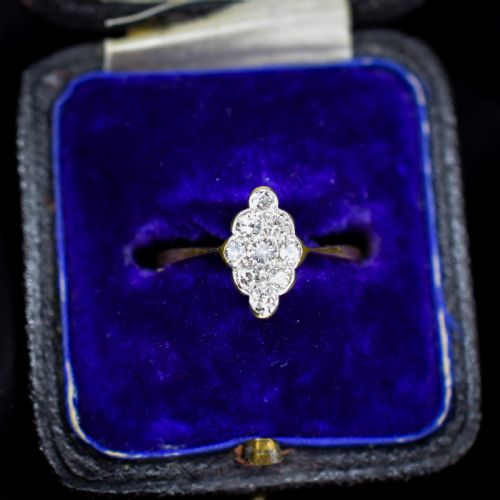
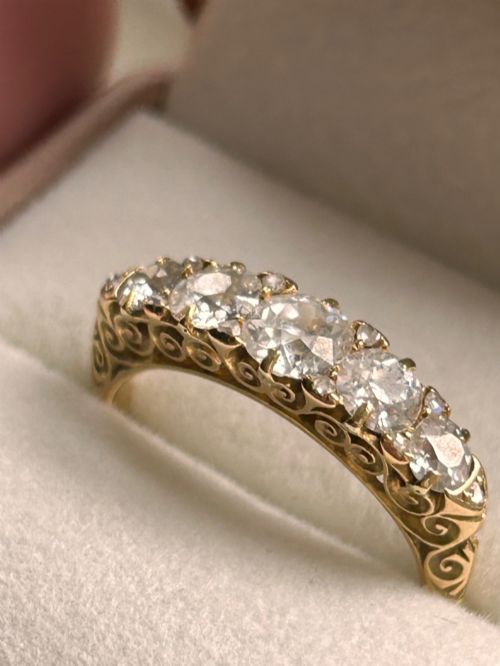
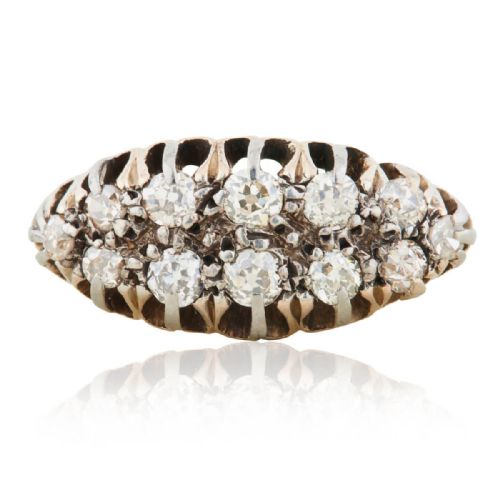
These Victorian boat shaped ring examples offer elongated cluster profiles and intricate old cut stone settings that collectors prize for finger coverage.
Victorian Boat Shaped Ring
A Victorian boat shaped ring is typically characterised by an elongated navette or cluster silhouette designed to curve gracefully across the finger. When you search for a Victorian boat shaped ring, you encounter navette designs, marquise clusters, and multi-stone rows originating from periods spanning the late nineteenth and early twentieth centuries.
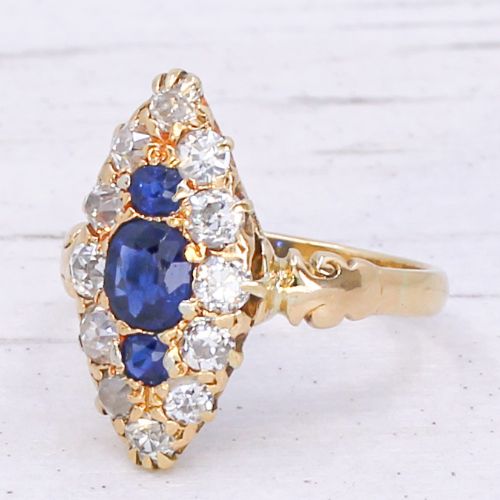
The prevailing forms on this page include diamond clusters, sapphire and diamond combinations, and ruby settings mounted in yellow gold and platinum. These pieces reflect Victorian and Edwardian aesthetics, utilising symmetrical arrangements that taper gently at either end.
Makers and jewellers of the era constructed these rings to maximise the visual impact of old cut diamonds and coloured gemstones. The profile resembles the hull of a boat, elevating the central stones above the band to catch the light from multiple angles.
Materials and construction methods
Gold forms the structural foundation of these pieces, with 18ct yellow gold frequently paired with platinum for gemstone settings. This combination allowed artisans to mount diamonds securely while maintaining a bright, reflective white surface around the stones.
Listings feature yellow gold, platinum, and silver materials combined with diamonds, sapphires, and rubies across Victorian and Edwardian periods.
Evaluating quality and proportion
The distinction between standard examples and finer pieces lies in the uniformity of the gemstone selection and the crispness of the cluster layout. Superior rings display closely matched old cut diamonds and securely tensioned settings that preserve the slender grace of the navette outline.
Construction integrity also dictates quality, particularly in the preservation of the delicate gold galleries and shoulders. Well-maintained mountings retain their original proportions, ensuring the boat shaped curve sits comfortably and securely upon the hand.
The Victorian Boat Shaped Ring Glossary
- Navette
- A boat shaped or little ship design featuring an elongated outline pointed at both ends. This silhouette sits lengthwise along the finger.
- Marquise
- A cluster form similar to a navette, often set with multiple diamonds radiating from a central point. It creates a pronounced focal presence.
- Old Cut
- A diamond cutting style typical of the nineteenth century featuring a small table, high crown, and open culet. These cuts produce distinctive soft light reflections.
- Cluster
- An arrangement of smaller gemstones surrounding a central stone or grouped tightly together. This technique maximises overall brilliance and colour.
Victorian Boat Shaped Ring: Frequently Asked Questions
How do I care for antique gold rings?
Antique gold rings require gentle handling and should be stored separately to prevent metal friction and stone abrasion. Regular inspection of the settings helps ensure stones remain secure within their original mounts.
Professional cleaning should be approached with caution to preserve the natural patina developed over decades. Avoid exposing delicate gemstone settings to harsh chemical cleaners.
Are these rings suitable for daily wear?
These rings can be worn regularly provided they receive appropriate care and periodic checks by a professional jeweller. The delicate nature of nineteenth century settings means heavy impact activities should be avoided.
Considering the age of the gold and platinum work, mindful usage preserves the structural integrity of the intricate galleries and claw settings.
What gemstones appear in these pieces?
Diamonds form the primary stone choice, frequently accompanied by natural sapphires or Burmese rubies. These coloured gems provide vibrant contrast against the yellow gold and platinum mountings.
Old cut diamonds and old mine cuts dominate the inventory, contributing characteristic warmth and varied facet patterns unique to period stones.