


Oil on Canvas Sporting Scene
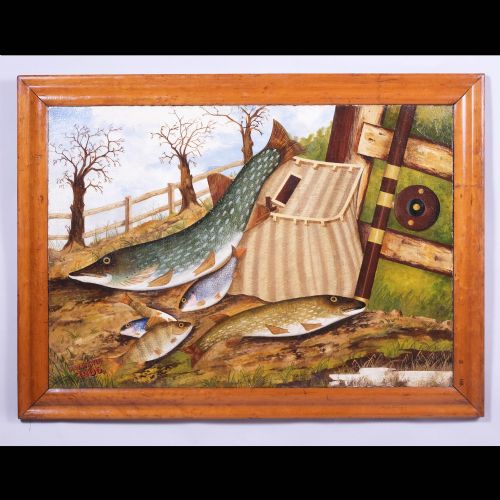
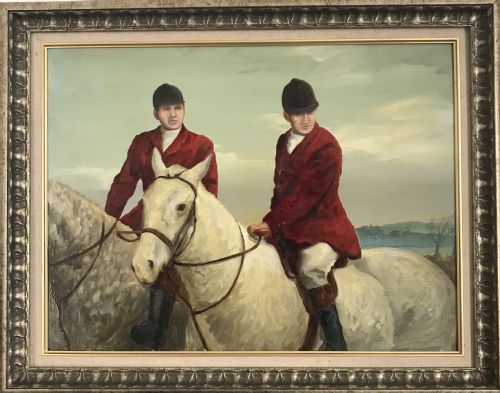
An oil on canvas sporting scene captures the movement of hounds, horses and game across rural landscapes.
Oil on Canvas Sporting Scene
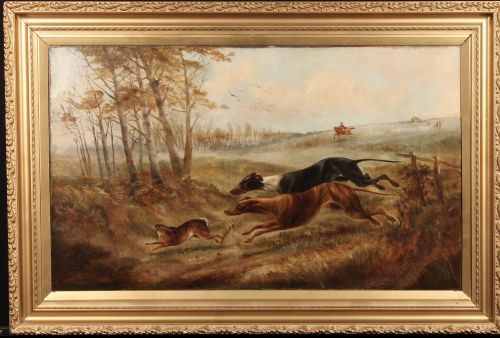
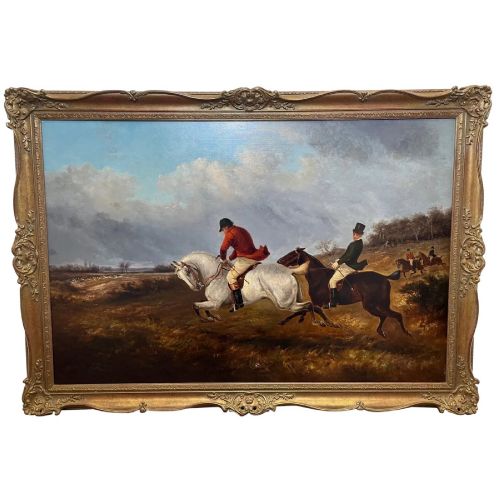
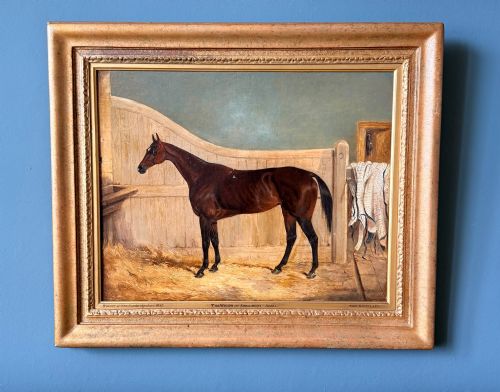
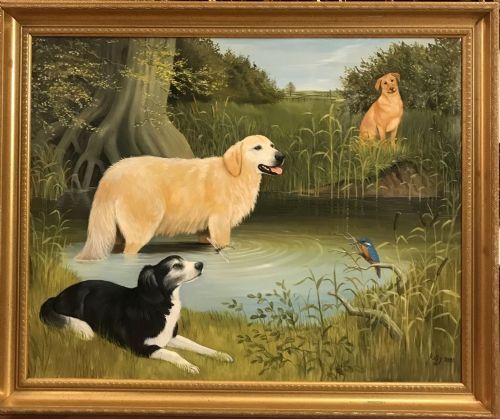
An oil on canvas sporting scene records the pursuits of the countryside, primarily fox hunting, hare coursing, equestrian portraits and coaching journeys. These works date predominantly from the nineteenth century and the Victorian era, though Edwardian and mid-twentieth century examples also appear.
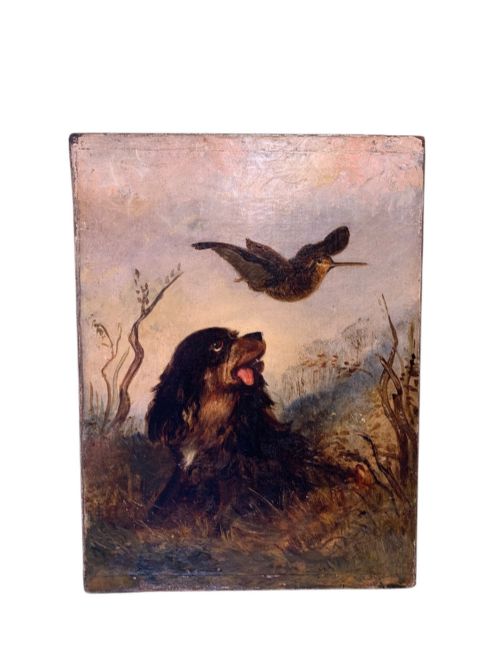
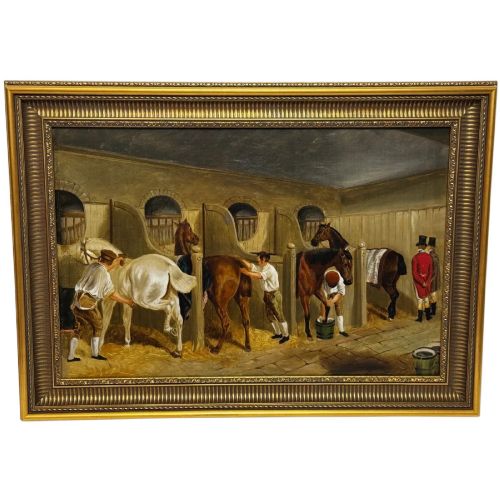
The compositions range from large-scale depictions of hunts in full cry to intimate studies of terriers, spaniels and prize-winning hunters in stables or moorland settings. Painters capture specific moments of the chase, the stillness of a covert meet or the dramatic action of horses galloping across rural terrain.
Materials and technique
Artists apply oil paint to stretched canvas, building rich layers of pigment to render the glossy coats of horses, the rough textures of hound fur and the expansive skies of the English and European countryside. The support is typically mounted within wooden frames, frequently finished in gilt wood or gold leaf.
Makers utilise traditional brushwork to balance detailed animal anatomy with atmospheric landscape backgrounds. Pigments capture the changing light of winter mornings, snowy coaching routes and dark, earthy barn interiors where terriers track quarry.
Listings combine oil on canvas works from the Victorian period, Edwardian era and the twentieth century, featuring wood and gilt wood frames.
Judging quality in sporting art
Quality rests upon the artist's command of animal anatomy, movement and proportion, where master hands render the tension in a galloping horse or the alert posture of a hunting dog with absolute conviction. Weaker works often stiffen into static poses or display awkward perspective in the background landscape.
The distinction also lies in the handling of light and narrative energy, distinguishing a routine record of a horse from a dynamic composition that places the viewer directly in the path of the hunt or beside the covert.
George Armfield·Thomas Smythe·Thomas Walker Bretland·John Arthur Lomax·Gertrude Halsband·George Wright·John Sanderson Wells·Edward Lloyd of Ellesmere·George E Sharpe·Samuel Spode·Charles Faulkner·Edwin Frederic Holt·John Frederick Herring Jnr·Samuel Henry Alken·John Charles Tunnard·Henri Schouten·John Charles Maggs·Robert Cleminson·Guillaume Urban Régamey·John Frederick Herring·George Goodwin Kilburne·John Vine of Colchester·W E Barrington-Browne
The Oil on Canvas Sporting Scene Glossary
- Canvas
- The woven fabric support, usually linen or cotton, stretched across a wooden frame to receive oil paint.
- Giltwood
- Wood carved and coated with a thin layer of gold leaf or metallic paint, standard for framing traditional paintings.
- Covert
- A thicket or woodland providing cover for game, frequently depicted as the starting point for fox hunting scenes.
- Greyhound
- A slender hunting dog bred for speed, often featured in coursing scenes and canine portraits.
Oil on Canvas Sporting Scene: Frequently Asked Questions
What periods do these paintings cover?
The works primarily date from the nineteenth century and the Victorian era, reflecting the height of traditional British sporting art. Later examples extend into the Edwardian period and the mid-twentieth century.
Creators recorded in the listings span from the early nineteenth century through to the 1960s, showing enduring demand for rural pursuits.
Which animals appear most frequently?
Horses dominate the compositions, appearing as hunters, carriage pullers and individual stable portraits. Hounds, terriers, spaniels and game birds such as woodcock and duck also feature prominently.
Artists frequently pair horses with dogs to record specific hunting expeditions, pack runs and farmyard ratting scenes.
How are these paintings framed?
The works are typically housed in wooden frames, with many examples featuring decorative gilt wood or gold leaf finishes. These surrounds complement the traditional subject matter and the period of creation.
Original frames enhance the historical context of the piece, preserving the complete presentation from the Victorian era or later decades.
Where were these scenes set?
Settings include English countryside landscapes, rural farms, open moorlands, stable interiors and snowy coaching routes. Locations often reference specific hunts, such as the Berkeley Hunt, or regional wins.
Backgrounds capture the topography of rural Britain, providing historical context for the horses, hounds and riders in pursuit.