





Octagonal Gaming Table
An octagonal gaming table brings versatile function and rich timber work to a room, offering clever surfaces for chess and card play.
Octagonal Gaming Table
An octagonal gaming table combines multi-sided geometry with surfaces designed for pastimes like chess, draughts, or general card play. These forms appear across the Regency and Victorian periods, extending into later revival styles and the twentieth century.
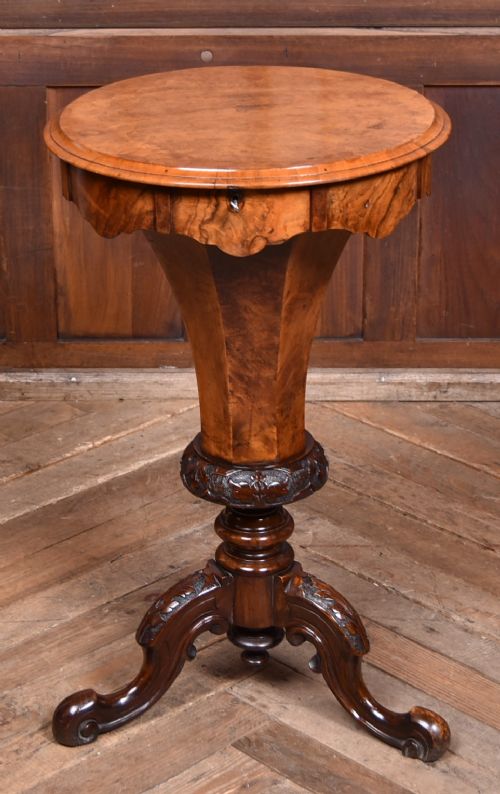
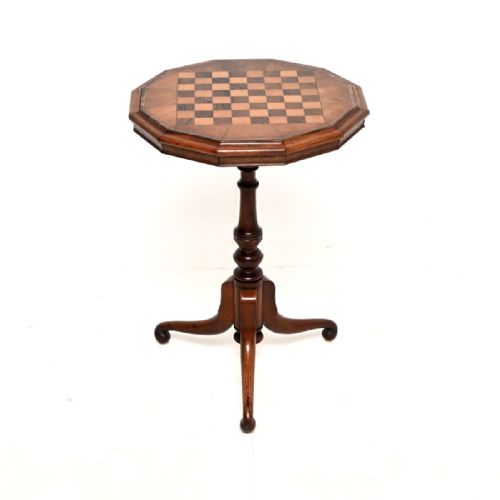
The most common examples on this page are nineteenth-century chess and occasional tables, often featuring clever inlaid boards on their tops. You will also encounter workboxes and centre tables that utilise the eight-sided form to anchor a room.
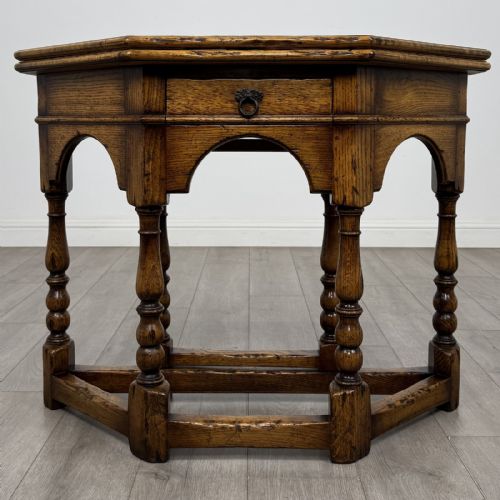
Makers adapted the octagonal shape to various functions, including tea service and library use, meaning a single piece often served multiple domestic purposes. This adaptability explains why these tables remain practical additions to contemporary homes.
How they were made
Cabinet makers relied on dense hardwoods like rosewood and walnut for the primary structure, often mounting them on sturdy tripod bases. These timbers provided the strength needed to support complex folding mechanisms and heavy stone tops.
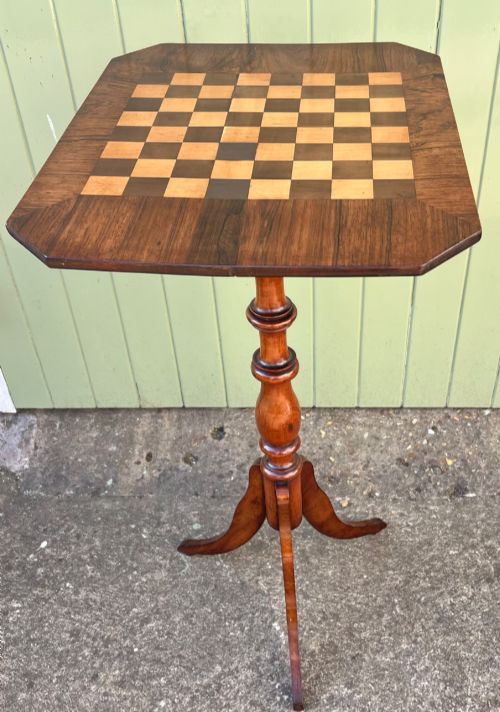
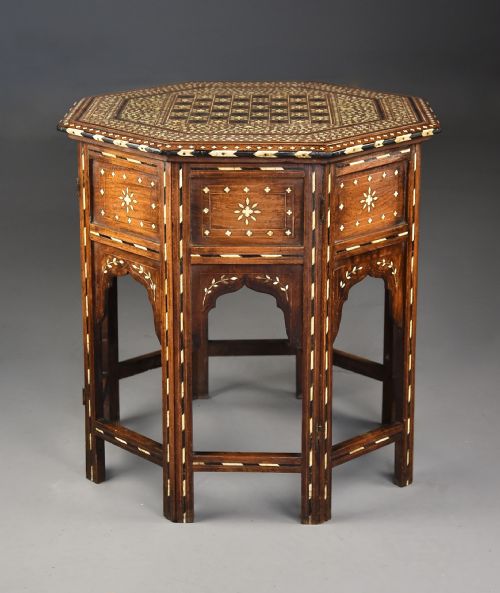
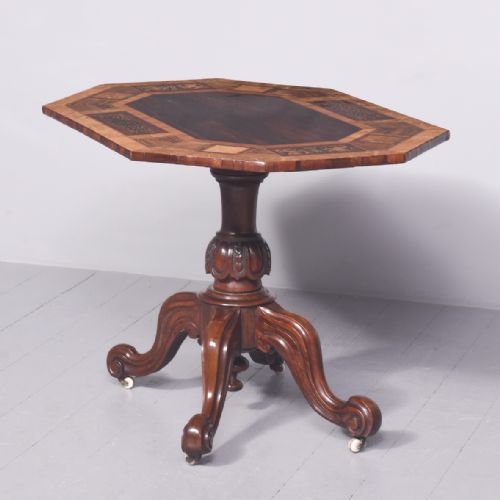
Inlay work defined the playing surfaces, combining contrasting materials such as boxwood, ebony, and satinwood to form precise chequer boards. Skilled artisans also employed mixed wood inlay and brass mounts to accentuate the geometric lines of the octagon.
Octagonal Gaming Table Retail Price Guide 2026
Typical asking prices for octagonal gaming table among the pieces listed under this phrase on Sellingantiques today, from the lower quarter to the upper quarter. They describe what is for sale here now, not the wider market.
Materials appearing across these tables include rosewood, walnut, oak, boxwood, ebony, marble, and mixed wood inlay.
What varies in quality
The precision of the wood inlay sets the finest tables apart from simpler workshop productions, particularly in the crispness of the chequer-board squares. Sharp alignment of contrasting timbers like boxwood and ebony indicates superior hand-working.
Choice of materials dictates the standing of a piece, with figured rosewood and specimen marble tops representing the upper tier of construction. The sophistication of the supporting column and tripod base further separates standard utility pieces from high-status examples.
The Octagonal Gaming Table Glossary
- Octagonal gaming table
- A multi-sided furniture piece designed specifically for board games or card playing. These tables often feature fold-over tops or dedicated inlaid playing surfaces.
- Chequer-board
- A patterned grid of alternating dark and light squares embedded directly into the tabletop. This surface allowed owners to play chess or draughts without fetching a separate board.
- Tripod base
- A central pillar supported by three spreading feet, commonly utilised on smaller occasional tables. This construction kept floor space clear while maintaining stability.
- Specimen marble
- A tabletop composed of various types of polished marble arranged in geometric patterns or panels. This material added significant weight and a cool, decorative surface to nineteenth-century tables.
- Mixed wood inlay
- The technique of fitting contrasting thin slices of timber into recessed cavities within a solid wood background. Artisans used this method to create intricate borders and decorative motifs.
Octagonal Gaming Table: Frequently Asked Questions
What is an octagonal gaming table used for?
These tables served primarily for indoor pastimes such as chess, draughts, and card games, providing a dedicated surface that could double as an occasional or tea table.
Many designs incorporated folding tops or internal compartments to store playing pieces, making them central hubs for Victorian and Regency home entertainment.
How do I identify a Regency period table?
Regency pieces often display refined proportions, classical influence, and the extensive use of dark timbers like rosewood accented with brass mounts.
They frequently rely on clean architectural lines and tripod pedestal bases rather than the heavier carvings found later in the nineteenth century.
Are these tables suitable for daily use?
Most examples were built to withstand regular domestic life, combining sturdy hardwood frames with practical surfaces for writing, sewing, or dining.
However, delicate inlaid timber and polished marble tops benefit from sensible precautions like coasters and gentle cleaning methods to preserve their finish.
What distinguishes Victorian gaming tables?
Victorian examples tend to embrace ornate decoration, incorporating rich walnut veneers, intricate boxwood inlay, and multi-functional designs like combined workboxes.
They reflect a period of great variety where furniture makers experimented with revival styles alongside traditional forms to suit changing middle-class tastes.