

Octagonal Center Table
An octagonal centre table anchors a room with eight-sided geometry and timber variety.
Octagonal Center Table
An octagonal centre table sits freestanding in a room, designed to be viewed from all sides rather than pushed against a wall. The form spans several decades and movements, appearing in Victorian, Edwardian, and Art Deco iterations.
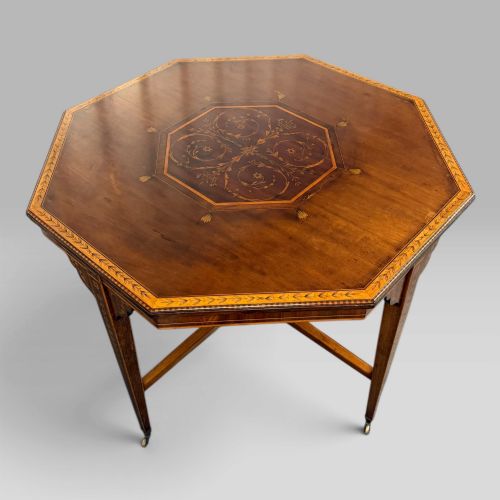
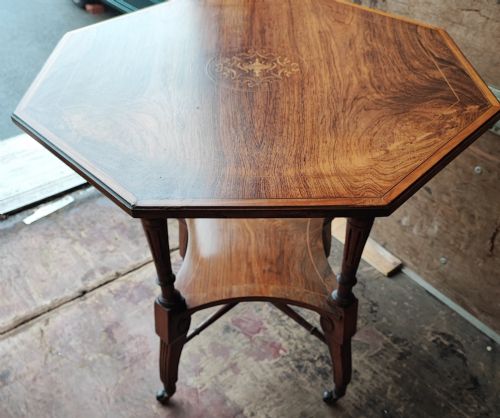
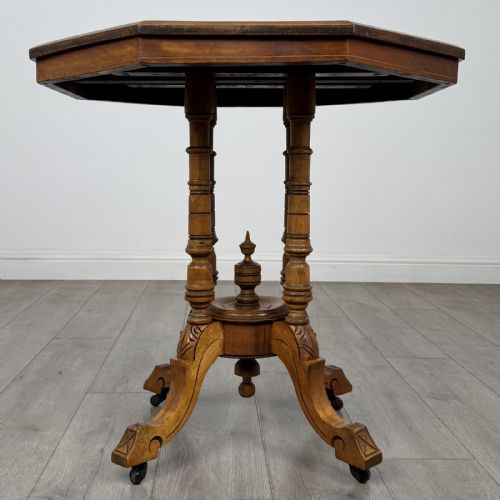
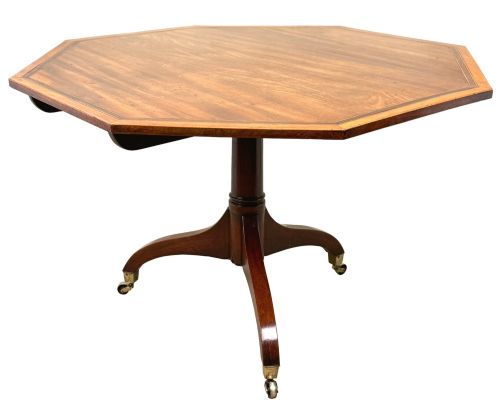
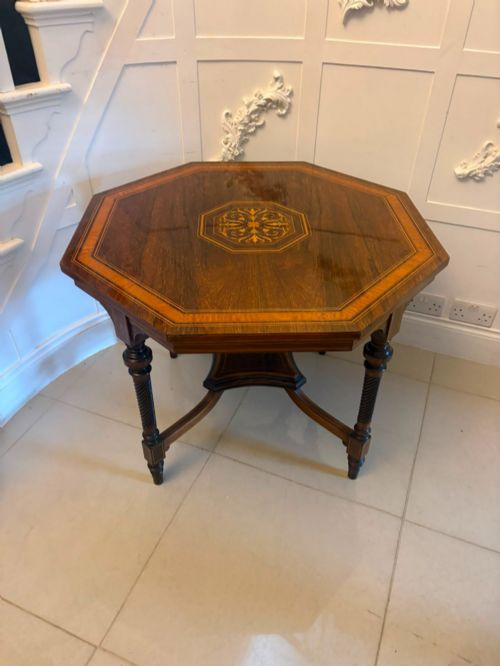
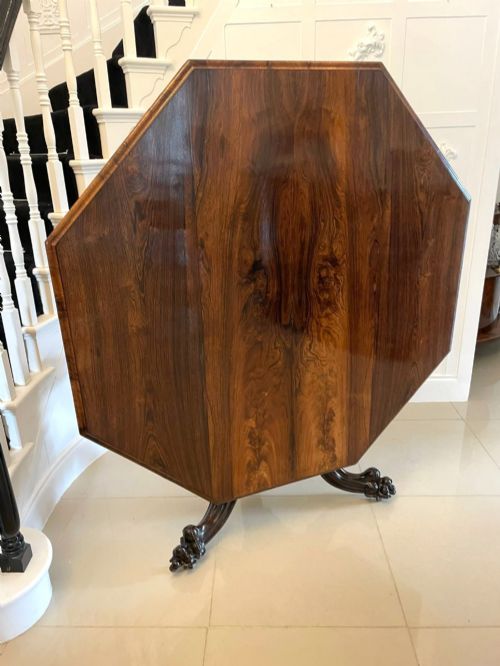
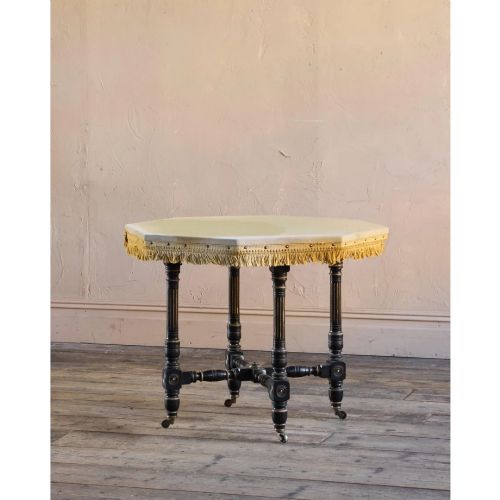
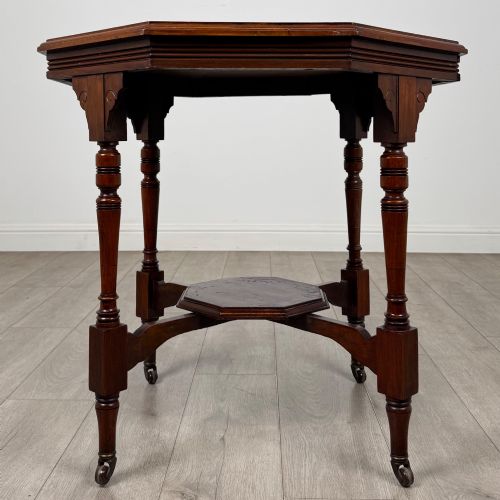
Most examples encountered here date from the nineteenth century and the early decades of the twentieth. Walnut, mahogany, and rosewood dominate the surviving pieces, often shaped with canted corners forming the eight-sided top.
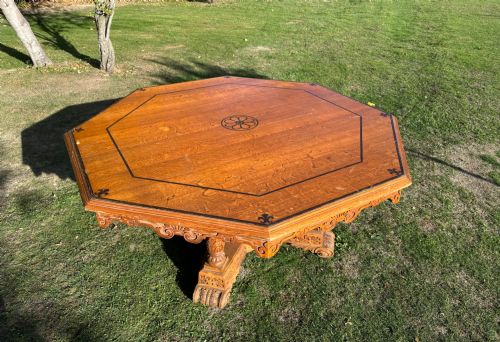
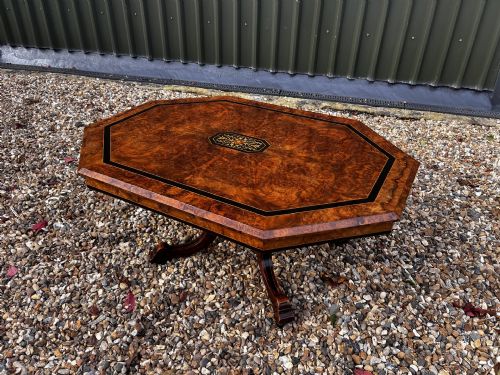
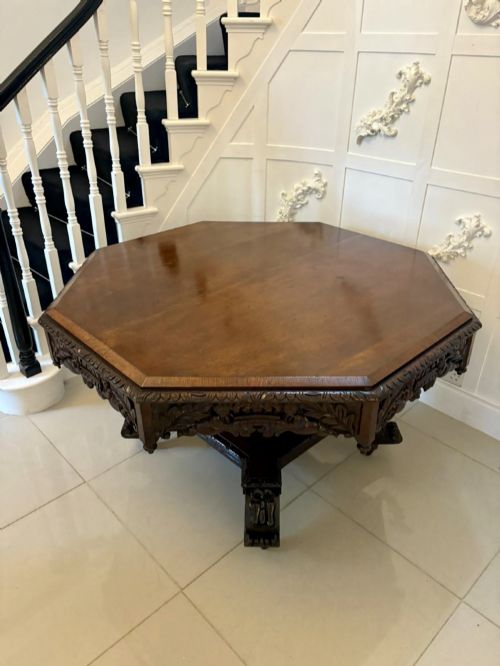
Makers utilised these surfaces for libraries, halls, and drawing rooms as occasional or display furniture. Variations range from heavy oak library tables with Gothic influences to inlaid burr walnut specimens.
Materials and construction
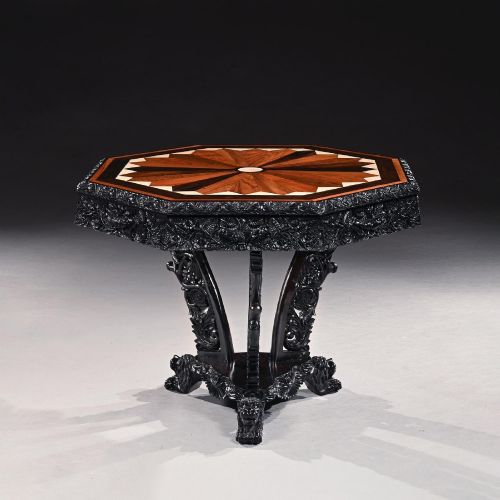
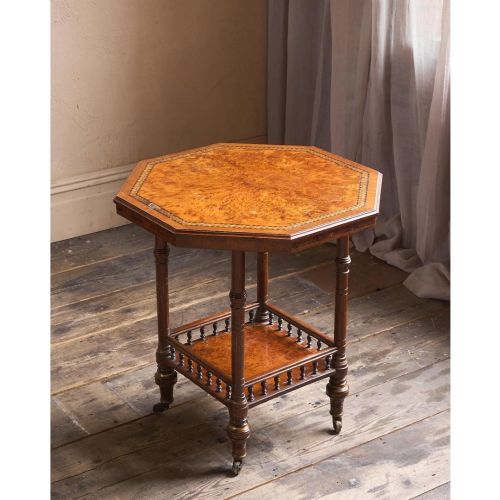
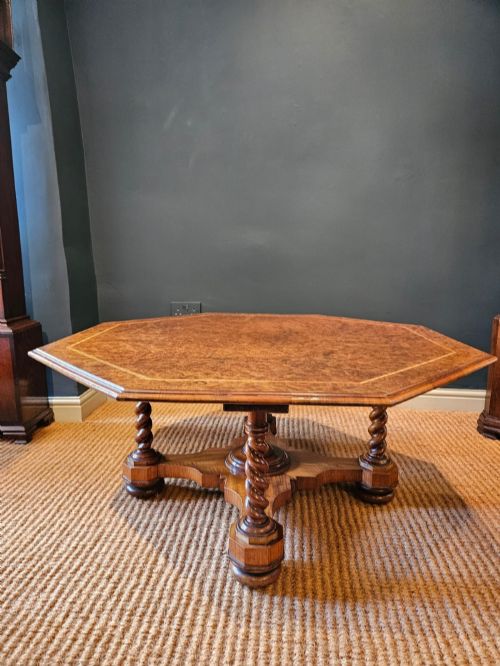
Cabinet makers built these tables using dense hardwoods like mahogany, oak, and walnut, frequently applying veneers of burr walnut, burr yew, or rosewood to the top surfaces. Marquetry, parquetry, and specimen wood inlays add geometric and floral decoration across many Victorian and Edwardian examples.
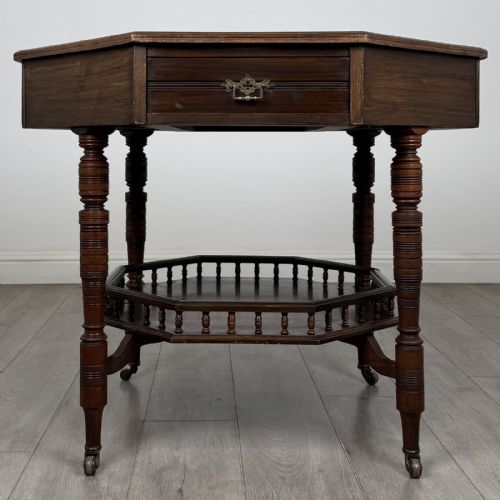
Structural support takes the form of central pillars, pedestals, or four-legged frames, occasionally incorporating galleried shelves beneath the main top. Leather inserts, tooled in Moroccan style, appear on library and writing variants.
Octagonal Center Table Retail Price Guide 2026
Typical asking prices for octagonal center table among the pieces listed under this phrase on Sellingantiques today, from the lower quarter to the upper quarter. They describe what is for sale here now, not the wider market.
Swans feature in the carved details of French giltwood tables.
Factors of quality
The refinement of the timber selection and the precision of the marquetry or parquetry inlay distinguish standard production from exceptional examples. Dense grain figuring in burr walnut or rosewood elevates a piece.
Carved detailing on pedestals, legs, and aprons reveals the hand of skilled workshops, especially in Gothic Revival and Aesthetic Movement pieces. The retention of original surfaces and leather inserts also alters the standing of a table.
Gillows·A Hindley and Sons
The Octagonal Center Table Glossary
- Marquetry
- Decorative veneer work forming pictures or patterns using various tinted woods. It frequently covers Victorian table tops.
- Parquetry
- Geometric mosaic woodwork used for repeating patterns on table surfaces. It creates block or chevron designs.
- Ebonised
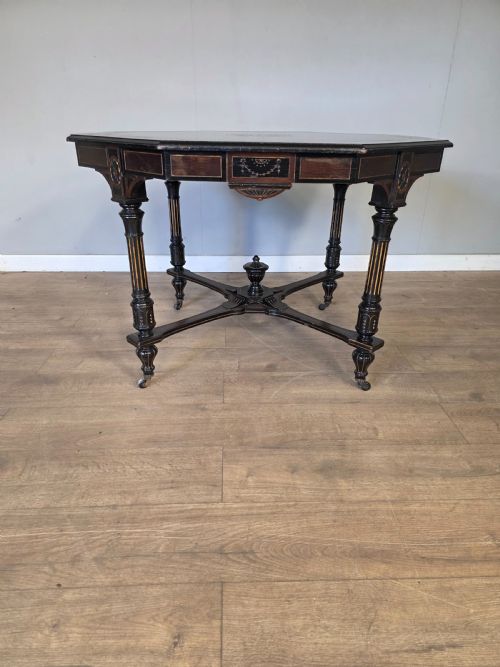
- Wood stained or treated to imitate ebony. This finish appears widely on Aesthetic Movement and late nineteenth-century tables.
- Galleried shelf
- A raised wooden edge running around a lower tier or shelf. It prevents items from sliding off.
- Specimen wood
- Various distinct timber types collected and used together in tabular inlay. Ceylonese examples often utilise this technique.
Octagonal Center Table: Frequently Asked Questions
What is an octagonal centre table used for?
These tables served various domestic functions, from library desks and hall furniture to parlor display surfaces. Their eight-sided tops allowed placement in the middle of a room.
Many included lower shelves or leather inserts to accommodate books, lamps, and decorative objects.
How do I date an octagonal centre table?
Dating relies on timber choices, stylistic influences, and construction methods recorded in the piece. Victorian examples often feature heavy burr walnut and marquetry, while Edwardian versions use lighter walnut or mahogany.
Stylistic cues like Gothic Revival arches or Art Deco sunburst veneers help narrow the period.
Where should I place an octagonal table?
Because the top is eight-sided and finished on all edges, the table suits placement in the middle of a room or centre of a hallway. They function well beneath central ceiling lighting.
Pairing them with a lamp or displaying books utilises the freestanding design.
What woods were used for these tables?
Mahogany, oak, and walnut form the primary structural timbers across the selection. Cabinet makers applied burr walnut, rosewood, and ebony as veneers or solid elements.
Inlays incorporate boxwood and various specimen timbers.