

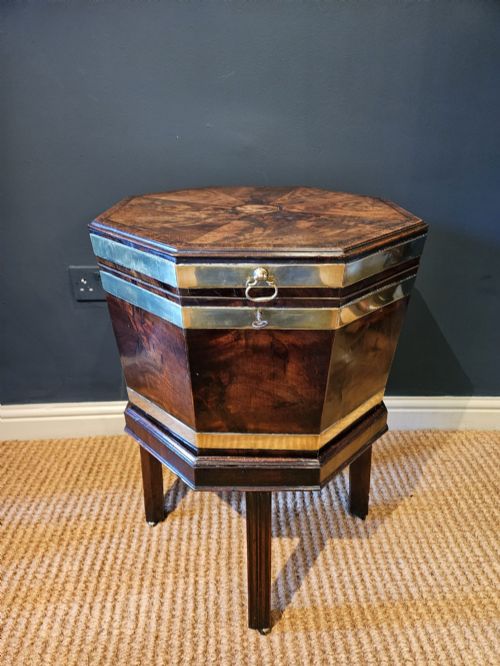
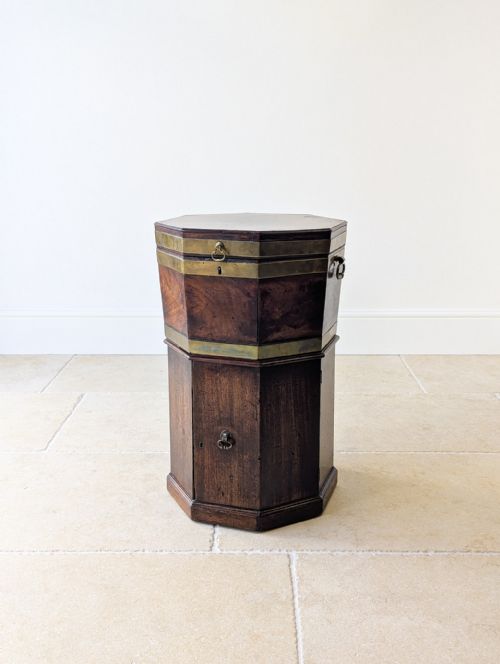
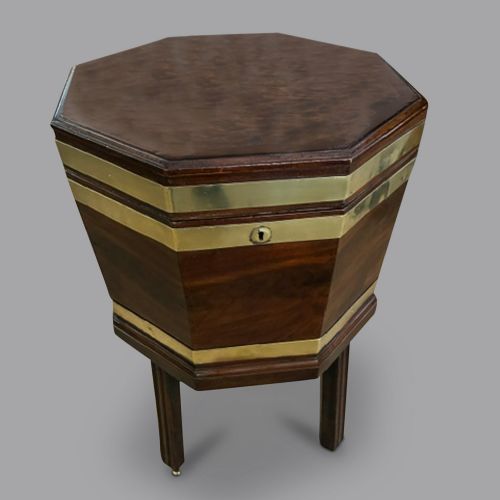
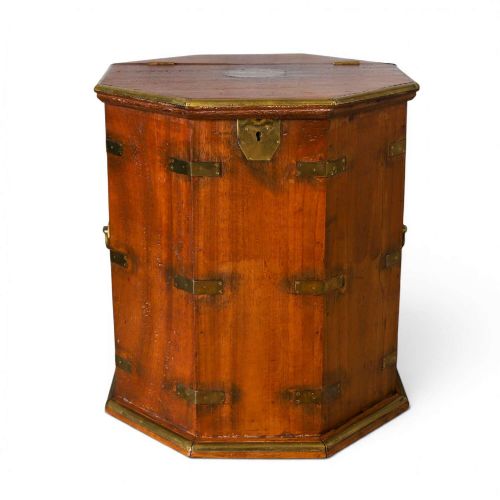


Octagonal Brass Bound Chest
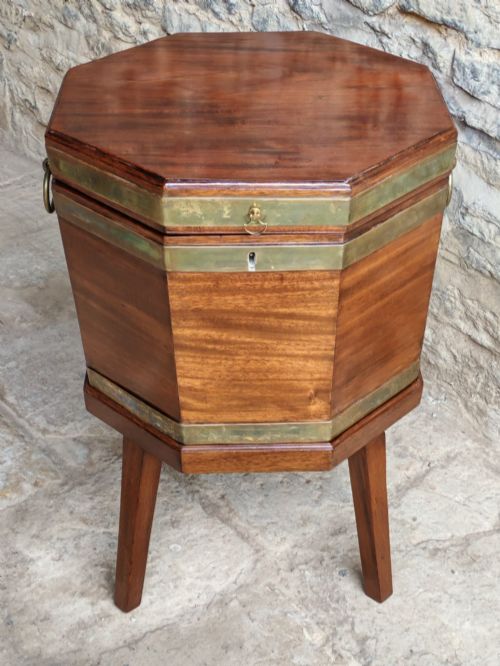
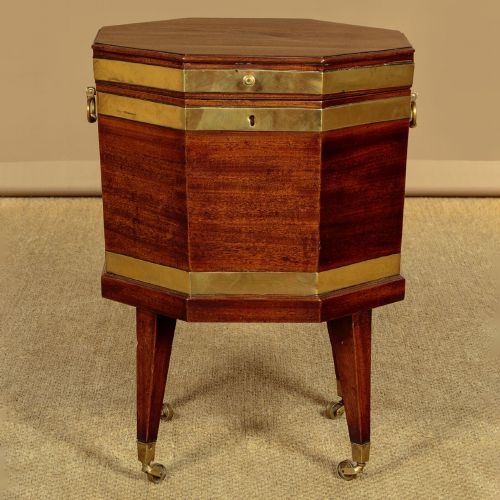
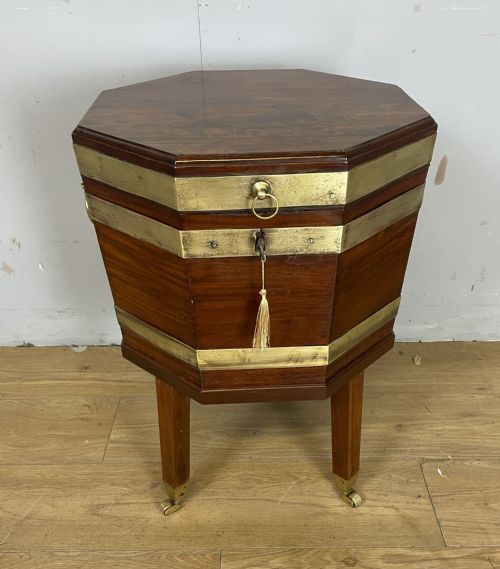
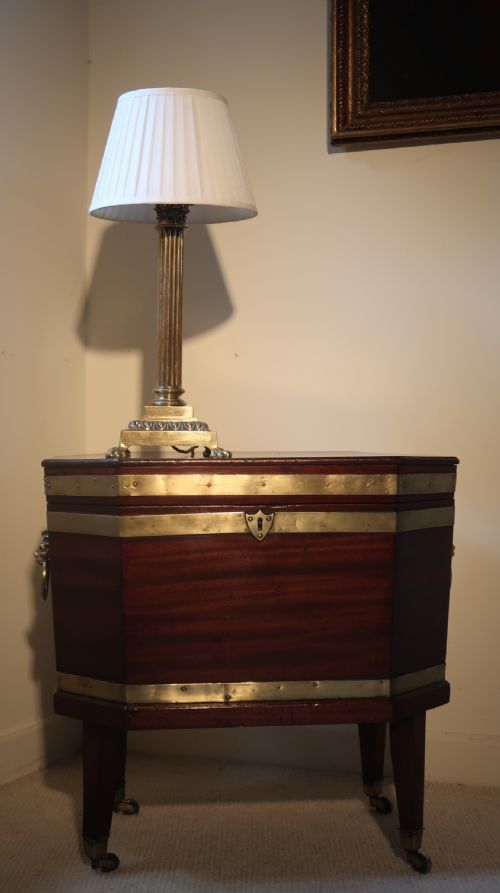
An octagonal brass bound chest is a sturdy Georgian cellaret designed to keep wine bottles cool, bringing rich mahogany and gleaming metalwork into a dining room.
Octagonal Brass Bound Chest
An octagonal brass bound chest is primarily encountered as a cellaret or wine cooler dating from the Georgian period, the eighteenth century, and the Regency era. These timber vessels held bottles for the dining table, often lined to contain ice and water.
Mahogany and padouk dominate the forms, frequently joined by teak and secured with heavy brass bands. Examples span George III workshops alongside Anglo-Indian colonial pieces and later Regency revival interpretations from the early twentieth century.
Most items present an eight-sided body with a hinged lift-up top, designed to sit low on the floor beneath a sideboard or beside a dining table. Their robust construction reflects both domestic utility and the portable requirements of military campaign furniture.
How they were made
Cabinetmakers constructed these chests using dense hardwoods such as mahogany, padouk, and teak, joined with precise woodworking techniques to withstand heavy loads of liquid and ice. The distinctive eight-sided geometry required careful stave or panel assembly.
Polished brass strapping and corner braces were applied to reinforce the structural joints and protect the timber edges from impact during use. Hinges and carrying handles were cast and fitted by hand, anchoring the metalwork firmly into the wood.
Octagonal Brass Bound Chest Retail Price Guide 2026
Typical asking prices for octagonal brass bound chest among the pieces listed under this phrase on Sellingantiques today, from the lower quarter to the upper quarter. They describe what is for sale here now, not the wider market.
Some chests retain traces of the original lead lining that once kept the claret cold.
What varies in quality
Quality rests in the choice of timber and the precision of the brass work, where thick, well-figured mahogany and heavy gauge brass bindings distinguish finer workshops from simpler production. The crispness of the octagonal angles and the integration of the hardware reveal the maker's hand.
Proportions and interior preservation separate superior examples, as does the fidelity of period details such as George III styling or Anglo-Indian colonial craftsmanship. Later revival pieces display different handling of the timber and metal compared to eighteenth-century originals.
The Octagonal Brass Bound Chest Glossary
- Cellaret
- A lockable container or chest designed to hold bottles of wine near the dining table. They frequently include internal divisions and linings.
- Brass bound
- The application of brass straps, bands, and corners to wooden chests for structural reinforcement and decoration. This technique is common on campaign furniture and heavy storage pieces.
- George III
- The stylistic period spanning the reign of King George III from 1760 to 1820. Furniture from this era emphasises classical proportions and refined cabinetwork.
- Anglo-Indian colonial
- Items produced in India under British influence, often utilising exotic timbers such as padouk and teak. These pieces combine British furniture forms with local craftsmanship.
- Campaign chest
- Portable furniture made in sections with recessed brass hardware for ease of transport during military expeditions. They are built for durability and travel.
Octagonal Brass Bound Chest: Frequently Asked Questions
What is an octagonal brass bound chest used for?
These chests functioned primarily as wine coolers and cellarettes in eighteenth and nineteenth-century dining rooms. They held bottles of wine and ice close to the table during formal meals.
Today, collectors use them as decorative storage pieces or side tables in living spaces. Their distinct shape and metalwork make them strong focal points in a room.
How do I date an octagonal brass bound chest?
Dating relies on examining the timber species, construction methods, and brass hardware styling. Eighteenth-century examples often feature solid mahogany or padouk with hand-cast brass bands.
Later revival pieces from the early twentieth century show different interior linings and secondary woods. Comparing the joinery helps distinguish Georgian originals from later interpretations.
What woods were used for these chests?
Cabinetmakers primarily selected dense tropical hardwoods such as mahogany and padouk for their strength and rich grain patterns. Teak also appears, particularly in Anglo-Indian colonial pieces.
These timbers resisted warping in humid conditions and provided a stable base for heavy brass reinforcement. The choice of wood often points to the region of manufacture.
Are these pieces waterproof inside?
Original interiors were designed to hold ice and wet wine bottles, often featuring lead linings or wooden inserts. Over the centuries, many of these internal linings have been removed, repaired, or replaced.
Buyers should examine the interior construction to understand its current state. Most are used dry today rather than filled with ice.
How do I care for mahogany and brass?
Maintain the wood with appropriate furniture wax to nourish the grain and protect the finish from drying out. Avoid placing the chest in direct sunlight or near heat sources.
Polish the brass bindings sparingly with a soft cloth to preserve their natural lustre without removing the patination. Regular dusting keeps the surfaces secure.