
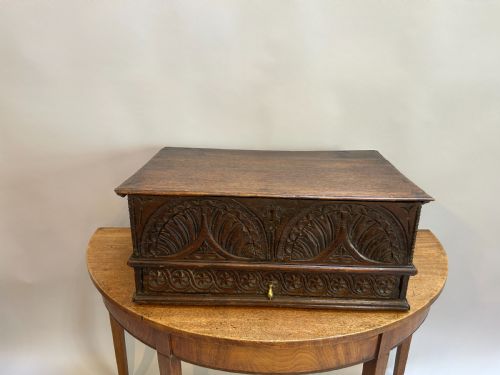

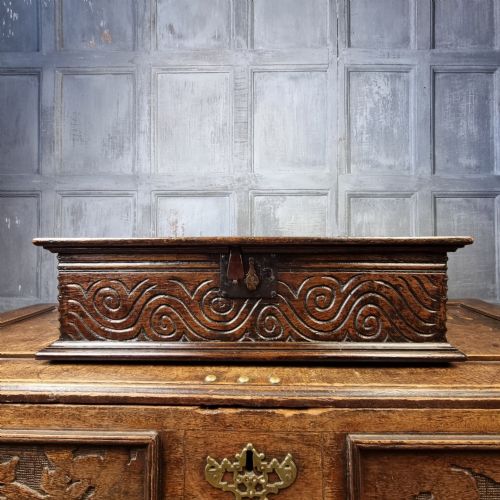

Oak Writing Desk Chest
When you search for an oak writing desk chest, you enter a tradition of sturdy utilitarian furniture spanning from the seventeenth century through the Georgian era.
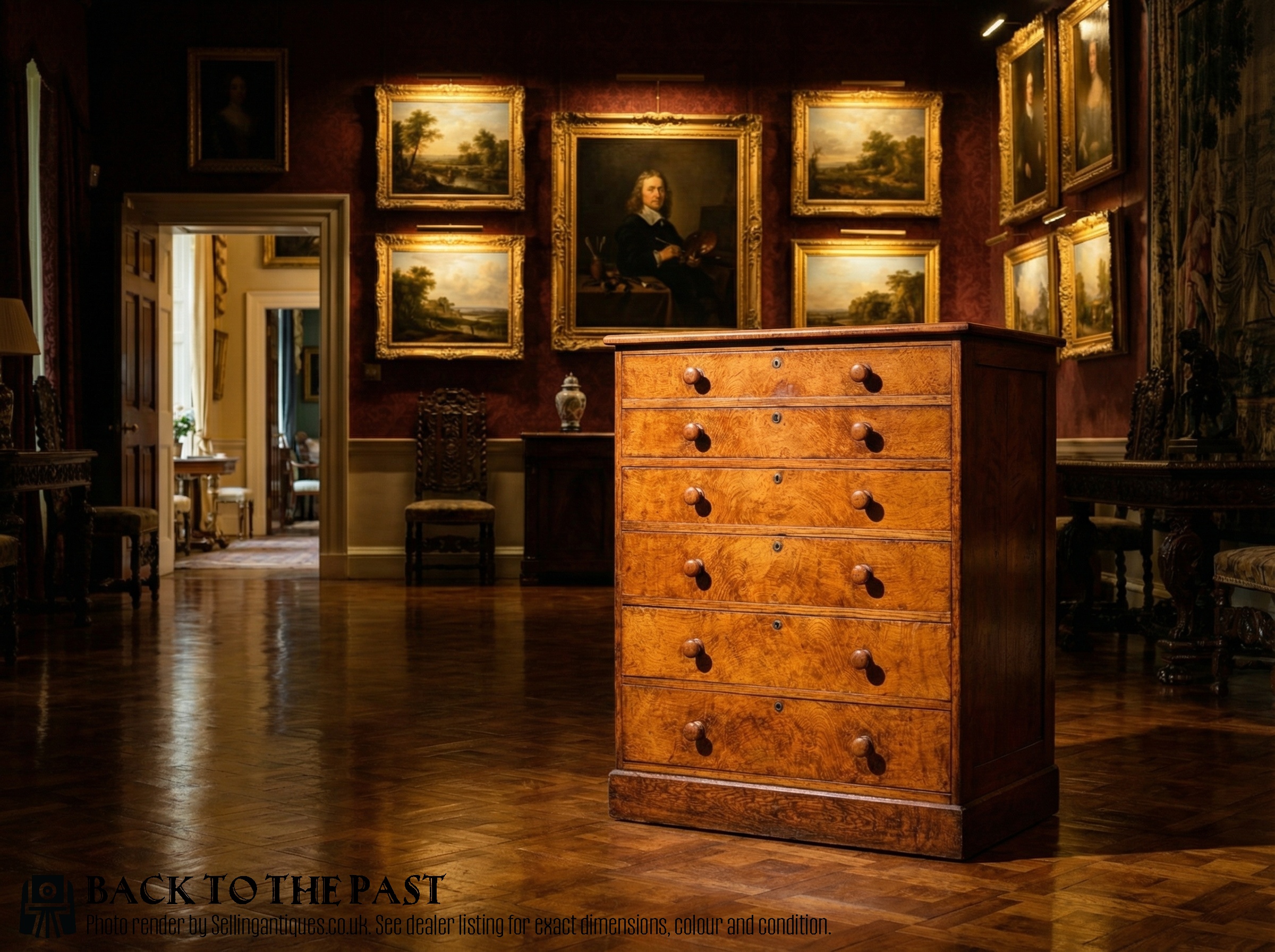
Oak Writing Desk Chest
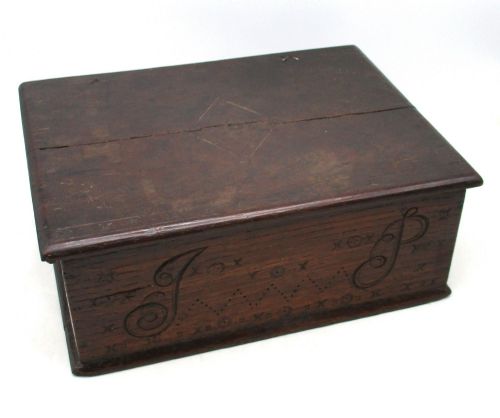
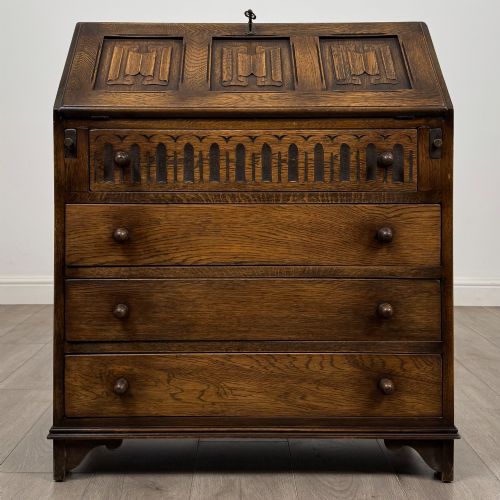
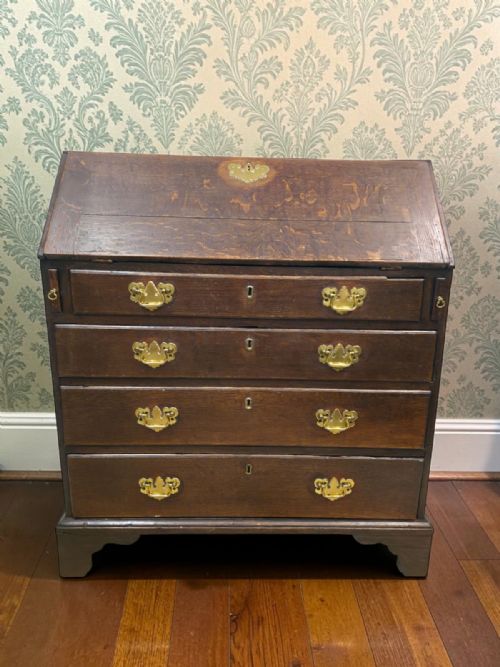
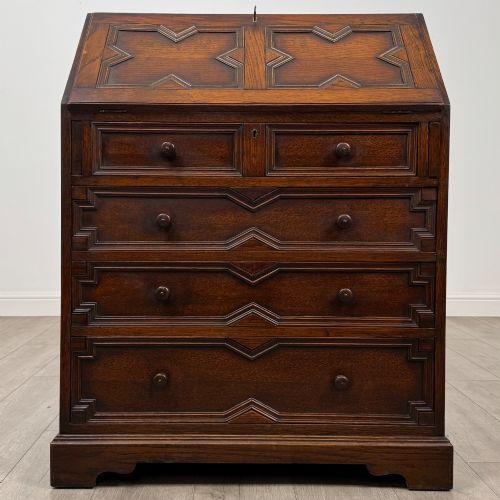
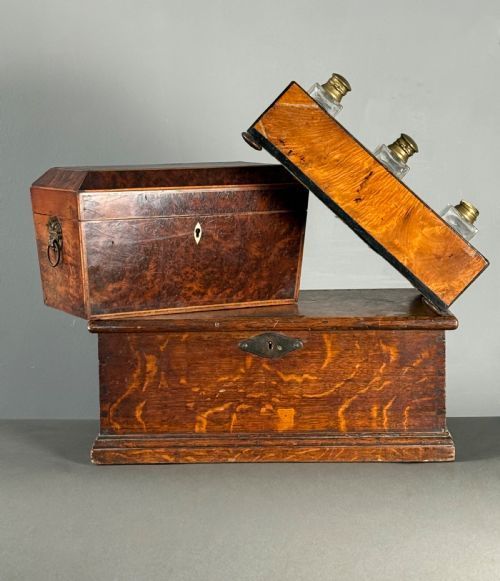
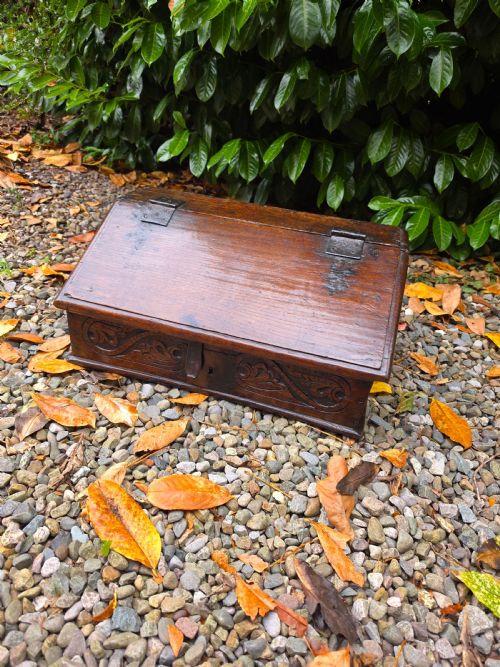
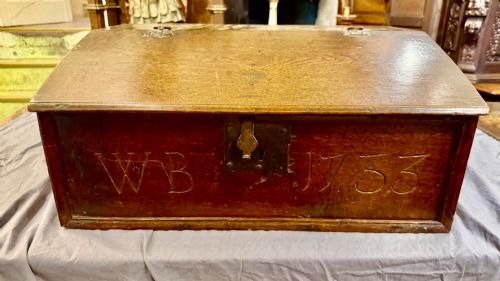
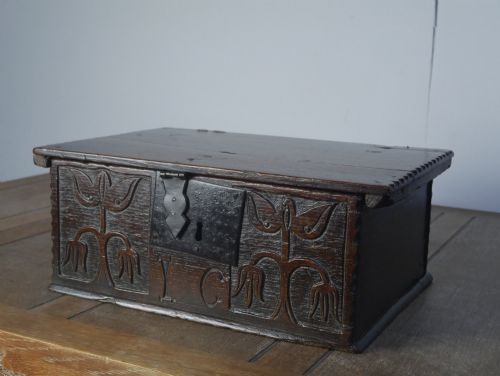
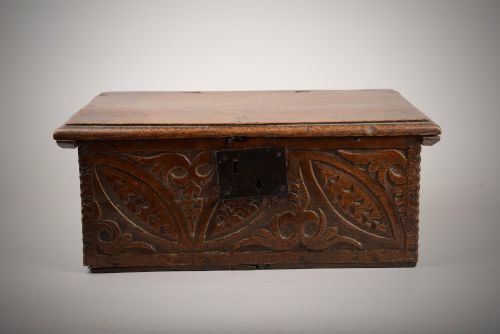
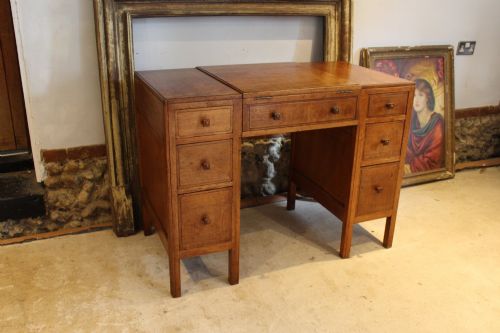
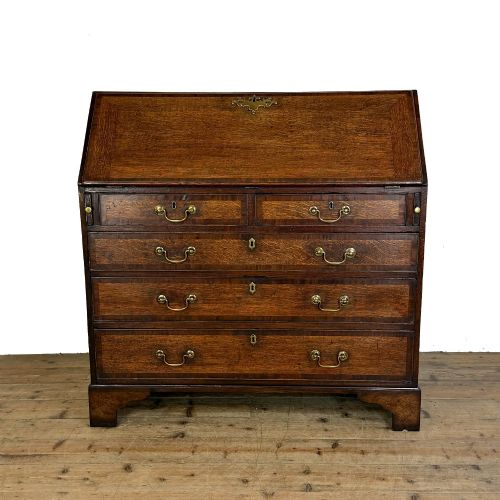
An oak writing desk chest bridges the functional need for storage and a writing surface, appearing in forms such as early Bible boxes, document chests, slant-front bureaux, and tall chest-on-chest secretaires. These pieces emerge primarily from the seventeenth and eighteenth centuries, alongside later revivals from the Edwardian period and the nineteen-twenties.
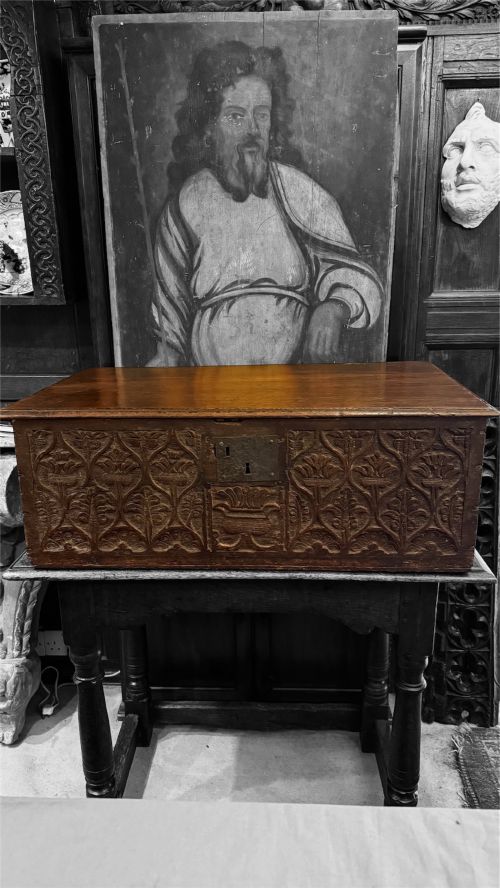
The earliest examples on this page take the form of compact table boxes and slanted Bible boxes designed for portable writing and secure document storage. Later Georgian developments integrate these writing compartments directly into chest furniture, combining drawers with fall-front desks or fitted interiors.
Materials and construction
Construction relies heavily on solid oak timbers, occasionally accented with secondary woods like walnut or mahogany, and detailed with boxwood, holly, and bog oak inlay. Hardware consists of wrought iron hinges and brass handles or escutcheons that secure lids and internal compartments.
Joinery techniques span from early pegged frame-and-panel construction to dovetailing on internal drawers. Surfaces frequently display hand-carved motifs, linenfold patterns, or distinct grain figuring found in pollard oak.
Object forms include slant-front bureaux, document boxes, Bible boxes, and tall chest-on-chest secretaires.
Judging the work
Quality rests upon the integrity of the timber selection and the crispness of the hand-carved details or inlay work. Pieces displaying cohesive period hardware and unblemished internal drawer construction stand apart from heavily restored or later reproduction items.
Proportion and the preservation of original surfaces dictate distinction across the range. Finer examples retain their original patination and structural cohesion without excessive timber replacement.
Lamb Of Manchester·Simpoles of Manchester
The Oak Writing Desk Chest Glossary
- Bible Box
- A small wooden chest with a sloping lid, originally made to hold a family Bible and writing materials.
- Slant Front
- A hinged writing flap that angles upward when closed, revealing a fitted interior of small drawers and pigeonholes.
- Secretaire
- A chest of drawers or cabinet featuring a pull-out or drop-front writing drawer containing a fitted desk space.
- Lowboy
- A small oak or walnut dressing table standing on relatively tall legs, often featuring a configuration of small drawers.
- Linenfold
- A style of wood carving that imitates folded fabric, frequently seen on panels from earlier periods.
Oak Writing Desk Chest: Frequently Asked Questions
How do bureaux differ from desk chests?
Bureaux typically incorporate a slanted writing flap that opens to reveal internal compartments and small drawers. Desk chests combine standard drawer storage with integrated writing surfaces or pull-out secretaire drawers.
Both forms utilise robust oak construction and serve similar document-handling purposes. The distinction lies primarily in how the writing surface is accessed.
Where were these pieces used?
These pieces served practical administrative functions in homes, churches, and offices where secure document storage was essential. They provided a dedicated space for correspondence and record-keeping before modern office furniture developed.
Their compact nature allowed them to be placed in parlours, studies, or bedrooms. They functioned as private repositories for personal letters and financial papers.
How do I care for antique oak?
Antique oak benefits from stable room temperatures away from direct heat sources and strong sunlight. Regular dusting with a dry, soft cloth preserves the natural finish without requiring heavy polishes.
Applying occasional traditional wax helps maintain the lustre of the timber. Avoiding excess moisture protects the historical joins and hardware.