




Oak Wood Lowboy
An oak wood lowboy is a low table with drawers, prized for its compact storage and centuries of craftsmanship.
Oak Wood Lowboy
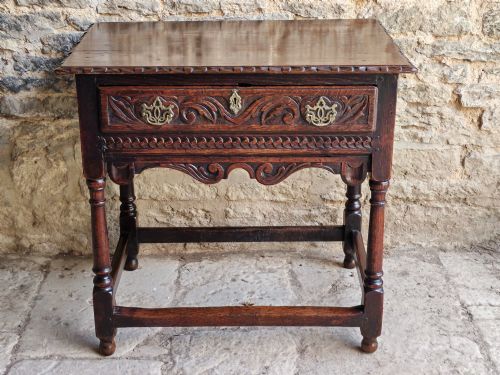
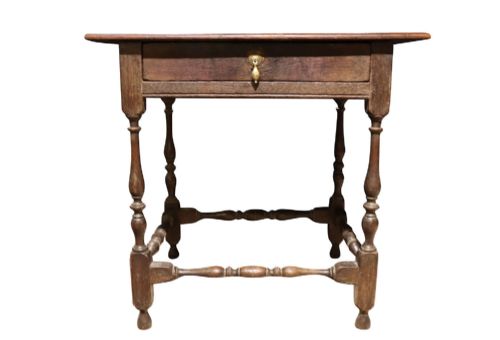
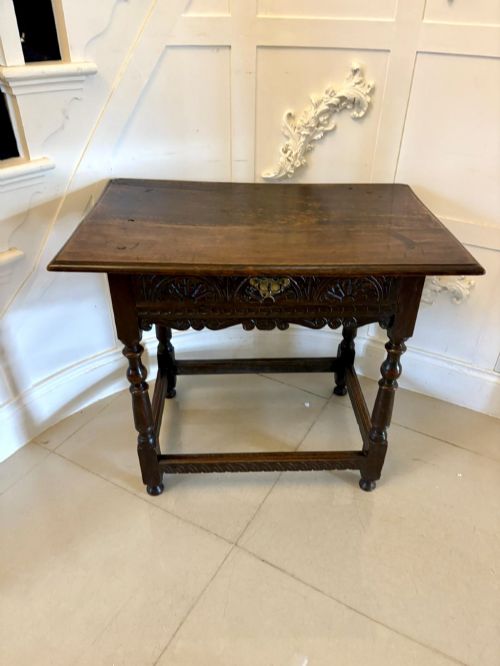
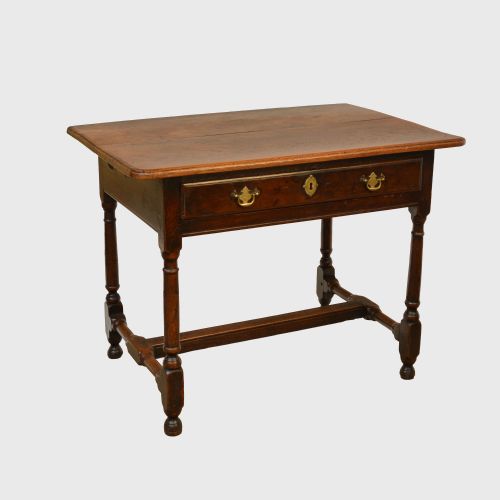
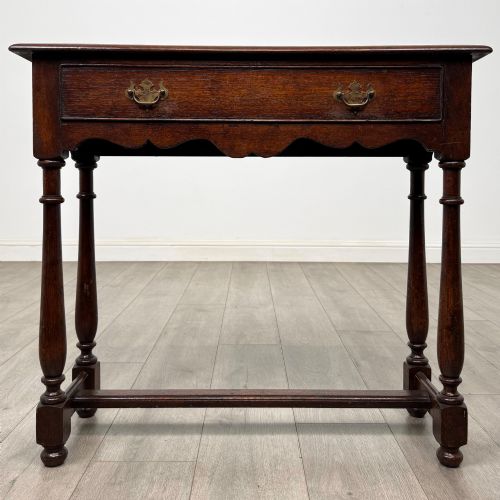
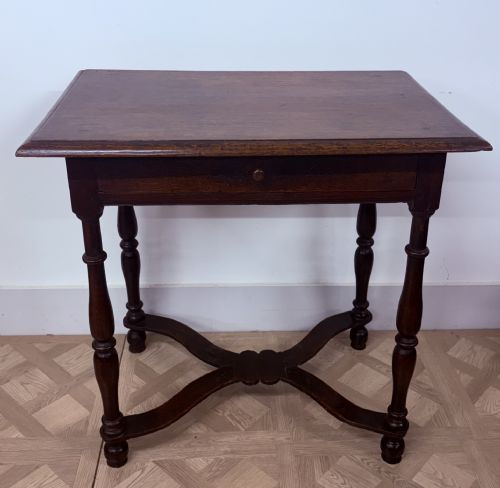
An oak wood lowboy serves as a compact table fitted with drawers, historically used for grooming, writing, or small storage. Buyers searching for an oak wood lowboy will encounter pieces spanning from the seventeenth century through the Georgian era and into later revival styles.
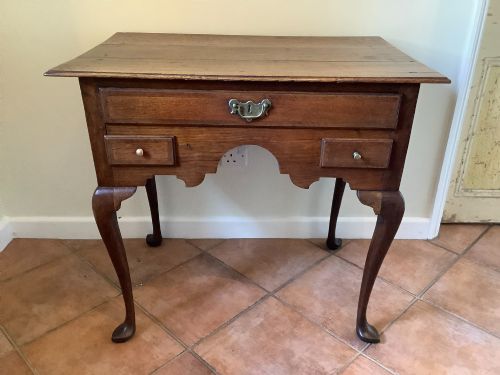
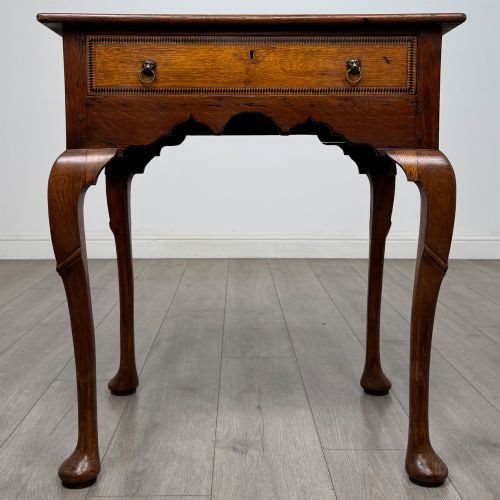
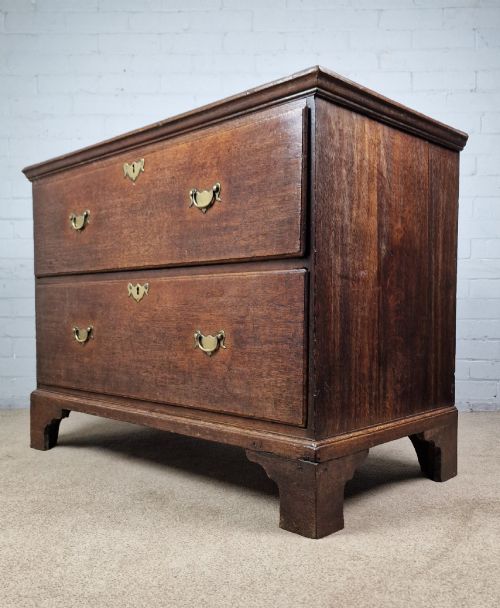
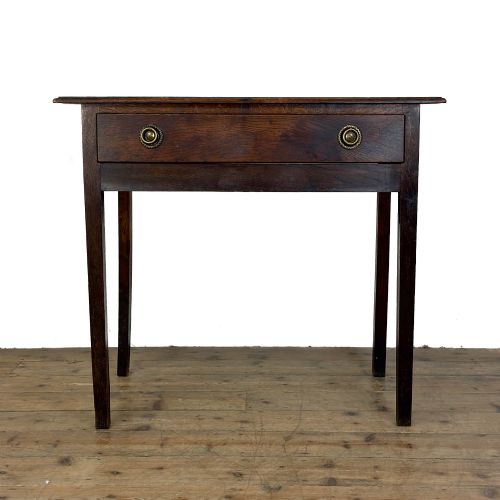
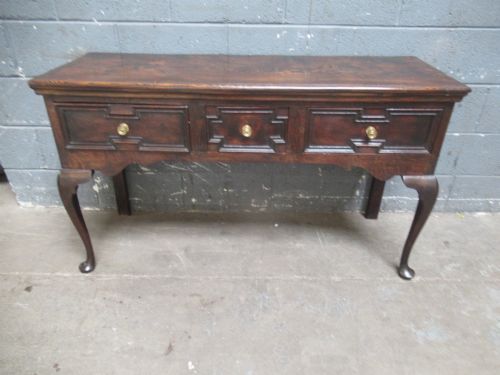
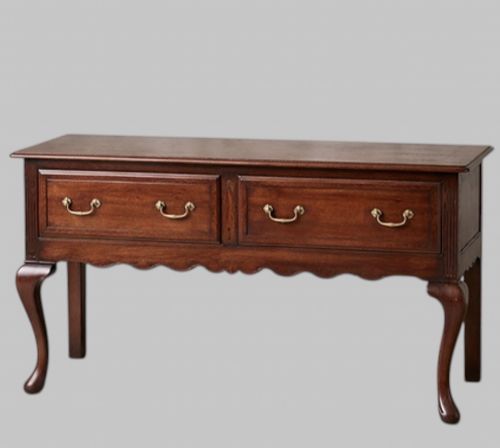
The version most commonly met on this page is the eighteenth-century lowboy, often constructed with multiple drawers and standing on cabriole or straight legs. Alongside dedicated lowboys, the selection includes related side tables, dressing tables, and dresser bases sharing similar proportions.
Origins stretch across English country workshops and formal urban cabinet makers, reflecting styles such as William and Mary, Queen Anne, and George II. These tables bridge the gap between small chests of drawers and larger sideboards.
Materials and Construction
Cabinet makers relied primarily on solid oak, frequently paired with secondary woods like elm, yew, cherrywood, or walnut for secondary framing and drawer linings. Timber was quarter-sawn to reveal characteristic medullary rays, adding durability and distinctive figuring to the surface.
Construction techniques involve traditional joinery such as mortise and tenon frames, hand-cut dovetails on drawer boxes, and pegged joints. Surfaces finished with period brass drop handles and escutcheons complete the structural assembly.
Oak Wood Lowboy Retail Price Guide 2026
Typical asking prices for oak wood lowboy among the pieces listed under this phrase on Sellingantiques today, from the lower quarter to the upper quarter. They describe what is for sale here now, not the wider market.
Listings feature oak alongside elm, yew, cherrywood, walnut, and burr walnut veneer, reflecting diverse regional cabinet-making traditions.
Assessing Quality and Character
The standard of timber selection and original surface patination separates basic vernacular pieces from finer urban examples. Finer pieces display crisp moulding profiles, well-proportioned cabriole legs, and minimal replacement to structural hardware.
Proportion and integrity dictate overall desirability, where untouched drawer linings and minimal timber replacement preserve the historical weight of the table. Later revivals show different tooling marks and assembly methods compared to seventeenth and eighteenth-century originals.
The Oak Wood Lowboy Glossary
- Lowboy
- A small table with one or more rows of drawers, standing on relatively tall legs. They originated in the late seventeenth century and served various domestic functions.
- Cabriole leg
- A furniture leg that curves out at the knee and tapers inward to an ankle, frequently terminating in a pad or foot. This form became popular during the Queen Anne and George II periods.
- Dovetail
- A joint formed by interlocking wedge-shaped fingers, used extensively in drawer construction. Hand-cut dovetails indicate traditional period craftsmanship.
- Escutcheon
- A flat plate surrounding a keyhole, usually made of brass on period furniture. It protects the surrounding wood from wear caused by the key.
- Quarter-sawn
- A method of milling logs radially to the growth rings. This cut produces stable boards with distinctive decorative grain patterns.
Oak Wood Lowboy: Frequently Asked Questions
What is an oak wood lowboy used for?
An oak wood lowboy functions well as a compact writing desk, a lamp table, or a hallway surface for small items. The drawers provide concealed storage while the top surface holds decorative objects.
Historically placed in bedchambers for grooming and dressing, these tables adapt easily to modern living rooms and studies.
How do I date an antique lowboy?
Dating relies on examining the joinery methods, timber species, handle styles, and leg shapes. Seventeenth-century examples often feature straight turned legs and plank tops, while eighteenth-century versions introduce cabriole legs and refined drawer dovetailing.
Revival pieces from later centuries mimic these historical forms but display different tool marks and secondary timbers upon close inspection.
Are lowboys and side tables the same thing?
A lowboy is technically a specific type of side table defined by the presence of drawers and a low stance. Many side tables lack drawers entirely or stand taller than traditional dressing lowboys.
Listings often group these forms together due to their similar rectangular footprints and room placements.
How do I care for antique oak furniture?
Keep antique oak away from direct heat sources and dramatic humidity changes to prevent timber splitting. Regular dusting with a dry cloth maintains the surface.
Applying a traditional beeswax polish occasionally helps nourish the wood and preserve the natural patinated finish built up over centuries.