


Oak Wing Armchair
An oak wing armchair is a substantial fireside seat designed to keep out draughts, and these pieces combine solid timber frames with comfortable upholstery.
Oak Wing Armchair
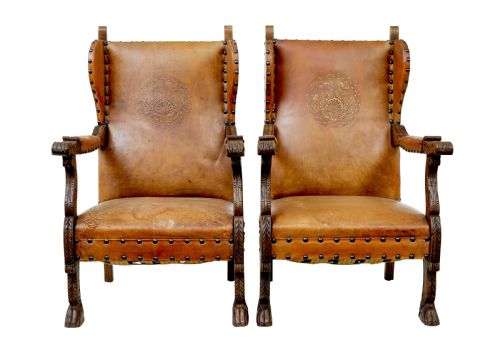
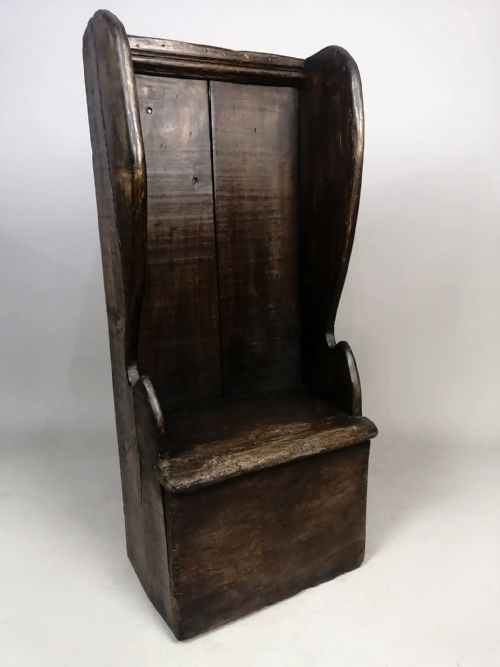
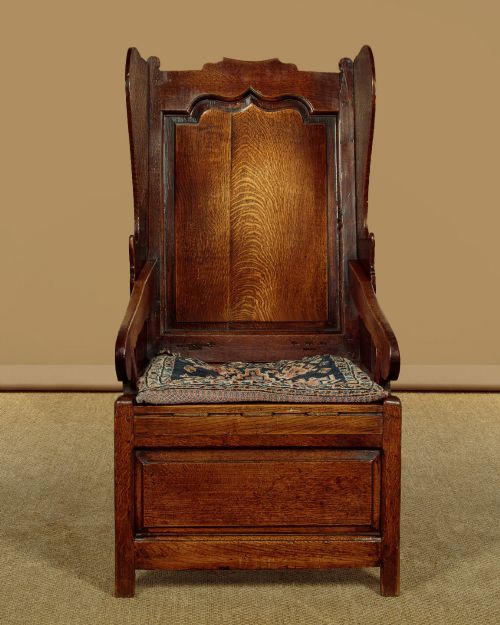
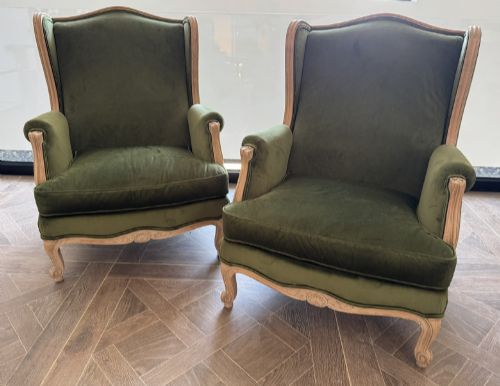
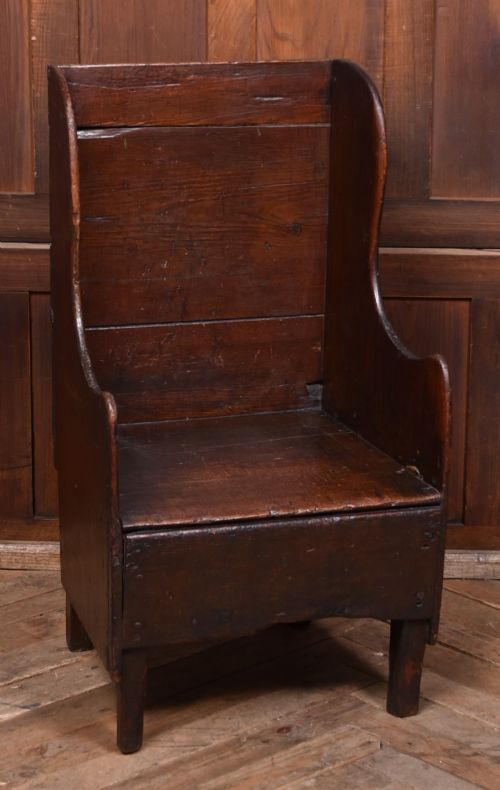
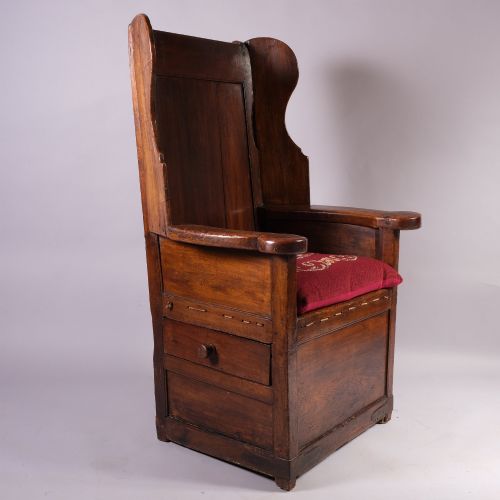
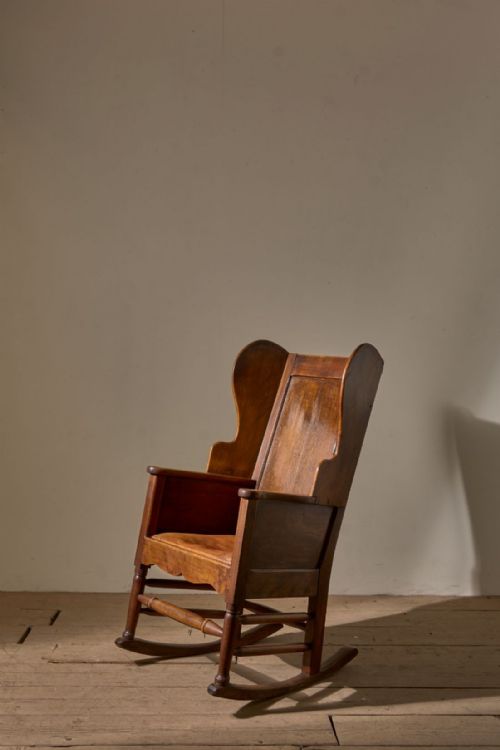
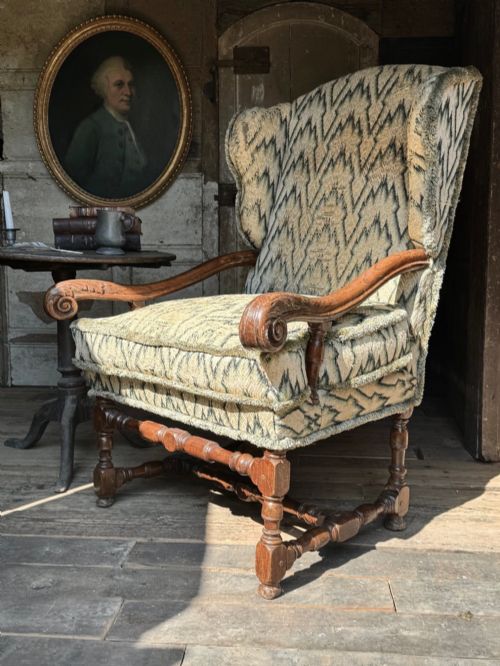
When you search for an oak wing armchair, you look at seating built to shelter the sitter from cold air through high backs and protective side panels, often known as wings. These forms range from vernacular lambing chairs with solid wooden hoods to fully upholstered library chairs framed in timber.
The examples gathered here stretch across centuries, including regional pieces from the eighteenth century, revival styles from the nineteenth, and later variations up to the 1930s. You will frequently encounter lambing chairs alongside leather or fabric upholstered wingbacks.
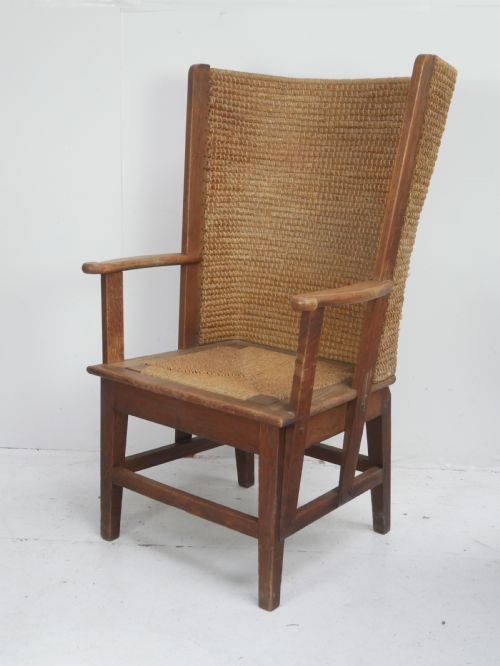
Regional variations appear across the selection, from Lakeland and Scottish pieces to French chateau models and Orkney chairs. This diversity shows how cabinetmakers adapted the basic protective shape to local domestic needs.
Materials and construction methods
Makers built the structural frames primarily from solid oak, sometimes combining it with fruitwood or walnut for specific components. Joinery relied on traditional pegging and framing techniques to support heavy daily use.
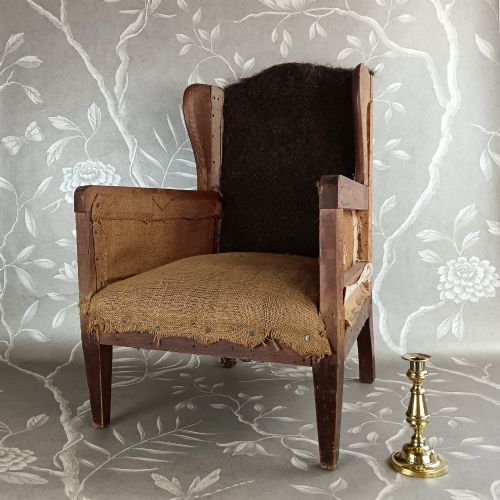
Upholstery materials such as leather, velvet, hessian, and wool textile were secured with brass studs over stuffing materials. In solid hood variations like lambing chairs, the timber itself formed the draught-excluding enclosure around the upper body.
Listings feature oak frames combined with brass, leather, velvet, hessian, and wool textile across multiple centuries.
Distinguishing quality across the range
The integrity of the timber frame and the retention of original structural components dictate the standing of a piece. Earlier examples depend on the survival of unaltered oak framing without extensive replacement timber.
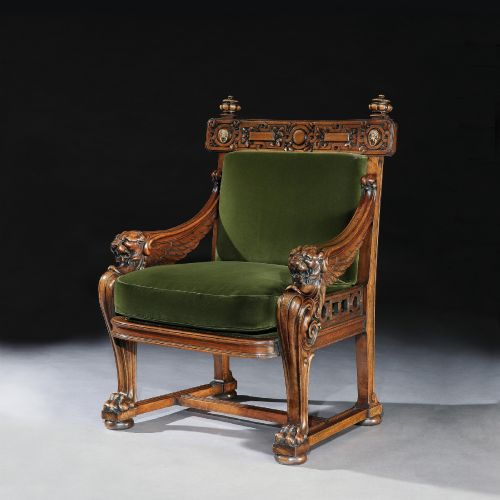
The refinement of carved details, such as lion monopodia or heraldic motifs, separates standard utilitarian seating from ambitious cabinetwork. Similarly, the sympathetic choice of period-appropriate leather or textile upholstery alters the overall presence of the chair.
George Montague Ellwood·Thomas Hope
The Oak Wing Armchair Glossary
- Wingback
- A chair design featuring side panels attached to the arms and rising to the back to deflect draughts. These projections were originally conceived to trap heat from a fireplace.
- Lambing chair
- A vernacular wooden seat with a high solid back and enclosed sides, traditionally featuring a compartment beneath the seat. They date frequently to the eighteenth century and earlier.
- Monopodia
- A carved furniture support taking the form of a single lion leg and foot. This classical motif appears on revival pieces influenced by nineteenth-century designers.
- Orkney chair
- A distinctive seating form featuring a woven straw back attached to a wooden frame. They originate from Scottish island traditions.
- Vernacular
- Objects made by local craftsmen following regional traditions rather than metropolitan academic designs. These pieces use readily available timbers like oak and fruitwood.
Oak Wing Armchair: Frequently Asked Questions
What is a lambing chair?
A lambing chair is a traditional wooden seat featuring a high solid back and enclosed sides designed to block cold draughts near an open hearth. Many examples include a concealed drawer beneath the seat.
These chairs often display vernacular craftsmanship using solid oak or fruitwood, reflecting regional building traditions rather than formal urban styles.
How do I date an oak wing armchair?
Dating relies on examining the construction methods of the oak frame, tool marks, and the style of any carved ornament. Joinery techniques and wood oxidation offer key clues to the century of manufacture.
Upholstery materials and styles also help, though coverings are frequently replaced over time while the underlying timber frame remains original.
Where were these armchairs used?
These armchairs served primarily in libraries, drawing rooms, and beside fireplaces in large country houses and farmhouses. Their protective wings provided shelter in draughty period rooms.
Scaled-down children's versions also exist, showing how the domestic fireside comfort was replicated for all family members.
How do I care for leather upholstery?
Leather upholstery benefits from regular dusting and occasional treatment with appropriate conditioning creams to prevent drying and cracking. Keeping the material away from direct heat sources preserves its suppleness.
Original studded edges and antique leather require gentle handling to maintain the integrity of the period finish.