

Oak Wardrobe Press
These oak wardrobe press pieces offer substantial storage through centuries of craftsmanship, combining hanging space and linen storage in solid timber.
Oak Wardrobe Press
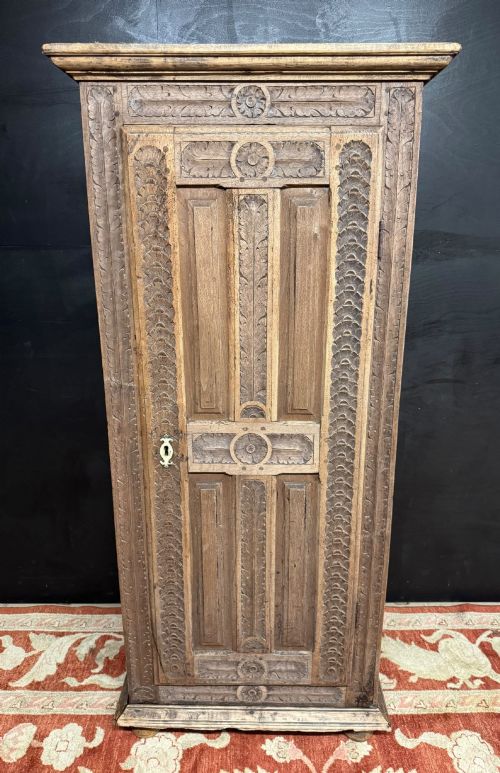
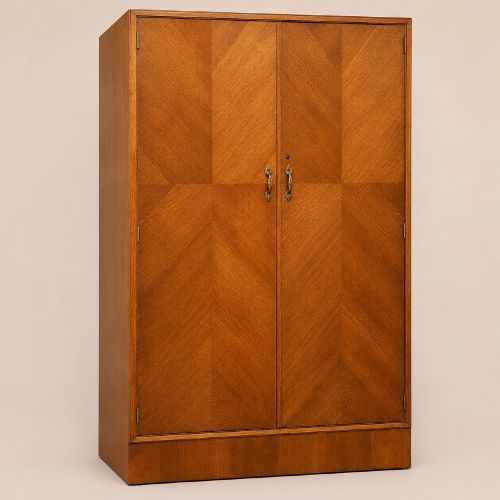
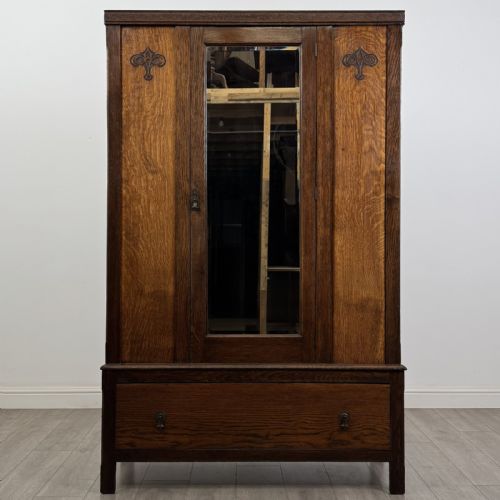
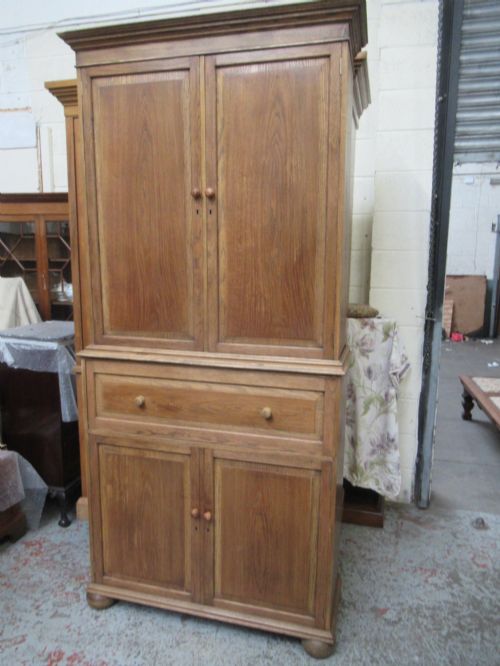
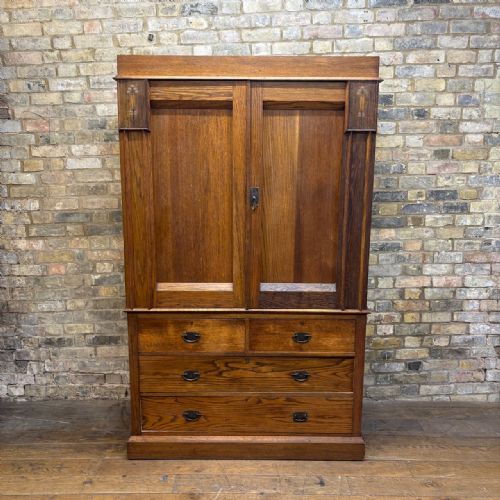
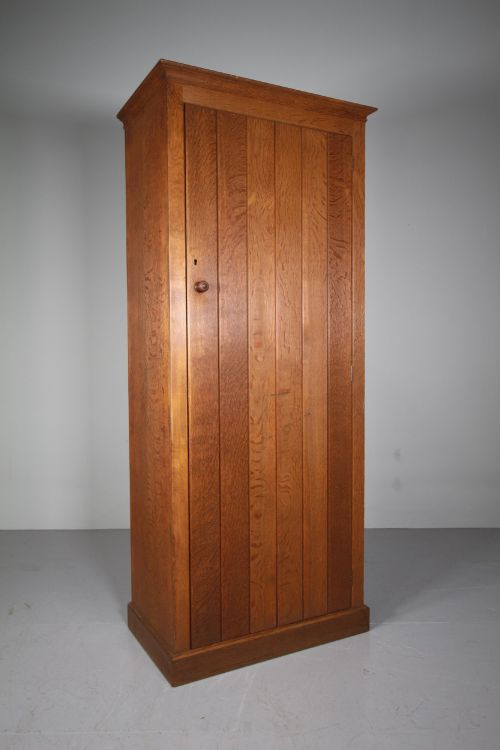
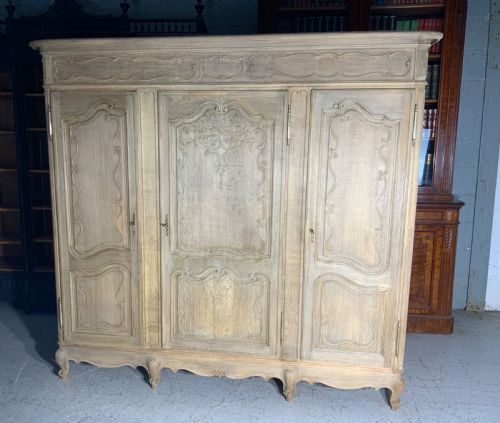
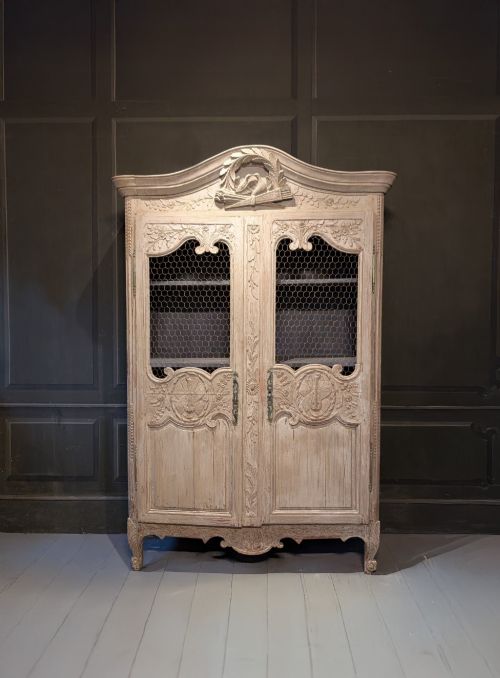
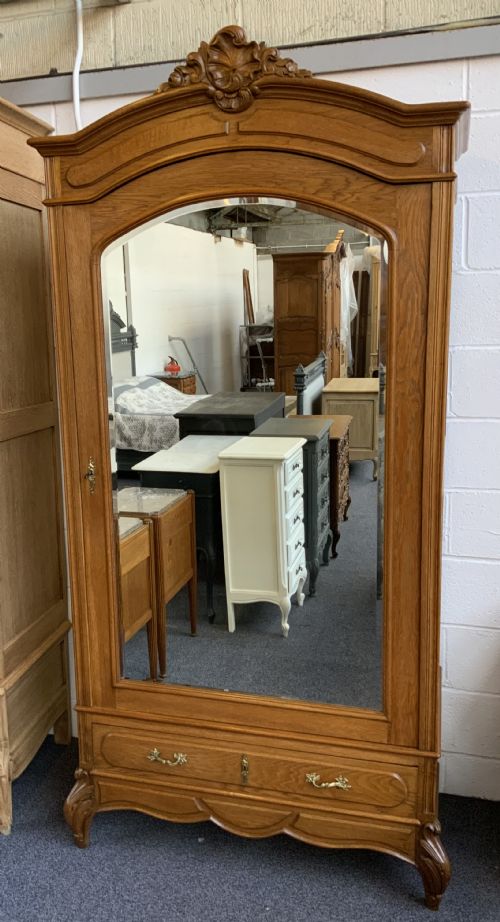
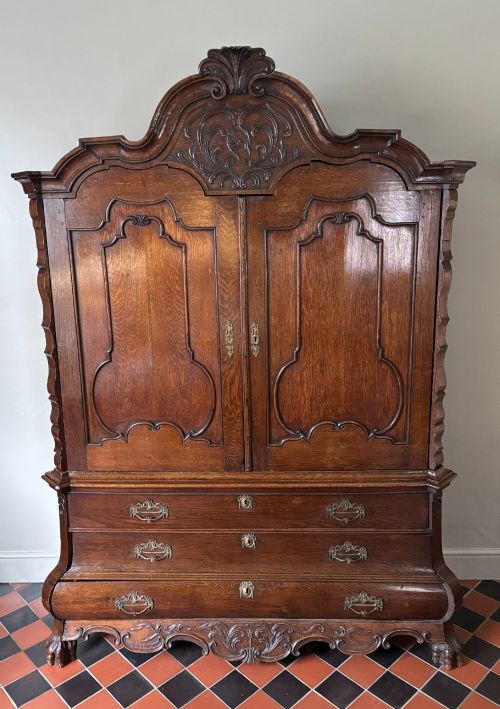
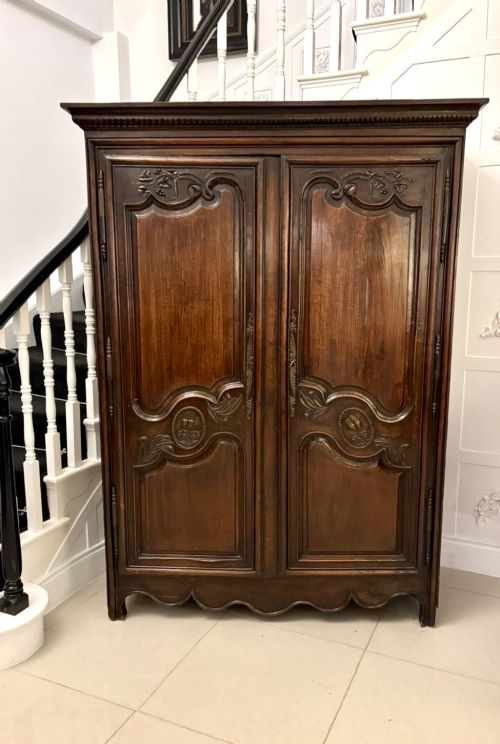
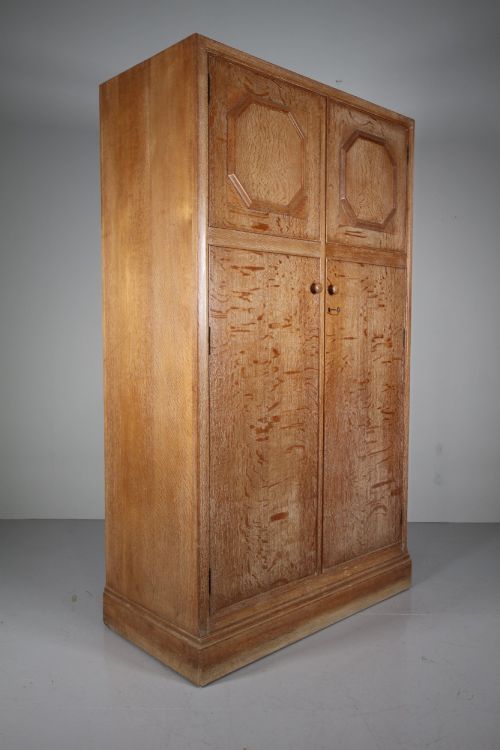
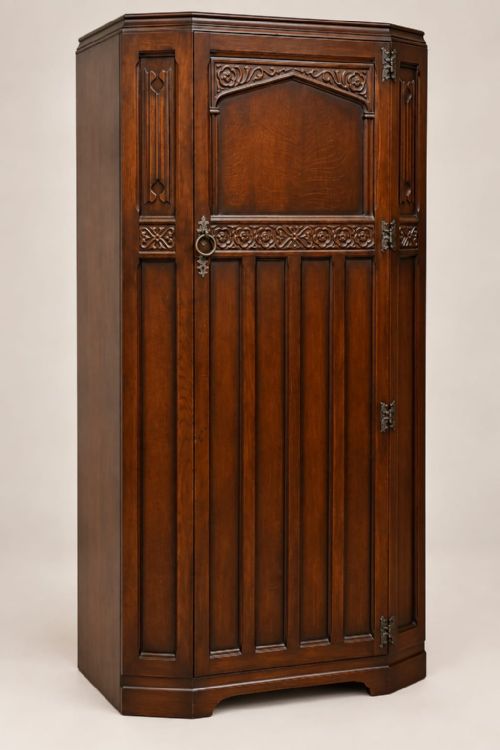
An oak wardrobe press bridges the functional gap between hanging garments and storing folded textiles, taking forms that range from Georgian housekeepers' cupboards to early twentieth-century compactums.
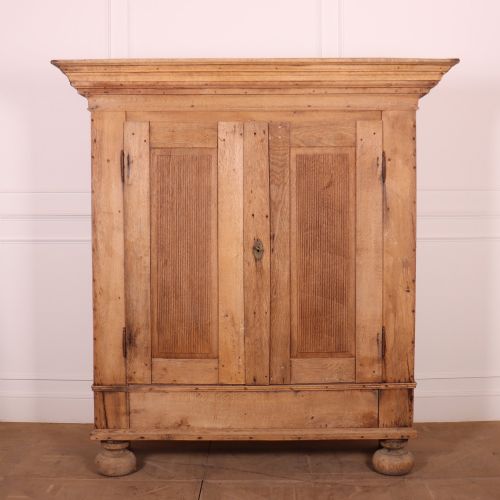
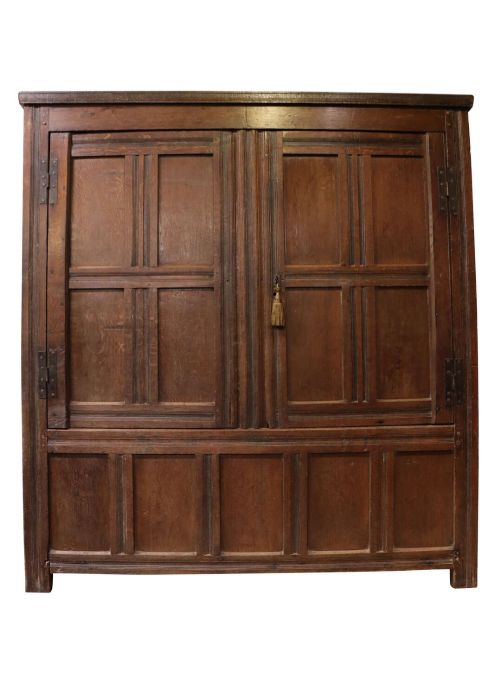
The pieces on this page span from the seventeenth century through the Georgian and Victorian eras into the nineteen-twenties and thirties, drawing on English, French provincial, Dutch, and Welsh vernacular traditions.
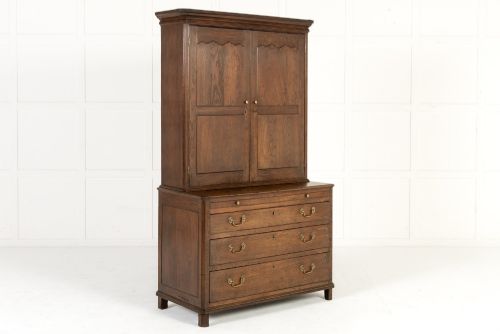
Buyers encounter structural variations that include linen presses with sliding trays above drawers, tallboys, armoires, and multi-door wardrobes built for domestic utility.
Materials and Construction
Makers utilised solid oak supplemented by secondary timbers such as pine, walnut, and exotic veneers like rosewood and ebony, assembling carcases through traditional joinery and panel construction.
Surface treatments recorded in the inventory include natural waxed finishes, dark polish, ebonising, and scumble faux paintwork, complemented by iron hinges, brass handles, and glass door panels.
Oak Wardrobe Press Retail Price Guide 2026
Typical asking prices for oak wardrobe press among the pieces listed under this phrase on Sellingantiques today, from the lower quarter to the upper quarter. They describe what is for sale here now, not the wider market.
Listings span from seventeenth-century joined cupboards to nineteen-thirties oak tallboys, incorporating brass, iron, glass, and painted pine elements.
Distinctions in Standard
The standard of a piece rests upon the crispness of hand-carved detailing, the integrity of panel construction, and the harmonious proportion of cornices, drawers, and doors.
Superior examples retain original brass or iron hardware, uncompromised timber patination, and fitted interior configurations that reflect the specific regional workshop of their origin.
Heals Of London·Crown Furniture·Harris Lebus
The Oak Wardrobe Press Glossary
- Compactum
- A large wardrobe designed with internal partitions, drawers, and hanging space to accommodate multiple categories of clothing within one cabinet.
- Livery cupboard
- A traditional storage piece historically used for provisions or clothing, characterised by panelled doors and ventilation apertures.
- Scumble
- A decorative paint technique applied to create simulated wood grains or patterned surfaces across base timbers.
- Kussenkast
- A large Dutch cabinet style featuring prominent cushion-moulded panels on the doors.
- Housekeeper cupboard
- A utilitarian storage cabinet designed for linen and provisions, featuring deep cupboards and frequently internal shelving or drawers.
Oak Wardrobe Press: Frequently Asked Questions
What is an oak wardrobe press?
An oak wardrobe press is a large storage cabinet combining enclosed hanging space or shelves with sliding trays and drawers specifically designed for folded linens and garments.
These pieces developed across centuries in British and continental workshops to serve domestic storage needs before fitted closets became standard.
How do I date an oak press?
Dating relies on examining construction methods, timber selection, moulding profiles, and hardware. Seventeenth and eighteenth-century examples display pegged joints and hand-panelling.
Later Victorian and early twentieth-century pieces incorporate machine-cut elements, mirrors, and alternative internal fittings while retaining traditional oak carcases.
Where were these cupboards used?
Housekeepers' cupboards and linen presses originated in large country houses and farmhouses for storing household textiles, blankets, and garments.
Over time their domestic role expanded into bedrooms and hallways across Britain and continental Europe for general apparel storage.
How do I care for antique oak?
Maintain antique oak by placing pieces away from direct heat sources and sudden humidity changes that can cause timber to split or warp.
Apply traditional beeswax periodically to nourish the surface and preserve the natural patination built up over centuries.