



Oak Wall Box
An oak wall box brings utilitarian timber storage off surfaces and onto panels where grain and joinery remain visible.
Oak Wall Box
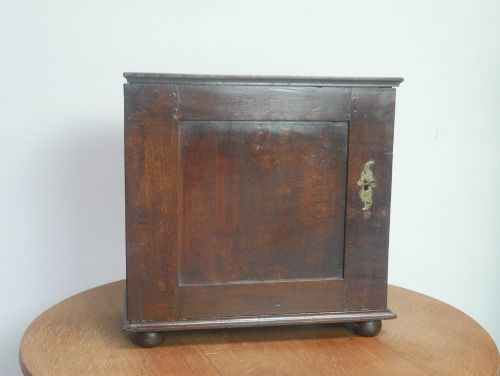
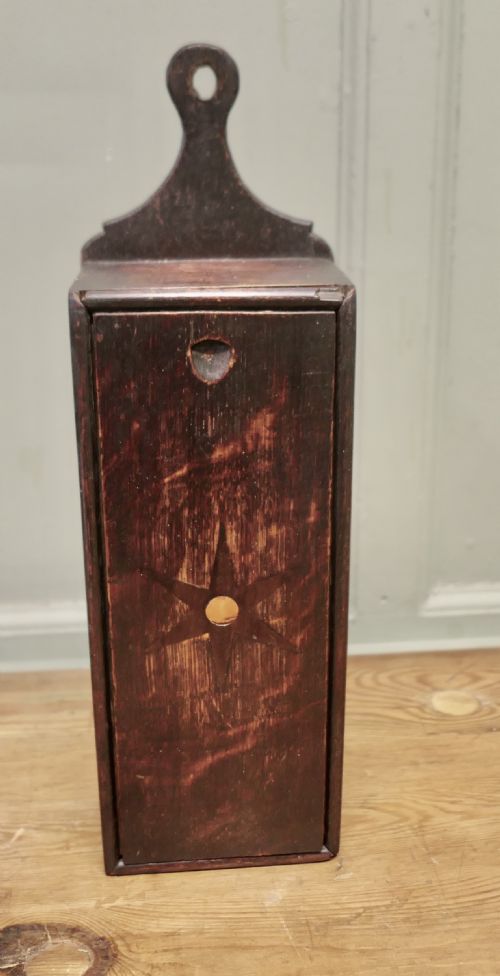
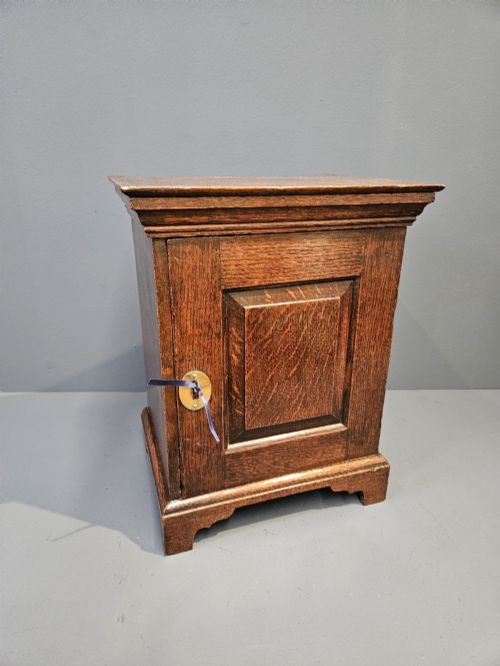
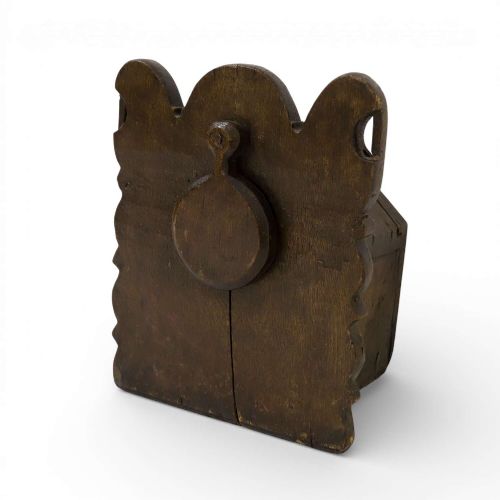
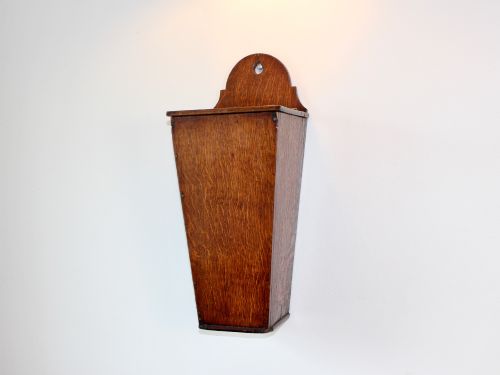
When you search for an oak wall box, you meet a utilitarian hanging receptacle designed to hold candles, salt, spices, letters or small household items within domestic interiors. These pieces take the form of small cupboards, tapered candle boxes, salt boxes and spice cabinets intended for wall suspension.
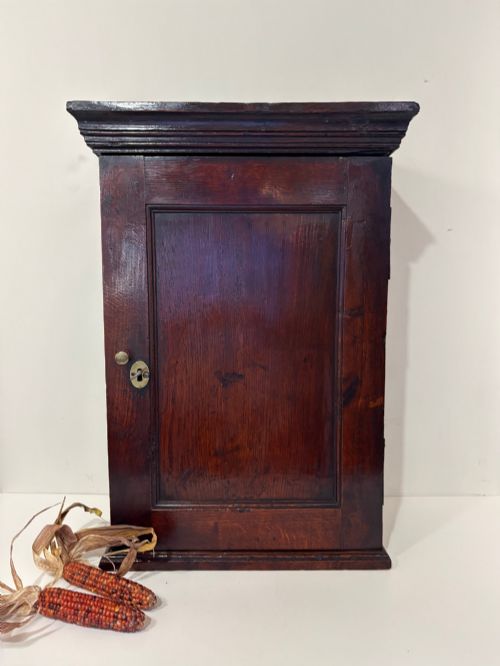
The versions most common on this page date from the eighteenth and nineteenth centuries, spanning Georgian, Victorian and country styles. Examples include pieces constructed from solid timber with dovetailed joints, shaped backboards and hinged lids or small panelled doors.
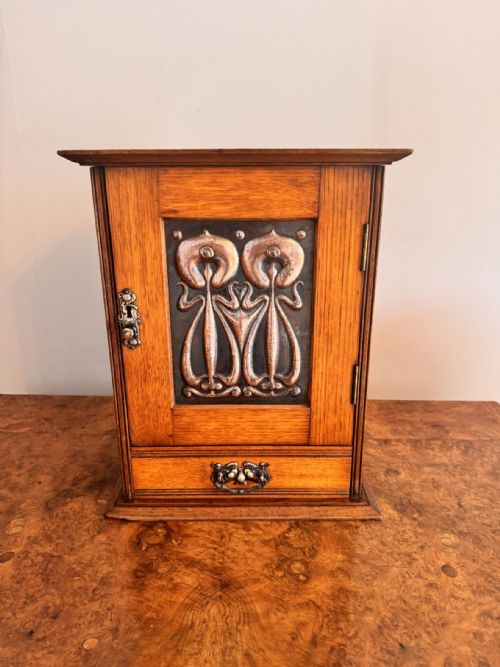
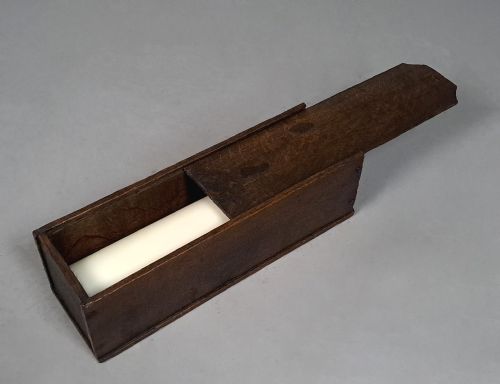
Earlier formats from the seventeenth and eighteenth centuries often feature primitive carpentry, sliding lids or original iron hardware, while later nineteenth-century and early twentieth-century iterations include display boxes, key cabinets and smokers cabinets.
How they were made
Joiners and country craftsmen built these wall-mounted receptacles primarily using solid oak, occasionally supplemented with secondary timbers such as pine for internal partitions or backboards. Construction relied on pegged joints, dovetailing at corners and hand-sawn boards rather than mass-produced fasteners.
Hardware played an essential functional role, incorporating forged iron hinges, latches and brass hooks or pulls. Surface finishes remained simple, often showing traces of original paint, wax polish or natural patina developed through decades of domestic handling.
Listings feature oak alongside brass, iron, glass, pine, copper, plywood and wood veneer.
What varies in quality
The standard of a piece rests upon the crispness of its joinery, the integrity of the timber and the retention of original hardware such as iron hinges and brass latches. Boxes featuring articulated backboards, shaped lids, carved ornamentation or untouched surfaces stand apart from plain utilitarian containers.
Proportion and construction depth also separate everyday utility items from finer examples, particularly where dovetailed corners remain tight and timber thickness provides structural weight without appearing clumsy.
Heals·Smith
The Oak Wall Box Glossary
- Candle box
- A hanging receptacle designed to store tallow or wax candles safely away from pests and dampness. These typically feature a shaped backboard for wall mounting and a sliding or hinged lid.
- Spice cupboard
- A small wall-mounted cabinet containing internal drawers or small shelves used historically for storing precious culinary spices. They often display panelled doors and brass furniture.
- Salt box
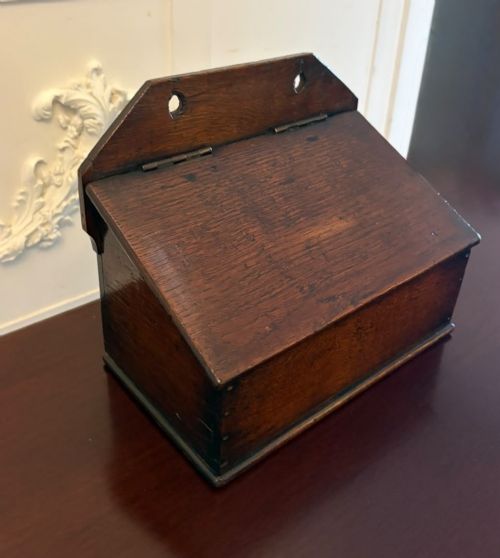
- A domestic container with a steep sloping lid and a high backboard pierced for suspension, intended to keep dry salt free from moisture near the hearth. Many retain early iron hinges.
- Treen
- Small handmade wooden household objects and utensils produced before the era of mass manufacturing. This category encompasses boxes, small containers and turned domestic items.
- Dovetail joint
- A method of interlocking timber boards using wedge-shaped tenons and mortises that provides exceptional tensile strength at corners without metal fasteners.
Oak Wall Box: Frequently Asked Questions
How were oak wall boxes used?
These boxes served practical domestic storage functions in kitchens, hallways and living rooms. Families hung them near hearths or doorways to keep everyday items such as candles, salt, spices and keys accessible yet protected.
The enclosed designs kept drafts and dust away from perishable goods, while open pockets allowed quick retrieval of letters or small tools.
How do I hang a wall box safely?
Most antique wall boxes feature original suspension holes or brackets incorporated into the upper backboard. Use appropriate fixings that match the weight of the solid timber and the wall type.
Ensure the hanging point bears the load securely without straining historic joints or the upper wooden panel.
How do I tell an 18th-century box from a later one?
Eighteenth-century examples display hand-tool marks, pegged construction, forged iron hardware and aged patination acquired over centuries of use. The timber grain tends to show irregular sawing patterns.
Later nineteenth-century and early twentieth-century pieces often utilise machine-cut boards, standardised brass fittings or distinct revival styles like Arts and Crafts.
Did these boxes always hang on walls?
While most were constructed with shaped backboards specifically pierced for wall suspension, some versatile formats functioned equally as tabletop containers or desk accessories. The presence of a high backboard with a suspension hole confirms intended wall placement.