




Oak Two Over Two
Oak two over two chests of drawers offer honest domestic storage in sturdy timber, giving a room solid historical character.
Oak Two Over Two
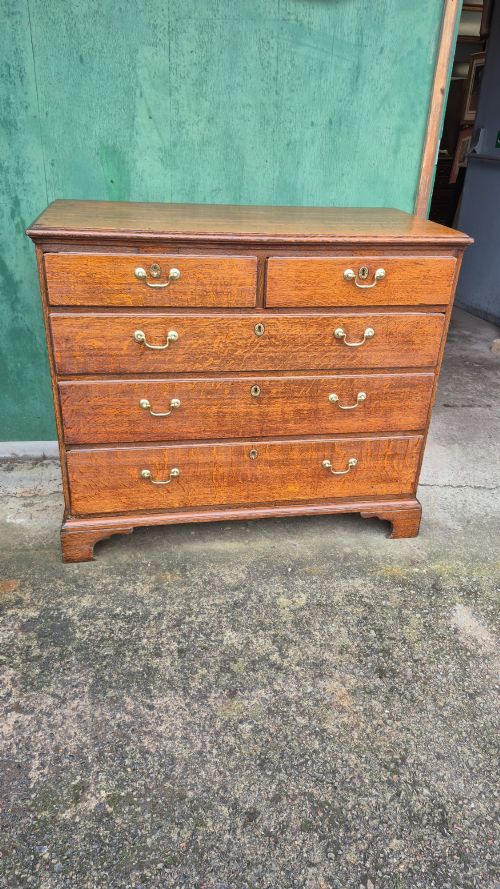
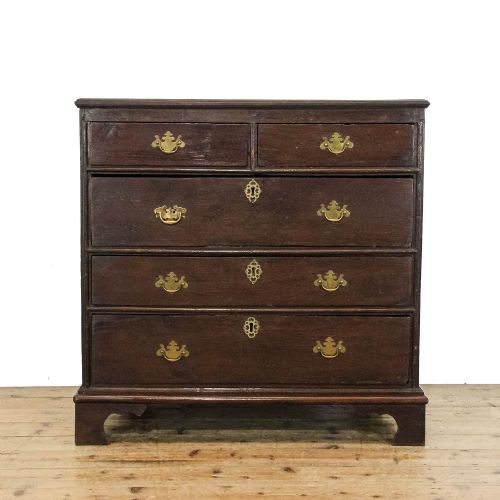
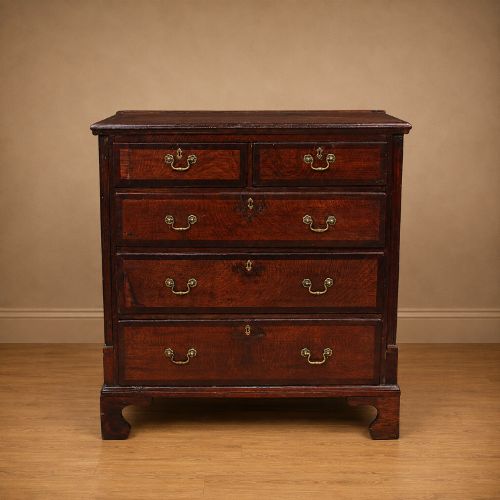
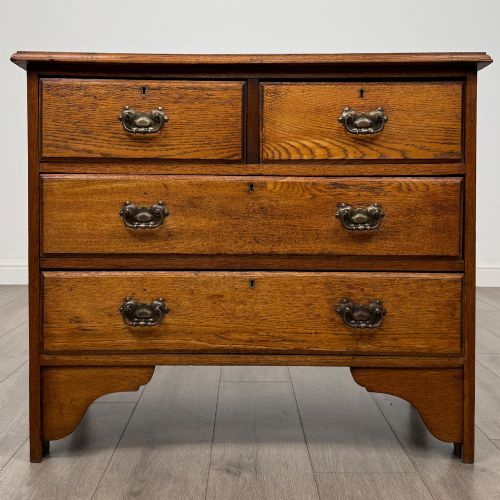
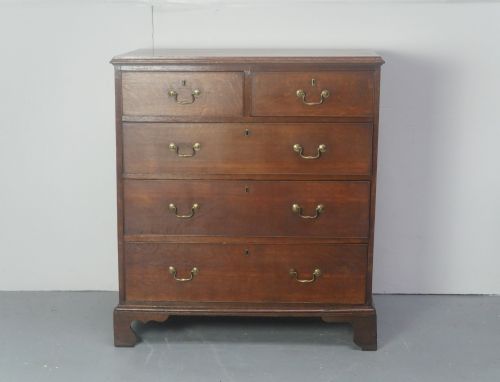
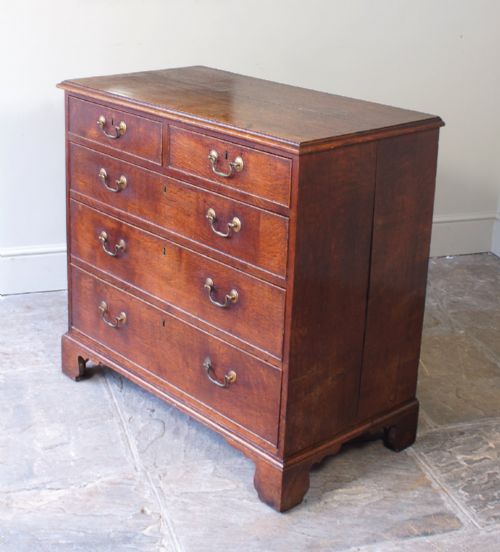
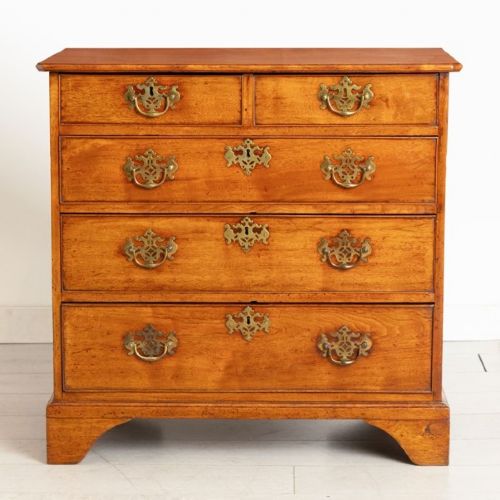
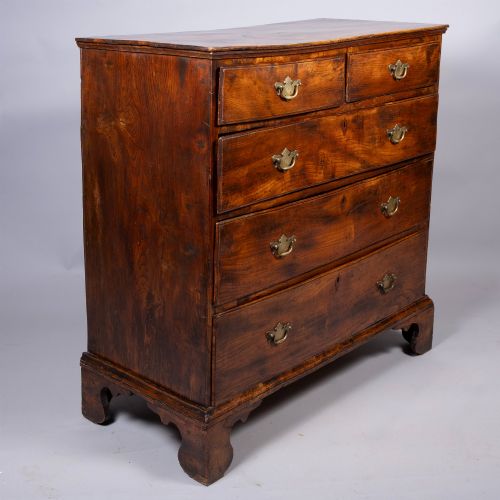
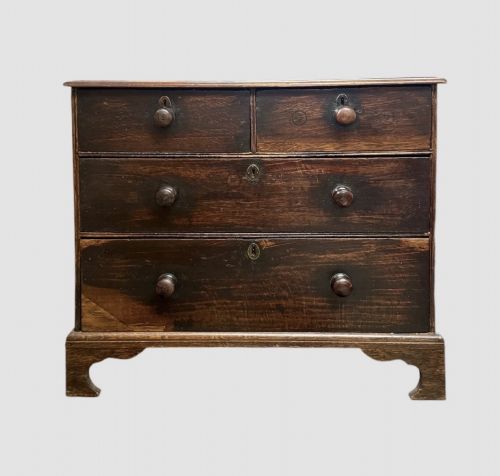
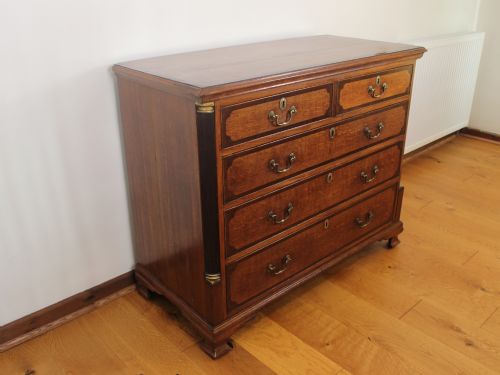
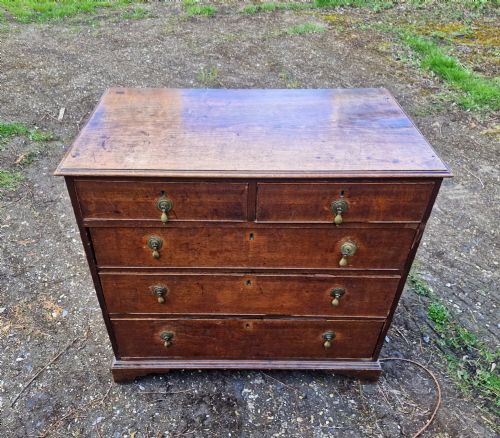
An oak two over two chest of drawers is a traditional form of bedroom or parlour storage featuring two smaller drawers positioned above two larger drawers. When you search for oak two over two, you are looking for classic case furniture designed to hold linens or clothing while presenting a balanced frontal elevation. Most examples you meet on this page originate from the eighteenth century or the Georgian period, often built in regional English workshops.
The materials and styles span several centuries, with pieces appearing from the seventeenth century through to the Edwardian era. Alongside solid oak, cabinet makers incorporated mahogany crossbanding, walnut, elm, and deal pine internals. Forms range from straight-front country examples to narrow proportions resting on bracket or splayed feet.
Construction and materials
Carpenters constructed these chests using solid timber boards for the top, sides, and drawer linings, frequently pairing oak with contrasting secondary woods like mahogany for decorative crossbanding or inlay. Drawers generally feature hand-cut dovetail joints at the corners, demonstrating traditional joinery methods designed to withstand daily pulling and pushing over generations.
Surface finishes vary from plain waxed oak to limed treatments or painted surfaces, while hardware typically includes brass drop handles or plate handles secured through the drawer fronts. Backboards and drawer bottoms consist of substantial timber planks fitted into grooved frames rather than modern thin plywood.
The styles represented span Georgian, English Country, George III, Edwardian, William & Mary, Victorian, and Jacobean periods.
Judging the standard of manufacture
The standard of an oak two over two chest rests in the choice of timber figure, the crispness of the drawer dovetails, and the survival of original feet and handles. Pieces featuring well-figured timber, such as pollard oak or deliberate grain selection, display greater visual presence than plain utility boards.
Proportion and scale also dictate worth, as smaller or narrow chests command attention for their domestic adaptability compared to bulkier formats. The integrity of the carcass, minimal timber shrinkage, and untouched surface patination separate everyday utility items from finer examples.
The Oak Two Over Two Glossary
- Crossbanding
- A decorative border technique where thin strips of veneer, often mahogany, are laid across the grain around the perimeter of a drawer front or top. This frames the primary timber and adds visual contrast.
- Bracket foot
- A small architectural foot supporting the corner of case furniture, shaped like a bracket and frequently seen on Georgian chests of drawers. It elevates the carcass slightly off the floor.
- Splayed foot
- A foot that angles outward slightly from the base of the chest, providing stable support while lending a lighter appearance to the profile.
- Dovetail
- A joint formed by interlocking wedge-shaped fingers, used extensively to join drawer sides to drawer fronts and backs securely without metal fasteners.
- Patina
- The surface sheen and colour developed on wood over decades of handling, polishing, and exposure to light. It is a sign of age and careful maintenance.
Oak Two Over Two: Frequently Asked Questions
What does two over two mean?
The phrase two over two describes the drawer arrangement on the front of the chest, where a row of two smaller shallow drawers sits directly above a row of two wider full-width drawers.
This specific layout became popular for sorting smaller garments from bulkier items while maintaining a symmetrical facade.
How old are these chests?
The pieces listed span multiple historical periods, with the majority originating in the eighteenth century and the broader Georgian era.
Examples also appear from the seventeenth century through to the Edwardian period, reflecting continuous vernacular and formal cabinet making traditions.
Where were they used?
These chests served primarily as domestic bedroom furniture for storing clothing, linens, and personal possessions.
Their robust construction and modest proportions also suited them for use in hallways, parlours, and upper landings across English homes.
How do I care for oak furniture?
Maintain the timber by applying natural beeswax periodically to nourish the grain and preserve the surface patination.
Keep the piece away from direct heat sources and rapid humidity changes to prevent timber splitting or joint movement.