
Oak Tub Armchair
An oak tub armchair brings solid character to a study or library, offering a curved back that wraps the sitter in sturdy comfort.
Oak Tub Armchair
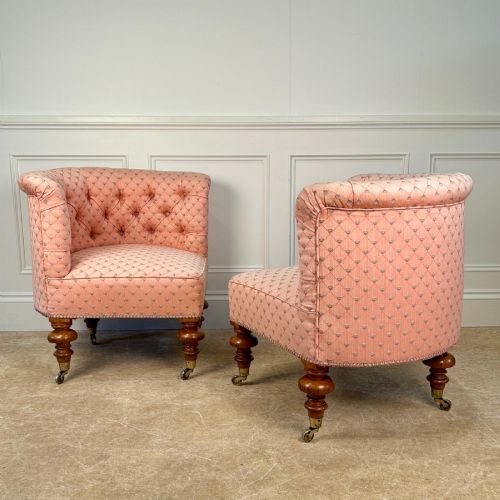
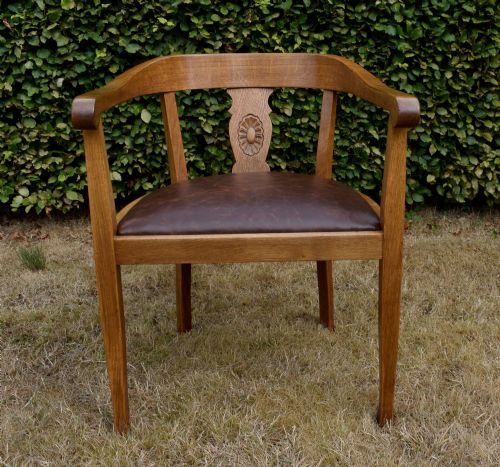
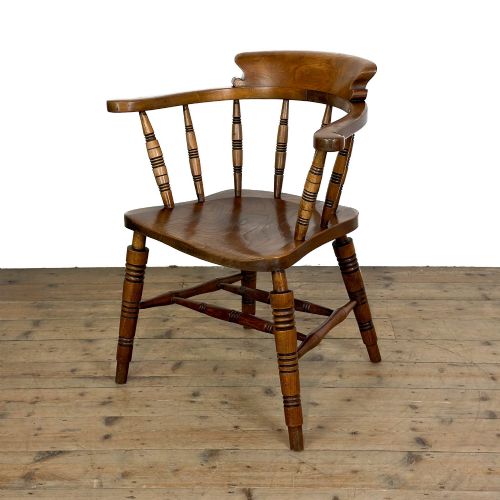
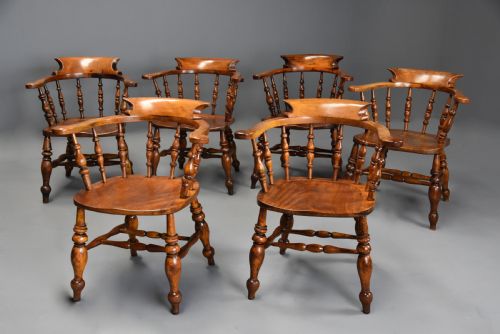
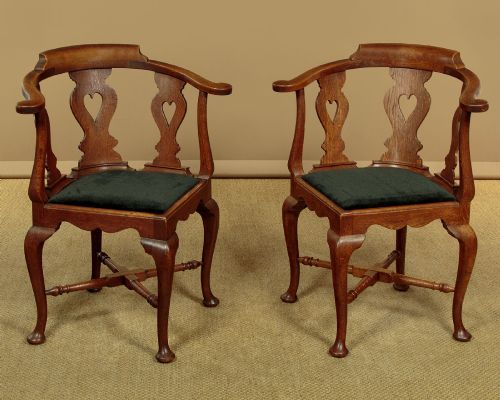
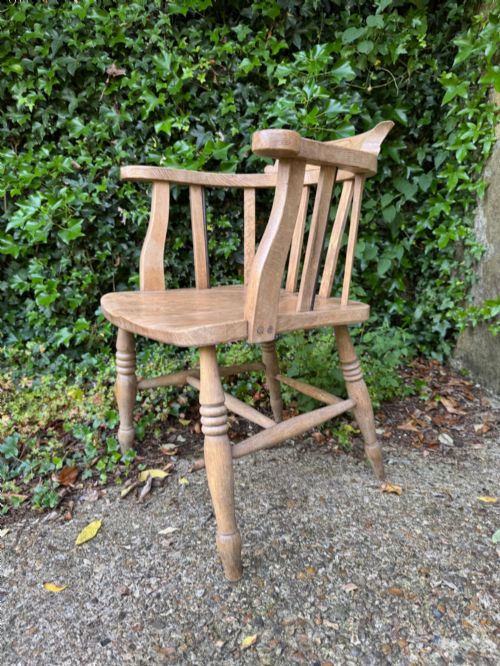
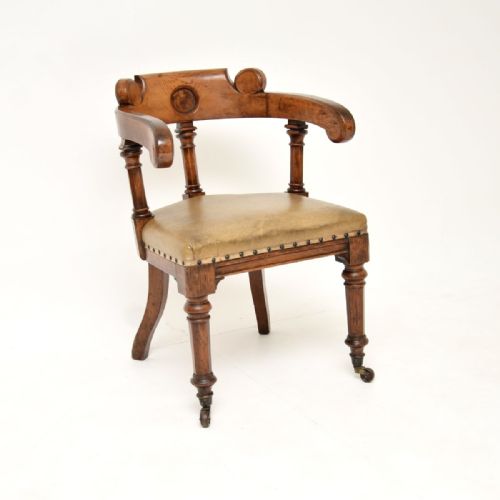
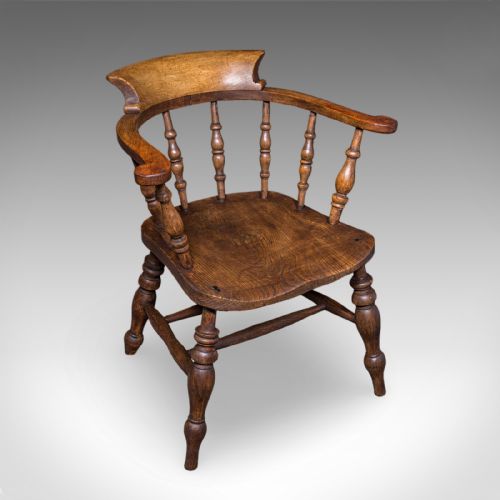
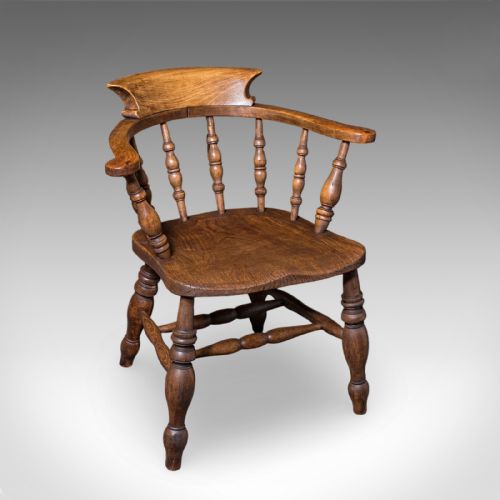
When you search for an oak tub armchair, you encounter nineteenth and early twentieth-century seating defined by a continuous semicircular backrest that merges into low arms. The versions met most often on this page date from the Victorian and Edwardian eras, frequently appearing as library chairs, desk chairs, or smokers bows.
Makers designed these pieces for heavy use in offices, studies, and country houses, employing robust timbers like oak supplemented by elm and beech. The form varies from plain utilitarian office seats to decorative Arts and Crafts or Gothic Revival models with leather or cane inserts.
How they were made
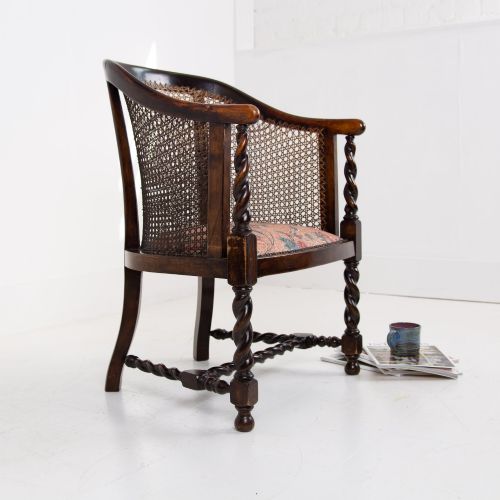
Carpenters constructed the curved tub backs by steaming and bending solid oak or layering timber sections to form the continuous elbow rail. Turned spindles, barley twist supports, and mortise and tenon joints provided the structural integrity required for daily seating.
Upholsters integrated drop-in seats, leather hides, cane panels, or fabric cushions into the wooden frames using brass tacks or webbing. Secondary timbers such as beech and elm frequently appeared in the underframes and Windsor-style spindles.
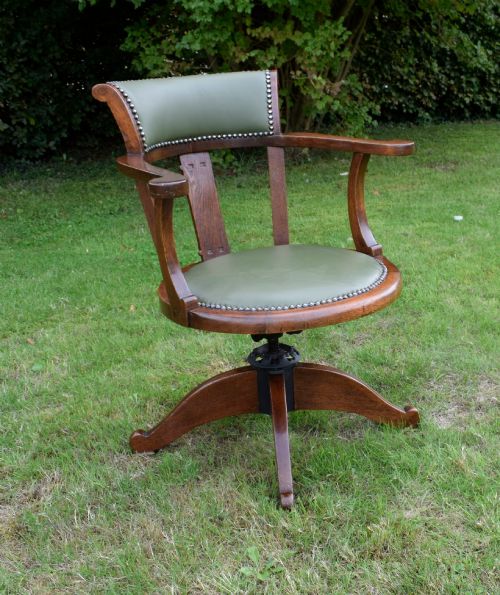
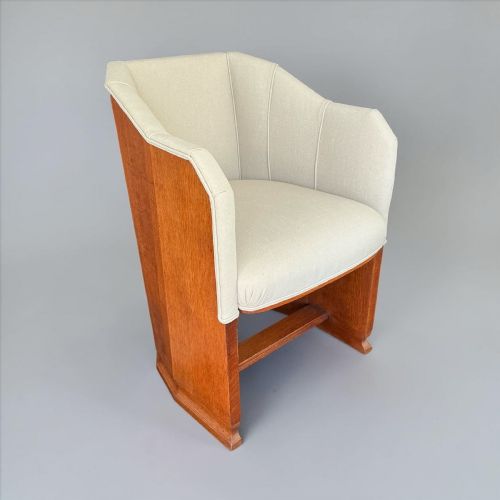
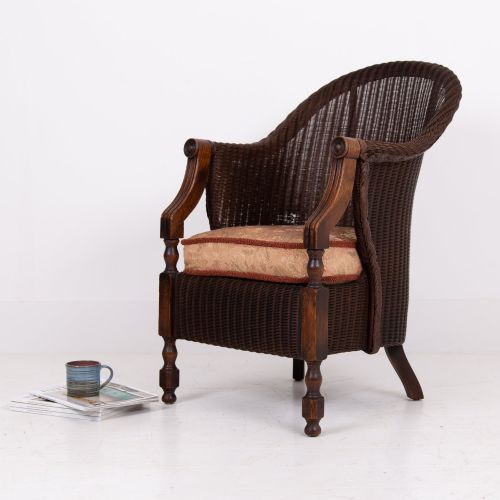
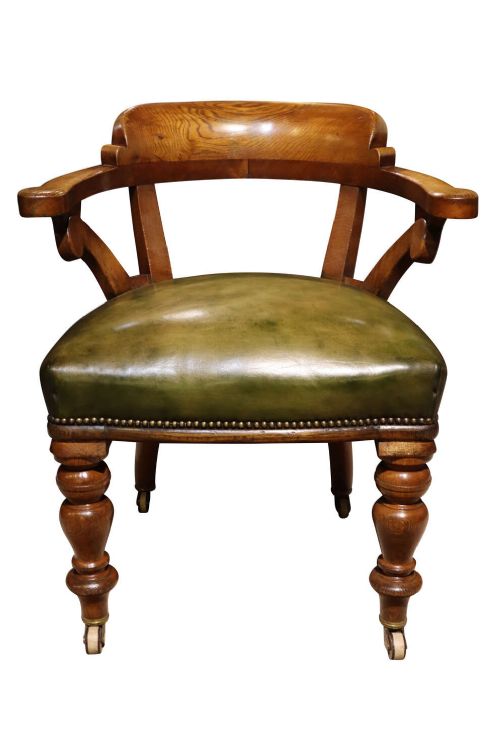
Listings feature oak tub armchairs spanning the Victorian, Edwardian, and Art Deco periods, incorporating leather, cane, and brass elements.
What varies in quality
The density and figuring of the timber dictate the upper tiers of quality, with golden oak and quarter-sawn grain showing superior visual depth. Construction details such as steam-bent solid wood rails rather than pieced segments separate standard workshop pieces from finer cabinet work.
Original upholstery materials, intact leather hides, and solid brass fittings preserve the integrity of the piece. Subtle hand-carved details and balanced proportions distinguish bespoke library chairs from mass-produced office seating.
The Oak Tub Armchair Glossary
- Tub armchair
- A seat featuring a continuous low curved back enclosing the sides. This form provides enclosed support for the sitter.
- Smokers bow
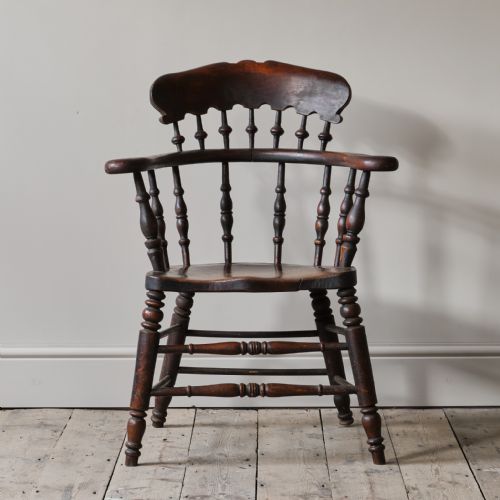
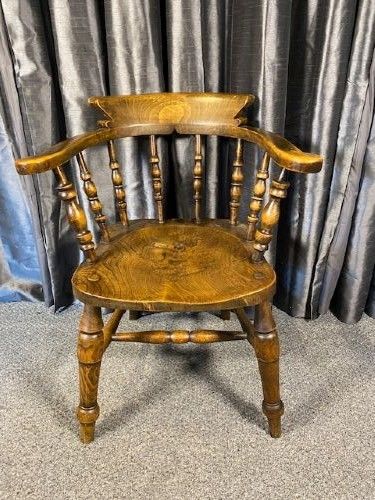
- A sturdy low-backed Windsor-style armchair popular in nineteenth-century offices and smoking rooms. It usually incorporates turned spindles and a solid saddle seat.
- Bergère
- An upholstered armchair with an enclosed wooden frame where the back and sides consist of cane work. French makers utilised this technique for light, decorative seating.
- Golden oak
- Timber exhibiting a warm, honey-toned hue brought out by specific polishing methods. This finish gained popularity during the Victorian and Edwardian periods.
- Barley twist
- A carved wooden furniture leg or support resembling a twisted rope. Cabinet makers turned this decorative motif on a lathe during the Victorian era.
Oak Tub Armchair: Frequently Asked Questions
How were oak tub armchairs used originally?
These chairs served primarily in studies, offices, and libraries where occupants required sturdy support during long hours of writing or reading. Their enclosed backs made them practical for placing at partners desks and reading tables.
In domestic settings, they functioned as comfortable elbow chairs near fireplaces or in garden rooms. The robust construction allowed them to withstand heavy daily use across generations.
How do I identify a Victorian oak tub armchair?
Victorian examples typically display dense, dark oak or golden oak timber with heavier proportions than later Edwardian pieces. Look for construction methods like hand-cut joints and traditional turned spindles.
Stylistic markers such as Gothic Revival mouldings or heavy brass studding on leather upholstery point directly to nineteenth-century manufacture. The presence of elm or beech secondary woods also supports a Victorian timeline.
Can I use an antique tub chair at a modern desk?
Many nineteenth and early twentieth-century desk chairs fit standard modern workspaces, though seat heights vary due to historical floor standards. Checking the clearance between the low arms and the underside of your desk ensures a proper fit.
Swivel mechanisms on certain period desk chairs add practical functionality for contemporary office use. Adding a slim leather or fabric pad can adjust the seating height comfortably.