


Oak Barrel Chair
An oak barrel chair brings solid timber craftsmanship and a curved, enclosing silhouette straight into your study or seating room.
Oak Barrel Chair
An oak barrel chair takes its name from the rounded, enclosing backrest that echoes the stave construction of a cask, offering a deeply supportive seat. When you search for an oak barrel chair, you are looking at substantial seating built to wrap around the sitter.
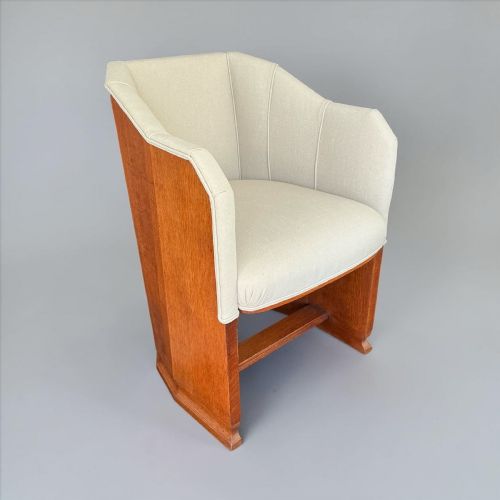
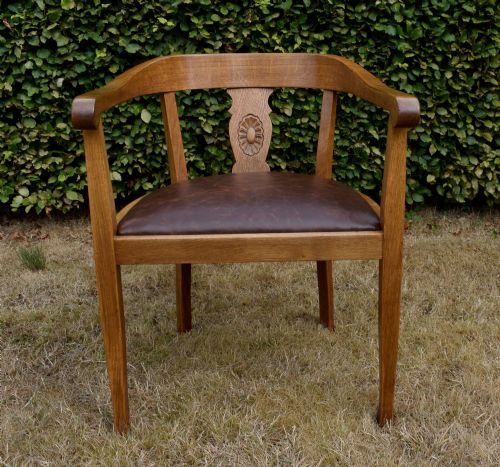
The selections found here span several distinct periods, including pieces from the nineteenth century, the Edwardian era, and the 1930s. You will encounter forms styled as desk chairs, tub armchairs, and low armchairs.
Makers of these chairs drew upon diverse design movements, ranging from Arts and Crafts and Gothic Revival to Art Deco and Jacobean Revival. This variety means you might find a heavy, solid wood vernacular dug out chair alongside a newly upholstered tub chair.
Materials and construction
Solid oak forms the primary structural foundation of these chairs, providing a heavy, durable framework that defines their longevity. Joinery methods connect the curved wooden staves and backs to create the characteristic barrel shape.
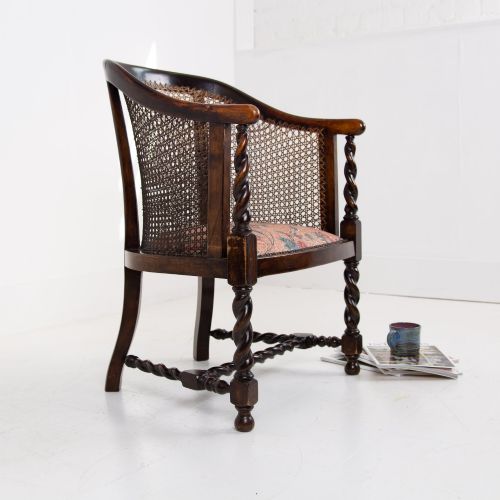
Many examples incorporate secondary materials such as cane, brass, and painted wood surfaces to add texture and visual contrast to the timber. Upholstered versions utilise fabric, leather, or velvet to line the interior seats and backrests.
The inventory records stylistic revivals including Gothic Revival, Jacobean Revival, and Louis XV Revival alongside Art Deco.
Judging quality and character
Quality in these pieces rests upon the integrity of the wooden frame and the precision of the curved joinery that forms the barrel back. Heavier solid timber construction and careful retention of the original grain signal superior making.
The standard of upholstery and the choice of covering materials, whether original leather or sympathetic replacement textiles, influence the overall finish. Pieces retaining well-preserved cane work or authentic period paint surfaces hold particular distinction.
The Oak Barrel Chair Glossary
- Tub chair
- An armchair featuring a continuous, curved back and armrest that resembles the shape of an open tub. This design wraps around the user for added comfort.
- Cane
- Woven rattan material used to create breathable panels for chair seats and backs. It requires careful hand-weaving to follow the curves of the frame.
- Gothic Revival
- An architectural and decorative style drawing inspiration from medieval forms. Pieces often display pointed arches, heavy mouldings, and robust construction.
- Bergere
- An enclosed upholstered armchair with wooden framing exposed around the sides and back. It frequently incorporates cane work in the sides.
Oak Barrel Chair: Frequently Asked Questions
What is an oak barrel chair?
An oak barrel chair is a sturdy seat characterised by a rounded, curved backrest shaped like a barrel. These chairs are built to provide an enclosed, supportive seating experience.
They appear in various forms across our listings, functioning as desk chairs, reading seats, or low armchairs in different historical styles.
How do I date an oak barrel chair?
Dating these chairs involves examining the wood finish, construction methods, and stylistic details. Pieces from the nineteenth century often display heavier timber work and hand-tooling, whereas 1930s examples lean towards streamlined Art Deco or simpler Arts and Crafts lines.
Looking at secondary materials like cane, brass, or the type of upholstery fabric also helps place the chair within its specific period.
Were these chairs used at desks?
Many examples on this page are specifically designated as desk chairs. Their compact, rounded backs allowed them to fit neatly into workspaces while offering sturdy support for writing.
They combine the comfortable enclosure of a tub chair with the mobility or height suited for a desk or study.
How do I care for oak and leather?
Oak furniture benefits from occasional treatment with appropriate wood waxes to nourish the grain and protect the surface from drying out. Leather upholstery requires gentle cleaning and conditioning to maintain its suppleness.
Keeping these chairs away from direct heat sources and strong sunlight preserves both the timber frame and the soft coverings.