


Oak Tavern Dining Table
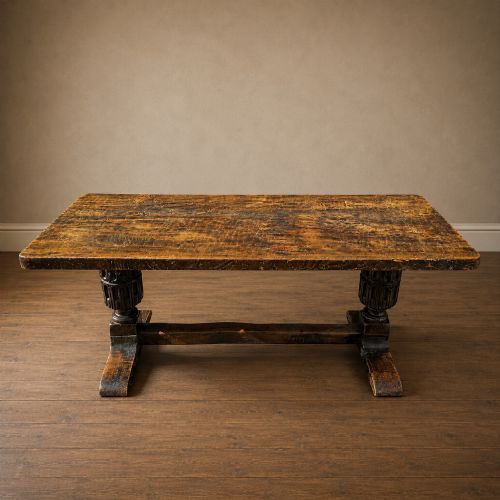
An oak tavern dining table brings weight and history into a room, offering a sturdy surface built for communal gathering and everyday hospitality.
Oak Tavern Dining Table
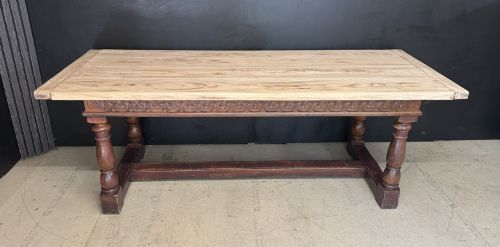
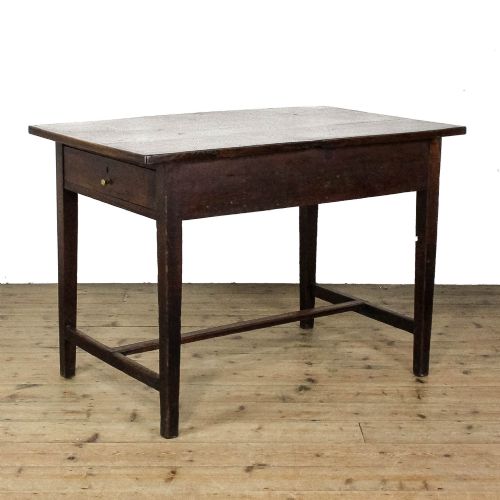
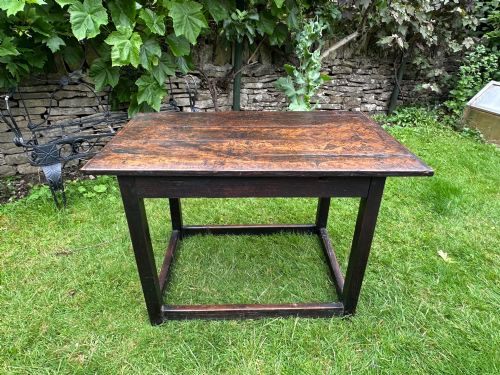
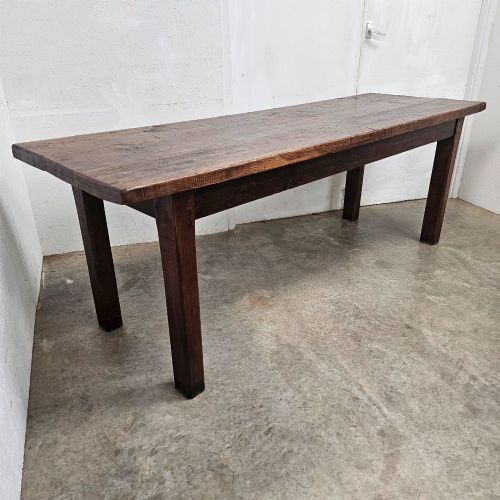
When you search for an oak tavern dining table, you encounter robust timber furniture designed for heavy domestic or public use across multiple centuries. The examples recorded here span from the 17th century through the Georgian and Victorian eras up to Edwardian and 1920s reproductions, alongside country-made and Welsh vernacular pieces.
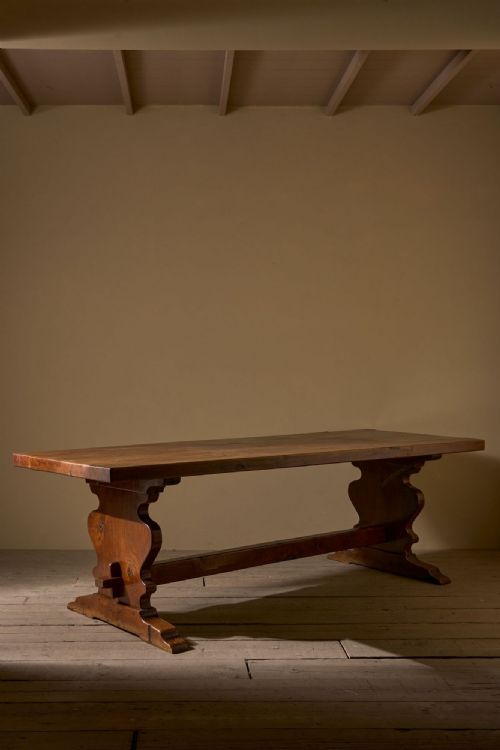
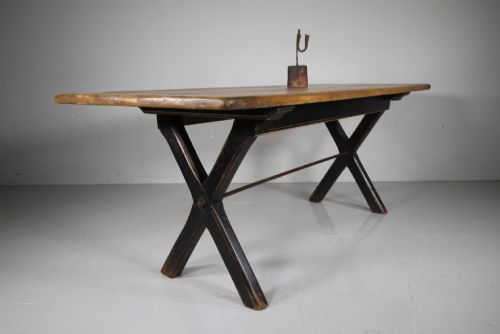
Forms vary from classic refectory and trestle constructions to gate-leg designs, centre tables, and X-frame supports. Many incorporate single-plank timber surfaces or thick tops supported by baluster posts and carved framing, reflecting both formal tavern seating and farmhouse kitchen traditions.
Materials and construction
Construction relies heavily on solid oak, frequently paired with elm for single planks, alongside supporting elements in pine, mahogany, red walnut, and timber. Metal components in brass, iron, and bronze appear selectively on feet, hinges, or structural stamps.
Joinery methods prioritize absolute strength, utilising thick planks, heavy frames, and carved wooden supports designed to withstand continuous movement and service over generations.
One listed Victorian ships refectory table bears an official ER crown estate stamp alongside bronze feet.
Evaluating construction and material quality
Quality rests in the selection of primary timbers, visible in the integrity of single-plank elm or solid oak tops and the depth of natural patination accumulated through age and usage. Heavier, sturdier frames with skilled carving command greater interest than lighter utilitarian builds.
The degree of original hardware, such as brass or bronze feet and authentic period stamps, distinguishes standard utility pieces from more distinctive examples recorded in archives.
Heals
The Oak Tavern Dining Table Glossary
- Refectory table
- A long, narrow dining table traditionally used in monasteries or large halls. These examples often feature thick oak planks and substantial wooden stretchers.
- Gate-leg table
- A table with hinged leaves supported by swing-out legs. This form allows the surface area to expand or contract according to space and usage.
- Baluster post
- A moulded upright support resembling a small column or pillar. They frequently appear turned on 17th century and revival tavern table legs.
- Plank top
- A table surface constructed from longitudinal wooden boards joined edge to edge. Single-plank variations utilise one wide slab of timber, such as elm.
- Trestle
- A structural support consisting of a horizontal beam fixed to two vertical feet or frames. This configuration provides ample legroom along the length of long tavern dining tables.
Oak Tavern Dining Table: Frequently Asked Questions
How do I date an antique oak tavern table?
Dating relies on observing construction methods, joinery types, and timber characteristics such as single-plank elm tops or hand-carved baluster posts.
Comparing these physical traits against documented pieces from the 17th century through the Edwardian period helps narrow the likely era of manufacture.
Were these tables used in actual taverns?
Many heavy timber tables served communal eating and drinking functions in public houses, country inns, and dairies.
Others originated as domestic refectory or farmhouse kitchen tables built to withstand daily family life.
How do I care for a solid oak top?
Maintain timber surfaces by dusting regularly with a dry cloth and avoiding excessive moisture or direct heat sources.
Applying occasional natural wax preserves the grain and protects the historic patina without altering the finish.
What is the difference between a refectory and a tavern table?
Refectory tables traditionally emphasise long, narrow proportions with fixed trestle or four-leg bases designed for communal dining halls.
_Tavern_ tables encompass a broader range of robust public house and kitchen forms, including gate-leg and centre table variants.