
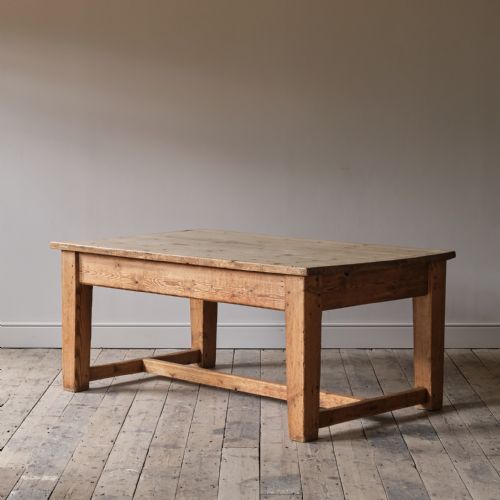
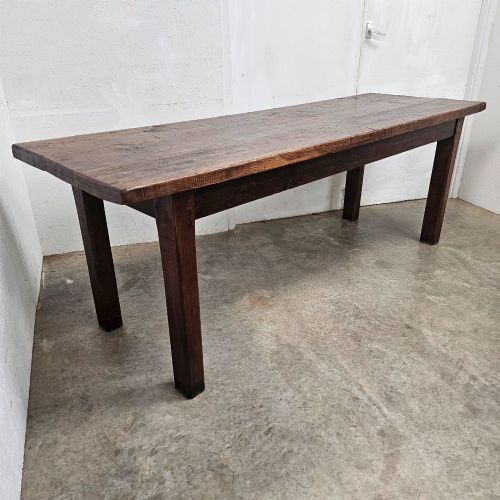


Vintage Tavern Kitchen Table
These heavy timber surfaces carry the practical honesty of the vintage tavern kitchen table, built for hearty meals and daily work.
Vintage Tavern Kitchen Table
A vintage tavern kitchen table serves as a sturdy focal point for domestic life, combining the robust utility of public house furniture with domestic scale. Buyers searching this category encounter robust dining and kitchen tables alongside related seating.
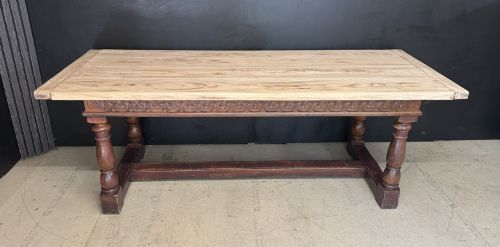
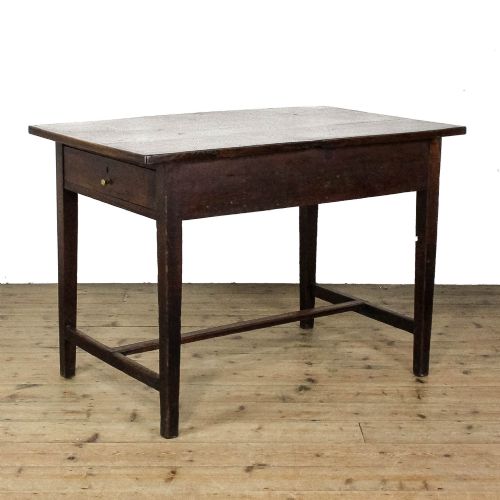
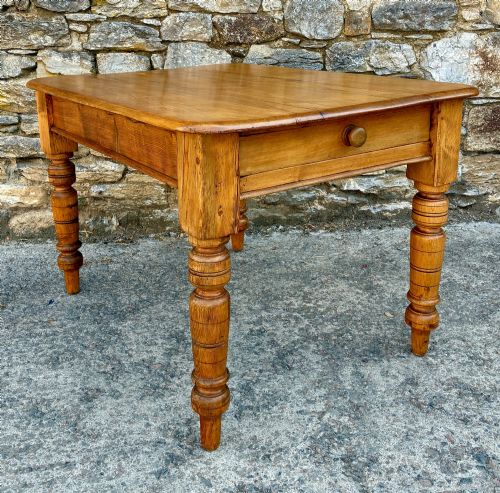
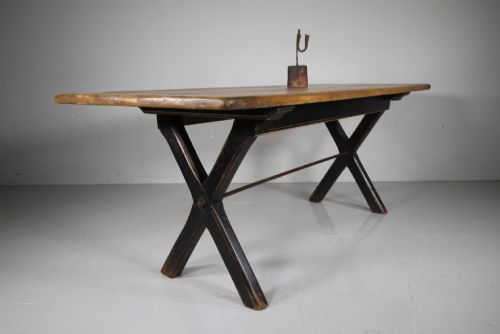
The pieces on offer span several distinct eras, stretching from the Georgian period through nineteenth-century examples into early twentieth-century formats dated around nineteen ten and nineteen twenty. Formats range from traditional four-legged designs to trestle bases and X-framed painted pine constructions.
Regional and stylistic variations shape these boards, encompassing rustic farmhouse, Welsh country, Victorian country, Jacobean style, and French provincial aesthetics. Benches occasionally appear alongside the core tables to complete the traditional seating arrangement.
Construction and materials
Makers built these tables primarily from solid timber foundations, relying heavily on pine and oak to endure heavy daily use. Thick two-plank tops with cleated ends provide stability and prevent warping across large expanses of wood.
Iron and brass hardware frequently reinforce the structural joints and corners, ensuring long-term durability in busy kitchen or tavern environments. Original painted finishes and timber surfaces show the straightforward joinery methods of past centuries.
A solitary bench sneaks into the tavern, proving that even dining tables occasionally need a long wooden companion to sit beside.
Judging quality in tavern tables
Quality rests in the substance of the timber and the integrity of the original construction, where thick tops and solid underframes command attention. Tables featuring untouched original painted surfaces or rich patinated oak display a more compelling character than heavily restored examples.
Proportion and scale distinguish superior pieces, particularly where trestle supports or X-framed bases offer both visual balance and practical legroom. The presence of period-correct cleated ends and authentic structural wear separates enduring utility from lesser adaptations.
The Vintage Tavern Kitchen Table Glossary
- Cleated ends
- Wooden battens fixed across the ends of a tabletop to prevent the boards from warping. This method keeps wide timber planks flat over decades of use.
- Refectory table
- A long narrow dining table traditionally used in monastic dining halls. The term describes the elongated proportions seen in several large country pieces.
- Trestle table
- A table consisting of two or more support frames connected by a longitudinal beam. This design maximises seating space along the length of the board.
- X-framed
- A structural base design forming an intersection beneath the tabletop. This configuration provides distinct lateral stability for heavy pine and oak surfaces.
Vintage Tavern Kitchen Table: Frequently Asked Questions
How do I date these tables?
Dating relies on examining the timber species, joinery methods, and surface treatments visible across the structure. Nineteenth-century examples often feature hand-planed surfaces and heavier pine planks, while Georgian pieces show distinct oak framing techniques.
Earlier formats display simpler tool marks and heavier fastenings, whereas pieces from nineteen ten or nineteen twenty introduce slightly lighter early twentieth-century proportions.
Are painted pine tables original?
Many traditional tables retain layers of historic paint applied during their working life in country kitchens or rural taverns. Original painted surfaces offer a distinct matte texture that develops natural wear over generations of use.
Buyers should examine the interface between the paint and timber to understand how the finish has aged alongside the underlying wood.
How should I care for a thick timber top?
Solid pine and oak surfaces benefit from regular dusting with a dry cloth and occasional treatment with natural beeswax to nourish the grain. Avoiding excessive moisture prevents the timber from splitting around traditional joints and cleated ends.
Placing tables away from direct heat sources maintains the stability of historical boards and preserves the natural patina.