


Oak Tantalus Box
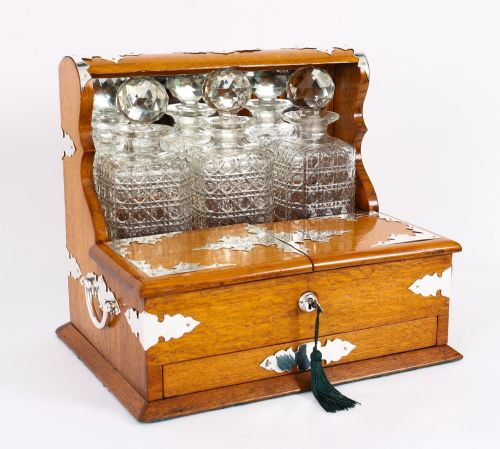
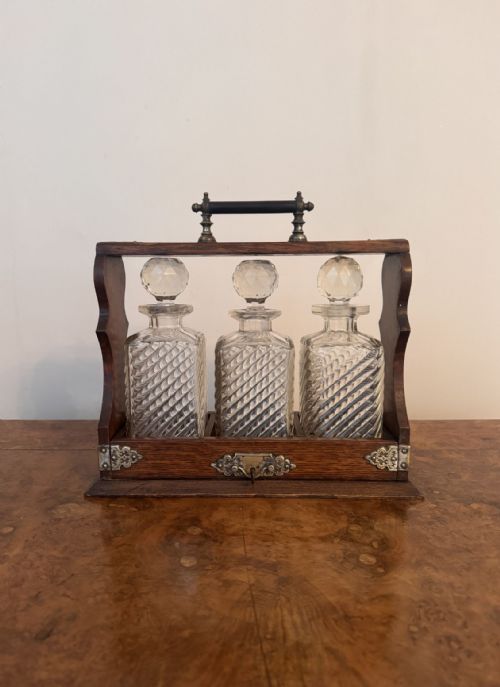
These oak tantalus box examples are locking barware cabinets holding decanters securely, combining practical after-dinner service with clever mechanical security.
Oak Tantalus Box
An oak tantalus box serves as a secure container for holding decanters of spirits, designed with a locking mechanism that prevents guests or staff from pouring a drink without the key. When you search for an oak tantalus box, you encounter pieces originating primarily from the Victorian and Edwardian periods, stretching into the late nineteenth century around eighteen eighty.
The forms span from simple single and two bottle holders to large dry bars, cabinets, and elaborate games compendiums equipped with decanter sets. These pieces function as both practical barware and social accessories for entertaining, often incorporating compartments for cards and games alongside the bottles.
Materials and construction
Makers utilised solid oak, blonde oak, golden oak, and pollard oak for the primary housing, frequently enhancing the timber with marquetry stringing and brass mounts or plaques. The internal framework relies on sturdy joinery to support heavy glass decanters and storage compartments.
The locking mechanisms and retaining bars employ silver plate and brass components that secure the necks of the cut glass or cut crystal decanters. Many variants integrate glass mirrors within the back panels or interior compartments to reflect light through the glassware.
The selection includes pieces dated to eighteen eighty, the Victorian era, and the Edwardian period.
Distinctions in quality
The distinction between standard examples and superior pieces rests on the complexity of the internal fitments and the selection of timber. Marquetry stringing, pollard oak graining, and comprehensive games compendium layouts indicate elevated craftsmanship.
Hardware execution also defines the scale, with heavy brass mounts, functional silver-plated locking bars, and cut crystal decanters representing the higher tier of production.
The Oak Tantalus Box Glossary
- Games compendium
- A fitted box containing equipment for multiple parlour games alongside storage. These often accompany barware sections in larger nineteenth-century cabinets.
- Pollard oak
- Timber taken from trees that have been pollarded, producing a highly figured and decorative wood grain. This material appears on select nineteenth-century furniture.
- Silver plate
- A thin layer of silver applied to a base metal for decorative hardware and locking bars. This finish provides the appearance of solid silver on functional components.
- Marquetry
- Inlays of different woods used to create decorative patterns on the exterior surfaces. This technique decorates the panels of finer Victorian cases.
Oak Tantalus Box: Frequently Asked Questions
What is an oak tantalus box?
An oak tantalus box is a lockable cabinet designed to hold spirit decanters securely behind a metal bar. This arrangement prevented unauthorized access to the contents by domestic staff.
The locking mechanism engages the stoppers so the bottles cannot be removed until the key turns the mechanism.
How do you date an oak tantalus box?
Dating relies on stylistic clues, materials, and hardware associated with the Victorian and Edwardian eras. Pieces often incorporate brass mounts and cut crystal typical of late nineteenth-century manufacture.
Construction methods and the presence of integrated games compendiums also help assign pieces to periods around eighteen eighty up to nineteen hundred.
What were games compendiums used for?
Games compendiums served as all-in-one entertainment sets for drawing rooms and gentlemen's clubs. They held items for cards, chess, or other parlour pastimes alongside the drinks.
Combining a tantalus with a games box maximised utility for host guests during evening gatherings.
Are all decanters original to the box?
Many surviving pieces retain their matched cut glass or cut crystal decanters, though replacements occur frequently due to breakage over time. Matching sets feature identical cutting patterns and fit precisely into the wooden base.
Examining the neck fit and glass clarity helps determine whether the bottles belong to the original housing.