

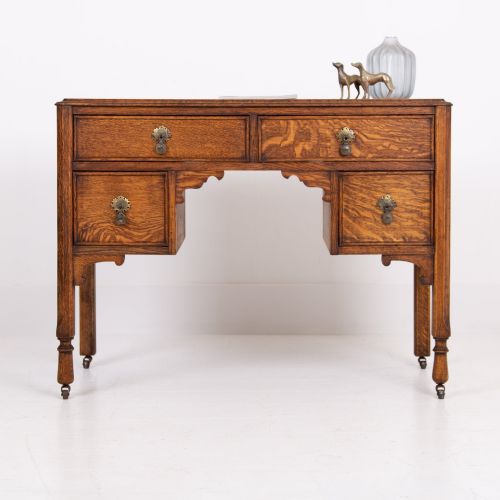
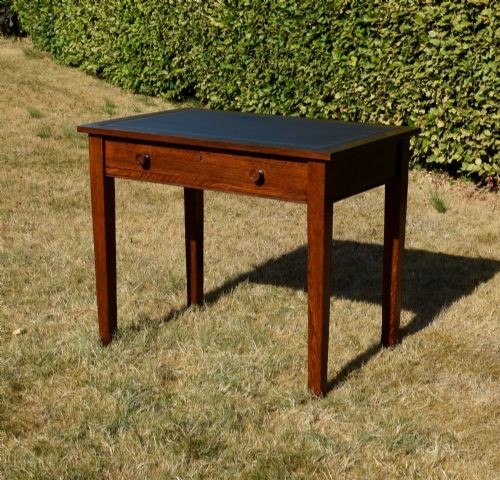

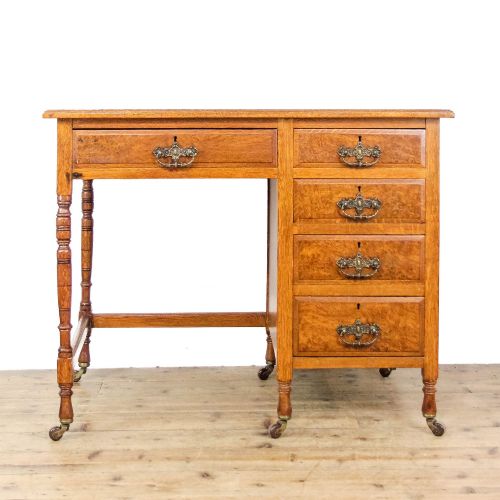


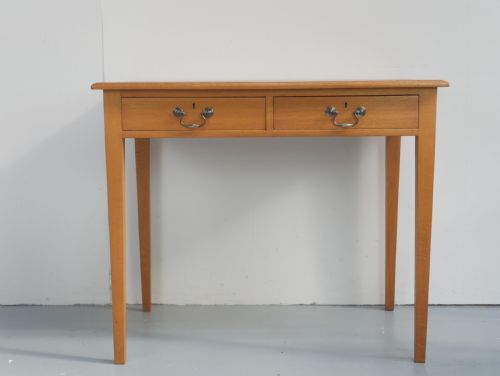
Oak Study Table Drawers
Oak study table drawers bring enduring utility and solid character to a home workspace, spanning simpler writing tables to substantial pedestals.
Oak Study Table Drawers
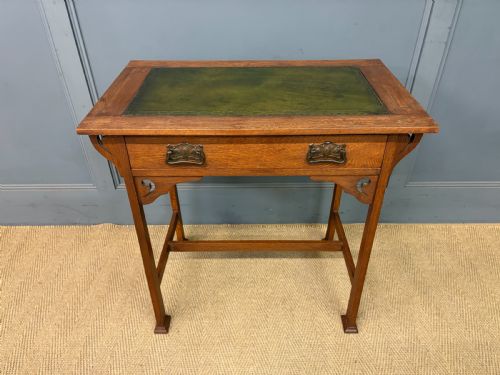
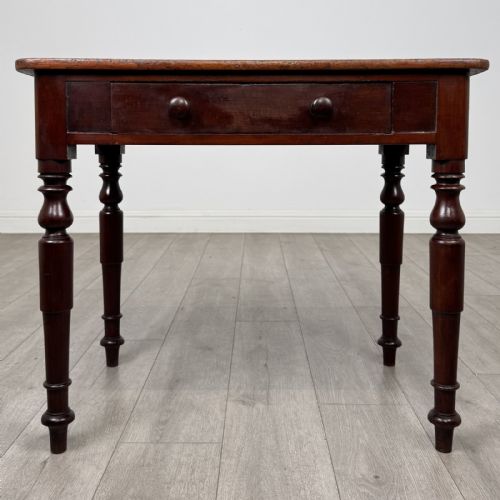
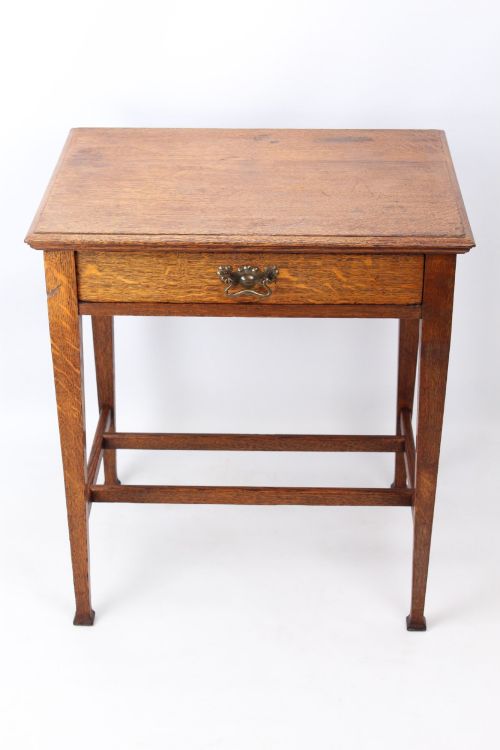
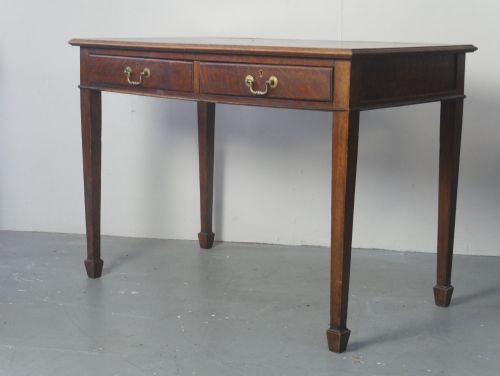
When you search for oak study table drawers, you encounter a varied selection of desks, writing tables, and pedestal forms spanning the nineteenth and early twentieth centuries. These pieces encompass everything from compact two-drawer writing desks to large multi-drawer office tables.
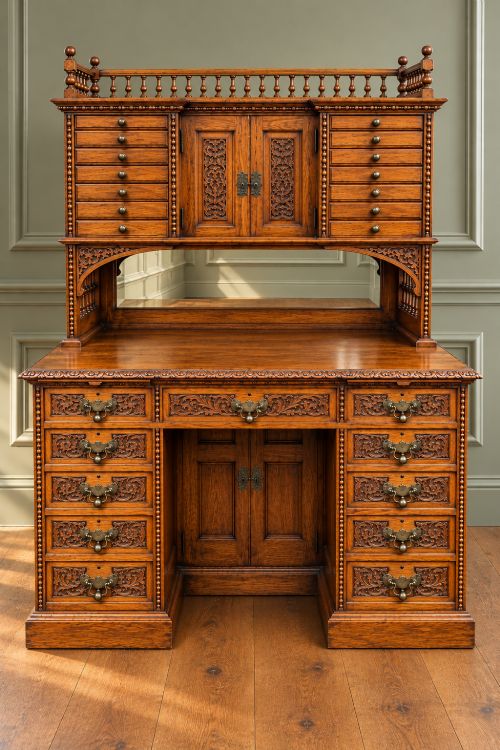
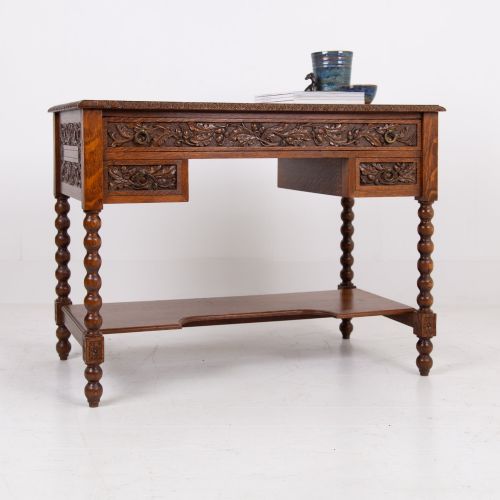
The versions most frequently met on this page include Victorian and Edwardian examples, alongside pieces influenced by the Arts and Crafts movement or Jacobean Revival. Workshops constructed these items primarily for domestic libraries, studies, and estate offices.
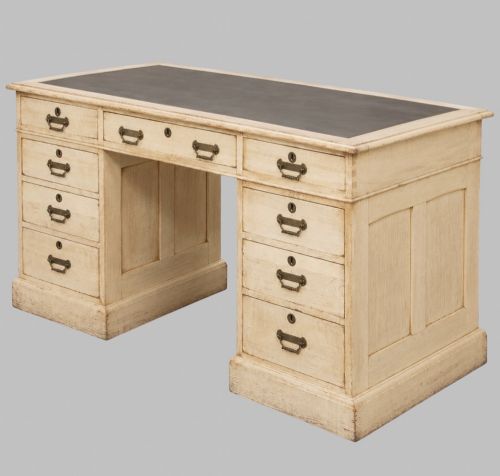
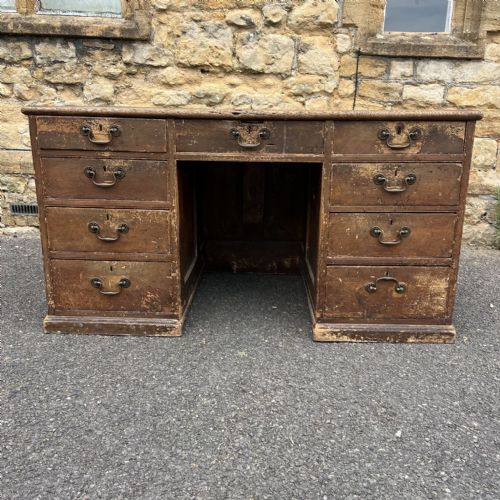
Makers utilised various configurations, ranging from single-drawer side tables to nine-drawer pedestals fitted with leather writing surfaces and brass handles. The overarching style moves between plain country utility and heavily carved formal presentation.
Materials and construction
Makers built these tables primarily from solid oak and golden oak, sometimes complemented by secondary timbers like pine or ash within internal drawer framing. Selected pieces incorporate burr walnut veneers or feature bleached and pale oak finishes.
Hardware played a functional and decorative role, with brass pulls, iron fittings, and inset leather writing surfaces commonly integrated into the desk tops. Construction methods relied on traditional joinery, dovetailing for drawer boxes, and turned or carved legs for structural support.
Oak Study Table Drawers Retail Price Guide 2026
Typical asking prices for oak study table drawers among the pieces listed under this phrase on Sellingantiques today, from the lower quarter to the upper quarter. They describe what is for sale here now, not the wider market.
Listings feature periods spanning from 1850 through to the 1930s, encompassing Victorian, Edwardian, and Art Deco eras alongside revival styles.
Evaluating quality and execution
Quality reveals itself in the selection of timber and the precision of the joinery, particularly in how smoothly the drawers run within their carcases. Finely figured oak and well-executed carving distinguish superior pieces from utilitarian workshop output.
The integration of secondary materials, such as premium leather tops and solid brass hardware, separates standard domestic furniture from finer pedestal desks produced by established makers.
Blyth & Son London·Edwards & Roberts·Gillows of Lancaster·Jenners
The Oak Study Table Drawers Glossary
- Pedestal desk
- A heavy office or library desk comprising two banks of drawers supporting a single top. These larger forms typically offer substantial storage beneath the writing surface.
- Writing table
- A lighter form of desk, usually fitted with one or more drawers in the frieze beneath the top. They function primarily for correspondence rather than heavy clerical work.
- Arts and Crafts
- A design movement valuing honest construction, visible joinery, and simplified forms over excessive ornamentation. Pieces from this tradition often display clean lines and minimal carving.
- Frieze
- The horizontal band situated directly beneath the desk top, which frequently houses the integrated drawer compartments. Drawers placed here pull out towards the user.
- Kneehole
- The central recessed space beneath a pedestal desk designed to accommodate the user's legs. Twin pedestals flank this open opening.
Oak Study Table Drawers: Frequently Asked Questions
What is an oak pedestal desk?
An oak pedestal desk is a substantial office or library table featuring two columns of drawers that support the main writing surface. The central kneehole provides space to sit comfortably while working.
These pieces offer significant storage capacity and often incorporate leather-lined writing surfaces. They appear frequently in nineteenth and early twentieth-century designs.
How do I date an oak writing table?
Dating relies on examining the construction methods, hardware styles, and prevailing design characteristics such as Victorian carving or Edwardian simplicity. Secondary timbers inside the drawers can also indicate the period of manufacture.
Subtle changes in handle design and timber finishing provide further clues regarding the decade of production. Comparative examination helps distinguish between mid-nineteenth-century and later revival pieces.
Were these desks used for offices?
Many of these tables served professional duties in home studies, estate offices, and libraries. Their multiple drawers provided practical organisation for stationery, documents, and writing instruments.
Lighter writing tables suited domestic correspondence, whereas heavy pedestal variants managed extensive paperwork. Both types accommodated the daily administrative needs of the period.
How do I care for a leather desk top?
Leather desk inserts require gentle maintenance using specialised leather balms to prevent drying and cracking. Avoiding direct sunlight and excessive heat preserves the suppleness of the material.
Regular dusting with a soft, dry cloth prevents grime accumulation across the surface and around the gilt tooling. Careful handling ensures the leather retains its finish over decades of use.