






Oak Storage Chest Bench
An oak storage chest bench offers a sturdy seat and a hidden compartment, bringing centuries of practical British craftsmanship into your hallway.
Oak Storage Chest Bench
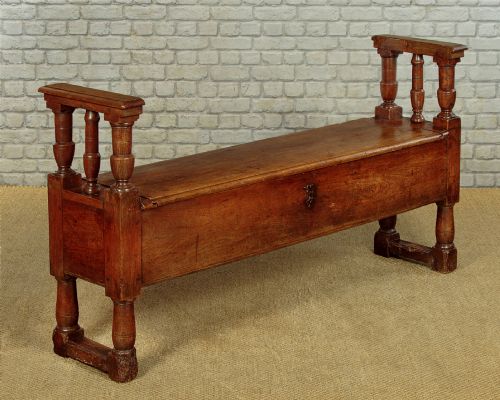
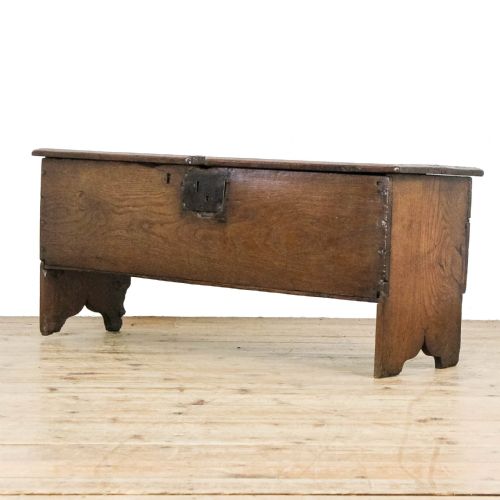
An oak storage chest bench combines a practical seat with a deep compartment beneath, serving as a versatile piece for hallways and living spaces. When you search for an oak storage chest bench, you encounter forms ranging from rustic box settles and blanket chests to elaborate monks benches and mule chests.
The pieces span several distinct eras, stretching from early six-plank construction up through Georgian vernacular, Victorian revival styles, and Edwardian production. The most common examples you meet on this page date from the Victorian and Edwardian periods, alongside substantial 18th-century country pieces.
How they were made
Makers built these pieces primarily from solid oak, sometimes combining secondary woods like pine for internal linings or panel frames. Iron and brass hardware, including strap hinges and handles, secured the heavy lids and doors.
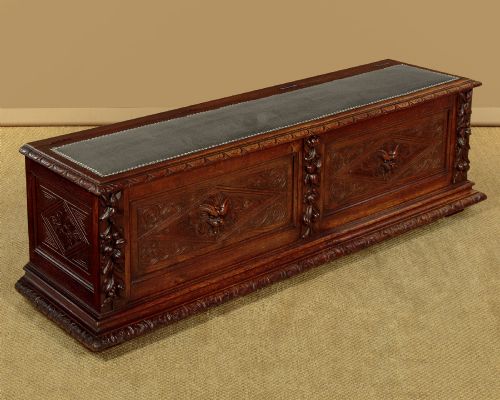
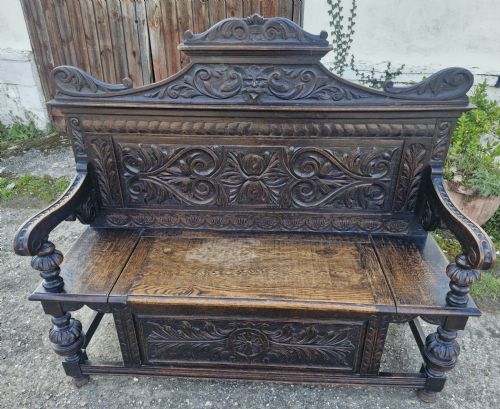
Carpenters utilised traditional joinery methods such as mortise and tenon frames, pegged joints, and tongue-and-groove panels. Many surfaces feature hand-carved panels displaying floral motifs, linenfold patterns, or Green Man carvings, finished with wax or polish to reveal the grain.
Oak Storage Chest Bench Retail Price Guide 2026
Typical asking prices for oak storage chest bench among the pieces listed under this phrase on Sellingantiques today, from the lower quarter to the upper quarter. They describe what is for sale here now, not the wider market.
Many a stern Victorian monks bench hides a whimsical Green Man grinning out from beneath the seat.
What varies in quality
The integrity of the timber and the depth of the hand-carving distinguish finer examples from simpler provincial work. Crisp relief work on panels and well-preserved original hardware elevate a piece above standard utility items.
Structural originalism dictates the standing of an antique chest or bench, particularly the condition of the baseboards, hinges, and lid fixings. Pieces retaining their early form without extensive timber replacement command greater appreciation.
The Oak Storage Chest Bench Glossary
- Monks bench
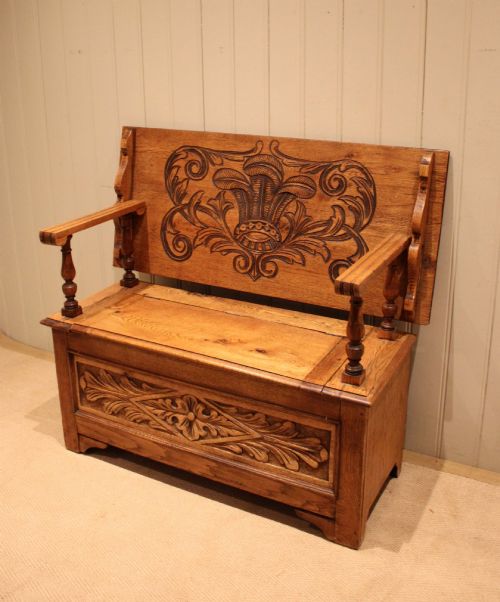
- A convertible furniture form featuring a pivoting back that folds down to create a table top over a box seat. It provides dual utility in smaller rooms.
- Mule chest
- A storage chest fitted with one or two drawers beneath the main compartment. This design evolved from the standard blanket chest by adding easy-access drawer storage.
- Six-plank chest
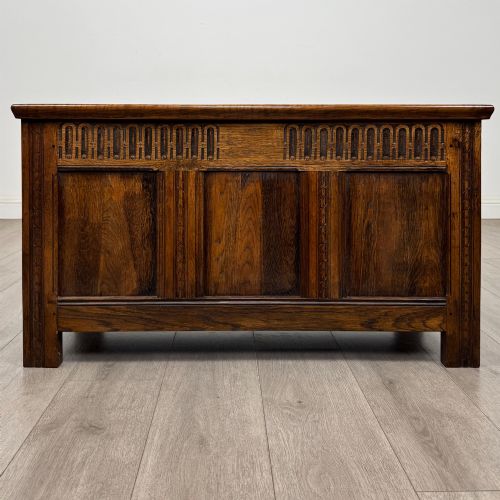
- An early and simple chest construction method utilising six boards joined edge-to-edge with pegged joints. It represents some of the oldest surviving storage forms.
- Box settle
- A high-backed wooden bench with enclosed storage beneath the seat. The high back shielded sitters from drafts in older stone-built houses.
Oak Storage Chest Bench: Frequently Asked Questions
Where should I place a monks bench?
These benches suit hallways, entryways, or living rooms where both seating and enclosed storage are useful. Their dual-purpose design makes them particularly practical in narrow spaces.
Ensure you allow adequate clearance if the model has a pivoting back that converts into a table top.
How do I clean oak furniture?
Dust the surfaces regularly with a soft, dry cloth to prevent the buildup of grime in carved recesses. Avoid modern silicone polishes which can build up a cloudy residue over time.
Feed the timber periodically with a traditional beeswax polish to maintain the natural lustre of the oak.
What is a Green Man carving?
A Green Man carving depicts a human face surrounded by or sprouting from foliage, vines, or leaves. It symbolizes rebirth and the cycle of growth.
This decorative motif appears frequently on Victorian revival oak furniture and architectural woodwork.
How do I identify an 18th-century chest?
Examine the construction methods, tool marks, and timber patination on the interior and underside. Hand-cut peg joints and irregular board widths typically indicate earlier craftsmanship.
Compare the style of the carved panels against known vernacular periods like the Georgian or William III eras.