







Oak Storage Box Bench
When you search for an oak storage box bench, you are looking at centuries of functional seating that hides your clutter.
Oak Storage Box Bench
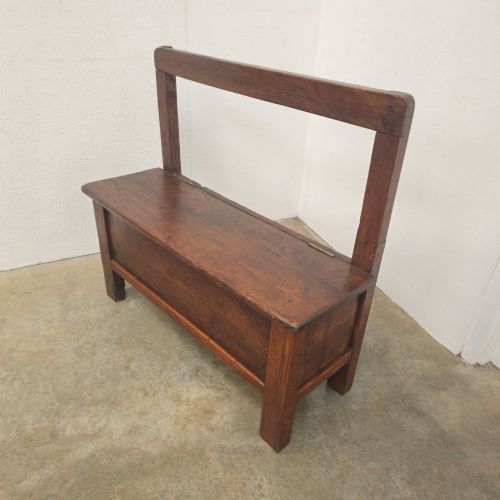
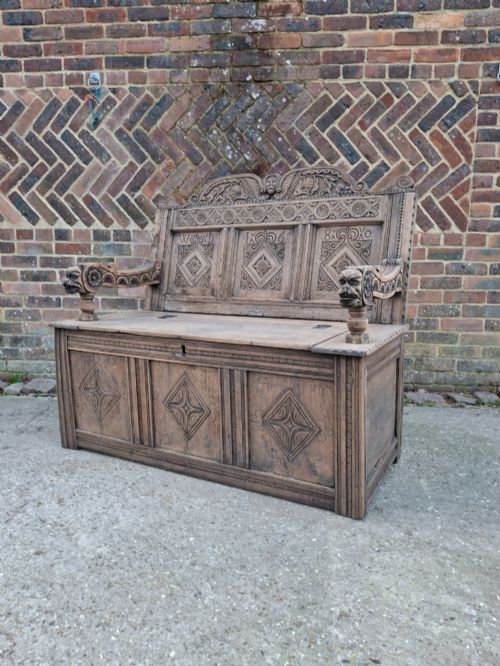
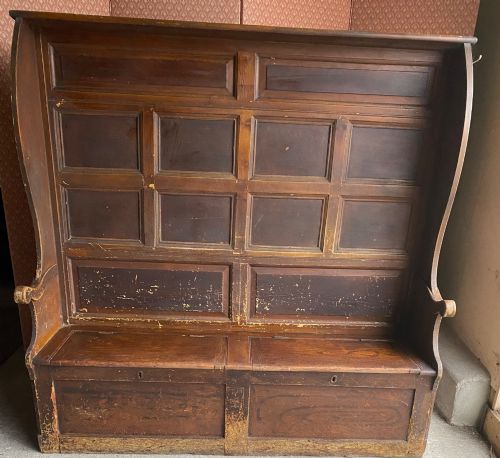
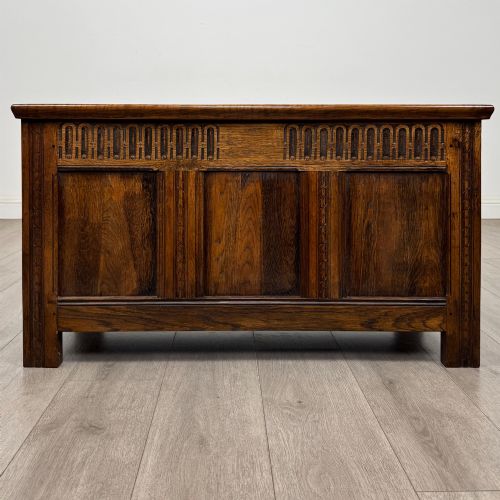
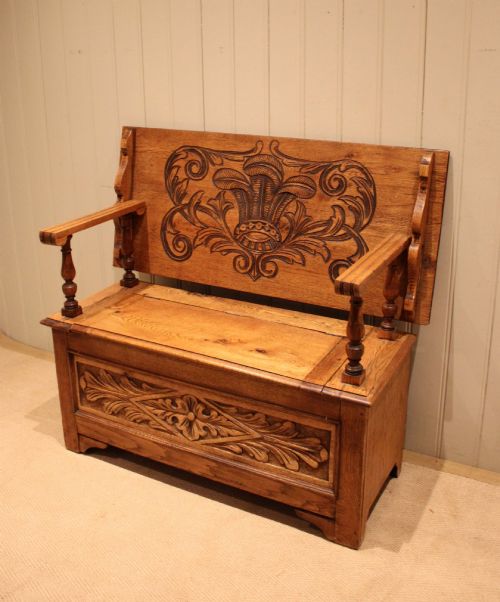
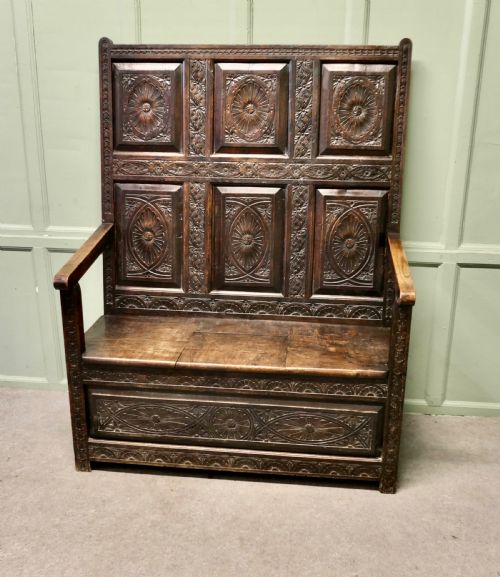
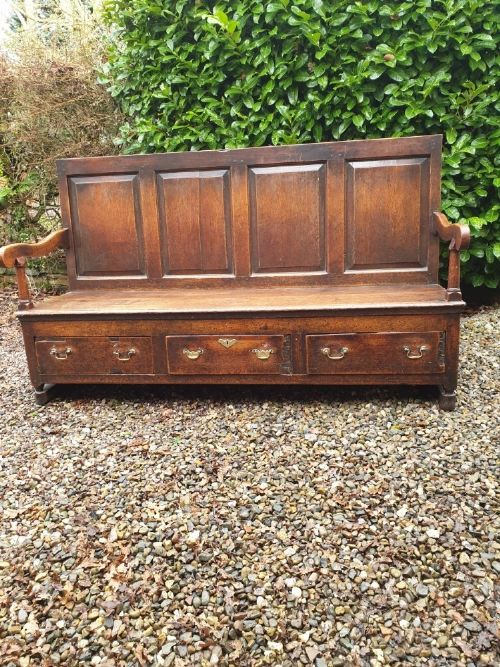
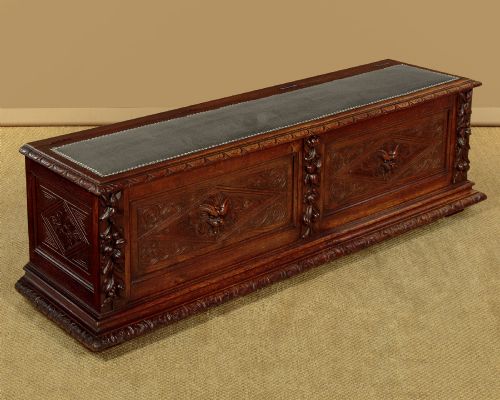
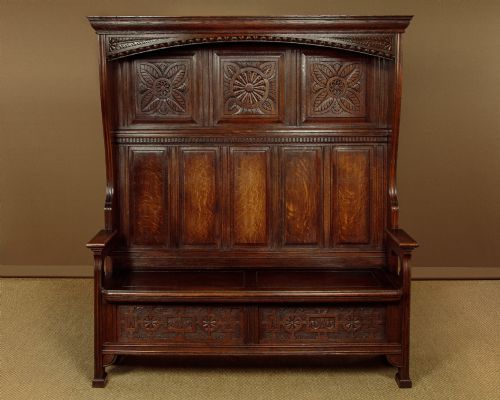
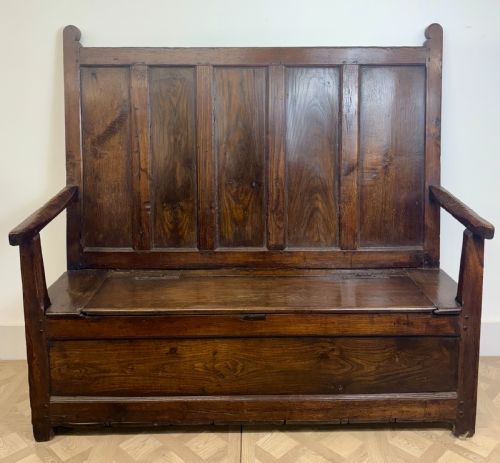
An oak storage box bench combines a sturdy seat with a concealed compartment beneath, taking forms such as settles, hall benches, and coffers. You will frequently meet 18th-century country settles and later revival pieces featuring lift-up lids or fold-over tops. These items served households by providing both a place to sit by the hearth and a secure chest for blankets or provisions.
The pieces span periods from the 17th century through the Edwardian era and the 1920s, showing styles like Jacobean Revival, Art Nouveau, and Georgian vernacular. High-back settles offer draught protection in large rooms, while smaller hall seats fit narrow corridors. Each example reflects the domestic requirements of its time, balancing utility with traditional craftsmanship.
Materials and construction methods
Makers relied primarily on solid oak, frequently supplemented by elm, pine, and ash for internal framing or secondary panels. Wood was selected for grain and strength, then joined using traditional methods like mortise and tenon. Iron hinges and brass fittings secured the lift-up seats and lids, while marquetry inlay added decorative contrast.
Carving defines many surfaces, ranging from geometric strapwork on early pieces to flowing plant motifs on Art Nouveau and Edwardian examples. Surfaces were finished with wax or left natural, allowing the wood to darken and develop a deep patina over generations of handling.
Oak Storage Box Bench Retail Price Guide 2026
Typical asking prices for oak storage box bench among the pieces listed under this phrase on Sellingantiques today, from the lower quarter to the upper quarter. They describe what is for sale here now, not the wider market.
Listings demonstrate forms spanning the 16th century to the 1920s, incorporating oak, elm, brass, iron, and fabric elements.
Distinctions in quality
The caliber of an oak storage box bench rests on the crispness of the timber carving and the integrity of its joinery. Superior examples display dense, well-figured oak with hand-cut panels that fit snugly within their frames without excessive modern reinforcement. The depth and relief of carved panels separate master workshop output from simpler vernacular items.
Proportion and structural survival also dictate standing. Pieces retaining their original hinges, boards, and untouched surface patinas command greater appreciation than heavily restored or altered equivalents. The balance between the backrest, seat box, and arm supports reveals the maker's eye for domestic scale.
The Oak Storage Box Bench Glossary
- Settle
- A wooden bench with a high back, solid arms, and a box seat. It was traditionally placed near the hearth to shield occupants from cold draughts.
- Monks bench
- A convertible seat featuring a fold-over top that transforms the backrest into a table surface. This dual-purpose form became popular during revival periods.
- Mule chest
- A storage chest fitted with one or more drawers beneath the main compartment. It bridges the transition between simple coffers and drawer-based cabinetry.
- Cooffer
- A heavy wooden box used for storing valuables or linens, often fitted with a flat lid that doubles as a seat. These represent some of the earliest forms of domestic chest furniture.
- Marquetry inlay
- The art of applying small pieces of contrasting wood veneer onto a solid surface to form decorative patterns. This technique highlights finer Edwardian and revival pieces.
Oak Storage Box Bench: Frequently Asked Questions
How were box settles used?
Families used box settles beside the fireplace to keep seated occupants warm while storing blankets, wool, or dry goods inside the base compartment.
The enclosed lower section protected contents from damp floors and pests, making the bench a central piece of multi-functional furniture in older homes.
How do I date an oak bench?
Dating relies on examining the construction marks, nail types, panel thickness, and stylistic motifs carved into the wood. Early 17th and 18th-century examples show hand-riven timber and pegged joints, whereas Edwardian and 1920s pieces often display machine-sawn elements and revival styles.
Secondary woods like elm or ash mixed with oak also point towards specific regional vernacular traditions from the Georgian period.
Where should I place a hall bench?
A hall bench suits entryways and corridors where its lift-up seat provides practical storage for shoes, scarves, and daily accessories.
Sinces many historic examples feature high backs or narrow footprints, they fit neatly against hallway walls without obstructing passage.