



Oak Spindle Back Dining Chairs
Oak spindle back dining chairs bring rugged rural character to a table, valued for their honest timber construction and comfortable turned spindles.
Oak Spindle Back Dining Chairs
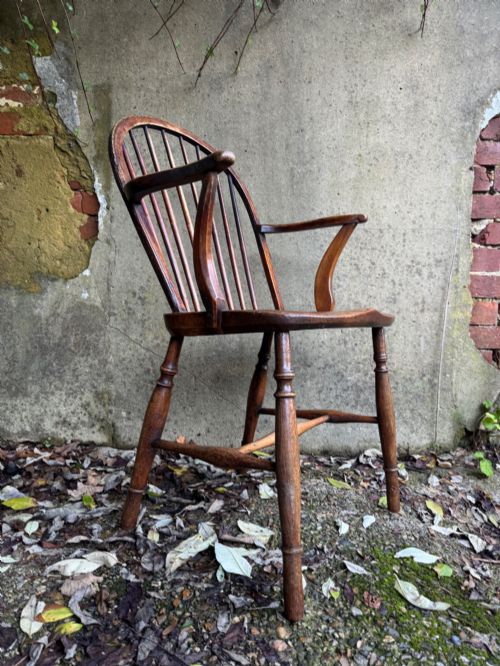
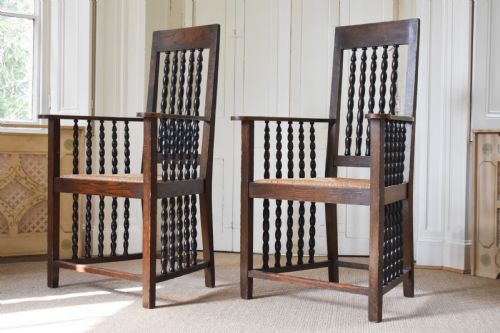
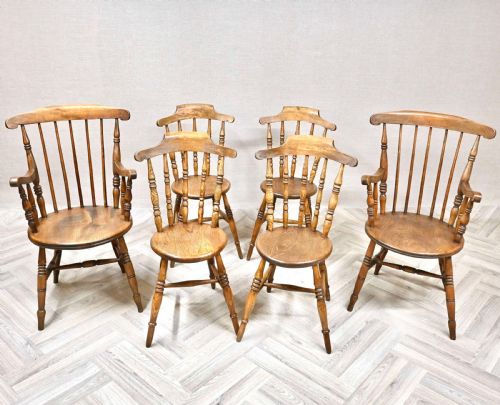
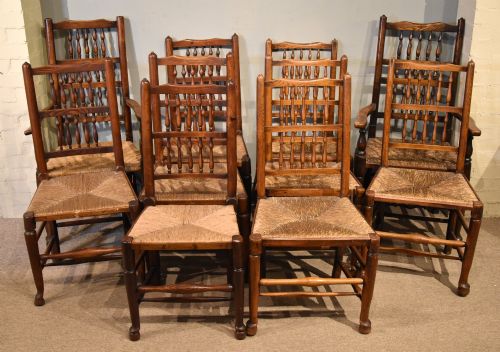
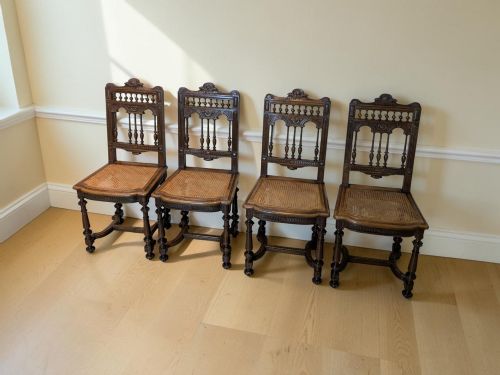
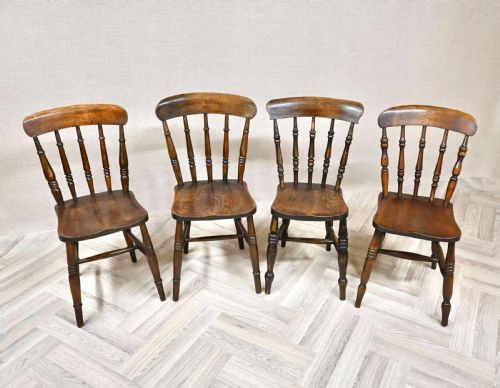
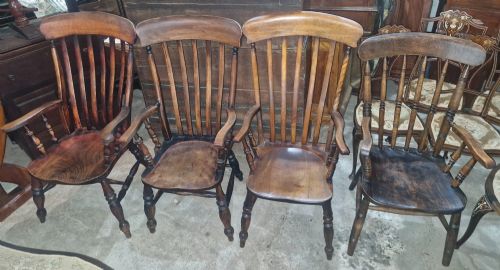
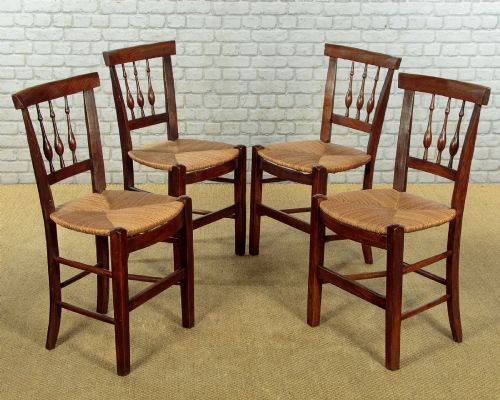
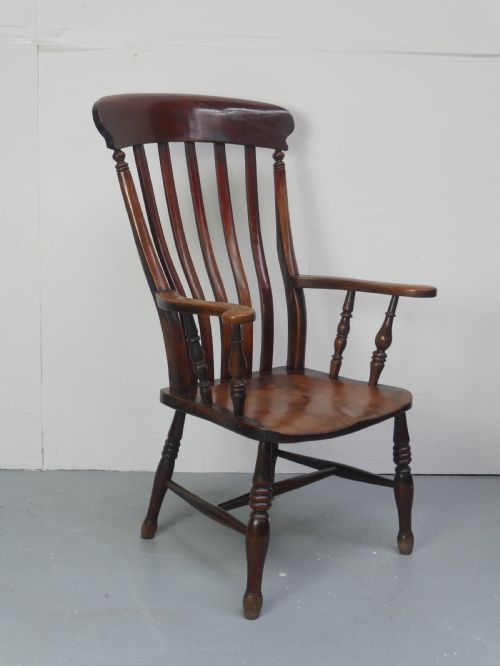
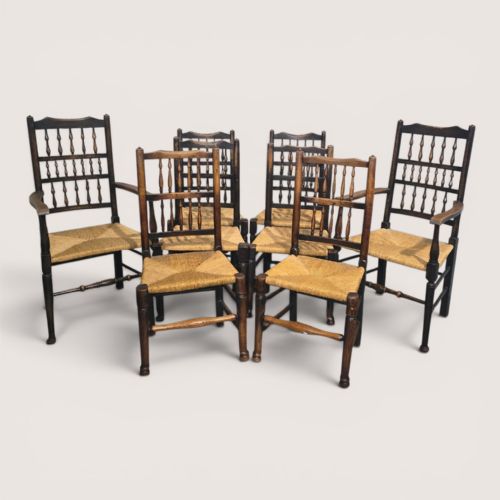
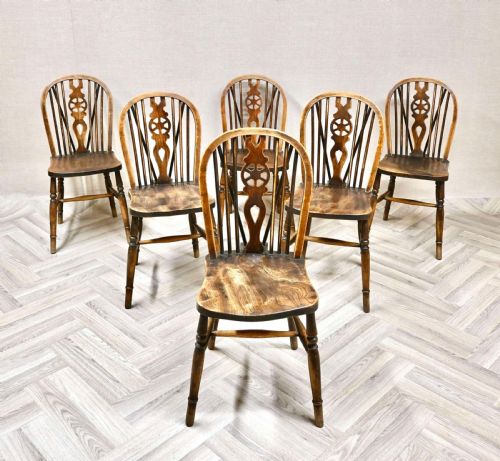
When you search for oak spindle back dining chairs, you encounter robust seating rooted in English country vernacular traditions. The pieces appearing here span from the eighteenth century through the Victorian era, taking forms such as kitchen chairs, Windsor armchairs, and Lancashire rush-seated models.
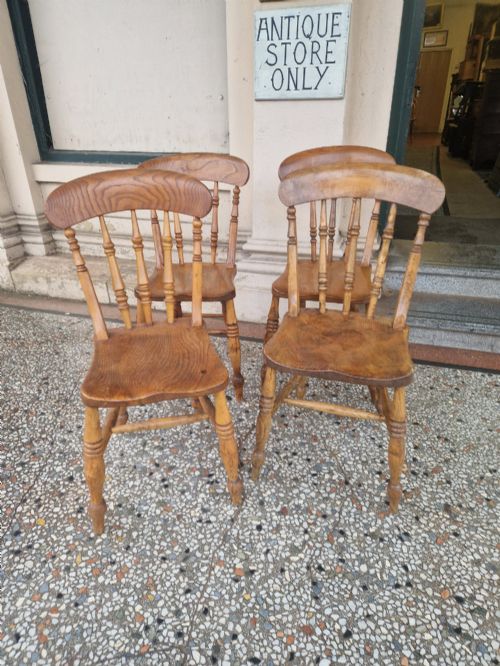
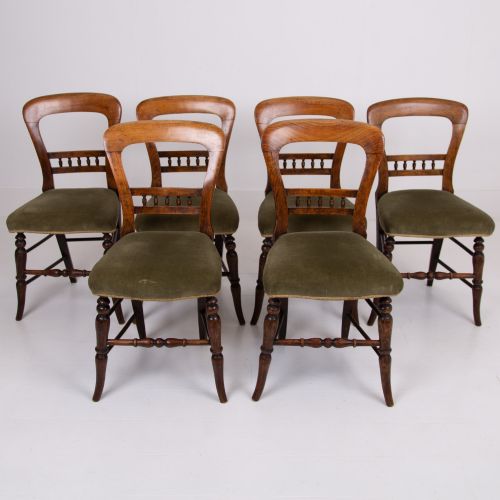
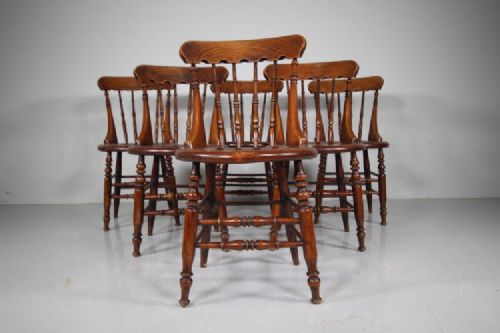
The most common variants you will meet are sets of farmhouse and kitchen chairs, often paired as harlequin collections or matched groups of four, six, or eight. These range from simple side chairs to generous armchairs featuring elm seats and rush bases.
Makers and regional styles also emerge across the listings, including Welsh farmhouse examples, Yorkshire armchairs, and pieces associated with Liberty & Co or Charles Bevan. They serve as functional dining furniture that carries centuries of domestic history.
Materials and construction
These chairs rely on native hardwoods, combining solid oak for frames with elm for shaped seats and beech or ash for turned spindles. This mixed timber construction provided structural rigidity where needed while allowing seats to be hollowed into comfortable penny or saddle shapes.
Joints were typically pegged and turned on a lathe, utilising traditional Windsor or ladder back framing methods without metal fixings. Many incorporate woven rush seating dropped into wooden frames, or feature steam-bent components that shape the characteristic curved backs.
Oak Spindle Back Dining Chairs Retail Price Guide 2026
Typical asking prices for oak spindle back dining chairs among the pieces listed under this phrase on Sellingantiques today, from the lower quarter to the upper quarter. They describe what is for sale here now, not the wider market.
Several sets retain the distinct hollowed dips of penny seats, shaped by generations of household diners shifting around the kitchen table.
Quality and character
Quality rests in the integrity of the timber and the harmony of matched sets rather than pristine factory finishes. Uniformity across a harlequin group or a matched set of six dictates desirability, alongside the crispness of the spindle turnings and the depth of the wood grain.
Original surfaces with honest patination elevate a piece above later restorations or over-cleaned timber. Regional distinctiveness, such as the regional Yorkshire or Lancashire shaping, also separates standard utility seating from finer vernacular expressions.
Liberty & Co·Charles Bevan·Worksop Allsop
The Oak Spindle Back Dining Chairs Glossary
- Spindle back
- A chair back constructed from vertical turned wooden rods fitted into upper and lower rails. This design lightens the frame while offering sturdy back support.
- Windsor
- A chair built with a solid wooden seat into which the legs, back sticks, and bow are all separately bored and wedged. The style originated in rural workshops and evolved into various regional forms.
- Rush seat
- A seating surface woven from dried marsh rushes, twisted and patterned across a wooden frame. It provides a resilient and comfortable pad for country dining chairs.
- Harlequin set
- A collection of chairs that are closely matched in style, period, or form rather than being cast from a single original workshop batch. They share visual harmony while showing slight individual variations.
- Penny seat
- A wooden saddle seat shaped with a circular depression resembling a large coin. This traditional carpentry technique enhances sitting comfort on solid timber chairs.
Oak Spindle Back Dining Chairs: Frequently Asked Questions
How do I care for antique wooden seats?
Keep these chairs away from direct heat sources and sudden humidity changes to prevent the timber from splitting or joints from drying out. Apply a traditional beeswax polish occasionally to nourish the grain and maintain a natural protective sheen.
Avoid modern silicone-based sprays, which can build up on the surface and dull the historic patination. Regular dusting with a soft, dry cloth is usually sufficient for day-to-day maintenance.
Can I mix these chairs with a modern table?
Vernacular timber seating pairs exceptionally well with contemporary glass, metal, or plain wooden tables by introducing texture and historic contrast. Their varied silhouettes prevent a dining space from feeling too uniform or formal.
When combining different periods, look for shared wood tones or complementary proportions to tie the seating arrangement together around the room's centrepiece.
How do I distinguish eighteenth-century chairs from Victorian copies?
Early pieces often display hand-turned irregularities, pegged tenons, and deep patination earned through generations of daily use. Tool marks left by pit saws or adzes on the underside of seats provide clues to earlier manufacturing methods.
Victorian interpretations frequently reveal more mechanical uniformity in their lathe turnings and drier, less complex timber grain. Examining the wear patterns around the footrests and seat edges also helps indicate the true age of the piece.
Are rush seats strong enough for daily dining use?
Traditional rush seating is surprisingly durable and designed to support everyday weight when properly maintained. The twisted marsh grass yields slightly to the body while retaining its structural tension across the frame.
Keep rush seats dry and avoid kneeling directly on them to preserve the woven strands. Should the rush eventually wear down, traditional re-seating can be carried out by a skilled restorer.