

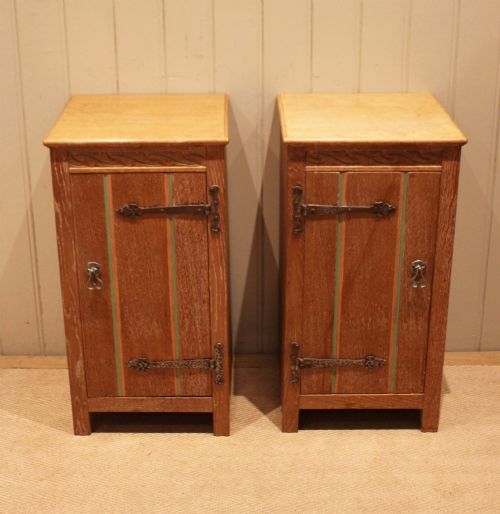


Oak Side Cabinets Pair
These oak side cabinets pair finds bring practical storage and solid timber grain together in matching sets for the bedroom or study.
Oak Side Cabinets Pair
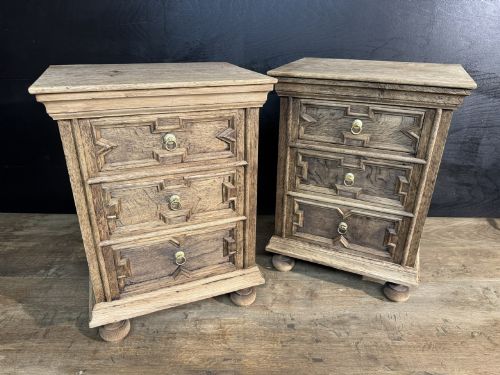
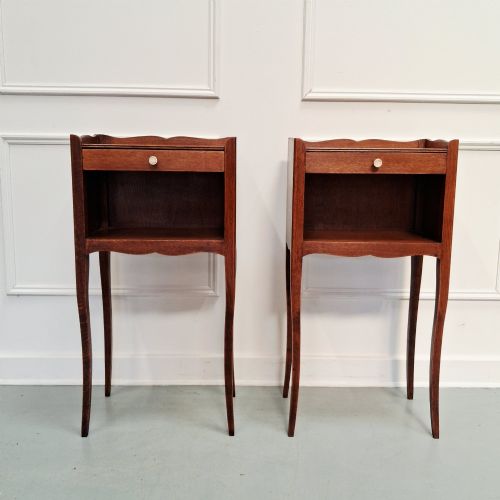
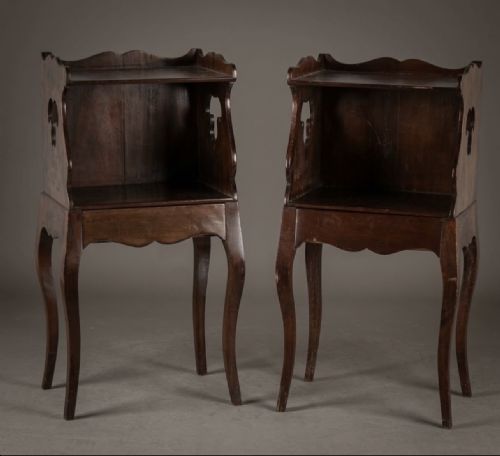
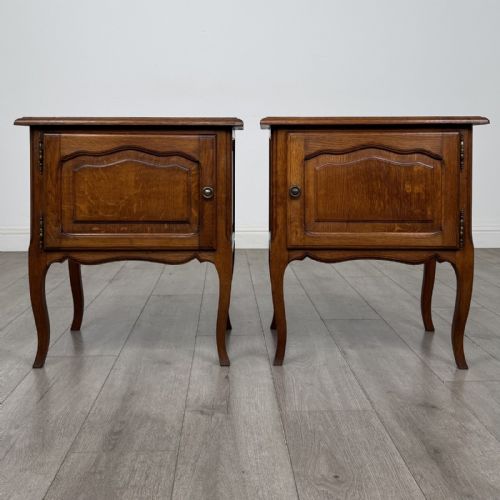
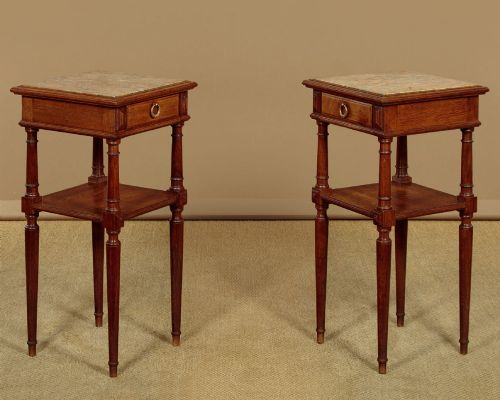
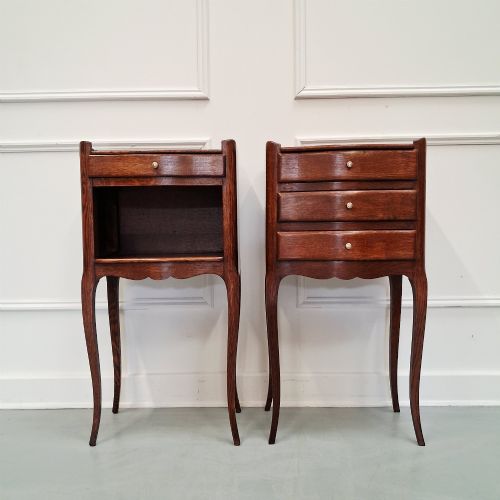
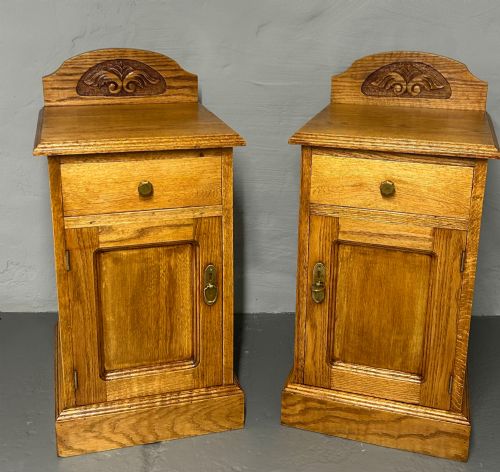
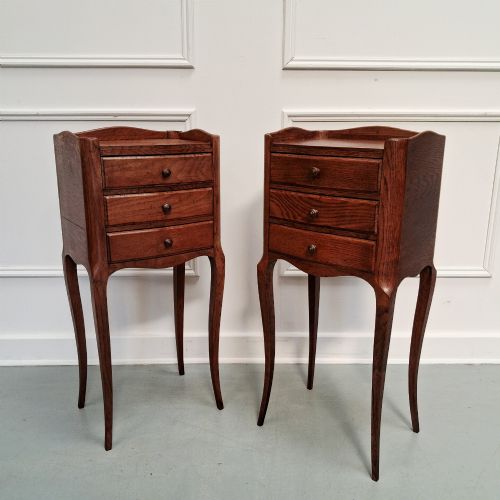
An oak side cabinets pair typically comprises matching bedside tables, bedside cabinets, or smaller pier cabinets designed to flank a bed or anchor a compact space. The pieces on offer span the nineteenth century up through the nineteen-thirties, drawing on varied design traditions.
French styles dominate the selections, alongside English country vernacular, Arts and Crafts, Art Deco, and Gothic revival influences. Buyers encounter forms featuring cabriole legs, marble tops, carved details, and bleached or limed finishes.
Bedside cabinets and tables form the vast majority of the matching sets currently presented, though taller bookcases also appear. These examples utilise oak as the primary timber, sometimes paired with walnut, dark wood, brass, metal, or wrought iron.
Materials and construction methods
Cabinet makers relied primarily on solid oak and wood veneers, shaping the timber into sturdy frames for bedside storage. Decorative variations include limed, bleached, and dark wood finishes that highlight the natural grain.
Fittings incorporate brass, metal, and wrought iron for handles, hinges, and structural accents. Certain nineteen-thirty Art Deco pieces also integrate inset marble tops into the wooden carcass for a durable surface.
Oak Side Cabinets Pair Retail Price Guide 2026
Typical asking prices for oak side cabinets pair among the pieces listed under this phrase on Sellingantiques today, from the lower quarter to the upper quarter. They describe what is for sale here now, not the wider market.
The listings span five distinct periods, from Regency and eighteen-eighty pieces up to nineteen-thirty designs.
Judging the quality of matching pairs
The standard of carving and surface finishing sets individual pairs apart, distinguishing simple utility furniture from more elaborate decorative items. Crisp detailing on cabriole legs or Gothic revival mouldings indicates superior craftsmanship.
The consistency of the match between the two pieces dictates the success of a pair, particularly where bleaching, liming, or natural wood ageing has occurred over decades. Intact original marble tops and period metalwork further elevate the stature of a matching set.
The Oak Side Cabinets Pair Glossary
- Pier cabinet
- A narrow cabinet designed to stand against a wall pier between windows or in a tight corner. These often feature single doors and compact footprints.
- Cabriole leg
- A furniture leg that curves out and then in, resembling the leg of an animal. This classic shape appears frequently on French style furniture from the early twentieth century.
- Limed oak
- Timber treated with a special finish that leaves a white pigment in the open pores of the grain. This technique lightens the wood while accentuating its natural texture.
- Gothic revival
- An architectural and decorative style drawing on medieval ecclesiastical forms. Pieces in this idiom display pointed arches, heavy tracery, and dark carved wood.
- Art Deco
- A design movement from the nineteen-twenties and nineteen-thirties characterised by geometric symmetry and sleek surfaces. French examples often pair oak structures with contrasting marble tops.
Oak Side Cabinets Pair: Frequently Asked Questions
What rooms suit an oak side cabinets pair best?
These matching cabinets serve primarily as bedside companions, offering concealed storage and surface space next to a sleeping berth. Their compact dimensions also allow them to function as small lamp tables or side units in a hallway or study.
Because they arrive in matched pairs, they bring symmetry to interior layouts. Placing them on either side of a bed or low mantelpiece creates a balanced visual anchor in the room.
How do I identify nineteen-thirties French style cabinets?
Nineteen-thirties French cabinets often combine traditional oak construction with modern geometric lines or subtle carved flourishes. Many examples incorporate cabriole legs or polished marble inserts on the top surface.
Makers of this period frequently bleached or limed the oak timber to create a paler, more uniform finish. This aesthetic differs from the darker, heavier tones found in nineteenth-century Gothic revival pieces.
Are these cabinets purely decorative or practical?
Every piece listed provides functional storage through enclosed cupboards, open compartments, or small drawers. They were built to hold bedside items, books, and personal belongings while occupying a minimal floor footprint.
The combination of sturdy timber construction and usable surface area makes them enduringly practical for modern homes. Their decorative merits lie in the grain of the oak and the period styling of the legs and hardware.