







Oak Shop Display
These oak shop display pieces bring commercial utility and honest craftsmanship into domestic spaces, offering glazed panels and sturdy timber construction.
Oak Shop Display
When searching for an oak shop display, buyers encounter a utilitarian range of mercantile furnishings spanning from the late nineteenth century through to the Art Deco period. These items originate from diverse commercial environments, including haberdashers, pharmacies, watchmakers, and drapers.
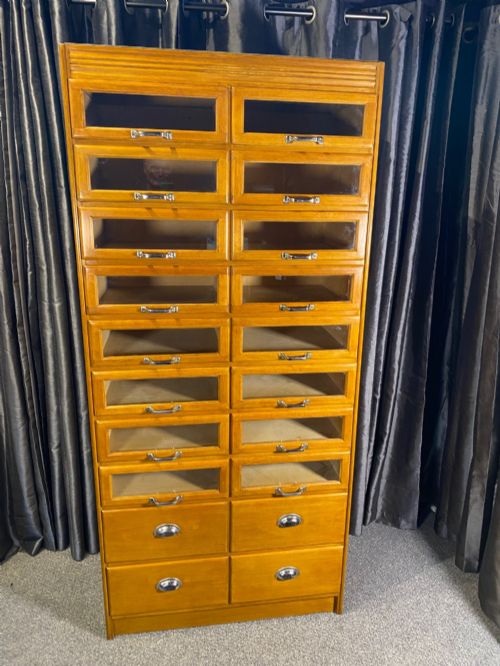
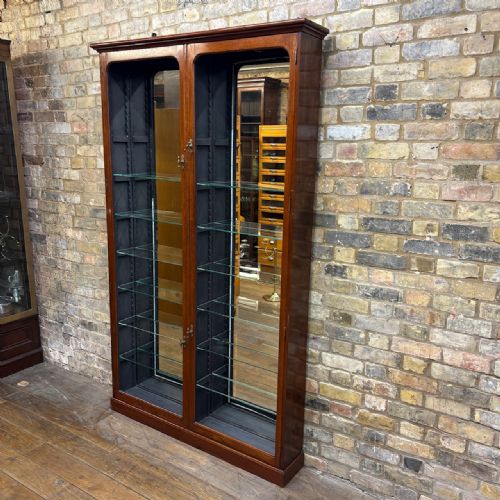
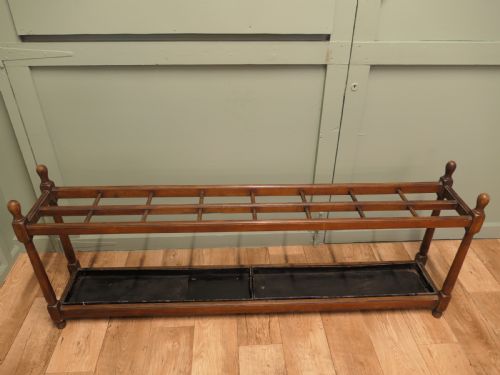
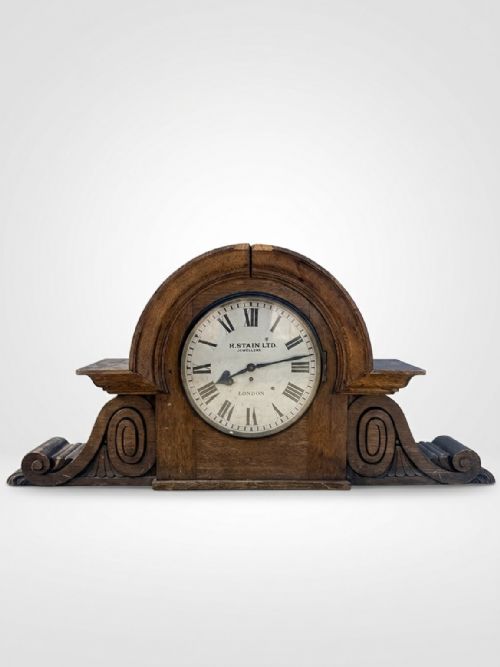
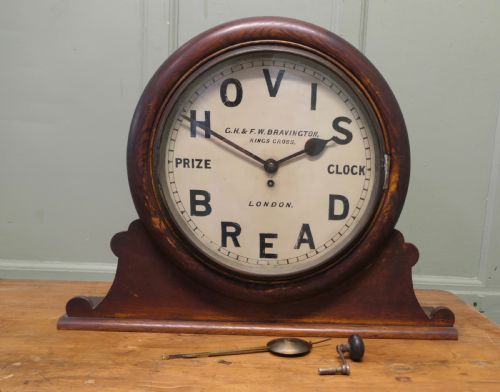
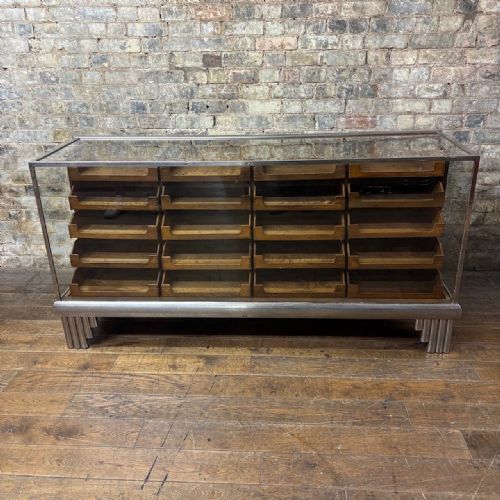
The most common forms on this page include countertop glass cabinets, multi-drawer haberdashery units, wall-mounted storage pieces, and large shop counters. Alongside these fitted furnishings appear specialised display items such as mechanical soap dispensers, advertising clocks, umbrella stands, and drapers tables.
Makers and merchants utilised dense timbers primarily to withstand daily retail traffic, resulting in robust constructions that survive in domestic interiors today. Pieces range from compact tabletop cases to expansive six-foot stands and heavy timber shop fittings.
Factors of quality
The distinction between standard commercial grade and superior workshop production lies in the refinement of the timber selection and the complexity of the internal mechanism or drawer configuration. Finely figured oak grain and integrated brass or bronze fittings elevate specific counters and watchmaker cabinets above simpler utility furniture.
Originality of glass panels, hardware, and structural elements governs the integrity of each piece. Surviving maker signatures, functional mechanical components, and authentic period advertising signage preserve the historical context of retail fittings.
Oak Shop Display Retail Price Guide 2026
Typical asking prices for oak shop display among the pieces listed under this phrase on Sellingantiques today, from the lower quarter to the upper quarter. They describe what is for sale here now, not the wider market.
Several cabinets retain their original chocolate and soap advertising, proving that sweet-toothed customers and clean hands drove early retail design.
F. Sage & Co·Dudley & Co·Manoah Rhodes & Sons Ltd
The Oak Shop Display Glossary
- Haberdashery cabinet
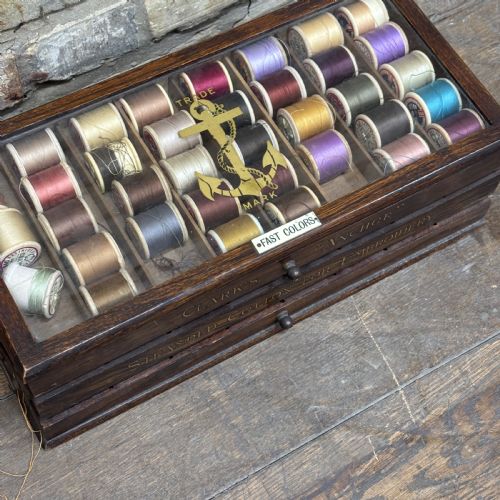
- A multi-drawer storage unit originally designed for storing small sewing goods, ribbons, and fastenings. These pieces typically feature glass fronts or shallow glazed drawers.
- Countertop display cabinet
- A compact glazed case positioned on shop counters to showcase small valuable items to customers. They often include rear access doors for the shopkeeper.
- Mechanical dispensing cabinet
- A specialised shop fitting incorporating internal levers or mechanisms to deliver goods such as soap upon actuation. These represent specific branded retail equipment.
- Drapers table
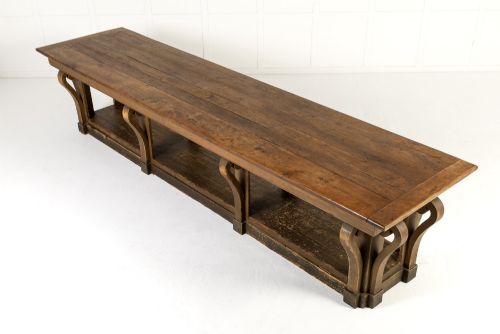
- A long wooden table utilised in fabric and textile shops for measuring and cutting cloth. They frequently incorporate lower shelving or deep drawers.
- Shop fitting
- Any permanent or semi-permanent fixture installed within a retail premises for storage and display. These items prioritise robust commercial construction.
Oak Shop Display: Frequently Asked Questions
What were haberdashery cabinets used for?
Haberdashery cabinets stored small sewing goods, buttons, ribbons, and fastenings in retail shops. The shallow drawers allowed shopkeepers to organise extensive stock efficiently.
Today, these multi-drawer units suit domestic storage for collections, stationery, or jewellery.
How do I identify a countertop display case?
Countertop display cases feature glazed top and side panels designed to sit upon retail counters. They allowed customers to view small wares while keeping items secure.
Rear doors provided access for the shopkeeper to retrieve goods during transactions.
Where can I use an oak shop display piece?
These pieces adapt readily to domestic interiors, functioning as kitchen storage, living room display cases, or hallway furniture. Their glazed panels and timber construction suit both traditional and modern rooms.
Larger counters serve as kitchen islands or sideboards.
How do I distinguish Edwardian pieces from 1930s designs?
Edwardian oak shop fittings often display traditional mouldings, brass hardware, and Arts and Crafts influences. Timber tones tend to be warm and golden.
Nineteen-thirties examples frequently incorporate Art Deco geometry, chrome detailing, and streamlined framing suited to modernising retail spaces.