







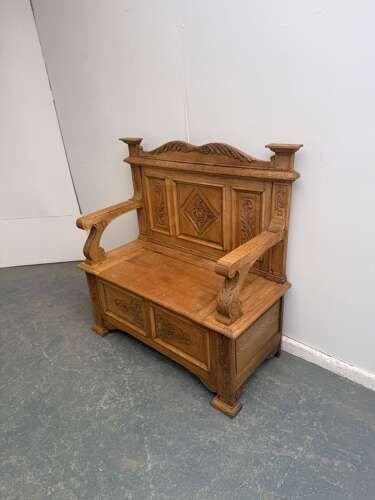
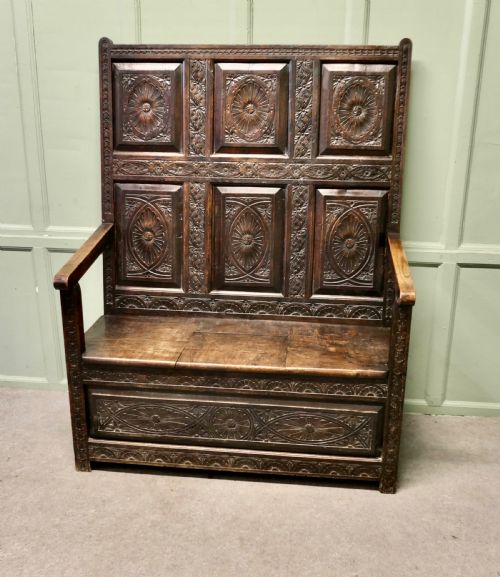
Oak Settle with Box
These oak settle with box pieces are sturdy wooden seats with integrated storage, built to offer draught-proof seating and secure containment in historical hallways.
Oak Settle with Box
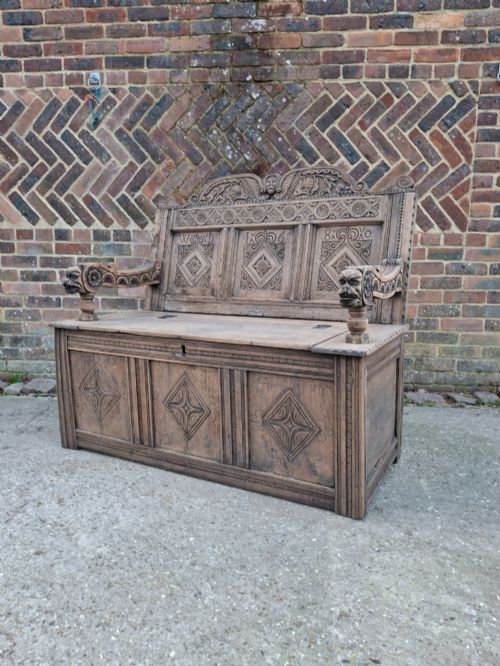
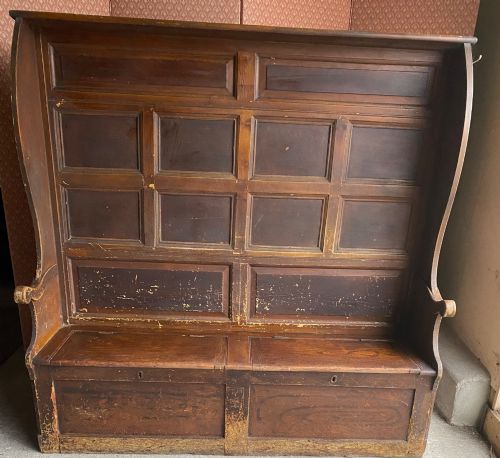
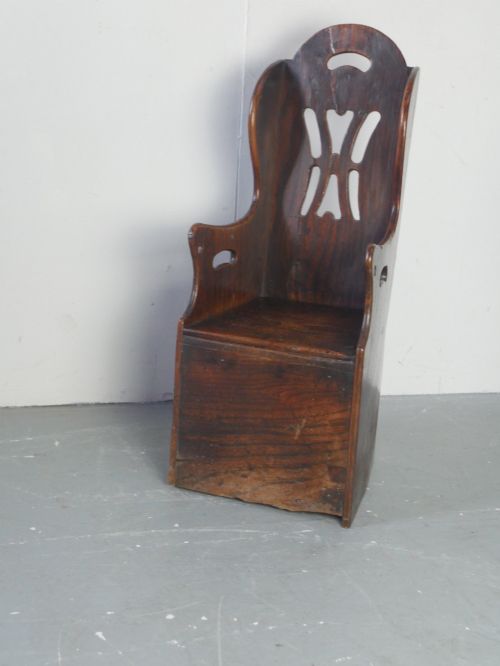
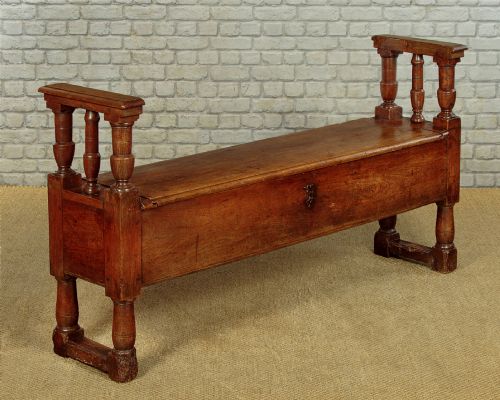
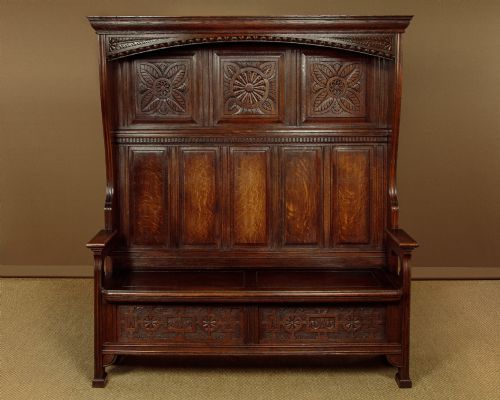
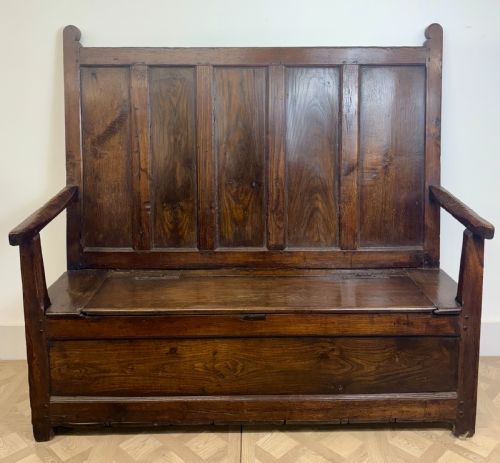
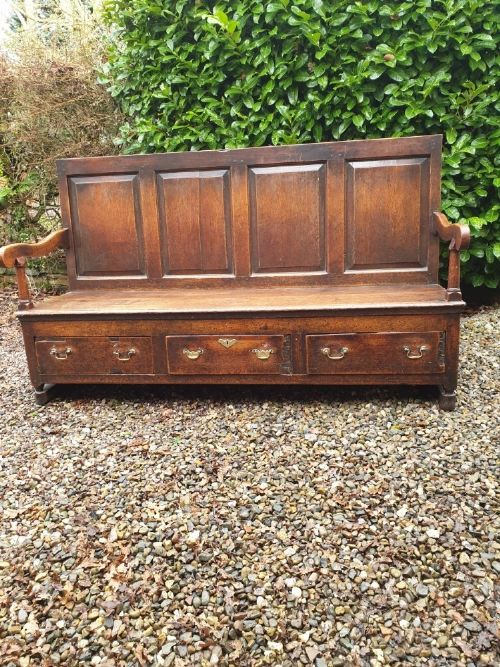
An oak settle with box combines a high-backed wooden bench with a compartmentalised storage space beneath the seat, functioning as a dual-purpose hall furniture item. These pieces appear across several distinct historical periods, ranging from seventeenth-century vernacular examples to twentieth-century revival designs.
Construction origins span multiple eras, including seventeenth-century craftsmanship, eighteenth-century George III vernacular styles, nineteenth-century Victorian revival pieces, and Edwardian interpretations. Makers utilised regional timbers suited to domestic halls, creating sturdy seating forms that served communal family life for generations.
Materials and construction methods
Makers built these settles predominantly using solid oak, frequently supplemented by elm for specific structural elements and iron for hinges and locking mechanisms. Selected timbers provided the density required to withstand daily domestic use in busy entryways and communal rooms.
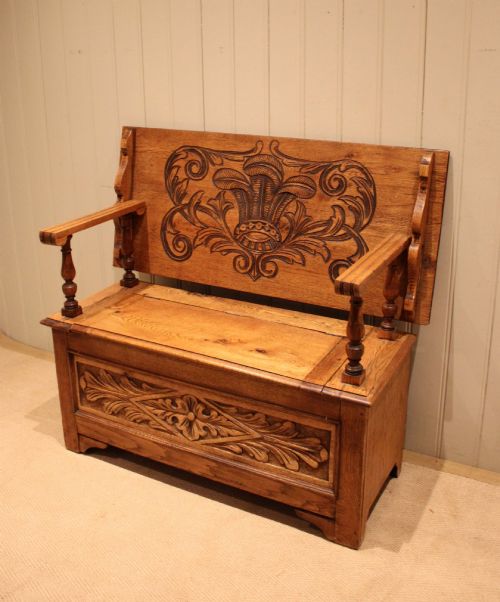
Surface ornamentation relies on traditional techniques such as hand carving, panel construction, and marquetry inlay. Artisans shaped structural elements using period joinery methods to secure high backs and hinged box compartments without relying on modern adhesives.
Oak Settle with Box Retail Price Guide 2026
Typical asking prices for oak settle with box among the pieces listed under this phrase on Sellingantiques today, from the lower quarter to the upper quarter. They describe what is for sale here now, not the wider market.
Listings incorporate items spanning from the seventeenth century through the Edwardian era, highlighting oak, elm, and iron as primary materials.
Assessing quality and construction
Quality in an oak settle with box rests upon the integrity of the timber selection and the retention of original structural components like the seat lid and hinges. Pieces displaying period hand carving or intricate marquetry inlay demonstrate higher levels of artisanal skill compared to plainer revival iterations.
The proportion and balance of the high back relative to the base box dictate the visual harmony of the piece. Superior examples maintain tight joinery and original hardware, reflecting the deliberate choices of period makers.
The Oak Settle with Box Glossary
- Box settle
- A wooden bench featuring a concealed storage compartment beneath the seat, accessed via a lift-up lid. This form kept household textiles and belongings dry and secure.
- Monks bench
- A convertible piece of furniture featuring a fold-over top that transforms the backrest into a table surface. It served multiple functions in compact historical interiors.
- Marquetry inlay
- A decorative technique using fitted pieces of contrasting wood veneer to create pictorial patterns on the surface. It adds visual complexity to panelled woodwork.
- Vernacular furniture
- Domestic items built by local craftsmen using regional styles and materials rather than following metropolitan court fashions. These pieces emphasise practical utility.
- Cofer
- A traditional wooden chest with a lid, which forms the structural base for certain hall seats and storage benches. It provided secure storage for valuables.
Oak Settle with Box: Frequently Asked Questions
What is an oak settle with box used for?
These pieces served as heavy seating placed near entryways to block cold drafts from entering living quarters. The integrated box beneath the seat provided secure containment for blankets, cloaks, and household goods.
In daily domestic life, the high back offered shelter while the sturdy wooden construction withstood constant traffic in busy halls and common rooms.
How do I date an oak settle?
Dating relies on examining the construction methods, joinery techniques, and stylistic markers present in the woodwork. Seventeenth-century examples often feature heavy framing and pegged joints, whereas later revival pieces incorporate machine-sawn elements and distinct stylistic revivals.
Changes in hardware, such as iron hinges, and the presence of specific decorative motifs like Art Nouveau inlay help distinguish Edwardian and Victorian interpretations from earlier eras.
What is a bacon settle?
A bacon settle is a specialised regional variant designed with high enclosed backs used for hanging and curing meats within domestic kitchens. These eighteenth-century forms utilise the upper structure for practical food preservation alongside standard seating.
They represent a specific utilitarian adaptation of the standard box settle found in rural vernacular households.