
Oak Server Sideboard Cabinet
An oak server sideboard cabinet offers solid construction and ample storage, grounding a dining room with traditional craft.
Oak Server Sideboard Cabinet
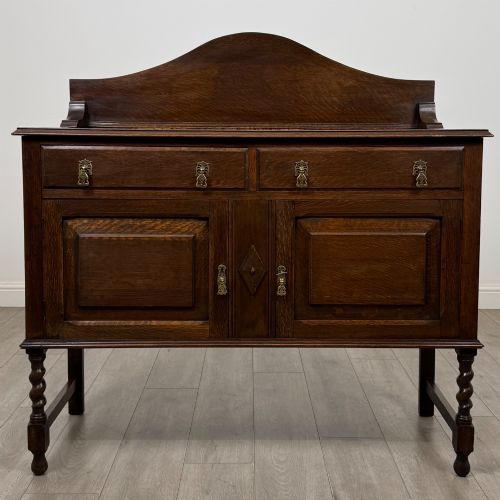
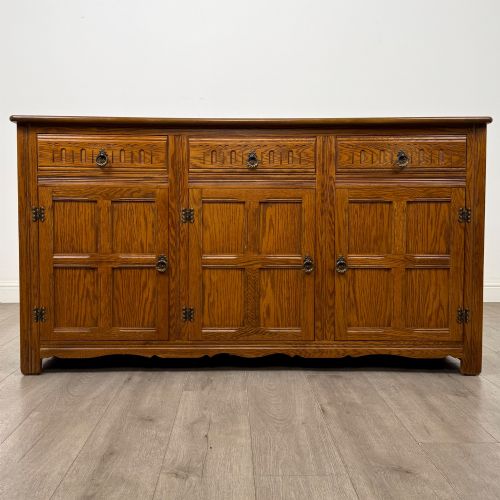
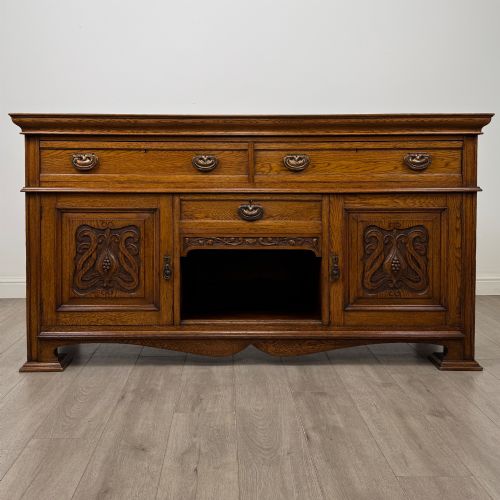
The oak server sideboard cabinet category encompasses practical storage furniture designed for dining spaces, combining surfaces for serving with cupboards and drawers for tableware. These pieces range from Georgian dresser bases to later Edwardian iterations, fulfilling the same functional role in the home.
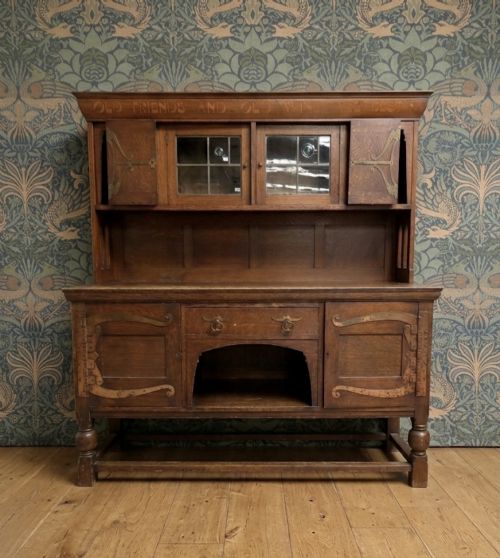
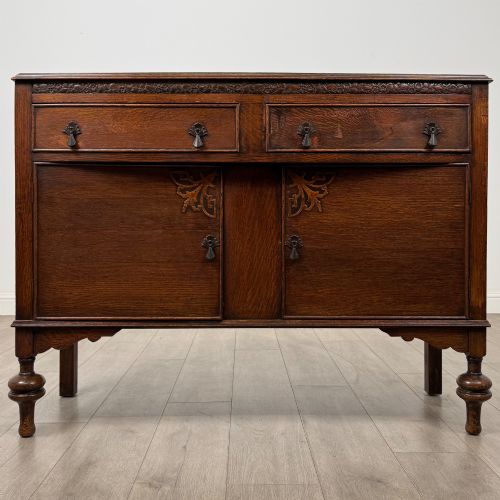
Buyers encountering this group will frequently meet Edwardian examples and nineteenth-century interpretations alongside earlier Georgian and Victorian forms. Regional pieces, French provincial models, and Arts and Crafts designs also appear regularly within the selection.
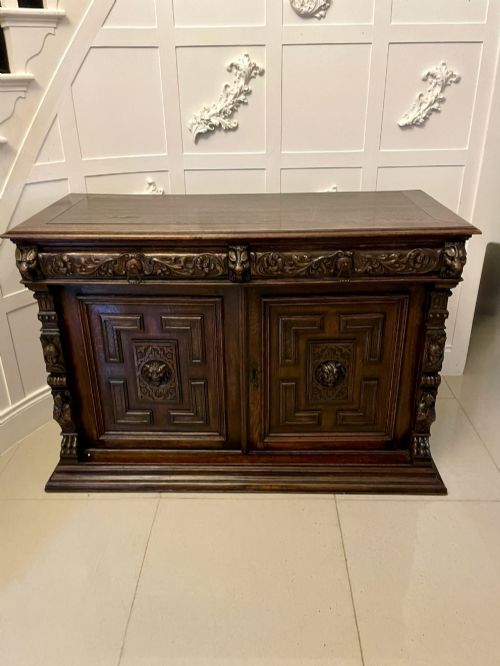
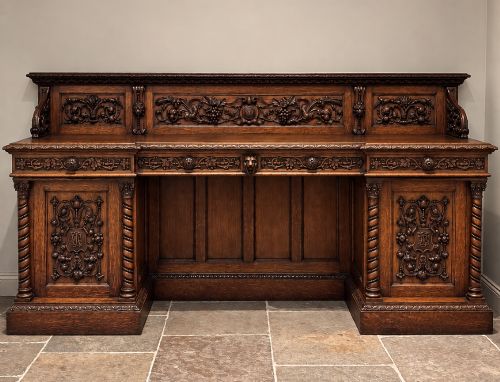
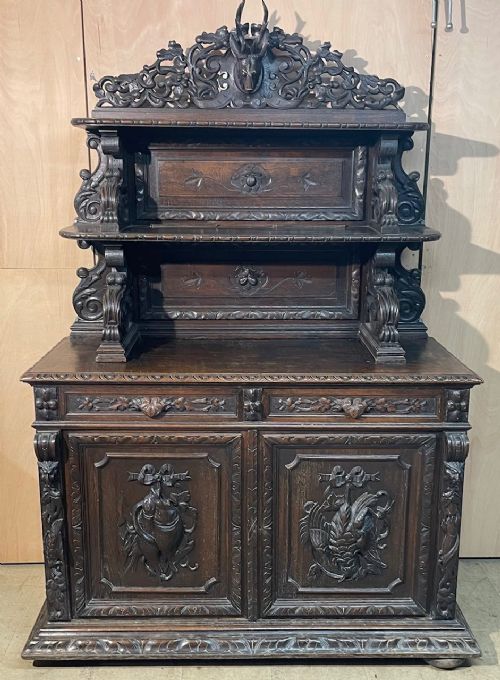
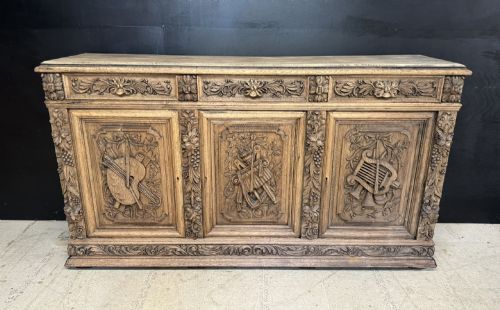
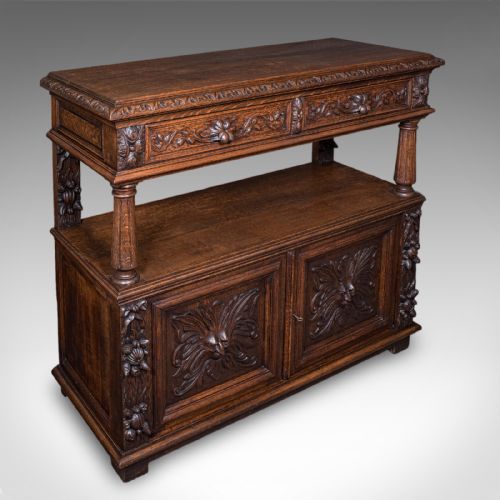
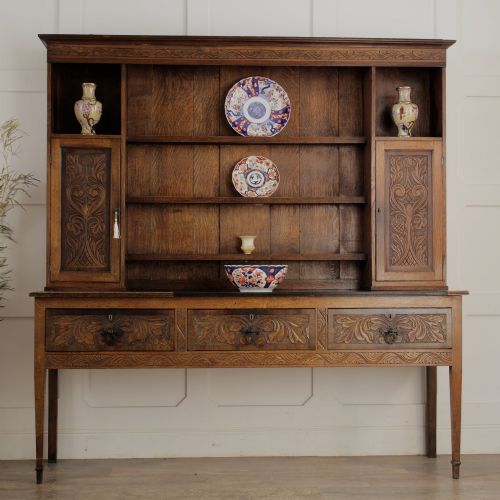
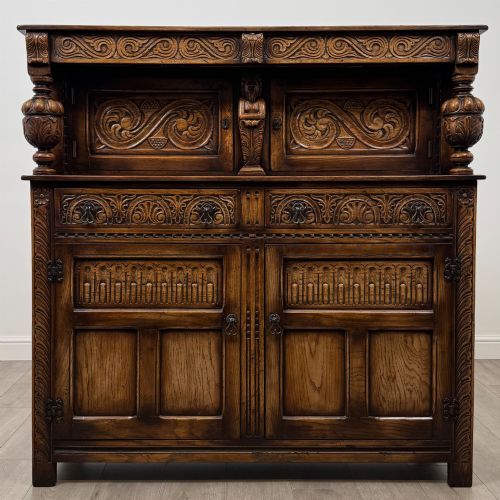
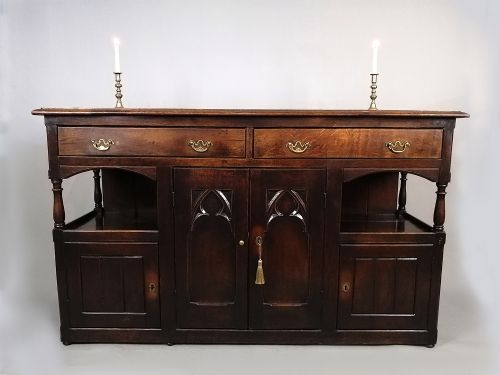
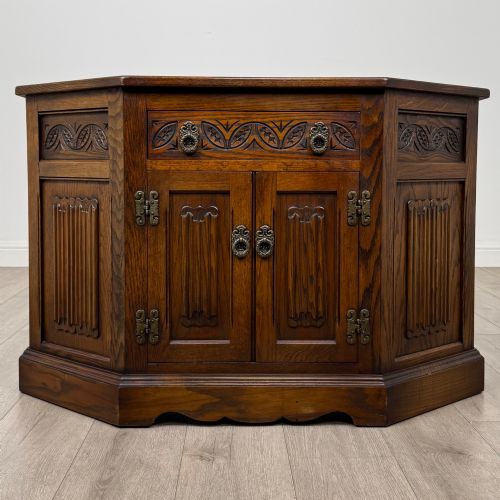
The primary forms take shape as low dresser bases, court cupboards, and heavily carved revival sideboards. Each variation adapts the core storage purpose to the aesthetic preferences of its respective period.
Distinctions in craftsmanship and design
Quality separates pieces through the crispness of hand-carved ornamentation and the selection of timber. Superior examples display carefully matched grain patterns and deeply undercut relief carving rather than shallow, mechanical tooling.
Structural integrity and the retention of original hardware dictate the standing of a piece within the range. Refined proportions, balanced joinery, and untouched original surfaces distinguish workshop pieces from standard commercial production.
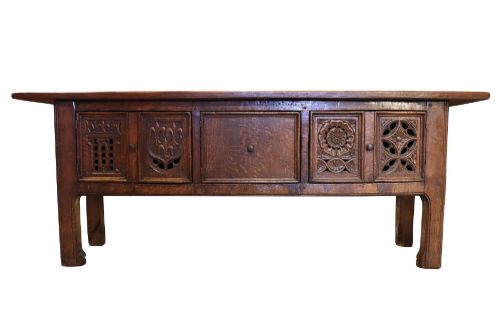
One exceptional French provincial housemaid cupboard patiently waited centuries before crossing paths with modern dining rooms.
Ambrose Heal for Heal & Son·Leonard Wyburd for Liberty·Gomme
The Oak Server Sideboard Cabinet Glossary
- Dresser base
- A low cabinet featuring drawers and cupboards, originally used in kitchens or dining rooms for food preparation and serving. These pieces typically sit lower than full dressers and lack upper shelving.
- Court cupboard
- A heavy, enclosed wooden cabinet with multiple tiers, used historically for storing food and utensils. The upper section is often recessed behind turned supports.
- Barley twist
- A decorative turning technique resembling a twisted rope, commonly found on the legs and supports of late nineteenth and early twentieth-century furniture. This style gained popularity during revival periods.
- Linenfold
- A style of wood carving that imitates folded fabric, frequently utilised on fifteenth-century and later revival panels. It creates a textured, repetitive pattern across cupboard doors.
- Arts and Crafts
- A design movement prioritising traditional craftsmanship, simple forms, and visible construction over industrial standardisation. Pieces from this tradition often utilise unadorned golden oak.
Oak Server Sideboard Cabinet: Frequently Asked Questions
How do I identify a Georgian oak server sideboard cabinet?
Georgian pieces generally exhibit simpler, cleaner lines with straightforward brass drop handles and hand-dovetailed drawer construction. The timber often shows a warm, aged patina developed over centuries of use.
Unlike later Victorian or revival examples, they avoid heavy relief carving and instead rely on proportion and timber grain for visual impact.
Where were these cabinets placed in a historic home?
These pieces traditionally stood in dining rooms or entrance halls to hold serving dishes, cutlery, and table linens. The top surface served as a station for presenting food before it reached the dining table.
In modern interiors, they function similarly in dining spaces or as living room storage media consoles.
How do I care for antique oak furniture?
Maintain the timber by keeping it away from direct heat sources and sudden temperature fluctuations that can cause the wood to split. Regular dusting with a dry, soft cloth prevents particle buildup.
Apply a quality beeswax periodically to nourish the grain and preserve the historic finish without leaving a heavy film.
What is the difference between a sideboard and a dresser base?
A dresser base historically originated in the kitchen or dining area as a utilitarian piece with drawers and pot boards underneath. Sideboards evolved slightly later with a specific focus on formal dining room service.
In practical terms today, the two terms often overlap significantly when describing low storage furniture.