
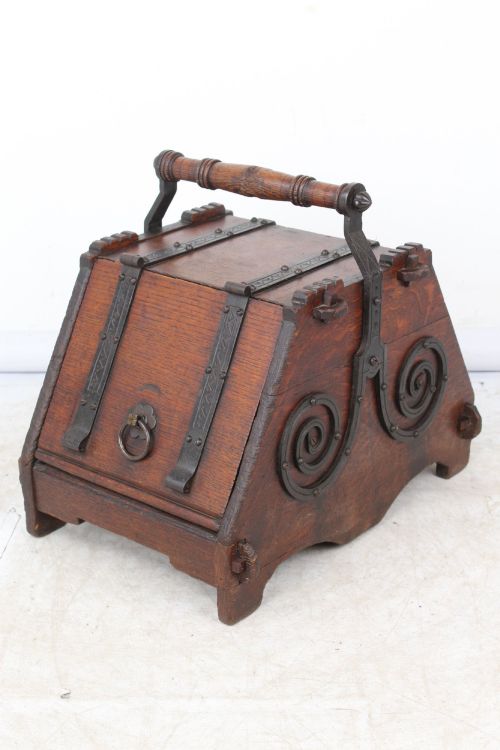
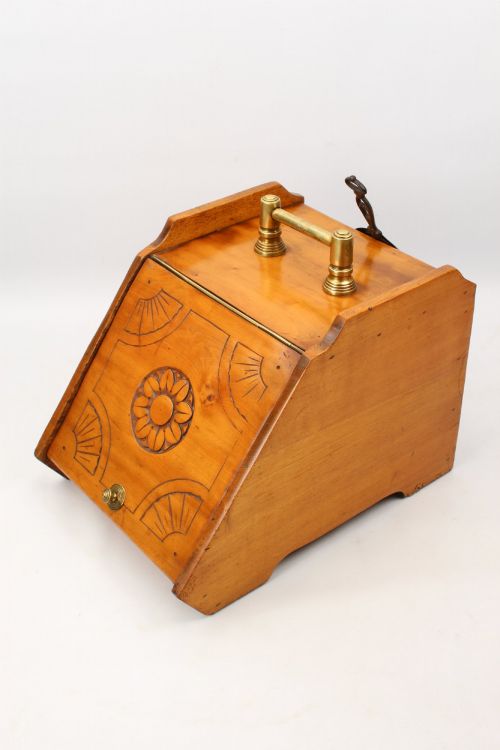


Oak Purdonium Coal Box
An oak purdonium coal box is a fireside essential designed to hold coal near the hearth while keeping domestic spaces tidy.
Oak Purdonium Coal Box
An oak purdonium coal box is a dedicated fireside storage container designed to hold fuel neatly beside a hearth. These items belong to the broader category of fireside accessories, appearing in Victorian and Edwardian forms as well as earlier Georgian examples.
The version you are most likely to meet on this page is the Edwardian or Victorian oak coal box featuring a pull-down front and an internal metal liner. These pieces often include brass handles, hinges, and a matching shovel stored within a dedicated compartment.
Examples range from plain utility boxes to carved Gothic Revival and Arts and Crafts designs with decorative metalwork. They combine functional storage with decorative presence in a traditional domestic interior.
How they were made
The primary material used in these pieces is solid or figured oak, sometimes complemented by pollard oak or walnut veneers. Woodworkers shaped and joined the timber using traditional methods to build sturdy frames capable of bearing heavy loads of coal.
Makers integrated functional hardware such as brass handles, strap hinges, and iron mounts to secure the structure and aid handling. An internal metal or zinc liner protected the wooden body from moisture and dirt associated with raw fuel.
Listings feature oak combined with brass, iron, and glass across Victorian, Edwardian, and eighteenth-century periods.
What varies in quality
Quality in an oak purdonium coal box rests on the selection of timber, such as figured pollard oak, and the crispness of any applied carving. Better examples display careful joinery and substantial brass or wrought iron mounts rather than thin or stamped fittings.
Christopher Dresser
The Oak Purdonium Coal Box Glossary
- Purdonium
- A specific type of coal box featuring a sloping drop-front designed to make shovelling fuel easier. It typically includes an interior metal liner and a slot for a shovel.
- Coal scuttle
- A traditional fireside vessel for carrying and holding coal. They appear in various forms including open buckets and enclosed boxes.
- Pollard oak
- Oak timber taken from pollarded trees showing highly decorative clustered knot formations. It was prized for luxury furniture and fireside boxes.
- Gothic Revival
- A nineteenth-century design style drawing on medieval architecture. Pieces in this style often feature pointed arches, heavy mouldings, and carved tracery.
- Arts and Crafts
- A design movement valuing handcraftsmanship and simple materials. Items from this tradition display honest construction and understated decoration.
Oak Purdonium Coal Box: Frequently Asked Questions
What is a purdonium?
A purdonium is a specialised coal box featuring a hinged drop-down front that allows easy access to the fuel inside. They were developed in the nineteenth century to keep coal tidy beside the fireplace.
Most versions contain a removable metal liner to catch coal dust and prevent moisture from damaging the outer wooden case.
How do I use a coal box today?
These boxes serve well beside modern wood-burning stoves or open fireplaces to store kindling, logs, or coal. They keep fuel out of sight while adding traditional character to a room.
You can also use them in living spaces as decorative storage bins for blankets, magazines, or general clutter.
How do I date an oak coal box?
Dating relies on examining the timber, construction methods, and stylistic details such as brass handles and decorative carvings. Victorian pieces often display heavier Gothic Revival or carved ornamentation.
Edwardian examples tend to show cleaner lines influenced by Arts and Crafts or Art Nouveau aesthetics, while earlier Georgian items feature simpler, robust joinery.
Are original liners important?
Original metal or zinc liners are valued because they complete the piece and show that the interior remains as the maker intended. They protected the wood from wet coal and ash.
While many pieces survive without them, finding one with its original liner and matching shovel adds authenticity to the item.