
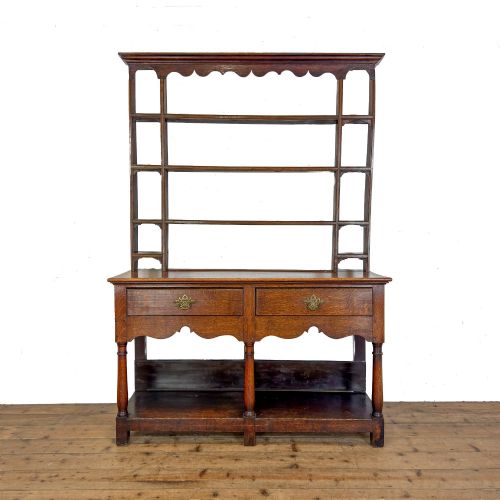
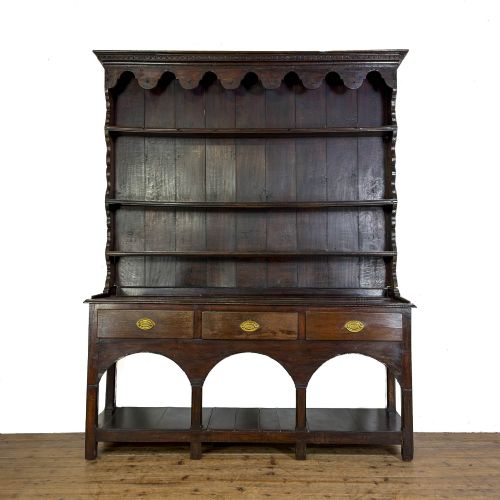
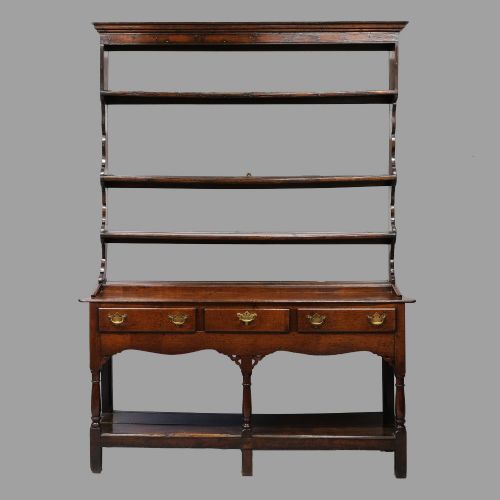
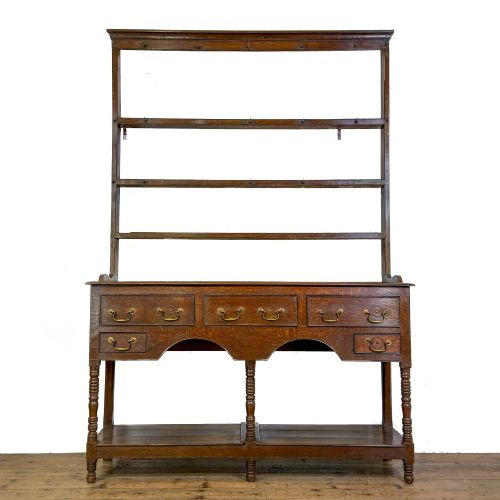
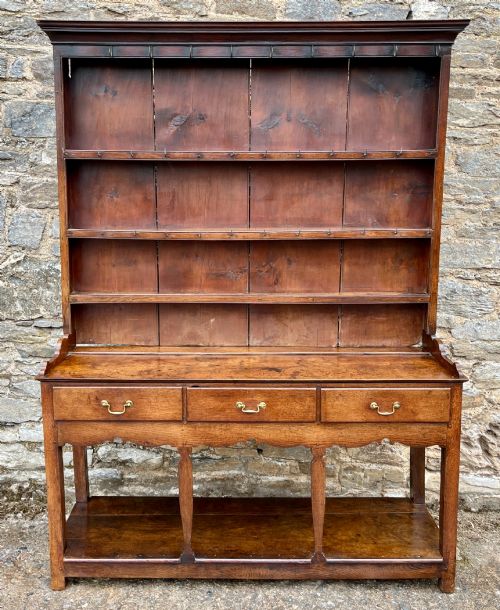
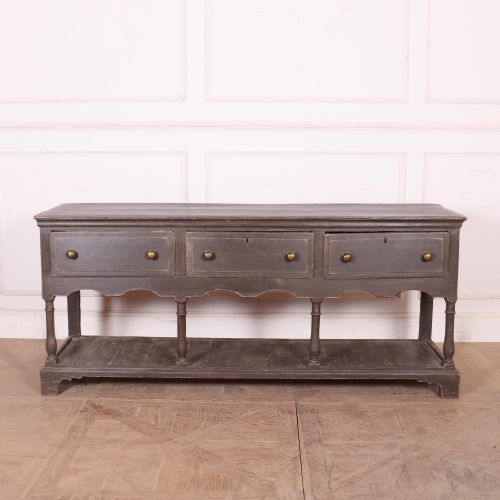


Oak Potboard Kitchen Sideboard
An oak potboard kitchen sideboard brings the sturdy timber and open lower shelf of the country house straight into a modern interior.
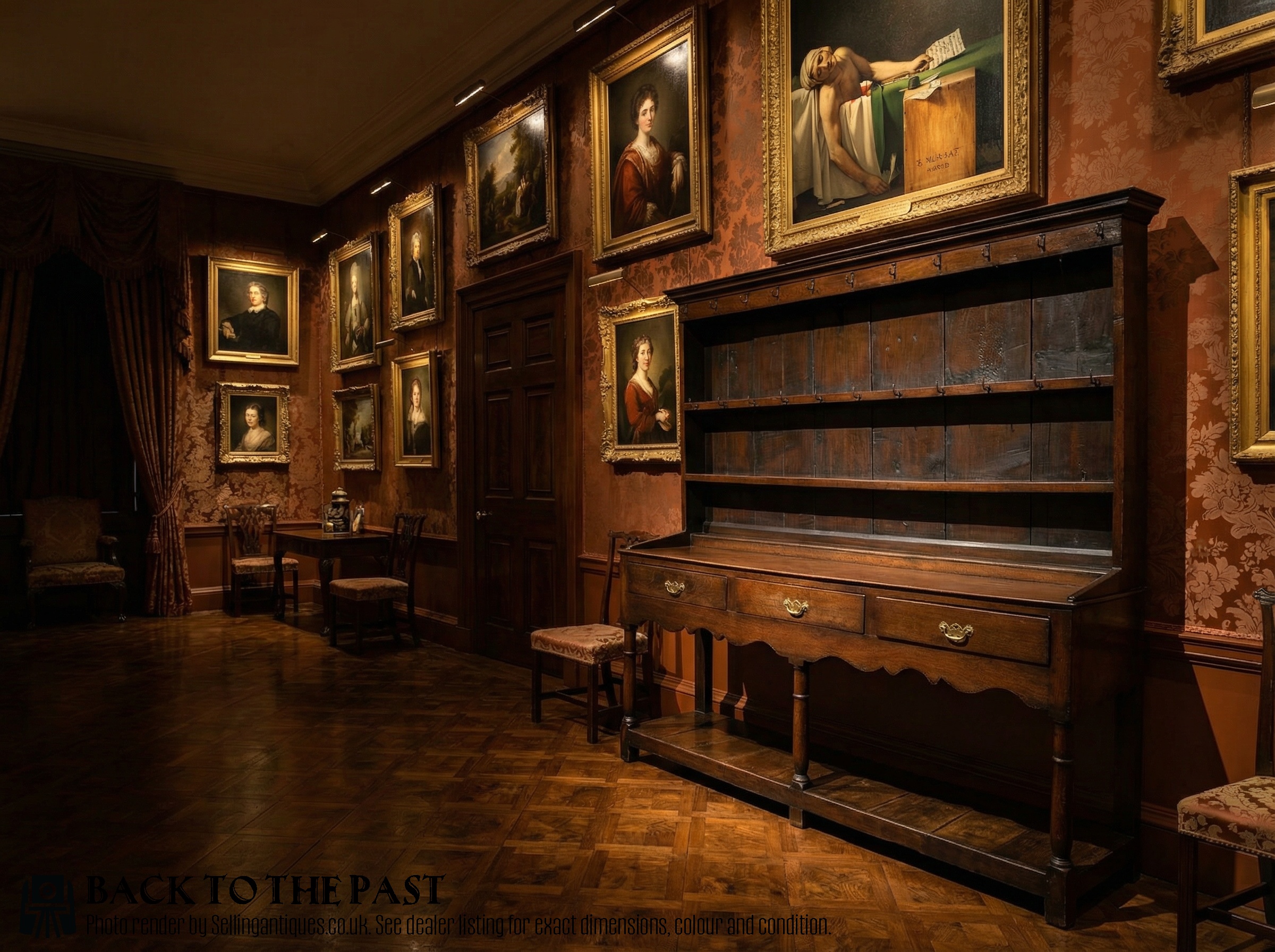
Oak Potboard Kitchen Sideboard
When you search for an oak potboard kitchen sideboard, you are looking at utilitarian storage furniture designed for centuries of domestic service. These pieces bridge the gap between working farmhouse utility and formal domestic display, taking many forms from dresser bases to complete two-part dressers with plate racks.
The versions you meet on this page hail primarily from the eighteenth and nineteenth centuries, with notable regional variations emerging from Welsh counties like Carmarthenshire and Glamorgan. They combine a solid timber surface for food preparation with an open lower shelf known as the potboard, designed originally to air pots, pans and heavy earthenware.
The regional vernacular shows strongly in these sturdy pieces, reflecting local rural traditions of cabinet making across English and Welsh counties. While many feature simple, clean lines suited to country interiors, others display geometric carvings or panelled construction that signal a specific geographical origin and period.
Materials and construction methods
Makers relied heavily on native oak for the primary carcass, drawer fronts and structural framing, sometimes pairing it with elm or burr walnut for contrasting detail. Timber was selected for its density and durability, ensuring the piece could withstand the daily friction of kitchen tasks and heavy storage loads.
Secondary structural elements incorporate pine and painted timber, whilst hardware such as drawer pulls and hinges utilise iron and brass. Joinery techniques relied on pegged mortise and tenon joints to secure the heavy framework without modern adhesives, allowing the timber to expand and contract naturally with kitchen temperatures.
Whilst oak remains the predominant timber across these sideboards, occasional examples incorporate elm, pine, iron, brass, and painted finishes.
Judging quality and proportion
The division between everyday utility and finer cabinet making rests in the proportions, timber selection and integrity of the original surfaces. Examples of smaller proportions or those retaining untouched patination command greater interest, as do pieces that preserve their original plate racks rather than married replacements.
Subtle details such as hand-cut dovetails on drawer linings, the thickness of the oak top boards, and the retention of original iron or brass hardware distinguish superior examples. Surface finish matters deeply, with genuine untouched wax patination outshining later stripped or heavily refinished timber.
The Oak Potboard Kitchen Sideboard Glossary
- Potboard
- The lower open shelf situated just above the floorboards, traditionally used for storing heavy pots and pans. It sets this specific form apart from standard closed-base sideboards.
- Dresser base
- The lower section of a dresser featuring drawers and cupboards above the potboard, capable of standing alone as a kitchen sideboard. Many pieces in this search are found in this configuration.
- Plate rack
- The upper shelving unit attached to or hung above the dresser base, designed to display ceramic plates upright against the wall. Original racks significantly enhance the integrity of the piece.
- Vernacular
- Furniture built by local country craftsmen following regional traditions rather than metropolitan pattern books. These pieces showcase practical solutions and local timber preferences.
- George III period
- The era spanning from seventeen sixty to eighteen twenty, characterised by refined proportions and understated classical influence in British cabinet making.
Oak Potboard Kitchen Sideboard: Frequently Asked Questions
What is a potboard base?
A potboard base refers to the open lower shelf built into traditional dressers and sideboards just above the floor. This platform provided a dry, accessible space to store heavy cookware in busy kitchens.
Over time, this practical feature became a defining aesthetic characteristic, allowing owners to display pottery or baskets beneath the main work surface.
Are these sideboards suitable for daily kitchen use?
These robust oak pieces were originally built for heavy daily labour, making them exceptionally well-suited for modern kitchen storage and surface preparation. Their solid timber construction handles everyday wear with ease.
To protect the historic wood, simply use coasters and chopping boards rather than cutting directly onto the antique surface.
How do I identify a Welsh dresser?
Welsh dressers often display distinct regional characteristics, such as specific drawer arrangements, shaped friezes, and particular vernacular joinery traits linked to counties like Carmarthenshire. They frequently feature deep potboards and sturdy native oak construction.
Examining the secondary woods and construction methods on the interior reveals clues about its precise geographical origins.