
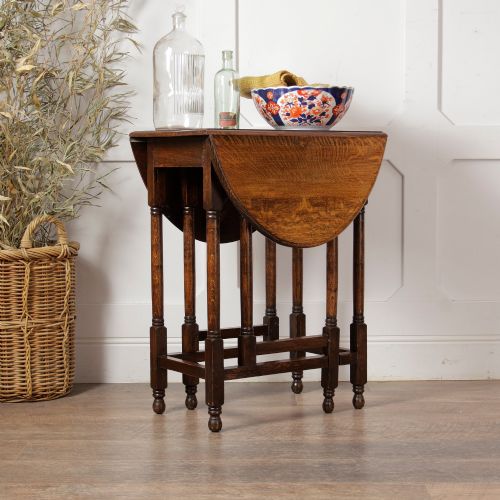


Oak Occasional Table Flaps
These oak occasional table flaps are compact timber folding tables that bring period warmth and practical surface space into smaller rooms.
Oak Occasional Table Flaps
When you search for oak occasional table flaps, you encounter a practical family of folding timber tables designed for flexible placement around the home. The selection spans centuries of British cabinet making, from early seventeenth century pieces through Georgian and Victorian examples up to the twentieth century.
You meet various functional forms among these listings, including gateleg tables, drop-side coffee tables, country pembroke tables and swivel-top occasional designs. These pieces typically feature hinged leaves that drop down when not in use, making them ideal for compact living spaces.
The periods represented stretch from the seventeenth century and seventeen fifty through the Victorian era and Edwardian period into the nineteen twenties and thirties. Alongside traditional oak, you find variants incorporating elm, burr oak and pollard oak with brass hardware.
Construction and materials
Cabinet makers built these tables predominantly from solid oak, sometimes combining it with elm or decorative veneers of burr and pollard oak for visual contrast. Structural joints relied on traditional carpentry techniques appropriate to each period, from early joined framing to later hinged mechanisms.
Makers integrated brass hinges, brackets and swivel mechanisms to support the folding flaps and drop leaves safely. Surface finishes developed through hand polishing, highlighting the natural grain and figuring of the timber over decades of use.
Several tables feature clever swivel tops that pivot to reveal hidden spaces before the drop leaves swing out.
Judging quality in folding tables
Quality rests upon the choice of timber and the dexterity shown in handling decorative veneers like pollard or burr oak. Early seventeenth century examples display different standards of hand joining compared to later Edwardian or twentieth century production.
The integrity of the folding mechanism and the smooth operation of drop leaves or swivel tops dictate daily utility. Carved detailing, where present, reveals the hand of the maker rather than mechanical repetition.
The Oak Occasional Table Flaps Glossary
- Gateleg table
- A table with hinged legs that swing out to support drop leaves on either side when opened. This design provides maximum surface area while folding down compactly.
- Drop-leaf table
- A table with a fixed centre section and hinged flaps that drop down at the sides. These leaves are supported by swing legs or brackets when raised.
- Pembroke table
- A rectangular table featuring two folding flaps on opposite sides and usually one or more drawers. It gained popularity during the eighteenth century for versatile domestic use.
- Pollard oak
- Oak timber taken from trees that were pollarded, resulting in rich, clustered grain patterns. Cabinet makers utilised these timbers for decorative tabletops.
- Swivel-top
- A table top designed to pivot horizontally on its base, often concealing a compartment or revealing support braces underneath for folding leaves.
Oak Occasional Table Flaps: Frequently Asked Questions
What rooms suit an occasional drop-leaf table?
These compact tables fit comfortably into sitting rooms, studies or hallways where surface space needs adjustment throughout the day. Their folding flaps allow you to expand the table only when necessary.
Lower coffee table variants work well beside seating, while taller gateleg and side table versions suit corners or empty wall spaces.
How do I distinguish seventeenth century oak from later revivals?
Early seventeenth century pieces display distinct timber seasoning, hand-carved details and traditional peg construction methods. The grain patterns and surface wear reflect centuries of handling.
Revival pieces from later periods often mimic these early forms but utilise different joint tolerances and machine-assisted preparation.
Can these tables support daily dining use?
Gateleg and pembroke tables were originally designed for versatile domestic tasks, including dining and writing. Sturdy seventeenth century or Georgian examples handle regular use easily.
Lighter occasional tables from the Edwardian period or nineteen thirties suit decorative display and lighter items rather than heavy loads.