




Oak Mantle Mirror
An oak mantle mirror anchors a chimney breast with substantial timber frames and reflective glass, bringing warmth and depth to a room.
Oak Mantle Mirror
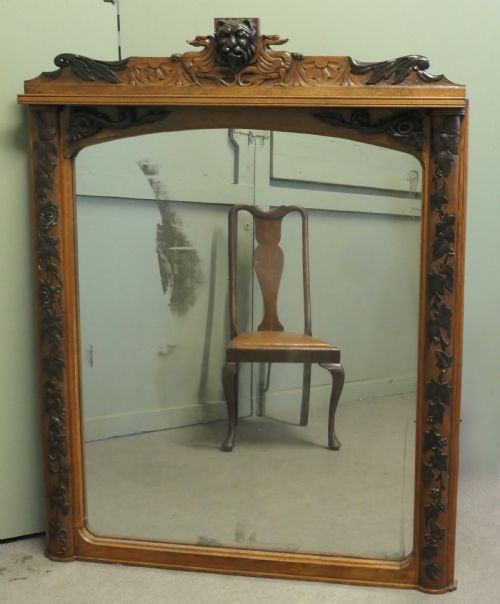
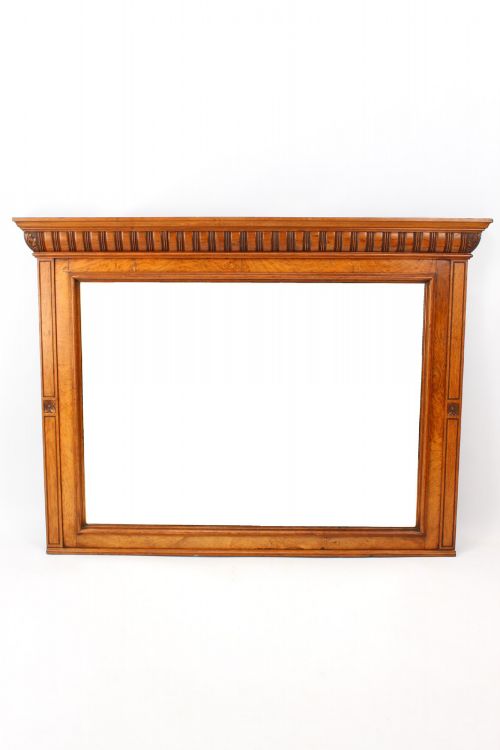
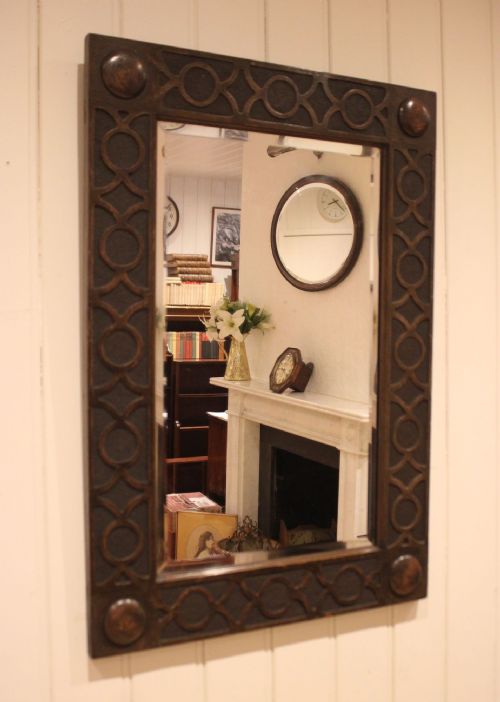
When you search for an oak mantle mirror, you are looking at substantial timber frames designed to sit above a fireplace or hang upon a principal wall. The examples available here span the Victorian era, the Edwardian period, and into the nineteen-thirties, reflecting diverse revivals from Gothic to Arts and Crafts.
Forms range from simple rectangular frames to cushion moulds, arch tops, and triple mirror configurations. Whether originating from English country houses or French provincial workshops, each object demonstrates the enduring utility of heavy timber framing around reflective glass.
Construction and Materials
Makers constructed these frames predominantly from solid oak and hardwood, often utilising scrubbed or polished finishes to highlight the natural grain. Carved ornamentation, leaf decoration, and architectural mouldings were applied directly to the timber substrate by hand.
Where giltwood, gold leaf, or gesso elements appear alongside the timber, artisans layered chalk and glue compositions onto the wood before applying metallic leaf. Bevelled glass plates were then fitted securely into the rebated frames, backed by wooden panels to protect the reflective coating.
The listings span the Victorian, Edwardian, and Art Deco periods, utilising oak, gesso, and bevelled glass.
Judging the Workmanship
The distinction between standard commercial production and finer work rests in the depth and crispness of the hand-carving. Crisp detailing on leaf motifs and balanced proportions indicate a higher tier of craftsmanship compared to repetitive machine moulding.
Materials also dictate the grade of the piece, with select items utilising figured pollard oak or integrated parcel-gilding that requires specialist joinery. The integration of original glass plates and robust framing timbers ensures structural integrity over centuries of domestic placement.
James Shoolbred
The Oak Mantle Mirror Glossary
- Overmantel mirror
- A large looking glass specifically proportioned to hang on the wall directly above a fireplace mantle. These frames often incorporate architectural cornices or extended bases.
- Gesso
- A plaster-like mixture applied to wood frames to provide a smooth surface for gilding or painting. It is frequently moulded into decorative relief patterns.
- Parcel-gilt
- A decorative treatment where only specific portions of a wooden frame are gilded with gold leaf, leaving the surrounding oak exposed. This highlights particular carved details.
- Cushion mirror
- A frame profile characterised by a rounded, convex sweep that swells outward toward the outer edge. This French-influenced style creates a pronounced three-dimensional effect.
- Bevelling
- An angled edge ground and polished around the perimeter of the mirror plate. This technique catches light and adds visual depth to the glass.
Oak Mantle Mirror: Frequently Asked Questions
How do I secure a heavy oak mantle mirror?
These heavy timber frames require fixing directly into wall studs or masonry using appropriate heavy-duty brackets. The weight of the oak and glass demands secure anchor points to prevent movement.
Professional installation is recommended for larger overmantel pieces to ensure the weight is properly distributed across the wall structure above a fireplace.
Can these mirrors be hung away from a fireplace?
While originally designed as overmantels for chimney breasts, many variants function equally well as standalone wall mirrors in hallways or principal reception rooms. Their substantial wooden frames provide a strong focal point in any large interior.
Wall-hanging formats are constructed with robust hanging loops or wooden battens to support their considerable weight safely in alternative locations.
How do I clean the oak frame and glass?
Dust the carved oak timbers regularly with a dry, soft cloth to prevent particulate buildup in the recesses of the relief work. Avoid harsh chemical polishes that can strip traditional wax finishes from the wood.
Apply glass cleaner to a cloth rather than directly onto the mirror surface to prevent liquid seepage behind the frame, which can damage the original silvering.
How can I tell a Victorian mirror from an Edwardian one?
Victorian examples frequently display heavier, more ornate carvings influenced by Gothic, Renaissance, or French Rococo revivals. The timber is often dark, highly polished oak paired with deep moulding.
Edwardian pieces tend to show lighter Arts and Crafts influences with simpler geometric lines or restrained decoration, reflecting changing interior tastes at the turn of the century.