
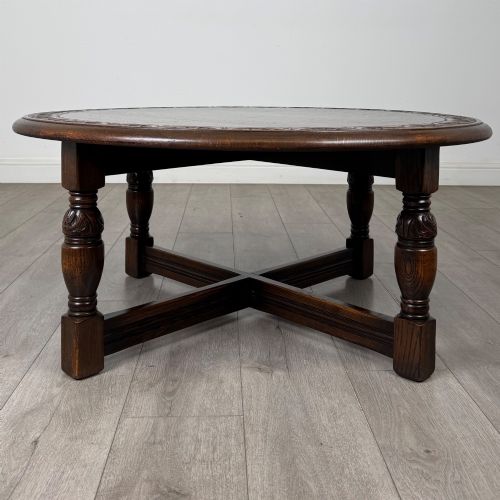
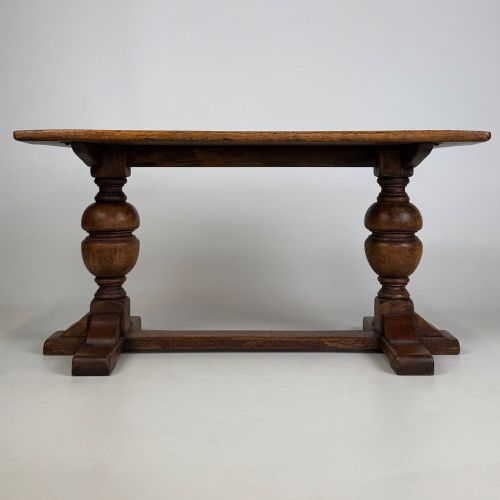
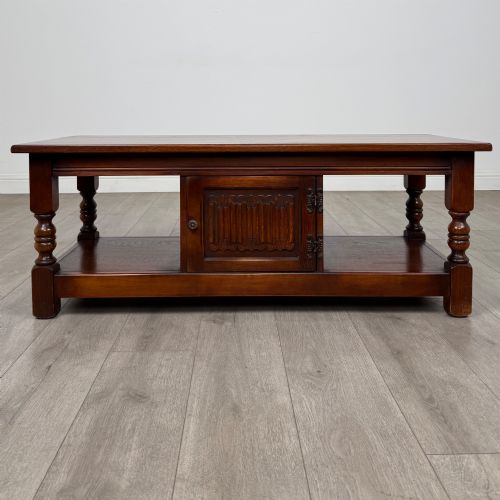
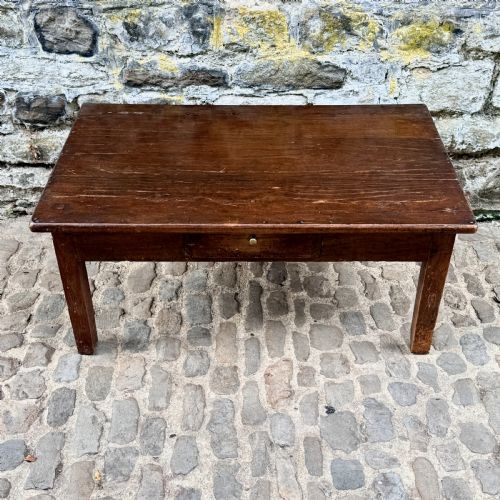


Oak Low Tea Table
These oak low tea table examples span the nineteenth century to the mid twentieth century, offering sturdy timber construction suited for contemporary living rooms.
Oak Low Tea Table
An oak low tea table brings practical surface space to a room while keeping a low profile, appearing in forms such as coffee tables, side tables, and occasional tables. These pieces emerge from periods ranging from the Victorian era and the Edwardian years through to the nineteen thirties and nineteen forties.
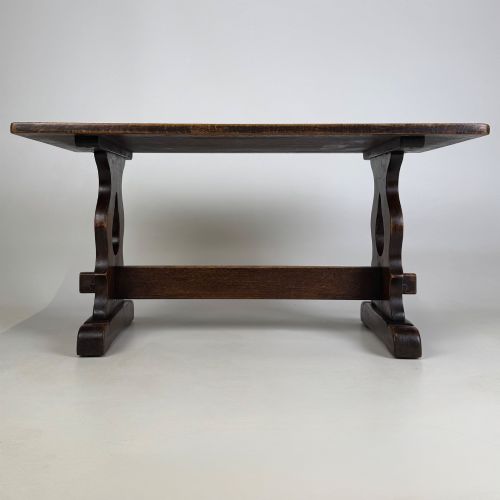
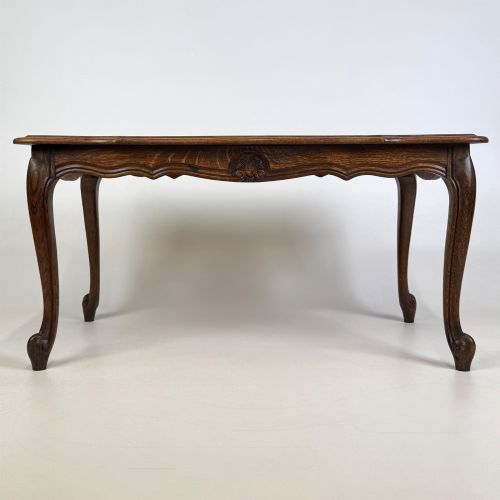
The versions most frequently met on this page are Edwardian and nineteenth-century pieces, alongside items from nineteen thirty featuring styles like Art Deco and Jacobean Revival. Construction varies from rustic farmhouse designs to carved coffee tables and gate-leg formats.
Makers and workshops of the period utilised timber to create functional furniture for domestic interiors. Surviving examples often incorporate alternative materials alongside primary woods, reflecting the diverse design influences of their respective decades.
What varies in quality
The standard of timber selection and the precision of the construction dictate the overall merit of a piece. Plain utility tables sit at one end, while items featuring deliberate stylistic influences, such as Chippendale details or specific school designs, represent more considered craftsmanship.
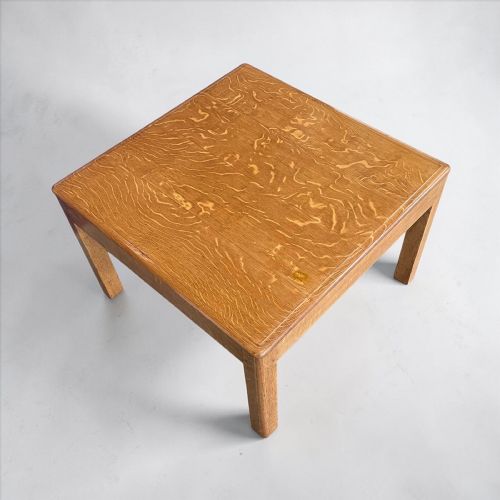
The integrity of secondary materials, including tile insets, onyx tops, and rattan weaves, influences the character of each table. Consistency in the timber grain and the condition of turned legs distinguish simpler vernacular items from finer workshop output.
Listings feature oak alongside chestnut, pine, and metal, spanning Victorian, Edwardian, and nineteen thirties periods.
Betty Joel·Heals
The Oak Low Tea Table Glossary
- Oak veneer
- A thin layer of oak applied to a secondary wood base to provide a figured surface. This technique allowed makers to achieve decorative grain patterns without using solid hardwood throughout.
- Gate leg
- A table design featuring hinged legs that swing out to support drop leaves. This mechanism enables the surface area to expand or fold down when not in use.
- Art Deco
- A design style prominent in the nineteen thirties characterised by streamlined forms and geometric symmetry. Pieces from this era often utilise blonde oak and minimal ornamentation.
- Turned legs
- Supports shaped on a lathe to create cylindrical, bulbous, or spiralling profiles. This traditional carpentry method adds decorative detail to the framework of a table.
Oak Low Tea Table: Frequently Asked Questions
What periods do these tables cover?
The selection spans the nineteenth century through to the mid twentieth century, encompassing Victorian, Edwardian, and nineteen thirties periods.
Specific dates within listings point towards specific stylistic shifts, ranging from rustic farmhouse items to Art Deco designs.
How do I identify an Art Deco table?
Art Deco pieces from the nineteen thirties typically feature blonde oak and streamlined geometric forms. They discard heavy carving in favour of clean lines and smooth surfaces.
Such tables reflect the modernist design movements of the interwar period.
What materials besides timber are used?
Alongside solid oak and oak veneer, listings record the use of chestnut, pine, metal, and leather. Certain examples incorporate ceramic tiles, rattan, or onyx table tops.
These varied materials reflect both the practical demands of tea tables and the decorative preferences of different eras.
Are these tables suitable for daily use?
Built as coffee, side, and occasional tables, these pieces were designed for functional domestic placement. Their low profiles make them practical surfaces for living rooms.
Construction methods like turned legs and sturdy framing ensure they withstand regular everyday activities.
How do I recognise Jacobean Revival styling?
Jacobean Revival pieces draw inspiration from seventeenth-century aesthetics, frequently displaying carved woodwork and robust proportions. They are typically constructed from dark oak.
This style experienced significant popularity during the late nineteenth and early twentieth centuries.