

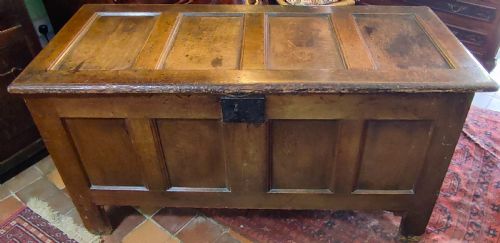


Oak Linen Box
An oak linen box is a sturdy storage chest built to hold textiles, most often seen here in seventeenth-century and Georgian panelled forms.
Oak Linen Box
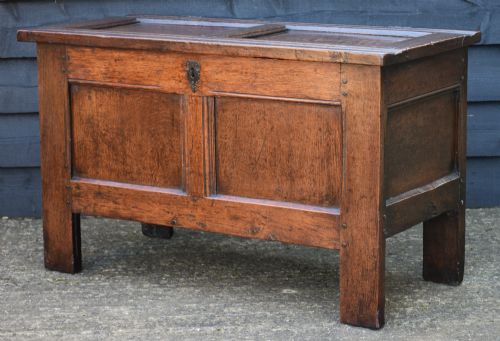
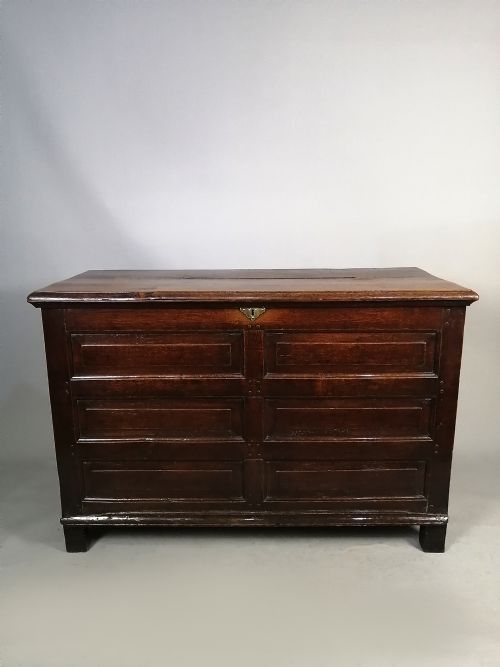
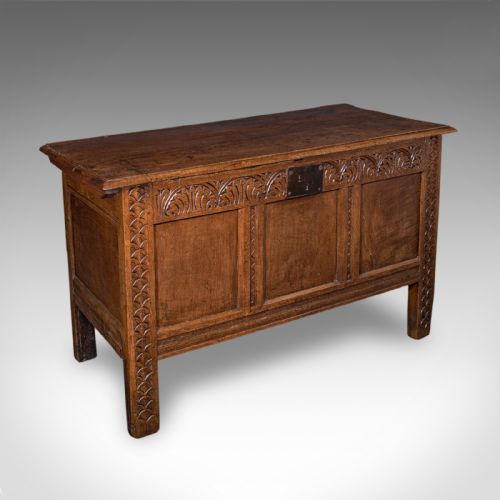
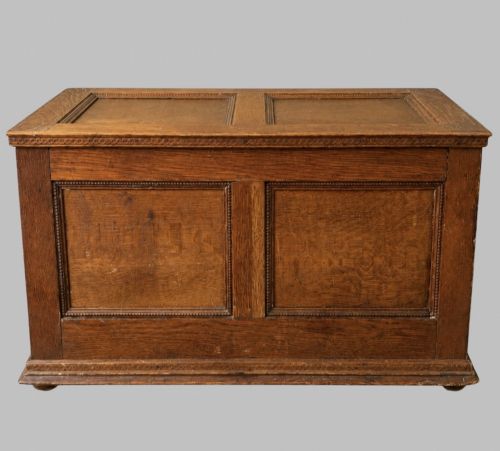
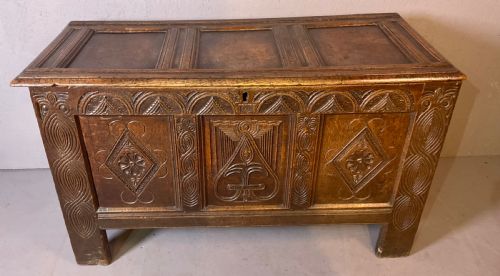
When you search for an oak linen box, you encounter heavy timber storage chests designed to protect household textiles. The pieces on this page span several centuries, reaching from early plank-built examples to later revival pieces.
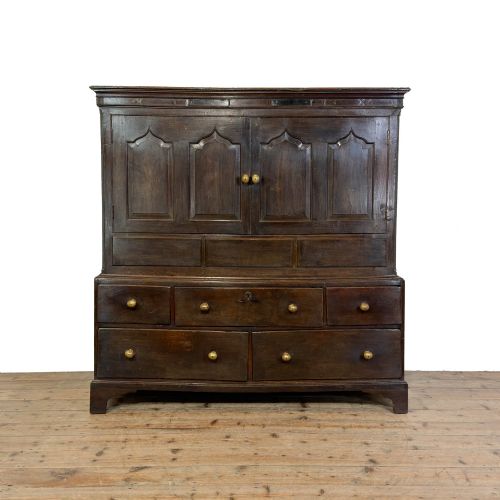
You are most likely to meet seventeenth-century panelled coffers and eighteenth-century mule chests made from native oak. These utilitarian boxes served practical storage needs in domestic interiors long before fitted wardrobes existed.
Regional variations appear across the selection, including Welsh examples and English country house pieces. Many double as window seats or blanket chests, retaining their heavy brass or iron hardware.
How they were made
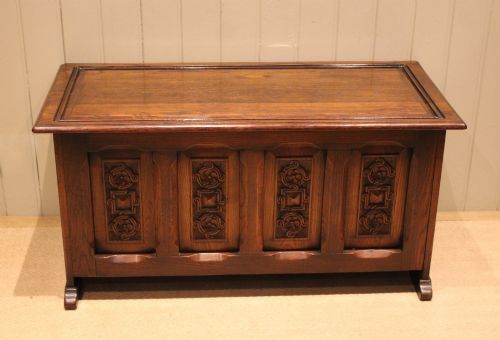
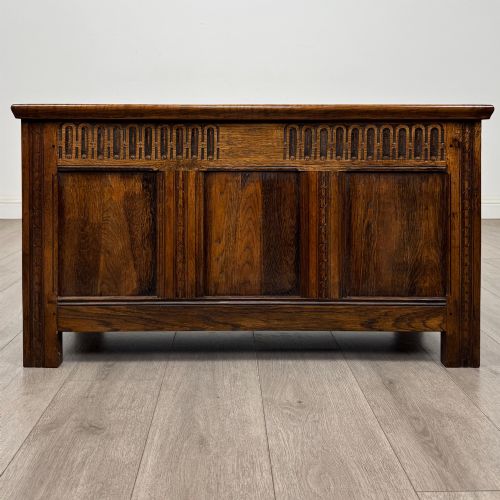
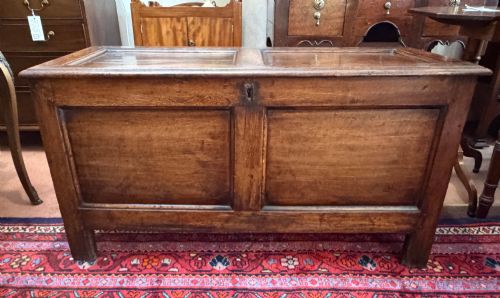
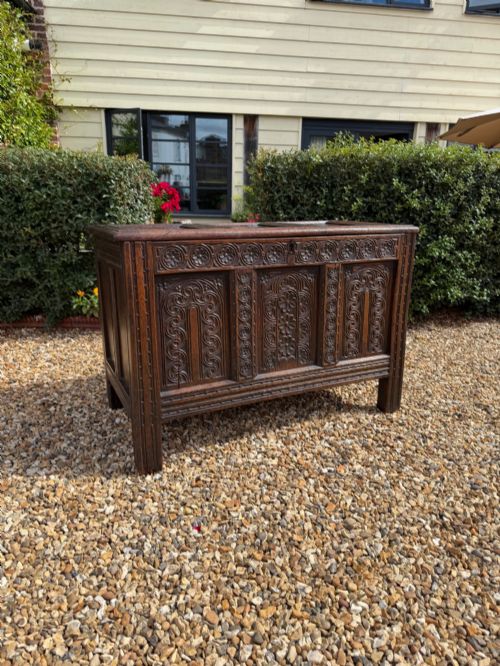
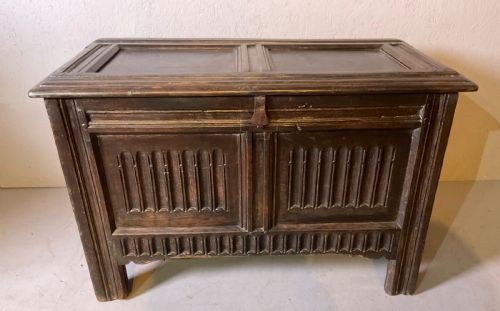
Cabinet makers constructed these chests primarily from solid oak, joined using traditional pegged framing and panel techniques. Early examples utilise simple plank construction, while later pieces feature detailed linenfold carving or geometric mouldings.
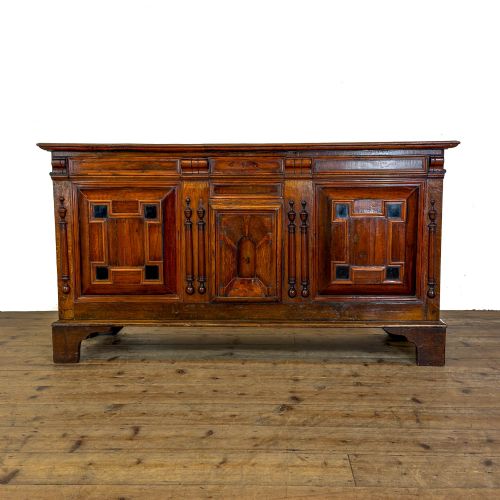
Iron and brass fittings such as hinges, lock plates and carrying handles provide structural reinforcement and functional security. Surfaces frequently display ebonised wood details alongside the natural grain of the timber.
Materials recorded across the inventory include solid oak augmented by iron, brass, and ebonised wood details on various panelled coffers and mule chests.
What varies in quality
The degree of hand carving and the crispness of details like linenfold panels distinguish standard utility boxes from finer commissions. Timber selection also matters, as quartersawn oak displays more pronounced medullary rays.
The survival of original hardware, lid boards and internal till compartments separates untouched historic examples from heavily restored pieces. Patina develops naturally over centuries of handling, giving the timber a deep surface warmth.
The Oak Linen Box Glossary
- Coffer
- A heavy wooden chest traditionally used for storing valuables or textiles. These sturdy boxes often feature hinged lids and panelled construction.
- Mule chest
- A storage chest fitted with one or more drawers beneath the main compartment. This form bridges the gap between the traditional coffer and the modern chest of drawers.
- Linenfold
- A style of wood carving that mimics the folds of a piece of linen cloth draped over a surface. It is commonly found on Tudor and Jacobean panels.
- Panelled coffer
- A chest constructed with a frame and floating panels that allow the timber to expand and contract with humidity. This technique prevents the wood from splitting.
- Till
- A small internal compartment built into the upper corner of a chest for holding smaller items. It often includes a small lid of its own.
Oak Linen Box: Frequently Asked Questions
What is an oak linen box?
An oak linen box is a heavy timber chest designed historically to store household textiles, blankets and garments safely away from moths and dampness. These versatile pieces were standard household fixtures in Britain for centuries.
Today, they function well as practical storage furniture that can double as coffee tables, window seats or hallway benches while adding historic character to a room.
How old are these chests usually?
The selection ranges widely in age, running from early plank-built examples produced before the sixteenth century through seventeenth-century joined coffers and eighteenth-century Georgian mule chests. Later revival pieces from the Edwardian era and the 1930s also appear.
Earlier pieces display hand-tooled joinery and pegged frames, whereas twentieth-century items often reflect historical revival styles using mature oak timber.
How do I tell a seventeenth-century coffer from a later revival?
Seventeenth-century coffers exhibit hand-split timber, uneven tool marks from adzes or pit saws, and traditional pegged mortise-and-tenon joints that show natural wear. The wood possesses a deep, oxidized patina acquired over hundreds of years.
Revival pieces made in the Victorian, Edwardian or 1930s periods often feature more uniform machine-sawn timber, standardised fixings, and cleaner internal surfaces that lack genuine centuries-old domestic wear.
Can I use an antique coffer as a seat?
Many antique coffers were built stoutly enough to serve as window seats or benches in traditional homes, provided the lid hinges and top boards remain stable. Their flat wooden tops make them suitable for occasional sitting.
It is wise to check the internal framing and the attachment of the lid before using any antique chest for seating, ensuring the old hinges and timber can bear the weight safely.