



Oak Leather Captains Chair
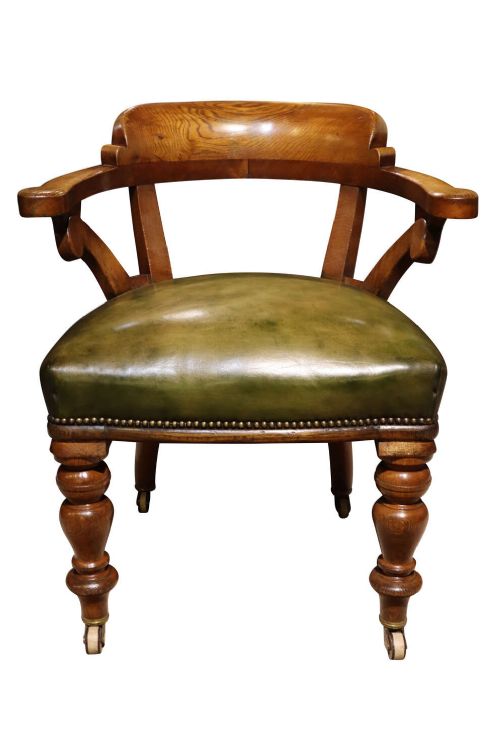
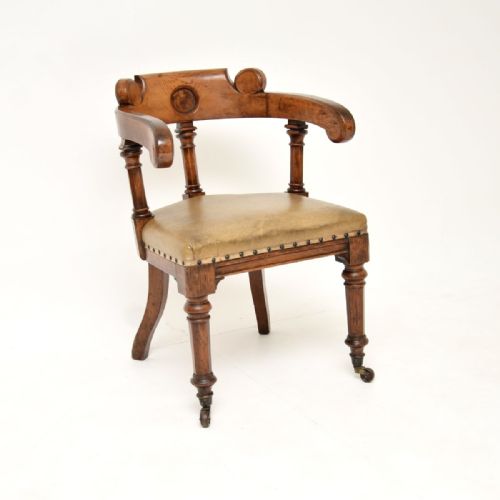
An oak leather captains chair delivers proper nineteenth and early twentieth century support to the study, combining sturdy timber frames with supple hide.
Oak Leather Captains Chair
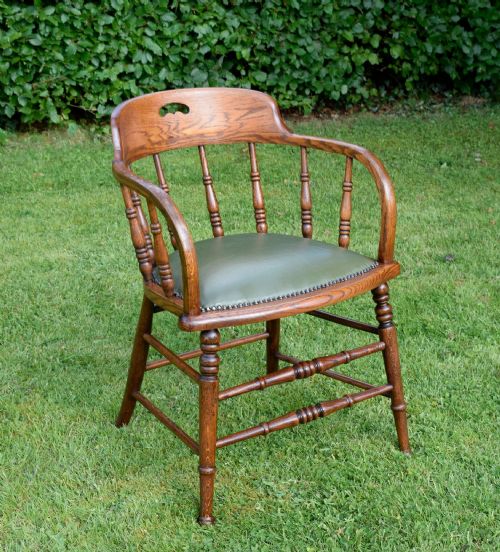
An oak leather captains chair sits firmly in the tradition of sturdy nineteenth and early twentieth century office and library seating. These pieces range from stationary library armchairs and smokers bows to revolving swivel desk chairs fitted for active workspaces.
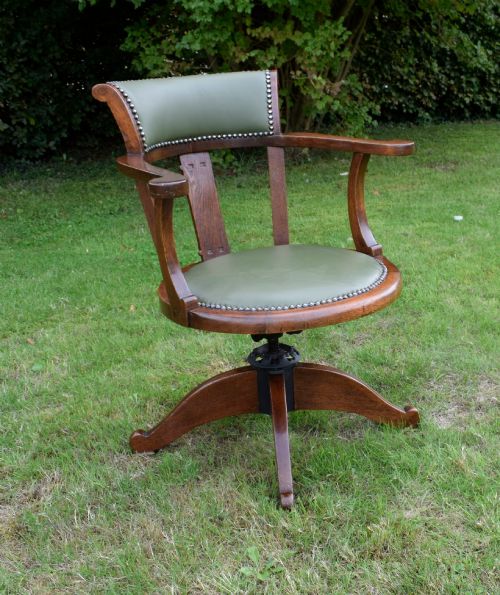
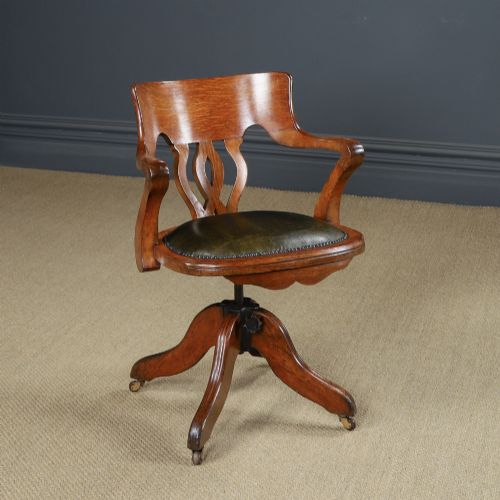
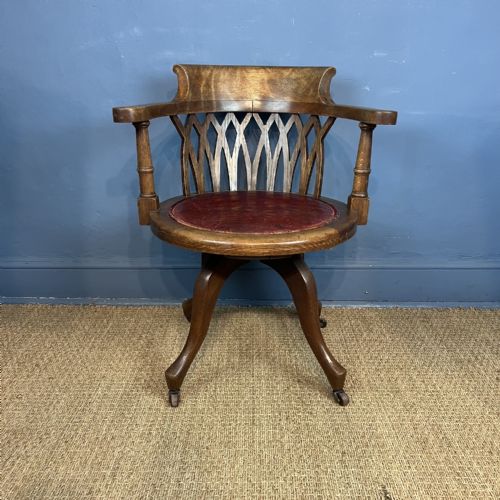
The version most likely to appear on this page is the Victorian or Edwardian swivel desk chair, constructed in solid oak with an upholstered leather seat and backrest. Such examples often feature mechanical height adjustment and tilting actions designed for daily use.
Makers and manufacturers adapted the form across several distinct styles, including Jacobean Revival, Gothic Revival, and Arts and Crafts. Pieces span from the 1860s through the 1920s, reflecting changing demands in domestic and commercial studies.
How they were made
Joiners built the primary frames from solid oak, occasionally combining beech or walnut elements for turned spindles and curved armrests. Timber was frequently polished to bring out the natural grain, or heavily carved in revivalist and maritime styles.
Upholsterers integrated leather hides, ranging from dark red and burgundy to green and tan, secured with brass tacks or iron studs. Swivel and revolving models incorporated cast iron and metal mechanisms, permitting height adjustment and tilting movement.
Several heavy ship's chairs on record feature fully rotating mechanisms, ensuring captains could weather any domestic storm in absolute comfort.
What varies in quality
The integrity of the revolving mechanism and swivel action dictates much of the daily utility and mechanical standard. Original cast iron underframes that operate smoothly distinguish superior examples from later replacements.
Carving depth and timber selection separate standard commercial office seating from fine library armchairs. Golden oak frames with substantial solid timber construction and well-preserved hide upholstery represent the upper tier of the range.
S&H Jewell·Kendrick & Jefferson·Alfred Allen Furnishing Expert
The Oak Leather Captains Chair Glossary
- Swivel mechanism
- An underseat iron or metal assembly allowing the chair to rotate fully. This hardware often includes threaded spindles for height adjustment.
- Smokers bow
- A low-backed Windsor-style armchair with a continuous curved arm rail. These sturdy seats served studies and offices before revolving desk chairs became common.
- Horseshoe chair
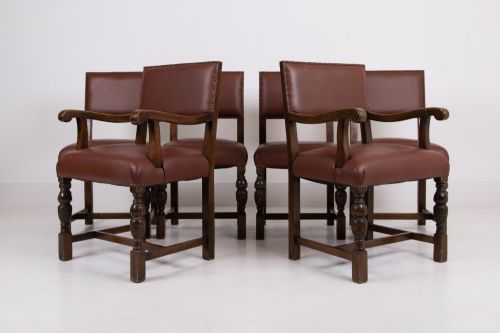
- An armchair featuring a semicircular backrest and arm rail formed from a single curved piece of timber. The shape wraps around the occupant for lumbar support.
- Cockfighting chair
- A low, specialised armchair originally designed for spectators, featuring an integral writing tablet or narrow back rest. Later adaptations function as compact desk seats.
- Hide
- The natural animal skin used for upholstery on the seat pads and backrests. Thicker hides develop a distinct patina through years of handling.
Oak Leather Captains Chair: Frequently Asked Questions
Are these chairs comfortable for daily desk work?
Solid oak frames and supportive leather upholstery provide firm seating suited for long hours at a desk. Many models offer ergonomic curves and tilting mechanisms.
Revolving designs allow easy movement around a workspace, though original nineteenth-century padding is firmer than modern office seating.
How do I distinguish a Victorian model from an Edwardian one?
Victorian examples often display heavier carving, darker polished finishes, and Gothic or Jacobean revival motifs. They date primarily from the 1870s to the 1890s.
Edwardian chairs, appearing around 1900 to 1920, tend to feature cleaner lines, lighter golden oak tones, and more refined mechanical swivel hardware.
What maintenance does the leather upholstery need?
Leather seats benefit from periodic conditioning with appropriate balms to keep the hide supple and prevent cracking. Avoid placing chairs in direct sunlight to preserve the original colour.
Gentle dusting of the carved oak frame and metal swivel components maintains the timber finish without damaging the patina.
Were all captains chairs originally made with swivel bases?
Early nineteenth-century forms were stationary library armchairs or smokers bows with fixed wooden legs. The revolving swivel base became prevalent toward the later Victorian period.
Both stationary and revolving variations fall under the traditional captains chair description in nineteenth-century commerce.