





Edwardian Leather Tub Chair
An edwardian leather tub chair combines enveloping curved wooden lines with supple hide upholstery, offering an inviting seat for study or fireside repose.
Edwardian Leather Tub Chair
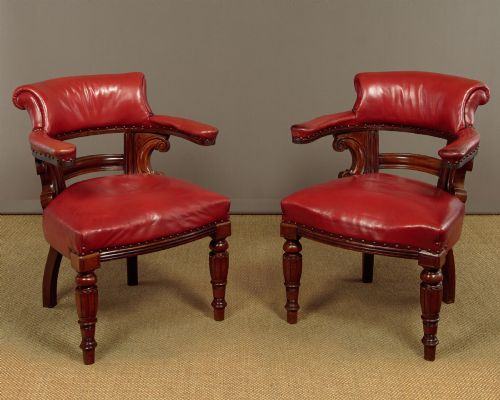
When you search for an edwardian leather tub chair, you encounter low, rounded seating designed to wrap around the sitter for comfort and support. These pieces frequently double as desk or library chairs, serving functional workspace roles as well as relaxed domestic seating.
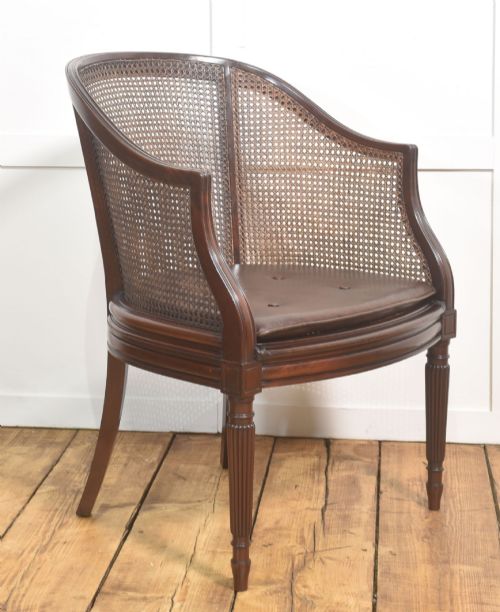
The specific examples found here span the Edwardian era alongside late nineteenth century and early twentieth century variations in mahogany, oak, walnut, and beech. Many feature cane panels, brass details, or revolving adjustable mechanisms tailored for office use.
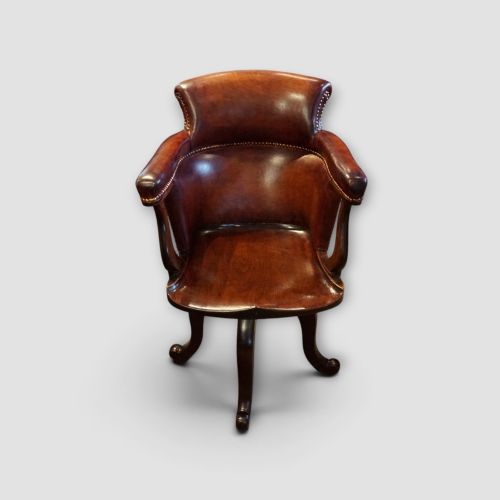
You meet various sub-forms within this grouping, including horseshoe desk chairs, captains chairs, and library armchairs upholstered in tan, red, or oxblood hide. These forms share a continuous curved backrest that flows directly into the arm supports.
Materials and construction
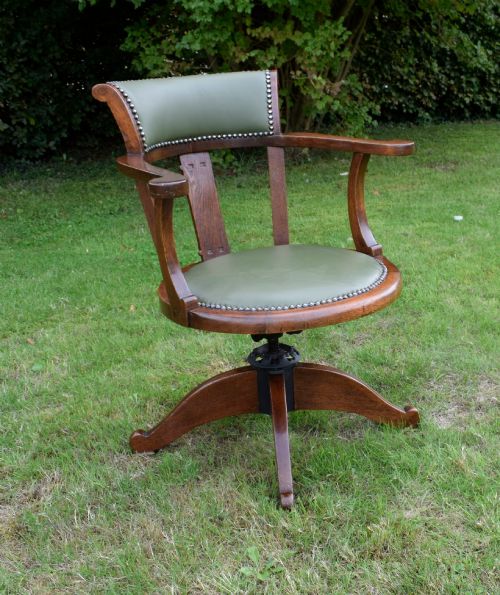
Cabinetmakers constructed the frames using durable hardwoods such as mahogany, oak, walnut, beech, and satinwood, frequently employing steam-bending techniques to achieve the characteristic continuous curved tub rail. Caning and cast iron swivel or height-adjustment mechanisms appear alongside timber in desk variants.
Upholsterers fitted these frames with supple leather hides - often finished in shades of tan, brown, or oxblood - secured traditionally with brass studs. Selected models integrate cane side panels or cane seats beneath loose or fixed leather cushions.
Several chairs double as swivel desk seats, letting you spin between tasks with nineteenth-century efficiency.
Assessing quality and craftsmanship
Quality rests upon the integrity of the timber frame and the precision of the curved joinery, particularly where the back rail meets the arms. Solid mahogany and finely figured oak frames demonstrate superior longevity compared to lesser secondary woods.
The treatment of the leather upholstery and the crispness of any carved detailing or cane work dictate the standing of an individual piece. Original revolving swivel actions and sturdy cast iron underframes on desk variants further distinguish finer examples.
The Edwardian Leather Tub Chair Glossary
- Tub chair
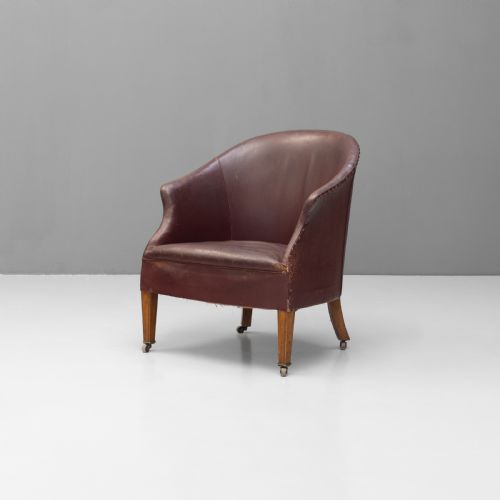
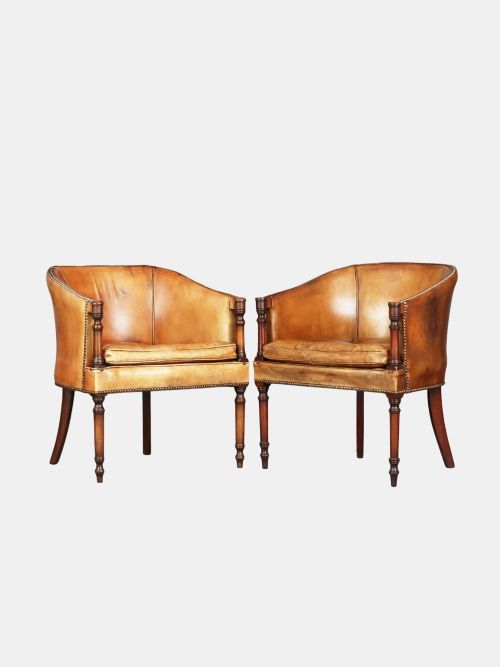
- An armchair featuring a continuous curved back and armrest enclosing the sitter. This rounded shape provides a compact footprint.
- Captain's chair
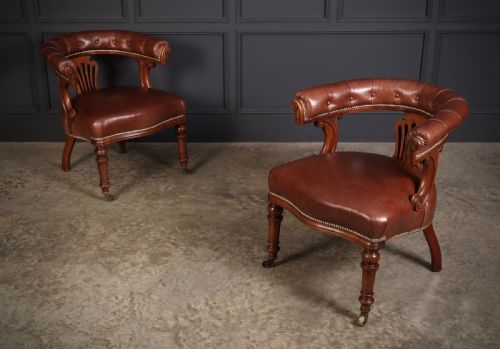
- A sturdy wooden armchair with a low curved back designed for office or desk use. These frequently incorporate swivel or tilting bases.
- Smoker's bow
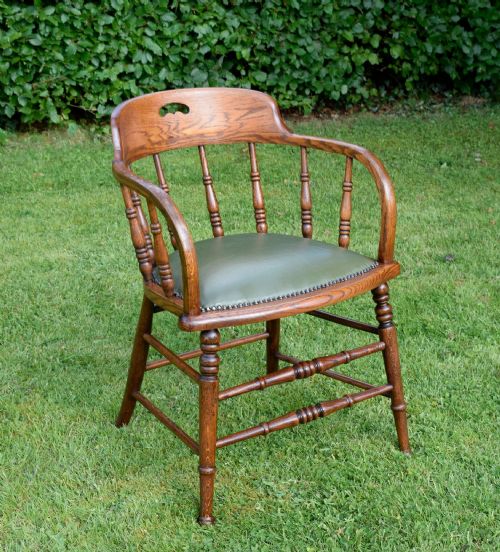
- A low-backed Windsor-style armchair with a turned spindle gallery beneath the arm rail. They occasionally incorporate upholstered leather seat pads.
- Caning
- Woven rattan material utilised for chair backrests and seat panels. This technique adds lightness and texture to the timber frame.
- Hide
- Animal skin prepared for upholstery use, valued for its durability. These chairs commonly display tan, burgundy, or oxblood variations.
Edwardian Leather Tub Chair: Frequently Asked Questions
What is a tub chair?
A tub chair is an upholstered armchair with a rounded backrest that curves continuously into the arms, resembling the shape of an open tub. This design offers enclosed support and a compact profile.
Such seating functions well in studies, bedrooms, and libraries where space is limited yet comfort remains essential.
How do I use a desk chair?
These desk chairs provide supportive seating for writing tables, bureau plat desks, and home offices. Their compact curved backs allow them to tuck neatly beneath desktop surfaces.
Revolving and adjustable mechanisms on select models allow you to turn and alter height for practical working conditions.
How do I care for leather?
Leather upholstery requires minimal maintenance, benefiting from occasional dusting with a soft dry cloth and conditioning to prevent the hide from drying out. Avoiding direct sunlight preserves the original colour.
Natural patinas develop over decades of use, meaning gentle cleaning maintains the surface without removing historical character.
How do I identify Edwardian furniture?
Edwardian pieces date from the reign of King Edward VII, spanning the early years of the twentieth century, and often lighten Victorian forms with Sheraton or arts and crafts influences. Mahogany and satinwood frequently appear.
Proportions tend to be lighter and more refined than heavy nineteenth-century equivalents, reflecting changing domestic tastes of the period.