

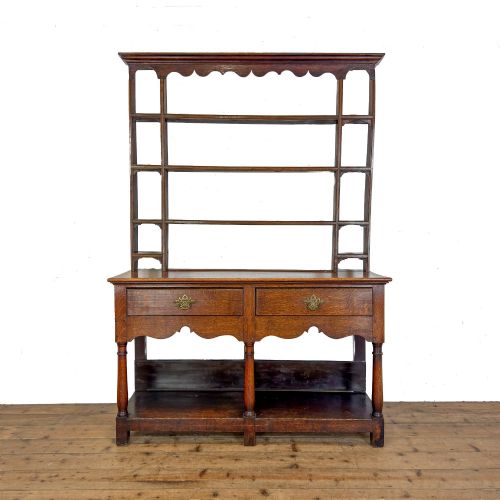
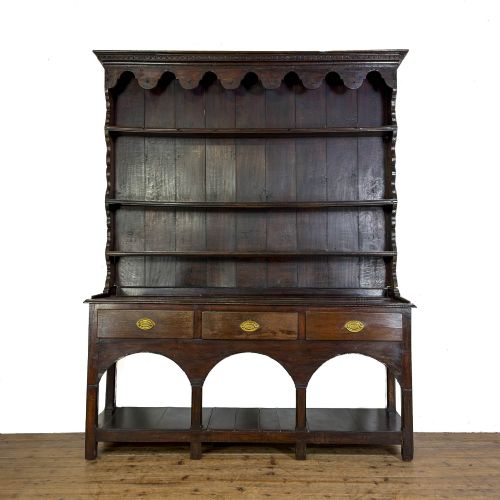
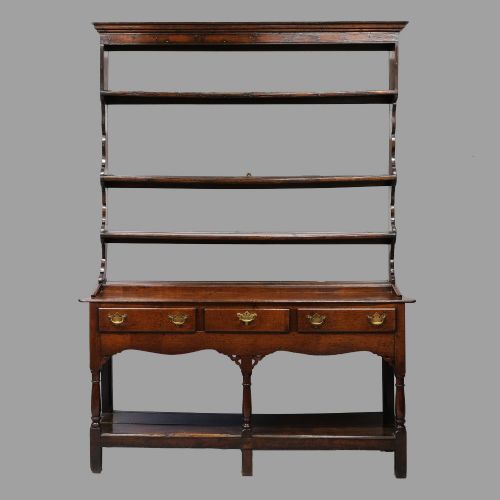
Oak Kitchen Dresser Rack
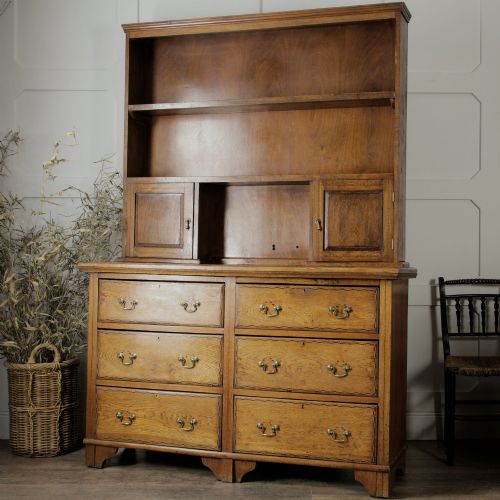
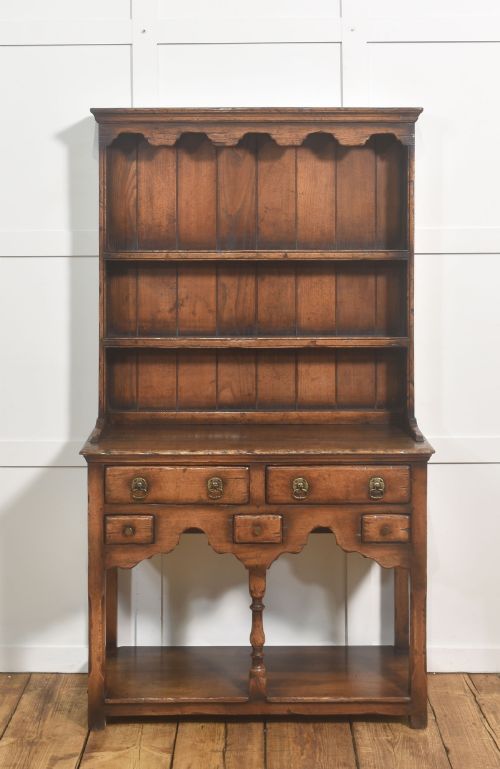
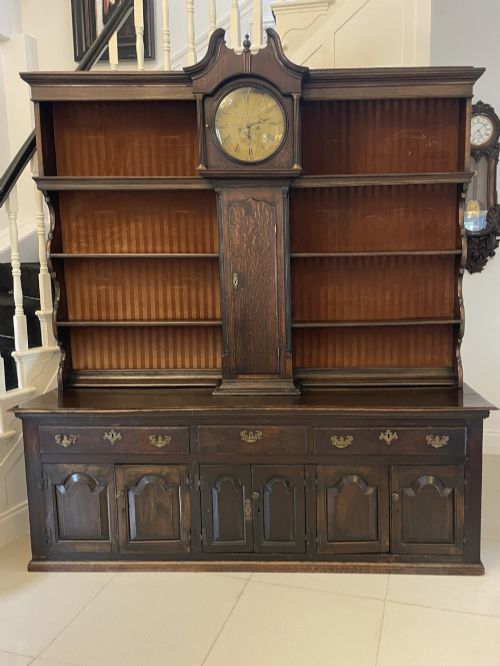
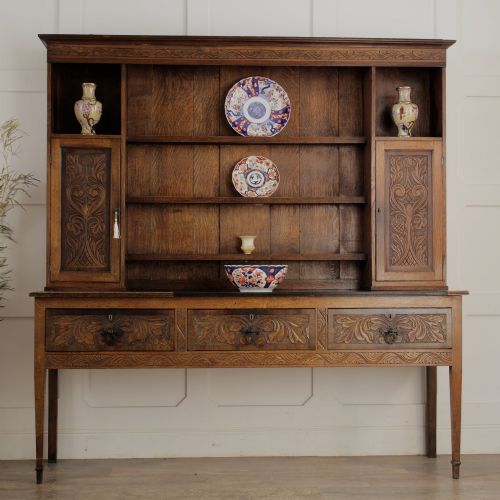
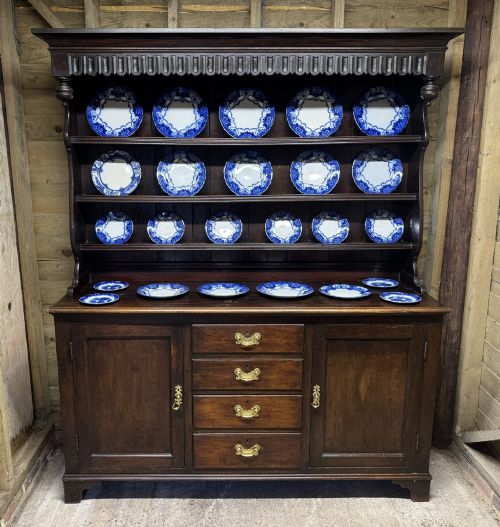
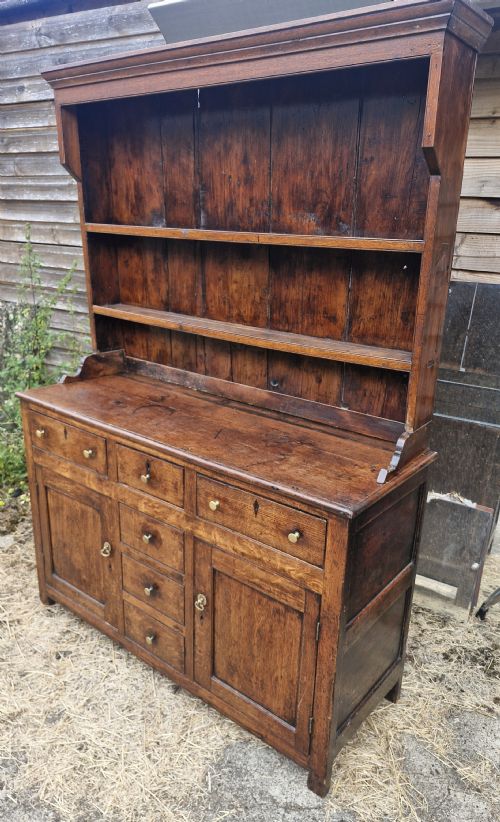
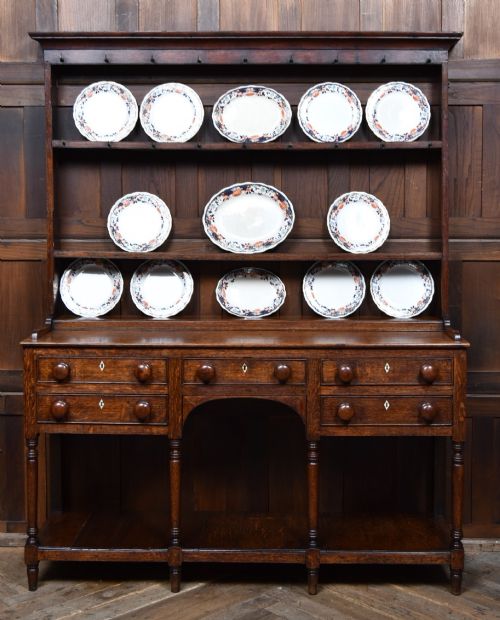
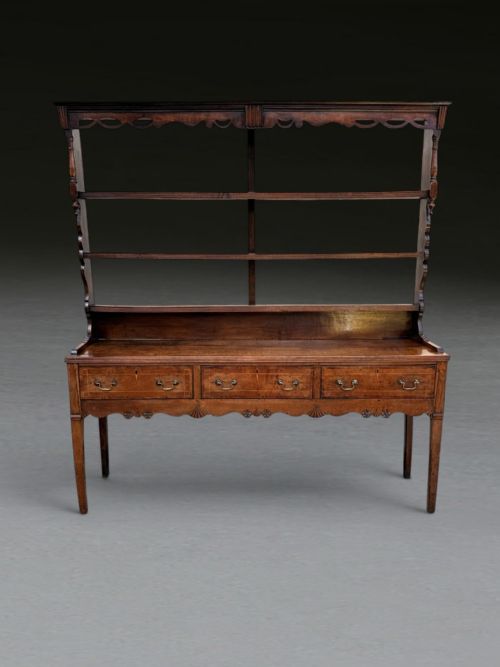
An oak kitchen dresser rack brings timeless vernacular utility to a wall, holding display plates and heavy pottery within robust timber framing.
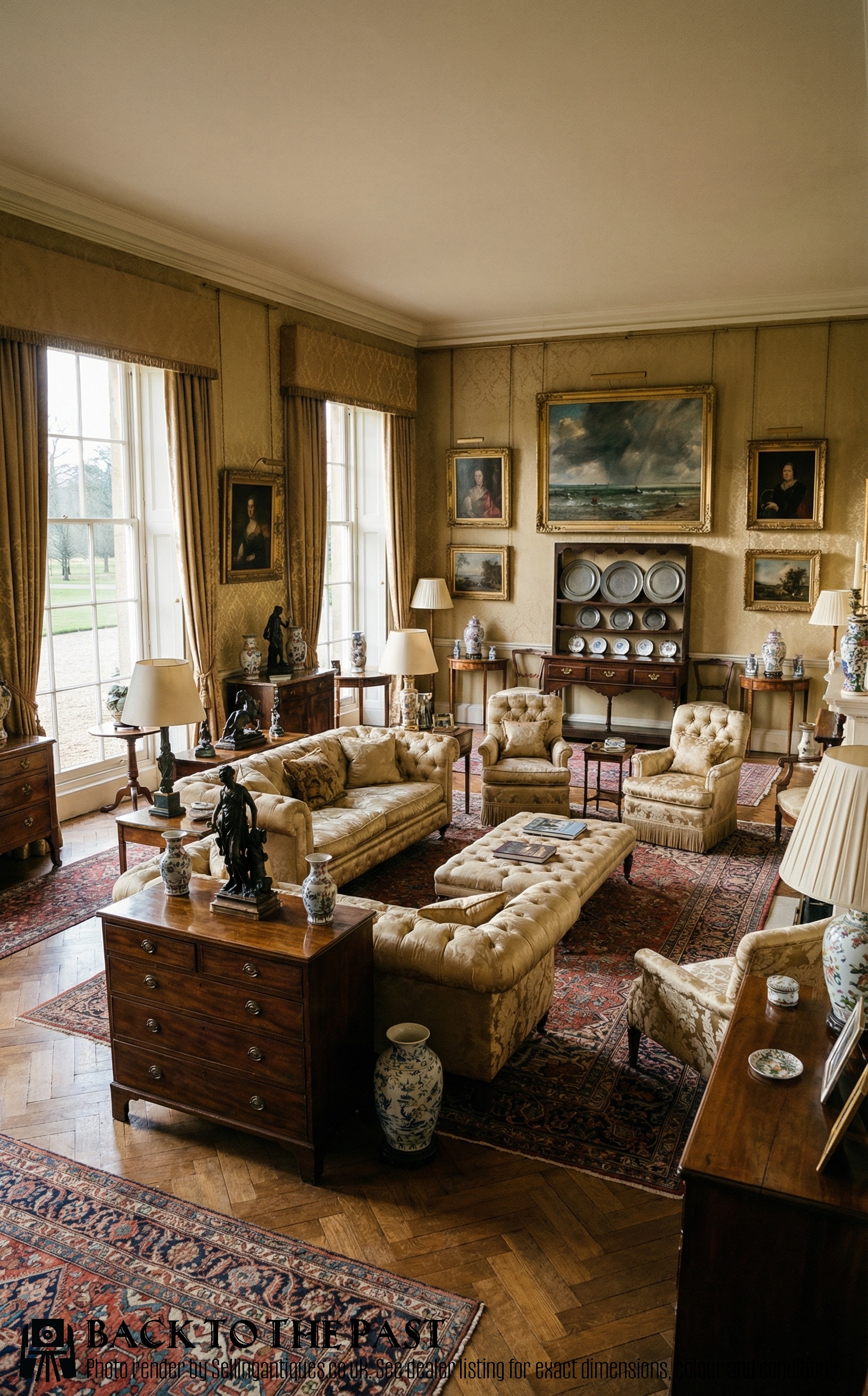
Oak Kitchen Dresser Rack
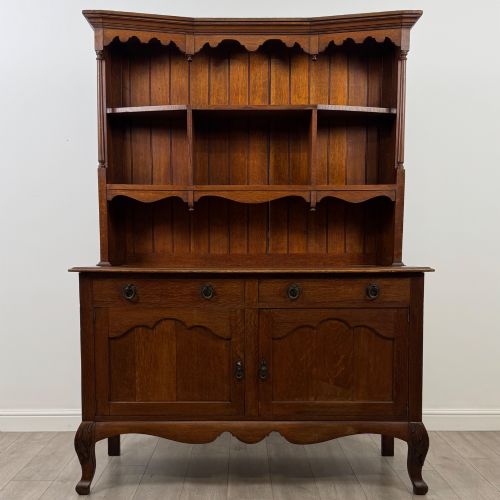
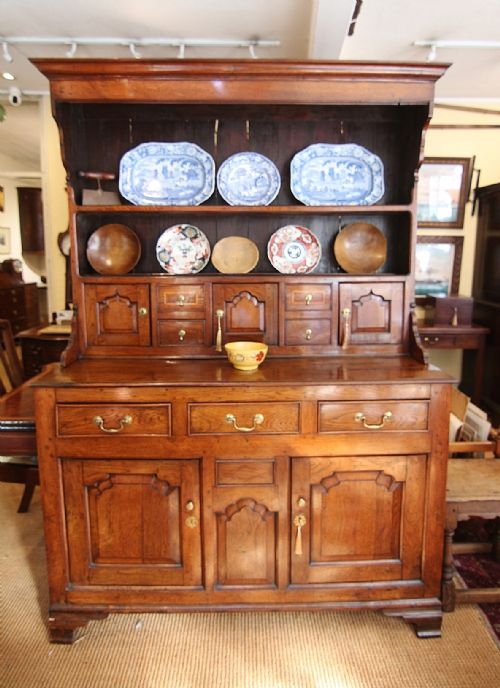
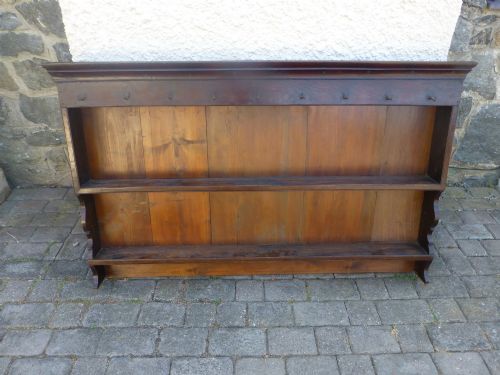
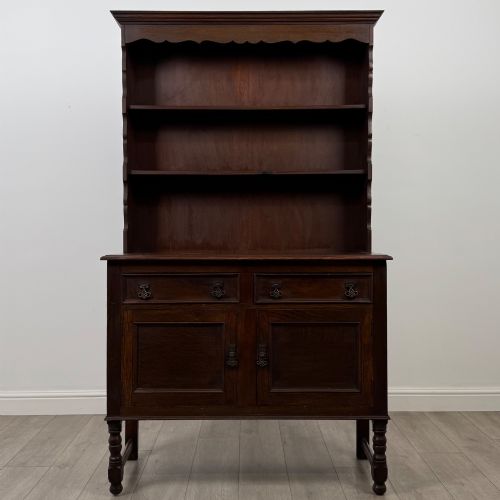
An oak kitchen dresser rack is a shelving superstructure designed to sit atop a lower base or mount directly to a wall for plate storage. Buyers seeking this phrase encounter wall-mounted plate display racks and complete tall dressers featuring open shelves alongside cabinetry.
The pieces on this page span the eighteenth and nineteenth centuries, taking forms such as the traditional Welsh vernacular, George III country pieces, and later Victorian and Edwardian iterations. Regional variations emerge clearly, including Snowdonia, Llanrwst, Shropshire, and West Country designs.
These racks serve as practical kitchen furniture intended to exhibit delftware, ceramics, and treen while keeping everyday domestic utensils close at hand. Many survivors combine open plate grooves with small spice cupboards or simple boarded backs.
Materials and Technique
Makers constructed these racks primarily from solid oak, sometimes supplemented by secondary timbers like pine or mahogany, utilising pegged mortise and tenon joints to ensure rigidity. Iron, brass, and occasional bone fittings appear in hinges, hooks, and escutcheons across regional workshops.
Surfaces display the tool marks of early hand-planing, while provincial examples often feature carved details, shaped friezes, or inlaid contrasting woods. Open shelves incorporate grooved plate rails to hold ceramics safely at an upright angle.
One notable Victorian survival comes complete with whimsical Green Man carvings and cabriole legs, proving country joiners loved a touch of woodland folklore.
Factors of Quality
Quality rests upon the integrity of the timber selection and the crispness of regional hand-carving or moulding details. Superior examples retain their original boarded backs, untouched surface patination, and proportional harmony between the plate shelves and the accompanying base.
Lesser or heavily restored pieces often suffer from replaced cornices, modern timber repairs, or stripped finishes that erase centuries of accumulated colour and wear.
The Oak Kitchen Dresser Rack Glossary
- Delft rack
- A wall-hanging or superstructure shelf unit specifically designed to display tin-glazed earthenware and plates. These racks feature narrow ledges and wooden lips to keep ceramic chargers upright.
- Potboard
- A lower open shelf built near the floor beneath a dresser base to store heavy pots and pans. This flat board replaces enclosed cupboards in many country workshops.
- Vernacular
- Furniture built by local country joiners using regional traditions rather than strict London pattern books. These pieces reflect the specific materials and domestic needs of areas like North Wales or Shropshire.
- George III
- The stylistic period spanning the mid to late eighteenth century, known for balanced proportions and understated classical influence in country furniture. Pieces from this era often display fine oak figure and restrained mouldings.
- Bread and cheese dresser
- A regional vernacular form associated with specific Welsh districts, traditionally incorporating small cupboards or ventilation panels for food storage. These pieces combine open display shelving with functional pantry housing.
Oak Kitchen Dresser Rack: Frequently Asked Questions
How do I hang a heavy oak plate rack?
Heavy oak racks require secure fixing directly into masonry walls or substantial timber studs using heavy-duty brackets and screws. Because these structures carry significant weight from timber and ceramics, anchoring must distribute the load safely.
Professional installation prevents the rack from pulling away from the wall under the weight of heavy platters and plates.
How should I clean and maintain antique oak timber?
Maintain antique oak by dusting with a dry, soft cloth and occasionally applying a traditional beeswax to nourish the dry wood. Avoid modern silicone polishes that build up sticky residues over time.
Keep the timber away from direct heat sources and dramatic humidity swings to prevent splitting or warping in the ancient boards.
Are these racks meant to stand alone or mount to a wall?
Some pieces are designed as independent wall-hanging racks with hanging holes or frieze boards, while others form the upper half of a tall floor-standing dresser. Wall racks must be fixed securely regardless of whether they rest on a base.
Checking the lower edge and backboards reveals whether the piece originally secured to a specific dresser base or hung independently.